

Customer service is going through a major shift and businesses are feeling the pressure to keep up. Companies using AI-driven tools have seen as much as 30 percent faster response times and 20 percent higher customer satisfaction scores. Think technology is the secret to winning customer loyalty? Not quite. The real breakthrough comes when organizations blend these impressive tools with genuine human connection and a culture that puts the customer first.
Table of Contents
- Developing Essential Customer Service Skills
- Leveraging Technology For Better Support
- Building A Customer-Focused Culture
- Measuring And Improving Service Performance
Quick Summary
| Takeaway | Explanation |
|---|---|
| Core Skills are Essential | Mastery of both technical and interpersonal skills, such as data management and active listening, is crucial for creating positive customer experiences and lasting relationships. |
| Embrace Technology | Leveraging AI and advanced communication platforms can significantly enhance support efficiency and allow for 24/7 service, leading to improved customer satisfaction. |
| Foster a Customer-Focused Culture | Cultivating clear organizational values centered around customer needs and continuous learning is vital for building trust and exceptional service practices. |
| Implement Performance Metrics | Tracking key performance indicators, like Customer Satisfaction Scores and First Contact Resolution rates, enables organizations to identify strengths and areas for improvement, ensuring higher service quality. |
| Commit to Continuous Improvement | Establishing systematic feedback mechanisms and utilizing advanced analytics can drive ongoing enhancements in service performance, transforming raw data into actionable insights. |
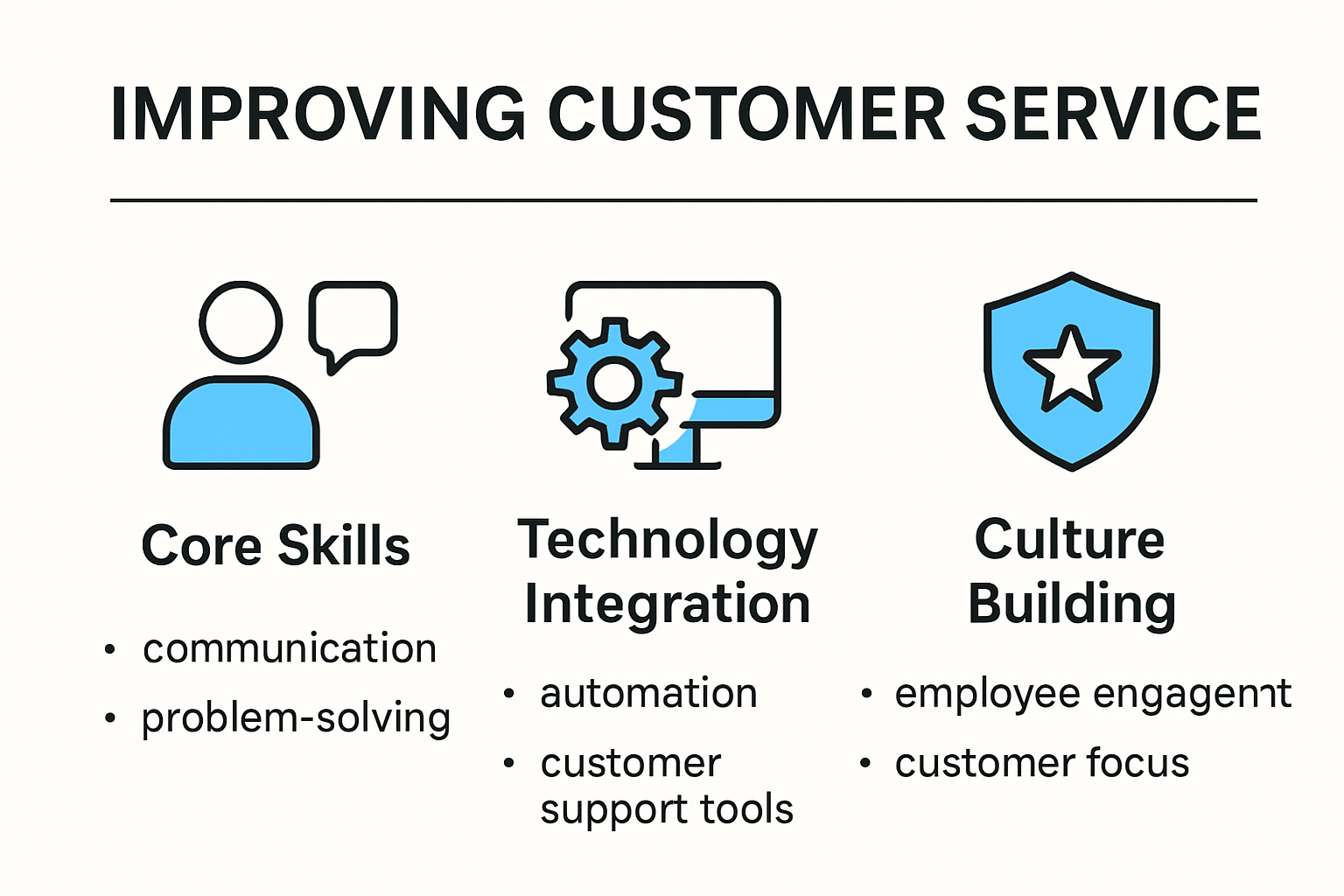
Developing Essential Customer Service Skills
Customer service skills form the backbone of successful business interactions. Professionals who master these skills create positive experiences that transform casual interactions into long lasting customer relationships. Understanding and developing these capabilities requires strategic focus and dedicated training.
Core Technical and Interpersonal Skills
Customer service excellence demands a comprehensive skill set that combines technical proficiency with strong interpersonal abilities. According to Forbes Advisor, top performers balance hard skills like data management with soft skills such as active listening and empathy. Technical skills include efficient use of customer relationship management (CRM) systems, accurate data entry, and quick problem resolution. Interpersonal skills, conversely, involve reading emotional cues, communicating clearly, and demonstrating genuine care.
Effective communication stands as the primary differentiator. Professionals must translate complex information into accessible language, ensuring customers feel heard and understood. This involves not just speaking clearly but listening attentively, asking clarifying questions, and responding with precision and empathy.

Strategic Skill Development Approaches
Developing customer service skills requires deliberate, structured training. TechTarget emphasizes that businesses should invest in comprehensive skill enhancement programs. These programs typically include:
- Role-playing scenarios: Simulating real-world customer interactions to practice responses
- Continuous learning modules: Ongoing training that updates skills and introduces new communication techniques
- Feedback mechanisms: Regular performance reviews that highlight areas for improvement
Professionals can also learn more about personal skill enhancement through targeted development programs. Organizations committed to customer service excellence recognize that skill development is an ongoing journey, not a one-time event.
To help clarify the differences and value between technical and interpersonal customer service skills, the following table summarizes the key skills and associated examples:
| Skill Type | Example Skills | Value to Customer Service |
|---|---|---|
| Technical | CRM usage, data entry, problem resolution | Accurate, efficient service |
| Interpersonal | Active listening, empathy, emotional intelligence | Builds trust, positive relationships |
Measuring and Enhancing Skill Proficiency
Measuring customer service skill effectiveness involves multiple evaluation methods. Key performance indicators include customer satisfaction scores, resolution time, first-contact resolution rates, and qualitative feedback. Organizations should implement regular assessments that provide actionable insights into individual and team performance.
Additionally, technology plays a crucial role in skill enhancement. Advanced training platforms use artificial intelligence to provide personalized learning paths, analyze communication patterns, and offer real-time coaching. By leveraging these tools, businesses can create adaptive learning environments that continuously refine customer service capabilities.
The most successful customer service professionals view skill development as a dynamic, iterative process. They remain curious, adaptable, and committed to understanding evolving customer needs and communication preferences. Ultimately, exceptional customer service skills are not just about solving problems but creating memorable, positive interactions that build lasting customer loyalty.
Leveraging Technology for Better Support
Technology has revolutionized customer service, transforming traditional support models into dynamic, intelligent systems that anticipate and resolve customer needs with unprecedented efficiency. As businesses navigate increasingly complex customer interactions, technological solutions offer powerful tools to enhance support experiences and operational effectiveness.
Intelligent Automation and AI-Driven Support
Artificial intelligence is reshaping customer service paradigms. Research from ICS-Assist demonstrates how machine learning frameworks can identify customer service scenarios and recommend precise solutions, significantly improving solution acceptance rates and customer satisfaction. AI-powered chatbots and virtual assistants now provide 24/7 support, handling routine inquiries with remarkable accuracy and freeing human agents to address more complex customer challenges.
These intelligent systems do more than just respond to queries. They learn from each interaction, continuously refining their understanding of customer needs and communication patterns. Natural language processing enables these technologies to understand context, sentiment, and nuanced customer requests, creating more personalized and empathetic support experiences.
Advanced Communication Platforms
Modern customer support technologies integrate multiple communication channels seamlessly. Omnichannel platforms allow customers to switch between email, chat, social media, and phone support without losing context. Blockchain research suggests that emerging technologies can create more transparent and contextualized feedback systems, enabling businesses to track and improve customer interactions across different touchpoints.
By exploring collaborative problem-solving techniques, organizations can design more responsive support ecosystems. These platforms aggregate customer data, providing support teams with comprehensive insights into individual customer histories, preferences, and potential issues before they escalate.
Data-Driven Performance Optimization
Technology enables unprecedented insights into customer service performance. Advanced analytics tools track key metrics like response times, resolution rates, customer satisfaction scores, and agent performance. Machine learning algorithms can predict potential service bottlenecks, recommend training interventions, and identify opportunities for process improvement.
Research from LangChain’s customer service automation study highlights how custom language models can enhance responsiveness and personalization. These technologies not only streamline support processes but also create more engaging, human-like interactions that customers appreciate.
The future of customer service technology lies in continuous adaptation. Businesses must view technological solutions not as static tools but as dynamic systems that evolve with changing customer expectations. By embracing intelligent automation, advanced communication platforms, and data-driven insights, organizations can create support experiences that are not just efficient, but truly exceptional.
Successful technology integration requires a strategic approach that balances technological capabilities with human expertise. The most effective customer service models will be those that use technology to augment, rather than replace, human connection and empathy.
Building a Customer-Focused Culture
Creating a customer-focused culture transcends traditional service strategies. It represents a fundamental organizational commitment where every employee understands their role in delivering exceptional customer experiences. This comprehensive approach requires deliberate cultivation of values, practices, and mindsets that prioritize customer satisfaction across all organizational levels.
Foundations of Customer-Centric Organizational Values
A truly customer-focused culture begins with clear, embedded organizational values that place customer needs at the center of every decision. Research from the National Center for Biotechnology Information highlights that service quality directly correlates with organizational culture, emphasizing the critical nature of systematic training and leadership alignment.
Leadership plays a pivotal role in modeling customer-centric behaviors. Executives must demonstrate genuine commitment by actively listening to customer feedback, participating in service interactions, and making strategic decisions that prioritize customer experience. This top-down approach signals to employees that customer satisfaction is not just a department’s responsibility but an organizational mission.
Embedding Customer Focus Through Continuous Learning
Developing a customer-focused culture requires ongoing education and skill development. Organizations must create robust training programs that go beyond technical skills, focusing on empathy, communication, and problem-solving. Learn more about creating a training culture that drives meaningful customer engagement and continuous improvement.
Effective training should include scenario-based learning, role-playing exercises, and real-world case studies that help employees understand diverse customer perspectives. Regular workshops, peer learning sessions, and mentorship programs can reinforce customer-centric principles and provide practical strategies for delivering exceptional service.
Systematic Feedback and Continuous Improvement
Building a customer-focused culture demands systematic approaches to gathering, analyzing, and acting on customer feedback. This involves creating multiple channels for customer input, including surveys, direct interviews, social media monitoring, and comprehensive feedback management systems.
Organizations must develop responsive mechanisms that not only collect feedback but translate insights into actionable improvements. This means establishing cross-functional teams dedicated to analyzing customer data, identifying trends, and implementing strategic changes. Transparency in communicating these improvements back to customers demonstrates genuine commitment to their experiences.
Successful customer-focused cultures recognize that this approach is not a destination but an ongoing journey. They foster an environment of curiosity, adaptability, and continuous learning. Employees are encouraged to challenge existing processes, propose innovative solutions, and view every customer interaction as an opportunity for improvement.
Ultimately, a customer-focused culture is about creating emotional connections. It requires moving beyond transactional interactions to build trust, demonstrate genuine care, and consistently exceed customer expectations. By aligning organizational values, investing in continuous learning, and maintaining a systematic approach to feedback, businesses can transform their service from merely functional to truly exceptional.
Measuring and Improving Service Performance
Measuring and improving service performance represents a critical strategic approach for organizations seeking to deliver exceptional customer experiences. By implementing systematic evaluation methods, businesses can transform raw data into actionable insights that drive continuous improvement and operational excellence.
Key Performance Metrics and Evaluation Frameworks
According to the General Services Administration, effective service performance measurement requires comprehensive tracking of multiple critical metrics. These include Customer Satisfaction Score, First Contact Resolution rate, Service Level goals, and Abandonment Rate. Each metric provides a unique perspective on service quality, enabling organizations to identify strengths and address potential improvement areas.
Customer Satisfaction Score serves as a direct indicator of customer perception, measuring the overall experience and emotional response to service interactions. First Contact Resolution rate demonstrates the efficiency and effectiveness of support teams in addressing customer needs quickly and comprehensively. Service Level goals track response times and accessibility, while Abandonment Rate reveals potential bottlenecks in customer support processes.
The table below provides an overview of key customer service performance metrics and what each measures:
| Metric | What It Measures | Why It’s Important |
|---|---|---|
| Customer Satisfaction | Overall customer perception and emotional response | Indicator of quality and loyalty |
| First Contact Resolution | Percentage of issues resolved on the initial interaction | Reflects efficiency and customer effort |
| Service Level Goals | Response times and accessibility targets | Ensures prompt support delivery |
| Abandonment Rate | Percentage of customers who abandon before resolution | Reveals bottlenecks and service obstacles |
Advanced Analytics and Performance Optimization
Modern performance measurement goes beyond traditional metrics, leveraging advanced analytics and machine learning technologies to provide deeper insights. These sophisticated tools can predict potential service challenges, identify patterns in customer interactions, and recommend targeted improvements. Learn more about managing performance strategies to understand how data-driven approaches can transform organizational capabilities.
Advanced analytics enable real-time performance monitoring, allowing organizations to make immediate adjustments and proactively address emerging service trends. By integrating multiple data sources, businesses can create comprehensive performance dashboards that provide holistic views of customer service effectiveness.
Continuous Improvement and Feedback Mechanisms
Research from the U.S. Government Accountability Office emphasizes the importance of establishing clear customer service standards and systematically measuring results. This approach requires creating robust feedback loops that not only collect data but translate insights into meaningful organizational changes.
Effective continuous improvement strategies involve regular performance reviews, cross-functional collaboration, and a commitment to learning and adaptation. Organizations must develop cultures that view performance metrics not as punitive measures but as opportunities for growth and enhancement.
Successful performance improvement requires a holistic approach that balances quantitative metrics with qualitative insights. This means combining statistical data with direct customer feedback, employee observations, and contextual understanding of service interactions.
Ultimately, measuring and improving service performance is an ongoing journey of strategic refinement. By embracing data-driven methodologies, fostering a culture of continuous learning, and maintaining a customer-centric perspective, organizations can create service experiences that consistently exceed expectations and drive long-term customer loyalty.
Frequently Asked Questions
What are the essential customer service skills needed for 2025?
To excel in customer service, professionals need a combination of technical skills, such as proficiency in CRM systems and data management, along with interpersonal skills like active listening and empathy. Mastering both areas is crucial for creating positive customer experiences.
How can technology improve customer service efficiency?
Leveraging AI-driven tools and advanced communication platforms can significantly enhance customer service efficiency. These technologies enable 24/7 support, reduce response times, and improve overall customer satisfaction by streamlining communication and resolving queries more effectively.
What strategies can help build a customer-focused culture?
To cultivate a customer-focused culture, organizations should embed customer-centric values within their mission, invest in continuous employee training that emphasizes empathy and communication, and establish systematic feedback mechanisms to ensure ongoing improvement based on customer insights.
How do I measure the effectiveness of customer service performance?
Customer service performance can be measured using various key performance indicators (KPIs), such as Customer Satisfaction Scores, First Contact Resolution rates, and response times. These metrics help organizations identify strengths and areas for improvement, ensuring higher service quality.
Ready to Transform Your Customer Service in 2025?
Every day, businesses struggle to keep up with changing customer expectations. The article highlighted the need to develop essential customer service skills, embrace advanced technology, and build a customer-focused culture. Yet, many teams lack strategic training, consistent skill measurement, and the right support to create lasting change. Are you losing ground because your team falls short on technical abilities or customer empathy? Are outdated methods and slow improvement cycles making progress feel out of reach?

Now is the time to address these gaps and modernize your approach. At Peuneo, we deliver accredited training, consulting, and ongoing support focused on the very strategies covered in this article. Discover practical skills development, compliance-focused upskilling, and programs designed to directly improve customer satisfaction. Visit our online learning portal to browse specialized customer service courses, or connect with our consulting team for tailored performance solutions. Give your team the tools to deliver exceptional service. Take action today and unlock new standards of excellence.
Recommended
- Essential Sales Strategies for Leaders in 2025 – Peuneo
- How to Lead a Team Effectively in 2025: Essential Strategies for Every Leader – Peuneo
- How to Enhance Personal Productivity in 2025: Strategies for All Professionals – Peuneo
- How to Improve Team Performance: Expert Strategies for 2025 – Peuneo
- Customer Journey Mapping for CRO Marketers in 2025
- Converting Real Estate Leads: Proven Tips for 2025 Success – Lead Linker