


Most organizations say they value employee development, yet only a few see real results from their training efforts. Here is something that stands out. Companies with structured training programs see 218 percent higher income per employee and are 21 percent more profitable. That sounds like a no brainer, right? Actually, creating a training culture that drives results is more about mindset than mandatory courses. The real winners are companies that treat learning as a daily habit, not an afterthought. Here is why that approach keeps them ahead.
Table of Contents
- Understanding The Value Of A Training Culture
- Key Steps To Build A Lasting Training Culture
- Overcoming Common Challenges In Training Initiatives
- Best Practices For Engaging All Stakeholders
Quick Summary
| Takeaway | Explanation |
|---|---|
| Leadership commitment is essential | Building a successful training culture requires active endorsement and participation from organizational leadership, demonstrating a genuine commitment to continuous development at all levels. |
| Personalization and technology in training are vital | Implementing AI-driven learning platforms can create dynamic, personalized training pathways that cater to individual employee needs, enhancing engagement and knowledge retention. |
| Measure impact beyond traditional metrics | Organizations should focus on tangible business outcomes, tracking metrics like ROI, productivity increases, and skills application to assess the effectiveness of training initiatives. |
| Address engagement and relevance proactively | To maintain employee interest, training content must be dynamic and personalized, utilizing advanced learning systems to adapt to the specific needs and career trajectories of employees. |
| Inclusive strategies engage all stakeholders | Developing comprehensive learning strategies that consider individual differences and align with organizational objectives helps ensure all stakeholders are engaged and benefit from training initiatives. |
Understanding the Value of a Training Culture
A training culture represents more than a corporate checkbox. It is a strategic approach that transforms employee potential into organizational performance. Companies recognize that sustainable growth depends not just on technology or strategy but on the continuous development of their most critical asset: human talent.
The Economic Impact of Strategic Training
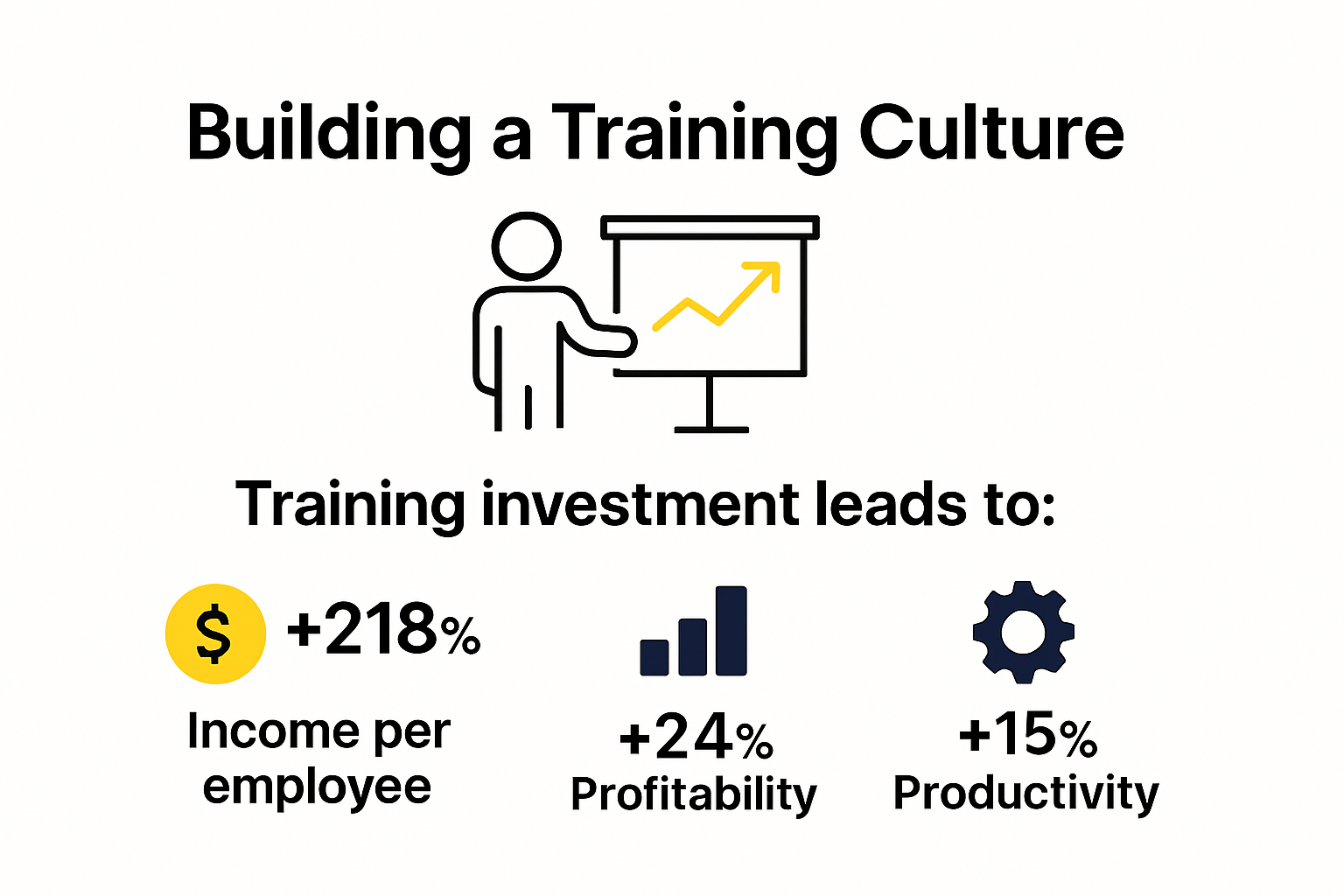
The financial implications of a robust training culture are profound. Research on workplace learning reveals startling statistics that underscore its significance. Companies with comprehensive employee training programs generate 218% higher income per employee compared to organizations without structured learning initiatives. Moreover, these organizations experience remarkable productivity gains, becoming 17% more productive and 21% more profitable.
Beyond raw numbers, training represents an investment in human potential. When employees receive targeted skill development, they feel valued and engaged. Our guide on optimizing training programs highlights how strategic learning correlates directly with increased job satisfaction and retention.
Employee Perception and Engagement
Employees are acutely aware of training’s transformative power. Approximately 59% of workers believe their performance is directly linked to the quality of training they receive. Even more compelling, 92% report that workplace training positively impacts their job engagement. This isn’t just about acquiring technical skills. It is about creating an environment where continuous learning becomes a cultural norm.
The global workplace training market reached $401 billion in 2024, signaling a widespread recognition that learning is no longer optional. Organizations are shifting from sporadic training events to creating holistic learning ecosystems that adapt to rapidly changing business requirements.
Building a Future Ready Workforce
A training culture prepares organizations for future challenges by developing adaptive, resilient talent. It goes beyond traditional skills training to cultivate critical thinking, innovation, and agility. By investing in comprehensive learning strategies, companies create workforces capable of navigating complex, unpredictable business environments.
The most successful training cultures share key characteristics: leadership commitment, personalized learning paths, technology enabled accessibility, and a clear alignment between individual development and organizational goals. They understand that training is not an expense but a strategic investment in human capital.
As we move into 2025, organizations that prioritize continuous learning will distinguish themselves. They will attract top talent, maintain competitive edges, and create workplaces where employees feel empowered to grow, innovate, and contribute meaningfully.
Key Steps to Build a Lasting Training Culture

Creating a sustainable training culture requires strategic planning and consistent execution. Organizations must move beyond traditional training approaches and develop comprehensive systems that foster continuous learning and adaptability.
Leadership Commitment and Strategic Alignment
Building a lasting training culture starts at the top. Executive leadership must not only endorse learning initiatives but actively participate and model continuous development. Our guide on supporting employee development emphasizes that organizational leaders need to demonstrate a genuine commitment to personal and professional growth.
According to research on learning and development trends, leadership development training should be prioritized across all organizational levels. This approach creates a cascading effect where emerging talent is empowered, team goals align with strategic objectives, and the entire organization becomes more resilient.
Personalized and Technology Enabled Learning
The future of training culture lies in personalization and technological integration. Advanced learning platforms now leverage artificial intelligence to create dynamic learning pathways tailored to individual employee needs, skill levels, and career aspirations.
These adaptive learning systems go beyond traditional one-size-fits-all training models. They analyze individual performance, recommend targeted learning modules, and track progress in real time. By providing personalized learning experiences, organizations can significantly enhance engagement and knowledge retention.
Measuring Impact Beyond Traditional Metrics
Successful training cultures require robust measurement strategies. Organizations must move past superficial metrics like training hours completed and instead focus on tangible business outcomes. Experts recommend tracking Return on Investment (ROI) and directly correlating learning initiatives with team productivity increases.
This data-driven approach allows organizations to continuously refine their training strategies. By understanding the direct connection between learning interventions and business performance, companies can make informed decisions about resource allocation and skill development priorities.
Building a lasting training culture is not a one-time initiative but an ongoing commitment. It requires continuous adaptation, technological integration, leadership support, and a genuine belief that employee development is fundamental to organizational success. As we move into 2025, the most successful organizations will be those that view learning not as an expense, but as a critical strategic investment in their most valuable asset: their people.
Overcoming Common Challenges in Training Initiatives
Training initiatives often encounter significant barriers that can undermine their effectiveness and organizational impact. Recognizing and strategically addressing these challenges is crucial for creating a successful learning environment in 2025.
Addressing Engagement and Relevance
One of the most persistent challenges in training programs is maintaining employee engagement and ensuring training content remains relevant. Our comprehensive guide on developing training programs highlights the importance of creating dynamic, personalized learning experiences.
Research on workplace learning indicates that AI-powered Learning Management Systems can transform traditional training approaches. These advanced platforms analyze individual employee skills, learning styles, and career trajectories to create truly personalized learning pathways. By tailoring content to specific needs, organizations can dramatically increase engagement and knowledge retention.
Overcoming Resistance and Cultural Barriers
Resistance to change represents a significant obstacle in implementing effective training initiatives. Organizations must proactively address cultural barriers that prevent continuous learning. Leadership development research suggests that creating a learning culture requires strategic intervention at all organizational levels.
Key strategies include:
- Leadership modeling: Executives must actively participate in and visibly support learning initiatives
- Clear communication: Explaining the direct benefits of training to individual career growth
- Incentive alignment: Connecting training outcomes to performance evaluations and career progression
Measuring Meaningful Training Impact
Traditional training metrics often fail to capture the true value of learning initiatives. Experts recommend moving beyond superficial measurements like completed training hours to focus on more substantive business outcomes.
Advanced organizations are now implementing comprehensive evaluation frameworks that track:
- Productivity increases
- Skills acquisition and application
- Direct correlation between training and business performance
- Return on Investment (ROI) for learning interventions
By adopting a data-driven approach, companies can transform training from a perceived cost center to a strategic investment in human capital. The most successful organizations will be those that view training challenges not as obstacles, but as opportunities for continuous improvement and organizational growth.
Navigating these challenges requires a holistic approach that combines technological innovation, leadership commitment, and a genuine understanding of individual and organizational learning needs. As we move into 2025, the ability to create adaptive, engaging, and measurable training initiatives will distinguish high-performing organizations from their competitors.
Best Practices for Engaging All Stakeholders
Engaging stakeholders effectively is critical to creating a thriving training culture that delivers sustainable organizational results. Success depends on a comprehensive approach that addresses the diverse needs and expectations of employees, leadership, and other key organizational participants.
Developing Inclusive Learning Strategies
Effective stakeholder engagement begins with creating comprehensive learning strategies that recognize individual differences and organizational requirements. Our insights on team building techniques highlight the importance of designing inclusive learning experiences that resonate across different skill levels and professional backgrounds.
Research on leadership development recommends prioritizing training initiatives that cultivate strategic thinking, emotional intelligence, and communication skills at all organizational levels. This approach ensures that emerging talent and senior leaders receive targeted development opportunities, creating a powerful cascading effect of knowledge and capability enhancement.
Leveraging Technology for Personalized Engagement
Advanced technological platforms are transforming stakeholder engagement in training initiatives. AI-driven learning platforms now offer unprecedented personalization, analyzing individual learning styles, career trajectories, and skill gaps to create dynamic, adaptive learning pathways.
Key technological strategies include:
- Adaptive learning algorithms: Tailoring content to individual skill levels
- Real-time performance tracking: Providing immediate feedback and progress insights
- Interactive multimedia content: Engaging learners through diverse learning formats
Measuring and Communicating Training Impact
Transparent communication about training outcomes is crucial for maintaining stakeholder buy-in. Experts recommend moving beyond traditional metrics to demonstrate tangible business value. Organizations should focus on robust measurement approaches that showcase direct correlations between training initiatives and key performance indicators.
Comprehensive stakeholder engagement requires tracking and communicating:
- Productivity improvements
- Skills acquisition rates
- Return on Investment (ROI) for training programs
- Direct business performance enhancements
By presenting clear, data-driven evidence of training effectiveness, organizations can secure ongoing support from leadership, motivate employees, and create a culture of continuous learning and improvement.
Successful stakeholder engagement is not a one-size-fits-all approach. It requires continuous adaptation, genuine commitment to individual growth, and a strategic vision that aligns learning initiatives with broader organizational objectives. As we move into 2025, the most successful organizations will be those that view stakeholder engagement as a dynamic, collaborative process of mutual development and organizational transformation.
Frequently Asked Questions
What is a training culture?
A training culture is a strategic approach within an organization that prioritizes continuous employee development and learning as a core aspect of its operations and values. It transforms employee potential into organizational performance through ongoing training and skill enhancement.
Why is leadership commitment important for a training culture?
Leadership commitment is essential because it sets the tone for the entire organization. When leaders actively endorse and participate in training initiatives, it demonstrates the value placed on employee development and encourages a culture of continuous learning throughout all levels of the organization.
How can technology enhance a training culture?
Technology enhances a training culture by enabling personalized learning experiences through advanced learning platforms. These platforms can tailor content to individual skill levels, track performance in real time, and provide interactive learning formats that engage employees more effectively.
How should organizations measure the impact of training initiatives?
Organizations should measure the impact of training initiatives by focusing on tangible business outcomes, such as ROI, productivity increases, and skills application. Moving beyond superficial metrics like training hours completed allows for a more accurate assessment of the effectiveness of training programs.
Transform Your Training Culture into Real Business Results
It is clear from the article that many organizations struggle to turn well-intentioned training programs into true performance gains. A big challenge is building a learning environment where leadership sets the tone, technology creates relevant learning paths, and every team member feels motivated to grow. The pain points are familiar: disengaged employees, training that feels generic, and a gap between learning investment and measurable impact. If you see these issues in your organization, you are not alone.

Imagine if your workplace had an accredited partner who makes continuous learning engaging and aligned with your real business goals. At Peuneo, we help South African companies build training cultures where people thrive and performance soars. Explore how our accredited programs, consulting services, and easy-to-use online learning portal can bring personalized, future-ready solutions tailored to your needs. Visit the Peuneo website now and take the first step toward a future where your training culture drives measurable results. Do not wait—make learning a source of competitive advantage today.