


Modern sales leadership is entering an exciting new era. By 2025, 35% of chief revenue officers will establish centralized AI teams to transform their sales strategies. But surprise, this isn’t just about using technology to push numbers. The real magic lies in the human connection that drives sales success. Sales leaders who master both technological integration and psychological intelligence will redefine what it means to lead a team. Get ready to explore how you can equip yourself and your team with the skills necessary for a thriving future.
Table of Contents
- Key Modern Sales Leadership Skills
- Implement High-Impact Sales Strategies
- Boost Your Sales Team Performance
- Future-Proofing Leadership Strategies
Quick Summary
| Takeaway | Explanation |
|---|---|
| Embrace Technological Integration | Sales leaders should leverage advanced CRM systems and AI to enhance their teams’ capabilities while emphasizing relationship-building over administrative tasks. |
| Develop Psychological Intelligence | Cultivating emotional intelligence within sales teams is essential for understanding and motivating diverse members, fostering resilience in complex environments. |
| Adopt a Consultative Selling Mindset | Shift from transactional selling to consultative approaches by training teams to become trusted advisors, focusing on delivering client value and outcomes. |
| Implement Continuous Learning and Development | Organizations must adopt ongoing training and personalized coaching to adapt to market demands and ensure team skills evolve with the industry. |
| Focus on Cultural Excellence | A positive company culture that promotes recognition and collaboration is critical for sustaining high sales performance and inspiring intrinsic motivation among team members. |
Key Modern Sales Leadership Skills
Modern sales leadership demands a sophisticated blend of strategic thinking, technological understanding, and profound human connection skills. The traditional approach of managing through command and control has become obsolete. Today’s sales leaders must be adaptive, empathetic, and technologically savvy professionals who can navigate complex business environments while inspiring and developing their teams.
Strategic Technological Integration
Successful sales leaders recognize that technology is not a replacement for human skills but a powerful amplification tool. [Research from Ddiworld](https://www.ddiworld.com/blog/leadership-trends-2025) suggests that leaders in 2025 must develop a nuanced approach to balancing technological advancement with human capabilities. This means understanding how artificial intelligence, data analytics, and automation can streamline administrative tasks while allowing sales professionals to focus on high-value relationship-building activities.
Key technological competencies for modern sales leaders include:
- Advanced CRM Management: Ability to leverage sophisticated customer relationship management tools
- Data Interpretation: Skill in extracting meaningful insights from complex sales data
- AI Integration: Understanding how to incorporate AI-driven insights into sales strategies
Psychological Intelligence and Team Development
Beyond technological prowess, modern sales leadership requires deep psychological intelligence. [Research from the Tyson Group](https://www.tysongroup.com/post/sales-leadership-in-2025-how-to-build-high-performing-teams) emphasizes the emergence of a “Sales Team Science” methodology. This approach transcends traditional management techniques by integrating psychological understanding with strategic planning.
Effective sales leaders now must:
- Develop emotional intelligence to understand and motivate diverse team members
- Create adaptive learning environments that encourage continuous skill development
- Build resilient teams capable of navigating increasingly complex sales landscapes
Consultative and Relationship-Driven Approach
The sales leadership paradigm has shifted from transactional interactions to strategic partnerships. [Analysis from Lepaya](https://www.lepaya.com/blog/the-2025-sales-training-boom-a-bold-strategy-for-growth) highlights that modern sales leaders must cultivate a consultative selling mindset. This means training teams to become trusted advisors rather than mere product pushers.
This approach involves:
- Developing deep industry and client domain expertise
- Training teams in sophisticated communication and listening skills
- Creating value-driven sales strategies that prioritize client outcomes
Modern sales leadership is no longer about managing numbers but about orchestrating human potential, technological capabilities, and strategic vision. The most successful leaders will be those who can seamlessly integrate technological tools with profound human understanding, creating adaptive, intelligent sales ecosystems that consistently deliver exceptional results.
Implement High-Impact Sales Strategies
Implementing high-impact sales strategies requires a comprehensive approach that combines data-driven insights, customer-centric methodologies, and adaptive technological integration. Modern sales leaders must move beyond traditional tactics and embrace a more sophisticated, nuanced approach to driving revenue and creating meaningful customer connections.
Data-Driven Strategy Optimization
[Research from SuperOffice](https://www.superoffice.com/blog/sales-trends-2025/) reveals that by 2025, 35% of chief revenue officers will establish centralized AI teams to transform sales strategies. This shift demands a strategic approach to data utilization and technological integration. Sales leaders must develop robust systems that transform raw data into actionable insights, enabling more precise targeting and personalized engagement.
Key components of a data-driven strategy include:
- Predictive Analytics: Leveraging machine learning to forecast sales trends
- Customer Segmentation: Creating highly targeted approach based on comprehensive data analysis
- Performance Metrics: Developing sophisticated tracking mechanisms that go beyond traditional sales metrics
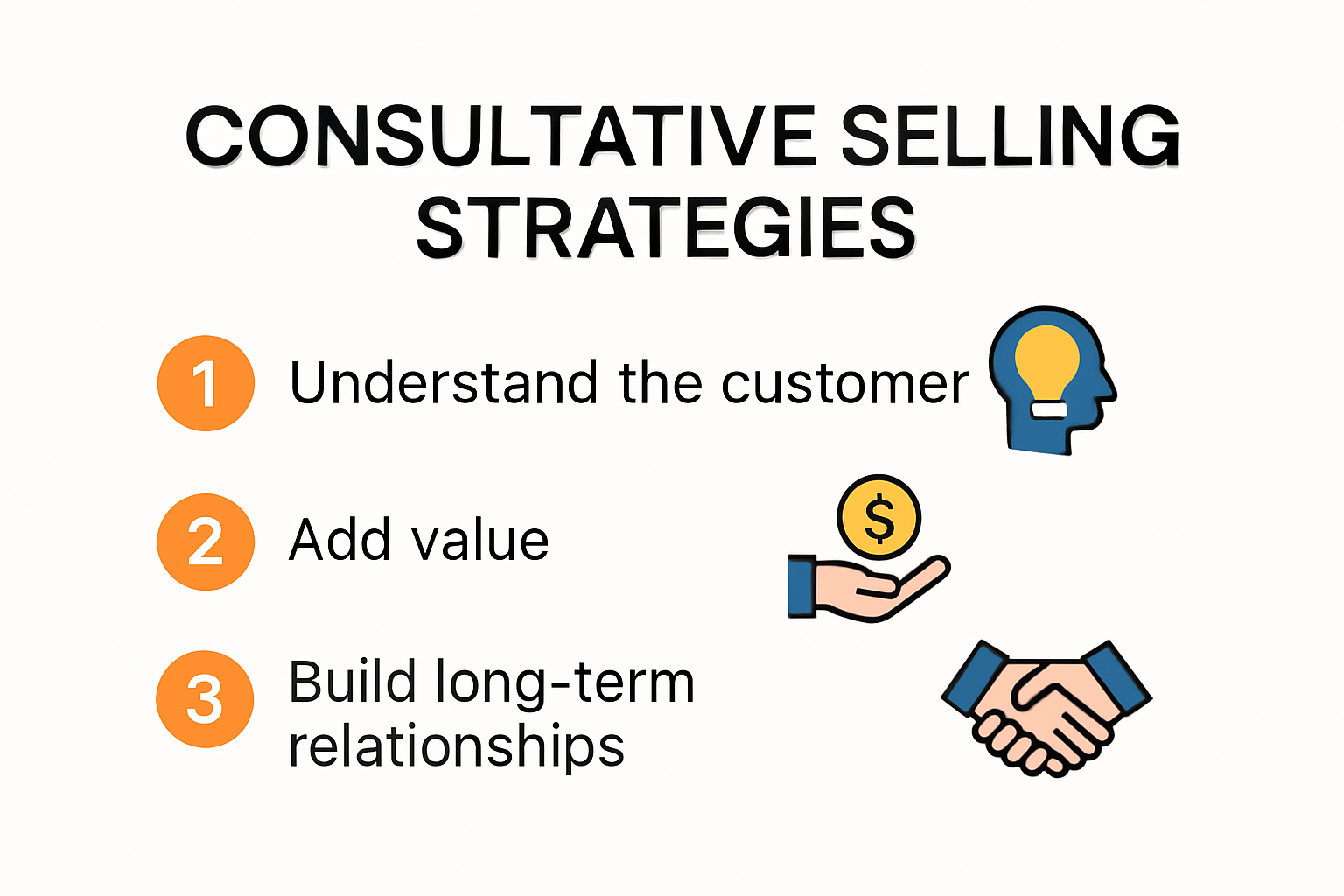
Consultative Engagement Frameworks
[Analysis from SPOTIO](https://spotio.com/blog/sales-statistics/) highlights a critical insight: nearly 70% of the B2B buyer’s journey is completed before a customer contacts a sales representative. This fundamental shift requires sales teams to reimagine their engagement strategies. The focus must move from transactional interactions to becoming trusted strategic advisors who provide genuine value throughout the customer’s research and decision-making process.
Effective consultative strategies involve:
- Developing deep industry expertise
- Creating content that supports the customer’s self-directed research
- Implementing personalized communication approaches
Technological Integration and Automation
[Trend research](https://www.superoffice.com/blog/sales-trends-2025/) indicates that sales leaders must embrace AI, automation, and adaptive technologies to remain competitive. The goal is not to replace human interaction but to enhance sales professionals’ capabilities by eliminating administrative burdens and providing intelligent insights.
Critical technological implementation strategies include:
- Intelligent CRM systems with advanced predictive capabilities

- Automated lead scoring and prioritization mechanisms
- AI-powered communication and follow-up tools
Successful high-impact sales strategies represent a holistic approach that balances technological sophistication with genuine human connection. Leaders who can seamlessly integrate data-driven insights, consultative methodologies, and cutting-edge technologies will create sales ecosystems that are not just effective, but transformative. The future of sales leadership lies in creating adaptive, intelligent systems that understand and anticipate customer needs while empowering sales professionals to deliver exceptional value.
Boost Your Sales Team Performance
Boosting sales team performance requires a multifaceted approach that goes beyond traditional motivation techniques. Modern sales leaders must create comprehensive ecosystems that combine technological innovation, continuous learning, and strategic cultural development to maximize team potential.
Strategic Talent Development
[Research from Selling Power](https://www.sellingpower.com/blog/three-key-factors-for-strong-sales-performance-in-2025) emphasizes that success in 2025 hinges on creating personalized buyer experiences supported by high-quality data and technology. This demands a radical reimagining of talent development strategies.
Effective talent development approaches include:
- Continuous Skills Training: Implementing adaptive learning programs that evolve with market demands
- Personalized Coaching: Developing individual development plans tailored to each sales professional’s strengths and growth areas
- Cross-Functional Skill Building: Encouraging skills that transcend traditional sales roles
Technology-Enabled Performance Optimization
[Analysis from the Beaird Group](https://www.beairdgroup.com/post/global-sales-excellence-preparing-your-team-for-2025-and-beyond) reveals that leveraging technology as a true team member can dramatically streamline sales processes. The goal is not to replace human capabilities but to augment and amplify them.
Key technological performance enhancement strategies include:
- Implementing advanced performance tracking systems
- Using AI-driven coaching and feedback mechanisms
- Creating intelligent workflow automation to reduce administrative burden
Cultural Excellence and Motivation
[Research from UCFS](https://www.ucfs.net/how-to-ensure-successful-sales-performance/) highlights that building a positive company culture from the top down is fundamental to sustained sales success. High-performing teams are not just technically skilled but emotionally engaged and intrinsically motivated.
Cultural performance boosting techniques involve:
- Establishing transparent, merit-based recognition systems
- Creating collaborative team environments that celebrate collective and individual achievements
- Developing meaningful connection points that go beyond traditional sales metrics
Bosting sales team performance is a holistic endeavor that requires leaders to think beyond conventional boundaries. By integrating sophisticated technological tools, commitment to continuous learning, and a strong motivational culture, sales leaders can create dynamic teams that are not just meeting targets but consistently exceeding expectations. The most successful organizations will be those that view their sales teams as living, adaptive ecosystems capable of rapid transformation and sustained high performance.
Future-Proofing Leadership Strategies
Future-proofing leadership strategies requires a proactive, adaptive approach that anticipates and prepares for emerging challenges in an increasingly complex business landscape. Sales leaders must develop comprehensive frameworks that enable organizational resilience, technological adaptability, and continuous learning.
Digital Transformation and Adaptive Capabilities
[Research from Arthur J. Gallagher](https://www.ajg.com/ca/news-and-insights/the-future-of-selling-maximizing-your-readiness-for-2025-and-beyond/) emphasizes the critical importance of developing digital dexterity within sales teams. This goes beyond mere technological proficiency and involves creating a culture of continuous learning and collaborative experimentation.
Key strategies for digital transformation include:
- Continuous Skills Evolution: Implementing ongoing training programs that keep pace with technological change
- Experimental Learning Culture: Encouraging team members to explore and integrate emerging technologies
- Adaptive Technology Integration: Developing flexible technological infrastructure that can quickly respond to market shifts
Leadership Pipeline and Organizational Resilience
[The Global Leadership Forecast 2025](https://www.ddiworld.com/research/global-leadership-forecast-2025) highlights significant challenges around leadership bench strength and organizational trust. Future-proofing requires a strategic approach to developing leadership talent and creating robust succession planning mechanisms.
Critical components of building leadership resilience involve:
- Identifying and nurturing high-potential talent across organizational levels
- Creating mentorship and cross-functional development programs
- Establishing transparent leadership progression pathways
Strategic Adaptability and Innovation
Future-proofing is not about predicting exact outcomes but developing organizational capabilities that can flexibly respond to unpredictable challenges. This requires leaders to cultivate a mindset of continuous innovation and strategic agility.
Strategies for maintaining strategic adaptability include:
- Developing scenario planning capabilities
- Creating cross-functional collaboration mechanisms
- Implementing agile decision-making frameworks
Successful future-proofing transcends traditional strategic planning. It demands a holistic approach that combines technological sophistication, human-centered leadership development, and an organizational culture of continuous learning and adaptation. The most resilient organizations will be those that view change not as a threat, but as an opportunity for growth and innovation.
Leaders who can create flexible, learning-oriented ecosystems will position their teams to not just survive but thrive in an increasingly complex and dynamic business environment. The future belongs to those who can transform uncertainty into strategic advantage.
Frequently Asked Questions
What are the essential sales strategies for leaders in 2025?
Emphasizing strategic technological integration, developing psychological intelligence, adopting a consultative selling approach, and fostering a culture of continuous learning are critical sales strategies for leaders in 2025.
How can sales leaders integrate technology effectively?
Sales leaders should leverage advanced CRM systems, utilize data analytics for insight generation, and adopt AI-driven tools to enhance team capabilities while focusing on relationship-building activities.
Why is psychological intelligence important in sales leadership?
Psychological intelligence helps sales leaders understand and motivate diverse team members, fostering resilience and adaptability in complex environments, which is essential for achieving sales success.
What role does a consultative selling mindset play in modern sales strategies?
A consultative selling mindset transforms sales interactions from transactional exchanges to meaningful partnerships, enabling teams to deliver greater value and become trusted advisors for clients.
Elevate Your Sales Leadership Today!
In an era where strategic technological integration and psychological intelligence are paramount for sales success, are you fully prepared to empower your team to thrive? As highlighted in Essential Sales Strategies for Leaders in 2025, cultivating emotional intelligence and adopting a consultative approach are not just ideal traits—they’re essential for navigating the complexities of today’s sales environment.

Don’t let your organization fall behind. At Peuneo, we specialize in skills development and training programs tailored to equip your sales leaders with the tools they need to excel in this transformative landscape. Our accredited courses are designed to foster both the technological competencies and adaptive emotional intelligence necessary for modern sales leadership. Act NOW to ensure your team is not just responding to changes but leading the charge! Visit https://peuneo.co.za and explore our training options today—your future leaders will thank you!