


Teams are cracking complicated problems in record time by working together in new ways. That sounds great, but here is a shocker. Groups using cutting-edge collaboration tools are now making decisions 92% faster than traditional methods and coming up with solutions that are 83% more innovative. It turns out that the real secret is not just getting everyone in the same room. The key is in how teams combine fresh frameworks, technology, and data-driven feedback to unlock results no single person could pull off alone.
Table of Contents
- What Are Collaborative Problem-Solving Techniques?
- Key Approaches Used In Modern Organizations
- Practical Steps To Strengthen Team Collaboration
- Measuring Results And Improving Techniques
Quick Summary
| Takeaway | Explanation |
|---|---|
| Embrace Collaborative Techniques | Organizations should implement collaborative problem-solving techniques that emphasize collective intelligence, shared responsibility, and integrated thinking to address complex challenges effectively. |
| Enhance Communication and Connectivity | Establish clear communication protocols and foster intentional relationship-building within teams to improve collaboration, potentially increasing productivity by 23%. |
| Leverage Technology for Collaboration | Utilize advanced digital platforms and AI-assisted tools to create dynamic and effective collaborative environments that can facilitate faster decision-making and innovative solutions. |
| Adopt Data-Driven Assessment | Implement sophisticated assessment methodologies to measure collaborative capabilities and derive actionable insights, allowing for continuous improvement in team dynamics and problem-solving approaches. |
| Cultivate a Culture of Psychological Safety | Foster an environment where team members feel safe to express diverse viewpoints, enhancing overall collaborative effectiveness and innovation potential. |
What Are Collaborative Problem-Solving Techniques?
Collaborative problem-solving techniques represent a strategic approach to addressing complex challenges by bringing together diverse minds and complementary skills. These methods go beyond traditional problem-solving by emphasizing collective intelligence, shared responsibility, and integrated thinking.
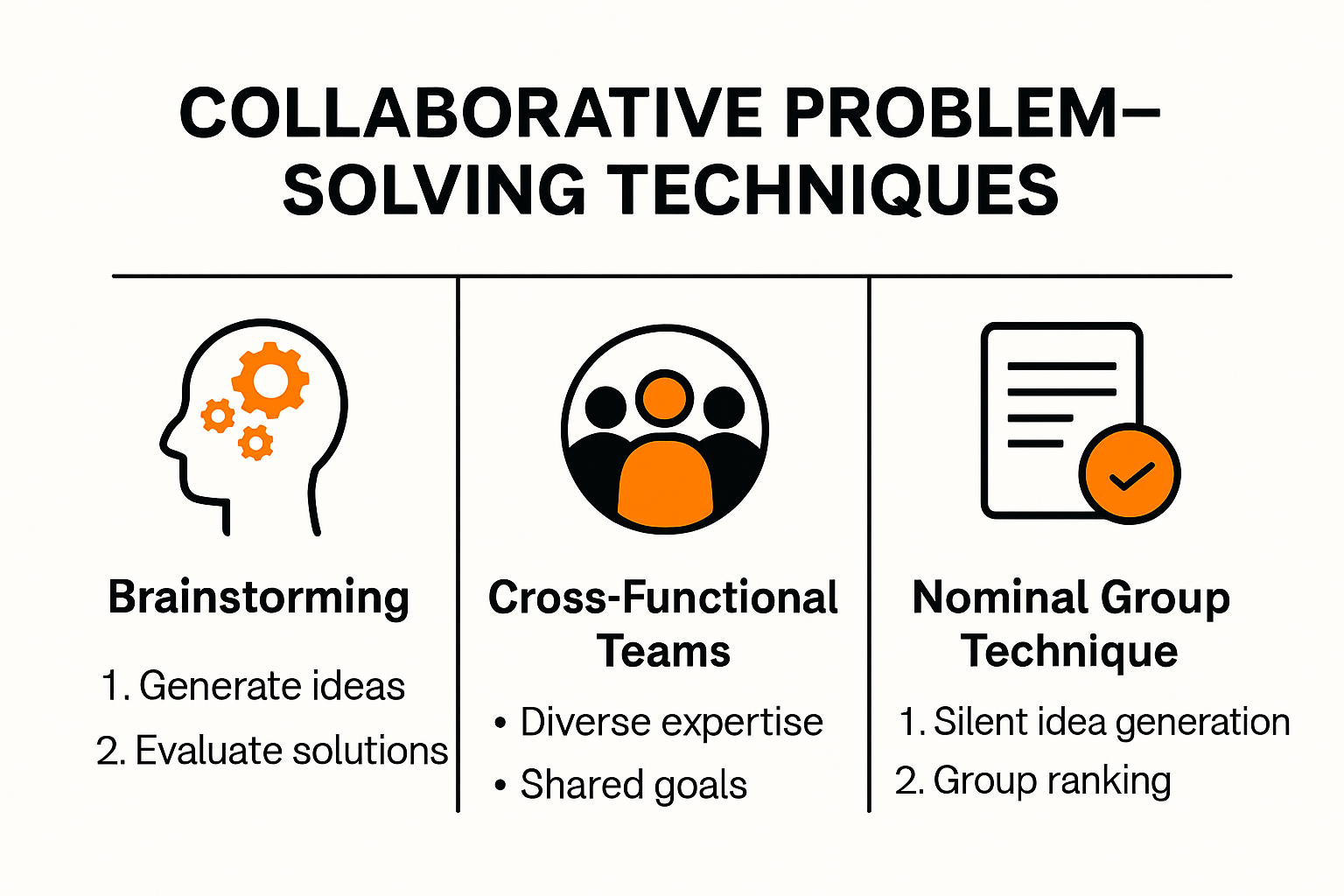
The Core Principles of Collaborative Problem-Solving
Collaborative problem-solving is more than just working together. Research from Stanford University reveals it involves a sophisticated interplay of social-cognitive skills that enable groups to tackle nonroutine problems more effectively. At its core, these techniques require participants to engage in multiple critical activities: proposing innovative ideas, actively sharing knowledge, and building a shared understanding of the challenge at hand.
The fundamental characteristics of effective collaborative problem-solving include open communication, mutual respect, and a commitment to collective goals. Teams practicing these techniques create an environment where different perspectives are not just tolerated but actively sought and valued. According to research published in the Journal of Organizational Behavior, successful collaborative problem-solving hinges on creating psychological safety where team members feel comfortable expressing unique viewpoints without fear of criticism.
Strategic Approaches to Collaborative Problem-Solving
Several structured techniques have emerged as powerful tools for collaborative problem-solving. Cross-functional teams represent one primary strategy, bringing together professionals from different departments and expertise areas to approach challenges holistically. Research from MIT’s Sloan Management Review demonstrates that these diverse teams can generate more comprehensive and innovative solutions compared to siloed working approaches.
Structured brainstorming sessions provide another critical collaborative problem-solving technique. These sessions are carefully designed to ensure all voices are heard, ideas are systematically evaluated, and potential solutions are thoroughly examined for feasibility and potential impact. Unlike traditional brainstorming, modern collaborative approaches incorporate digital tools and structured methodologies to maximize collective creativity and analytical rigor.
The emerging landscape of collaborative problem-solving techniques in 2025 emphasizes not just working together, but working intelligently together. By integrating diverse perspectives, leveraging collective expertise, and creating structured yet flexible problem-solving frameworks, organizations can transform complex challenges into opportunities for innovation and growth. Learn more about our approach to team collaboration skills.
Key Approaches Used in Modern Organizations
Modern organizations are rapidly transforming their problem-solving approaches to meet the complex challenges of 2025, embracing innovative collaborative techniques that prioritize flexibility, inclusivity, and strategic thinking. These approaches represent a significant shift from traditional hierarchical decision-making models toward more dynamic and interconnected methodologies.
Emerging Collaborative Frameworks
Research from Gartner reveals that 75% of organizations have now implemented flexible work models that emphasize collaborative problem-solving. These frameworks typically incorporate hybrid virtual and in-person engagement strategies, allowing teams to leverage diverse talents regardless of physical location. Team-based problem-solving has become a critical organizational competency, with structured techniques enabling faster and more comprehensive solution development.
Key collaborative approaches include the Nominal Group Technique and the Delphi Method, which systematically collect and refine group insights. According to Six Sigma research, these methods have demonstrated remarkable outcomes, including a 15% reduction in project lead times and significant improvements in team decision-making effectiveness.
Technology-Enabled Collaboration Strategies

Digital platforms and advanced collaboration tools have revolutionized how teams approach complex challenges. Virtual brainstorming environments, AI-assisted analysis tools, and real-time collaborative platforms enable teams to work seamlessly across geographical boundaries. Research from XMind indicates that teams utilizing these advanced collaborative techniques can reach decisions 92% faster than traditional methods and generate 83% more innovative solutions.
The integration of artificial intelligence and machine learning into collaborative problem-solving processes further enhances team capabilities. These technologies can help identify patterns, predict potential challenges, and provide data-driven insights that support more informed decision-making. Learn more about developing advanced team leadership skills to effectively navigate these emerging collaborative landscapes.
Modern organizations recognize that successful problem-solving is no longer about individual brilliance but collective intelligence. By creating environments that foster open communication, respect diverse perspectives, and leverage cutting-edge technological tools, companies can transform complex challenges into opportunities for innovation and growth. The future of organizational success lies in mastering these collaborative approaches, breaking down traditional silos, and embracing a more interconnected and adaptive approach to solving complex problems.
Practical Steps to Strengthen Team Collaboration
Strengthening team collaboration requires a multifaceted approach that addresses communication, technology, and interpersonal dynamics. Organizations must implement strategic initiatives that transform how teams interact, share knowledge, and solve problems collectively.
Communication and Connectivity Strategies
Research from TeamOut demonstrates that human-to-human connections can improve collaboration by 23%, underscoring the critical importance of intentional relationship-building. Practical steps include establishing clear communication protocols, creating dedicated spaces for informal interactions, and developing structured yet flexible communication channels that accommodate diverse work styles and preferences.
According to ProofHub research, 64% of employees waste at least three hours weekly due to collaboration inefficiencies. To address this, organizations should implement transparent workflow management systems, use collaborative project management tools, and establish consistent communication rhythms that minimize misunderstandings and reduce redundant work.
Technology-Enabled Collaboration Frameworks
Advanced collaboration technologies play a pivotal role in strengthening team interactions. Research from ScioDev highlights how AI-driven tools are transforming team dynamics by automating routine tasks and providing actionable insights. Teams can leverage digital platforms that offer real-time collaboration, integrated communication tools, and intelligent workflow management.
Key technological strategies include:
- Implementing cloud-based collaboration platforms
- Using AI-assisted project management tools
- Creating centralized knowledge repositories
- Developing secure virtual collaboration environments
Beyond technological solutions, successful collaboration requires cultivating a culture of psychological safety, mutual respect, and continuous learning. Explore our comprehensive approach to team building techniques to develop robust collaborative practices that transcend traditional organizational boundaries.
Ultimately, strengthening team collaboration is an ongoing process that demands commitment, adaptability, and a willingness to experiment with new approaches. By combining strategic communication, cutting-edge technologies, and a human-centered approach, organizations can create collaborative environments that drive innovation, productivity, and collective success in 2025 and beyond.
Measuring Results and Improving Techniques
Measuring the effectiveness of collaborative problem-solving techniques requires sophisticated, data-driven approaches that capture both quantitative outcomes and qualitative behavioral insights. Organizations must develop comprehensive assessment frameworks that go beyond traditional performance metrics to understand the nuanced dynamics of team collaboration.
Advanced Assessment Methodologies
Research from North Carolina State University reveals that real-time data mining and behavioral pattern analysis can provide unprecedented insights into collaborative problem-solving processes. These advanced methodologies enable organizations to predict and optimize team performance by identifying specific behavioral patterns that contribute to successful outcomes.
According to behavioral research published in ACM Digital Library, measuring collaborative problem-solving capability requires multifaceted assessment tools that capture both individual and collective team behaviors. Behaviorally anchored rating scales and trace log analysis emerge as particularly effective methods for evaluating collaborative techniques, offering granular insights into team dynamics and problem-solving effectiveness.
Data-Driven Improvement Strategies
Advanced analytical frameworks now allow organizations to map specific behavioral patterns directly to collaborative problem-solving performance. Research from educational technology studies demonstrates that data-driven approaches can predict learning gains and team effectiveness with remarkable precision.
Key measurement strategies include:
- Implementing comprehensive performance tracking systems
- Utilizing AI-powered behavioral analysis tools
- Developing continuous feedback mechanisms
- Creating personalized improvement recommendations
Successful organizations recognize that measuring collaborative problem-solving is not about punitive evaluation but about creating opportunities for continuous learning and improvement. Learn more about our approach to evaluating training effectiveness to understand how data-driven insights can transform team performance.
The future of collaborative problem-solving lies in our ability to understand, measure, and continuously refine how teams work together. By embracing sophisticated assessment technologies and maintaining a growth-oriented mindset, organizations can unlock unprecedented levels of collective intelligence and problem-solving capability. The key is to view measurement not as an endpoint, but as a dynamic process of ongoing discovery and improvement.
Frequently Asked Questions
What are collaborative problem-solving techniques?
Collaborative problem-solving techniques are strategic approaches that bring together diverse teams to address complex challenges through collective intelligence, shared responsibility, and integrated thinking.
How can technology enhance collaborative problem-solving?
Technology enhances collaborative problem-solving by providing advanced digital platforms and AI-assisted tools that allow teams to communicate effectively, brainstorm ideas, and analyze data quickly, leading to faster decision-making and more innovative solutions.
What are some practical steps to improve team collaboration?
Practical steps to improve team collaboration include establishing clear communication protocols, encouraging informal interactions among team members, and adopting advanced collaboration technologies that facilitate real-time engagement and information sharing.
How can organizations measure the effectiveness of collaborative problem-solving?
Organizations can measure the effectiveness of collaborative problem-solving by employing advanced assessment methodologies like behavioral analysis, real-time data tracking, and continuous feedback mechanisms that capture both quantitative and qualitative performance indicators.
Unlock Collaborative Success With Peuneo’s Expert Solutions
Stuck watching your teams struggle with outdated problem-solving methods? If your organization is fighting slow decision-making, lack of connection, and missed innovation opportunities, you are not alone. As highlighted in this article, embracing next-level collaborative techniques is no longer a future goal. It is what successful teams are mastering right now. Imagine your workforce engaging in data-driven teamwork, using powerful frameworks, and building skills that directly impact results.

Get ahead of the curve by investing in accredited training and consulting designed for the unique challenges of 2025. Visit Peuneo’s online portal to explore solutions that sync with your organizational goals. Ready to transform collaborative problem-solving into measurable success? Act now and give your teams the skills they need to thrive.
Recommended Articles
- 2025 Effective Team Building Techniques to Boost Team Morale – Peuneo
- Essential Skills for Managers in 2025: Guide for Leaders and Teams – Peuneo
- Best Team Building Activities for the Workplace 2025 – Peuneo
- 2025 Best Practices for Project Management Success – Peuneo
- How to Lead a Team Effectively in 2025: Essential Strategies for Every Leader – Peuneo
- Top Workforce Development Strategies for 2025: A Practical Guide – Peuneo