


Choosing a training provider can shape the skill set and productivity of your whole organization. Think it’s just about comparing course catalogs or price tags? Not quite. Training that is tailored to your company’s culture and needs can actually boost learning retention by over 60 percent. Yet most companies still stick to shallow checklists. The real secret is evaluating providers with proven, multidimensional frameworks that put measurable results and fit above everything else. Here is how you find one that will actually move the needle.
Table of Contents
- Key Criteria For Choosing Training Providers
- Evaluating Course Content And Instructors
- Assessing Quality, Outcomes, And Support
- Tips For Comparing Providers And Making A Decision
Quick Summary
| Takeaway | Explanation |
|---|---|
| Organizational Alignment is Crucial | Select training providers who understand your industry, culture, and learning objectives to ensure effective training outcomes. |
| Utilize a Comprehensive Evaluation Framework | Adopt models like CIRO to assess training providers across context, input, reaction, and outcome dimensions for thorough evaluation. |
| Assess Course Content and Instructor Quality | Evaluate the quality of course materials and the expertise of instructors using tools like Kirkpatrick’s model for effective learning measurement. |
| Focus on Measurable Outcomes and Support | Implement strategies to track performance improvements and ensure that ongoing support is available post-training to foster continuous learning. |
| Conduct Detailed Comparative Analysis | When choosing a provider, consider their flexibility, customization capabilities, and innovation in learning approaches using both quantitative and qualitative metrics. |
Key Criteria for Choosing Training Providers
Selecting the right training provider is a strategic decision that directly impacts your organization’s skill development and performance. When evaluating potential training partners, you need a comprehensive approach that goes beyond surface level assessments.
Organizational Alignment and Contextual Understanding
The most effective training providers understand that one size does not fit all. Your chosen provider must demonstrate a deep comprehension of your specific industry, organizational culture, and unique learning objectives. Learn more about program evaluation strategies to ensure precise alignment.
According to research from Exemplar Global, certification and industry recognition are critical indicators of a training provider’s credibility. Look for providers who:
- Demonstrate Industry Experience: Providers with proven track records in your specific sector
- Offer Customizable Curriculum: Training programs that can be tailored to your organizational needs
- Possess Relevant Certifications: Credentials from recognized professional bodies
Comprehensive Evaluation Framework
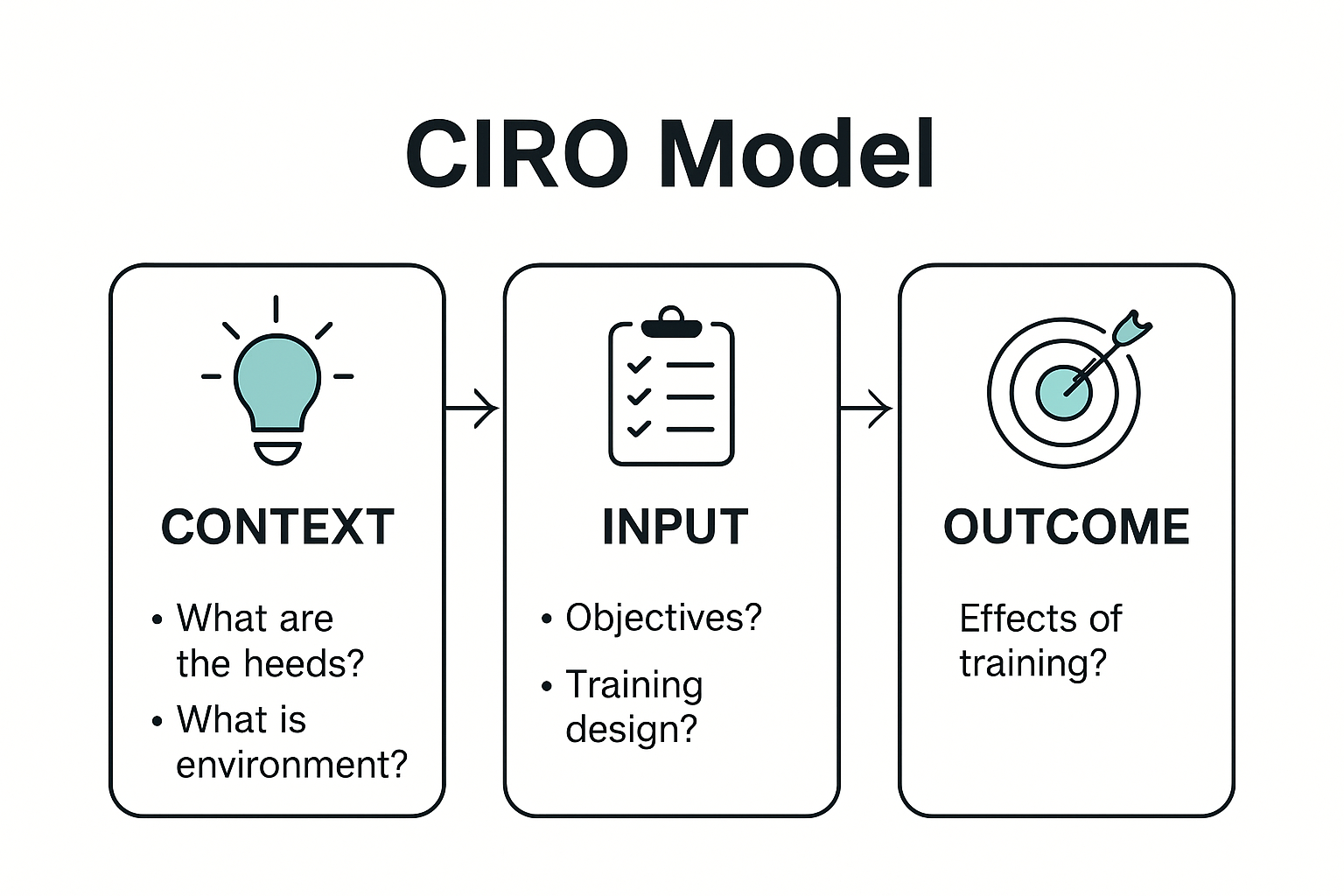
The CIRO model provides a robust framework for assessing training providers. According to industry experts, this approach evaluates providers across four critical dimensions:
- Context Evaluation: How well the training aligns with organizational goals
- Input Evaluation: Quality of training materials, trainer qualifications, and learning resources
- Reaction Evaluation: Participant satisfaction and immediate learning engagement
- Outcome Evaluation: Measurable improvements in job performance and skill application
When conducting your assessment, prioritize providers who can articulate clear methodologies for measuring training effectiveness. This means going beyond traditional metrics and focusing on tangible skill development and performance enhancement.
Furthermore, research from Edstellar emphasizes the importance of considering global and regional expertise. A training provider should not only understand theoretical concepts but also demonstrate practical application across different organizational contexts.
Key considerations in your evaluation should include:
- Trainer Expertise: Instructors with real world experience
- Learning Technology: Modern, interactive training platforms
- Flexible Delivery Models: Options for in person, online, and hybrid training
- Post Training Support: Ongoing resources and follow up mechanisms
Ultimately, choosing a training provider is about finding a strategic partner who can transform learning into meaningful organizational growth. By applying a systematic, multidimensional evaluation approach, you can select a provider that truly understands your unique developmental needs.
Evaluating Course Content and Instructors
The effectiveness of training programs hinges critically on two fundamental elements: the quality of course content and the expertise of instructors. A comprehensive evaluation requires a nuanced approach that goes beyond surface level assessments.
Content Quality Assessment Strategies
Evaluating course content demands a multifaceted methodology. Explore our comprehensive program evaluation techniques to understand the depth of content assessment. According to the Kaufman’s Five Levels of Evaluation, effective content evaluation encompasses multiple dimensions:
- Input Evaluation: Analyzing resources, design quality, and alignment with learning objectives
- Process Evaluation: Measuring learner engagement and interaction with course materials
- Acquisition Evaluation: Assessing knowledge and skill transfer capabilities
The Kirkpatrick Model provides additional insights, recommending a four-tiered approach to content assessment:
- Reaction Level: Gathering immediate learner feedback
- Learning Level: Measuring knowledge gained through pre and post assessments
- Behavior Level: Tracking application of learned skills in real work environments
- Results Level: Evaluating broader organizational impact
Instructor Expertise Evaluation

Research from Arlo highlights the critical importance of comprehensive data collection methods for assessing instructor quality. Key evaluation criteria should include:
- Professional Credentials: Academic qualifications and industry certifications
- Practical Experience: Demonstrated real world expertise in the subject matter
- Teaching Methodology: Ability to communicate complex concepts effectively
- Learner Engagement: Capacity to create interactive and dynamic learning environments
Instructors should not merely be subject matter experts but also skilled facilitators who can:
- Adapt teaching approaches to different learning styles
- Provide practical, contextual examples
- Offer personalized guidance and support
- Demonstrate deep understanding beyond theoretical knowledge
Utilizing advanced analytics and feedback mechanisms allows organizations to develop a holistic view of instructor performance. This includes collecting:
- Participant satisfaction surveys
- Performance tracking data
- Skill application metrics
- Long term learning retention assessments
The ultimate goal is to select training providers whose course content and instructors can transform theoretical knowledge into practical, actionable skills that drive meaningful organizational growth. By implementing rigorous evaluation frameworks, you can ensure that your training investments yield substantial returns in professional development and performance enhancement.
Assessing Quality, Outcomes, and Support
Beyond initial training delivery, organizations must adopt a comprehensive approach to evaluate the true value and effectiveness of training providers. This assessment goes far beyond surface level metrics, requiring a strategic and holistic examination of quality, measurable outcomes, and ongoing support mechanisms.
Comprehensive Quality Assessment Framework
Explore advanced skills assessment techniques to understand the nuanced evaluation of training quality. According to Kaufman’s Five Levels of Evaluation, organizations should systematically assess training providers across multiple dimensions:
- Input Quality: Evaluating resources, design sophistication, and learning infrastructure
- Process Quality: Measuring learner engagement and interaction effectiveness
- Acquisition Quality: Analyzing knowledge and skill transfer capabilities
- Application Quality: Tracking behavioral changes and practical skill implementation
- Organizational Impact: Assessing broader business and societal benefits
Outcome Measurement and Performance Tracking
Research from Edstellar emphasizes the importance of innovative learning methods in achieving meaningful outcomes. Effective outcome assessment should include:
- Quantitative Performance Metrics
- Pre and post training skill assessments
- Productivity improvement tracking
- Error reduction measurements
- Skill proficiency level comparisons
- Qualitative Performance Indicators
- Participant testimonials
- Manager feedback
- Long term behavioral observations
- Career progression data
Ongoing Support and Continuous Improvement
According to industry analytics research, comprehensive support goes beyond initial training delivery. Key support elements include:
- Post Training Resources: Supplementary learning materials
- Mentorship Programs: Continued guidance and skill refinement
- Performance Coaching: Personalized development strategies
- Learning Community Access: Peer networking and knowledge sharing platforms
Utilizing advanced analytics and multi dimensional evaluation frameworks enables organizations to transform training from a transactional event into a strategic development initiative. By rigorously assessing quality, tracking tangible outcomes, and ensuring robust ongoing support, businesses can maximize their training investments and drive sustainable organizational growth.
The ultimate goal is not just skill acquisition but creating a dynamic learning ecosystem that continuously adapts to evolving professional requirements and individual development needs.
Tips for Comparing Providers and Making a Decision
Selecting the right training provider requires a strategic and systematic approach that goes beyond surface level comparisons. Organizations must develop a comprehensive decision making framework that carefully evaluates multiple critical factors.
Comprehensive Comparative Analysis
Learn about advanced provider selection strategies to make informed decisions. Research from Edstellar highlights the importance of evaluating providers across several key dimensions:
- Industry Relevance: Assess providers with demonstrated expertise in your specific sector
- Customization Capabilities: Evaluate ability to tailor training to organizational needs
- Delivery Flexibility: Examine multiple learning format options
- Innovation in Learning Approaches: Review methodology and technological integration
Evaluation Metrics and Decision Frameworks
According to Docebo’s learning effectiveness research, organizations should develop a structured decision making process that includes:
- Quantitative Comparison Criteria
- Cost per training participant
- Historical performance metrics
- Certification and accreditation levels
- Technology and resource investment
- Qualitative Assessment Factors
- Instructor expertise
- Client testimonials
- Cultural alignment
- Demonstrated innovation
Final Selection Strategy
Ultimate provider selection should involve a multi stage approach:
- Initial Screening: Eliminate providers not meeting basic requirements
- Detailed Evaluation: Conduct in depth assessments of shortlisted providers
- Pilot Testing: Consider small scale trial programs
- Comprehensive Review: Analyze comprehensive performance data
Key recommendation factors include:
- Proven Track Record: Verified success in similar organizational contexts
- Scalability: Ability to grow and adapt with organizational needs
- Continuous Improvement: Demonstrated commitment to updating training methodologies
- Support Ecosystem: Robust post training resources and follow up mechanisms
Making the right training provider selection is not about finding a perfect match but identifying a strategic learning partner who can evolve alongside your organizational objectives. By implementing a rigorous, multidimensional evaluation approach, you can transform training from a standard procurement process into a meaningful strategic investment in human capital development.
Frequently Asked Questions
What criteria should I consider when choosing a training provider?
When selecting a training provider, consider factors like organizational alignment, course content quality, instructor expertise, post-training support, and measurable outcomes. A comprehensive evaluation framework, like the CIRO model, can guide your assessment.
How can I assess the quality of course content and instructors?
To evaluate course content, use strategies like input, process, and acquisition evaluation. For instructors, consider their professional credentials, practical experience, teaching methodology, and engagement techniques to ensure they can effectively facilitate learning.
What metrics can help me measure the outcomes of training?
To measure training outcomes, utilize quantitative metrics such as pre and post-training assessments, productivity improvements, and skill proficiency levels. Qualitative indicators include participant testimonials and manager feedback on behavioral changes.
How do I compare different training providers?
To compare training providers, conduct a comprehensive analysis focusing on their industry relevance, customization capabilities, delivery flexibility, and innovative learning approaches. Develop a structured evaluation process that includes both quantitative and qualitative criteria.
Take the Next Step: Transform Your Training Evaluation with Peuneo
If you are tired of ticking boxes with generic training vendors and want a partner who truly understands the value of strategic skills development, you are not alone. The article highlighted real challenges like making sense of frameworks such as CIRO, measuring organizational alignment, and getting training that actually moves the needle. Peuneo takes these challenges head-on with a local focus, deep industry knowledge, and a commitment to measurable results.

Experience training providers who do more than talk about outcomes. Let Peuneo show you how accredited, customizable programs and a robust online learning portal can fuel your growth. Visit Peuneo’s website now to explore solutions tailored for your sector. If you want your next training investment to deliver real returns, connect with Peuneo and unlock support built around your organizational needs. Invest in results-driven training and consulting today—your team deserves it.
Recommended Articles
- Evaluate Training Programs: A Guide to Measuring Success – Peuneo
- Training Program Evaluation: Measuring Success in 2025 – Peuneo
- How to Create a Training Culture That Drives Results in 2025 – Peuneo
- Aligning Training with Business Goals: 2025 Guide – Peuneo
- Measuring Employee Training Program Effectiveness – Peuneo
- How to Conduct Effective Training: 2025 Actionable Tips – Peuneo