


Training program evaluation is crucial for businesses aiming to maximize the effectiveness of their learning initiatives. It may surprise you to learn that organizations with strong evaluation processes are 3.5 times more likely to achieve significant performance improvements. Yet, many companies overlook this essential step, focusing solely on immediate results. The real game-changer lies in understanding how these evaluations can inform future training strategies and drive long-term growth.
Table of Contents
- What Is Training Program Evaluation
- Key Training Evaluation Models Explained
- Steps To Conduct Program Evaluation
- [Establishing Clear Evaluation Objectives](#establishing-clear-evaluation-obj ectives)
- Data Collection And Analysis Strategies
- Implementing Continuous Improvement Mechanisms
- Tips For Effective Training Evaluation
Quick Summary
| Takeaway | Explanation |
|---|---|
| Establish Clear Evaluation Objectives | Define specific, measurable goals aligned with organizational strategies to ensure relevant data collection and actionable insights. |
| Utilize Diverse Data Collection Methods | Combine quantitative assessments, qualitative feedback, and behavioral observations to capture a holistic view of training effectiveness, leading to nuanced understanding of outcomes. |
| Implement Continuous Improvement Mechanisms | Create structured feedback loops and regularly review evaluation findings to adapt training programs, ensuring they remain effective and aligned with evolving business needs. |
| Apply Established Evaluation Models | Leverage frameworks like the Kirkpatrick Model and the Phillips ROI Methodology to systematically assess training effectiveness and link initiatives to strategic business outcomes. |
What Is Training Program Evaluation?
Training program evaluation is a critical strategic process that systematically assesses the effectiveness, impact, and value of an organization’s training initiatives. It goes beyond simply measuring participant satisfaction, diving deep into understanding how training programs contribute to individual performance, skill development, and ultimately, organizational goals.
The Core Purpose of Training Evaluation
At its essence, training program evaluation is about measuring the return on investment (ROI) of learning and development efforts. Organizations invest significant resources in training, and evaluation provides a structured approach to understanding whether those investments translate into tangible outcomes. Research from the Association for Talent Development shows that companies with robust training evaluation processes are 3.5 times more likely to see meaningful performance improvements across their workforce.
The evaluation process involves a comprehensive analysis that examines multiple dimensions of a training program. This includes assessing participant reactions, measuring learning acquisition, understanding behavioral changes in the workplace, and evaluating the broader organizational impact. By collecting and analyzing data at each of these levels, organizations can gain insights into the true effectiveness of their training initiatives.
Key Components of Effective Training Program Evaluation
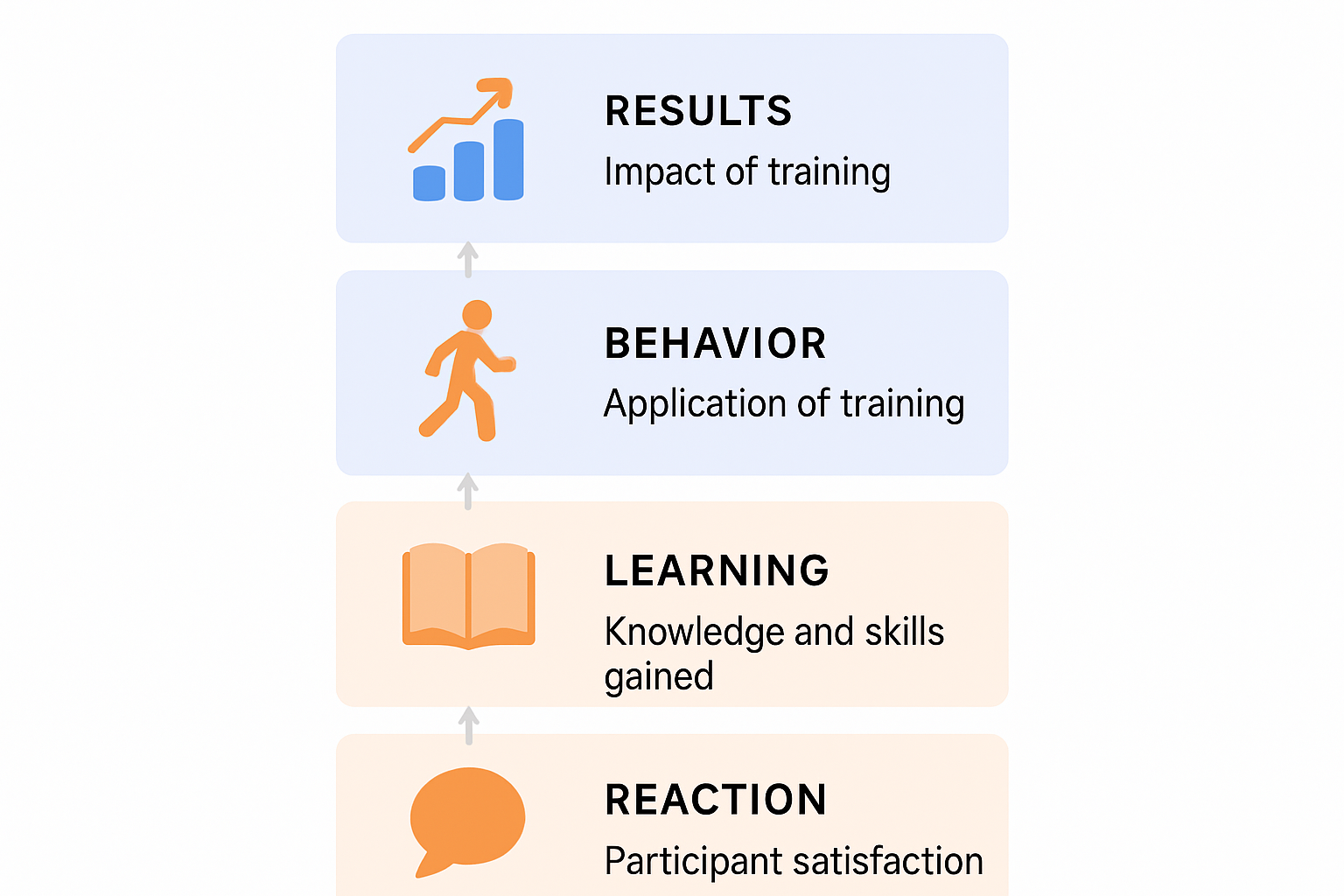
A comprehensive training program evaluation typically encompasses several critical components. According to the Kirkpatrick Model, a widely recognized framework in training assessment, evaluation should focus on four primary levels:
- Reaction: Measuring participants’ immediate response and satisfaction with the training
- Learning: Assessing the knowledge and skills acquired during the training
- Behavior: Evaluating how participants apply new skills in their work environment
- Results: Analyzing the broader organizational impact and business outcomes
By systematically examining these dimensions, organizations can transform training from a routine process into a strategic tool for continuous improvement. Effective evaluation helps identify strengths and weaknesses in training programs, provides insights for future curriculum design, and demonstrates the tangible value of learning and development investments.
Moreover, modern training program evaluation goes beyond traditional metrics. Research from SoPact emphasizes the importance of using both quantitative and qualitative methods to capture a holistic view of training effectiveness. This might include surveys, performance data, direct observations, and long-term tracking of individual and organizational performance metrics.
The ultimate goal of training program evaluation is not just to collect data, but to generate actionable insights. By understanding what works, what doesn’t, and why, organizations can continuously refine their training approaches, ensuring that learning and development efforts are aligned with strategic objectives and deliver meaningful value to both employees and the organization as a whole.
Key Training Evaluation Models Explained
Training evaluation models provide structured frameworks that enable organizations to systematically assess the effectiveness and impact of their learning and development initiatives. These models offer comprehensive approaches to measuring training outcomes beyond simple participant feedback, helping organizations understand the true value of their investment in employee development.
The Kirkpatrick Model: A Classic Approach to Training Evaluation
Developed by Donald Kirkpatrick in the 1950s, the Kirkpatrick Model remains the most widely used training evaluation framework globally. This model introduces a four-level approach that progressively examines training effectiveness:
- Reaction: Measures participants’ immediate emotional response and satisfaction with the training experience
- Learning: Assesses the knowledge and skills participants acquire during the training program
- Behavior: Evaluates how participants apply their new skills and knowledge in their actual work environment
- Results: Analyzes the broader organizational impact and business outcomes resulting from the training
The model’s strength lies in its holistic approach, which moves beyond surface-level assessments to provide a comprehensive understanding of training effectiveness. Research from Training Industry indicates that organizations using this model can more effectively link training initiatives to strategic business objectives.
The Phillips ROI Methodology: Expanding Evaluation Perspectives
Building upon the Kirkpatrick Model, Jack Phillips introduced the ROI Methodology as a more detailed approach to training evaluation. This model adds a crucial fifth level focused specifically on return on investment, providing a financial perspective to training assessment. Research from the ROI Institute demonstrates that this methodology allows organizations to quantify the monetary value of their training programs.
The Phillips model introduces several key innovations:
- A more rigorous approach to measuring behavioral changes
- Precise calculation of training program monetary value
- Isolation techniques to distinguish training impact from other organizational factors
- Comprehensive cost-benefit analysis
Contemporary Evaluation Models: Beyond Traditional Frameworks
Modern training evaluation continues to evolve, with newer models addressing the complexities of contemporary workplace learning. Research from Valamis highlights emerging approaches that incorporate technology, real-time feedback, and more nuanced measurement techniques.

Emergent models are characterized by their ability to:
- Integrate digital learning platforms
- Provide real-time performance tracking
- Incorporate predictive analytics
- Offer more granular insights into learning effectiveness
While traditional models provide valuable frameworks, organizations must adapt their evaluation approaches to match the dynamic nature of modern workplace learning. The most effective training program evaluations combine established methodological principles with innovative measurement techniques, ensuring a comprehensive understanding of learning outcomes and organizational impact.
Steps to Conduct Program Evaluation
Conducting a comprehensive training program evaluation requires a systematic and strategic approach that transforms data collection into meaningful insights. The process demands careful planning, precise execution, and a commitment to continuous improvement across organizational learning initiatives.
Establishing Clear Evaluation Objectives
Before beginning any evaluation, organizations must define specific, measurable goals that align with broader business strategies. Research from the Association for Talent Development emphasizes that well-defined objectives are critical for meaningful evaluation. This initial stage involves:
- Identifying specific performance gaps the training aims to address
- Determining key performance indicators (KPIs) relevant to the training
- Establishing baseline metrics before training implementation
- Aligning evaluation goals with organizational strategic objectives
Clear objectives provide a roadmap for the entire evaluation process, ensuring that data collection and analysis remain focused and purposeful. Without well-defined goals, organizations risk collecting irrelevant information that fails to provide actionable insights.
Data Collection And Analysis Strategies
Effective program evaluation requires a multi-method approach to data collection. Research from the ROI Institute suggests utilizing both quantitative and qualitative methods to capture a comprehensive view of training effectiveness. Key strategies include:
- Surveys and Questionnaires: Collecting immediate participant feedback and perceptions
- Performance Assessments: Measuring skill improvements and behavioral changes
- Direct Observations: Tracking on-the-job application of learned skills
- Business Impact Metrics: Analyzing broader organizational outcomes
The analysis phase involves systematically examining collected data to identify patterns, strengths, and areas for improvement. Advanced organizations leverage data analytics and machine learning techniques to uncover deeper insights that might not be apparent through traditional evaluation methods.
Implementing Continuous Improvement Mechanisms
Program evaluation is not a one-time event but a continuous process of refinement and optimization. Research from Valamis highlights the importance of creating feedback loops that enable ongoing learning and adaptation. This involves:
- Regularly reviewing evaluation findings
- Developing targeted improvement strategies
- Implementing incremental changes to training programs
- Tracking the impact of modifications over time
Successful organizations view program evaluation as a dynamic process that supports organizational learning and development. By creating structured mechanisms for continuous improvement, companies can ensure their training initiatives remain relevant, effective, and aligned with evolving business needs.
Ultimately, a robust program evaluation approach transforms training from a static event into a strategic tool for organizational growth. It requires commitment, sophisticated analytical approaches, and a willingness to embrace data-driven insights that can fundamentally reshape learning and development strategies.
Tips for Effective Training Evaluation
Effective training evaluation requires a strategic and nuanced approach that goes beyond traditional measurement techniques. Organizations must develop comprehensive strategies that capture the multifaceted nature of learning and development, ensuring that evaluation processes provide meaningful insights and drive continuous improvement.
Establishing Clear Measurement Frameworks
Research from the Society for Human Resource Management emphasizes the importance of creating robust measurement frameworks before implementing any training program. This involves:
- Defining specific, measurable learning objectives
- Identifying key performance indicators (KPIs) aligned with organizational goals
- Developing a comprehensive assessment strategy that covers multiple evaluation levels
- Creating baseline metrics for comparing pre and post-training performance
Successful organizations approach evaluation as a strategic process, not just a compliance exercise. By establishing clear frameworks, they can transform training data into actionable insights that drive meaningful organizational improvements.
Leveraging Multiple Data Collection Methods
Comprehensive training evaluation requires a multi-dimensional approach to data collection. Research from Kirkpatrick Partners recommends utilizing diverse methodologies to capture a holistic view of training effectiveness:
- Quantitative Assessments: Utilizing performance metrics, skill tests, and numerical data
- Qualitative Feedback: Collecting detailed participant experiences and perspectives
- Behavioral Observations: Tracking real-world application of learned skills
- Long-term Impact Analysis: Measuring sustained performance improvements
By combining multiple data collection methods, organizations can develop a more nuanced understanding of training effectiveness. This approach helps identify not just immediate learning outcomes, but also long-term behavioral and organizational impacts.
Creating a Culture of Continuous Improvement
Research from Deloitte highlights the importance of embedding evaluation as a continuous learning process rather than a one-time event. Effective training evaluation involves:
- Developing iterative feedback mechanisms
- Encouraging open communication about learning experiences
- Regularly updating training content based on evaluation insights
- Promoting a learning-oriented organizational culture
Successful organizations view training evaluation as a dynamic, ongoing process that supports continuous organizational development. By creating structured feedback loops and maintaining a commitment to improvement, companies can ensure their training programs remain responsive to changing business needs and employee development requirements.
Ultimately, effective training evaluation is about more than measuring performance—it’s about creating a strategic approach to learning that drives organizational growth, enhances employee capabilities, and supports long-term business objectives. By embracing comprehensive, data-driven evaluation strategies, organizations can transform training from a routine requirement into a powerful tool for innovation and competitive advantage.
Frequently Asked Questions
What is training program evaluation?
Training program evaluation is a systematic process that assesses the effectiveness, impact, and value of an organization’s training initiatives, focusing on how these programs contribute to skill development and business goals.
Why is training program evaluation important?
Training program evaluation is crucial as it helps organizations measure the return on investment (ROI) of their learning and development efforts, leading to performance improvements and aligning training with strategic objectives.
What are the key components of an effective training program evaluation?
Key components include measuring participant reactions, assessing learning acquisition, evaluating behavioral changes in the workplace, and analyzing broader organizational impacts using established evaluation models like the Kirkpatrick Model.
How can organizations implement continuous improvement in training evaluation?
Organizations can implement continuous improvement by creating structured feedback loops, regularly reviewing evaluation findings, developing targeted improvement strategies, and adapting training programs based on insights gained from evaluations.
Unlock Your Training Potential with Peuneo!
As highlighted in the article on training program evaluation, measuring the return on investment (ROI) of your training initiatives is more critical than ever. Organizations that prioritize evaluation are finding themselves 3.5 times more likely to see meaningful improvements. Are you ready to transform your training from a routine expenditure into a powerful growth tool?

At Peuneo, we are committed to providing a comprehensive skills development platform tailored to meet your unique needs. Whether you’re in search of accredited training, professional consulting, or state-of-the-art online courses, we have you covered! Let us help you define clear evaluation objectives for your training programs, leverage diverse data collection methods, and implement continuous improvement mechanisms designed to ensure your organization thrives in today’s competitive landscape.
Don’t wait! Discover how Peuneo can help you harness the true value of training. Visit us at https://peuneo.co.za and take the first step towards measurable success today!