


BBBEE ratings have become a major force in South Africa’s business scene, driving both compliance and growth strategies. Here is something that might surprise you. Companies with top BBBEE ratings enjoy up to a 20 percent increase in government contracts, putting them far ahead in the race for new business. Yet thinking of BBBEE as just a procurement shortcut misses the real story. The smartest companies now see these ratings as blueprints for transformation and meaningful talent development, setting themselves up for lasting success.
Table of Contents
- What Are BBBEE Ratings And Why They Matter
- How The BBBEE Scorecard Works In 2025
- Steps To Improve Your BBBEE Rating
- BBBEE Ratings Impact On Business Opportunities
Quick Summary
| Takeaway | Explanation |
|---|---|
| Understanding BBBEE Ratings as Strategic Tools | BBBEE ratings serve as a vital framework for economic transformation, measuring a company’s effectiveness in creating opportunities for historically disadvantaged individuals, and providing a competitive edge in securing government contracts. |
| Core Components of the BBBEE Scorecard | The BBBEE scorecard evaluates companies based on five key elements: ownership, management control, skills development, enterprise and supplier development, and socio-economic development, each contributing to the overall rating. |
| Steps to Improve BBBEE Rating | Companies can enhance their ratings through strategic ownership transformation, investing in skills development, and supporting black-owned enterprises, viewing these actions as opportunities for genuine economic transformation rather than mere compliance. |
| Impact on Business Opportunities | Higher BBBEE ratings significantly increase access to government contracts and employment opportunities, with Level 1 and Level 2 rated companies enjoying preferential treatment in procurement processes. |
| Importance of Genuine Commitment | Successful navigation of the BBBEE framework requires a holistic, genuine approach, where companies must integrate transformation into their core strategies to unlock significant competitive advantages and contribute positively to society. |
What Are BBBEE Ratings and Why They Matter
Broad-Based Black Economic Empowerment (BBBEE) ratings represent a critical framework for understanding economic transformation in South Africa. These ratings measure how effectively businesses contribute to creating inclusive economic opportunities for historically disadvantaged individuals.
Understanding the Core Concept
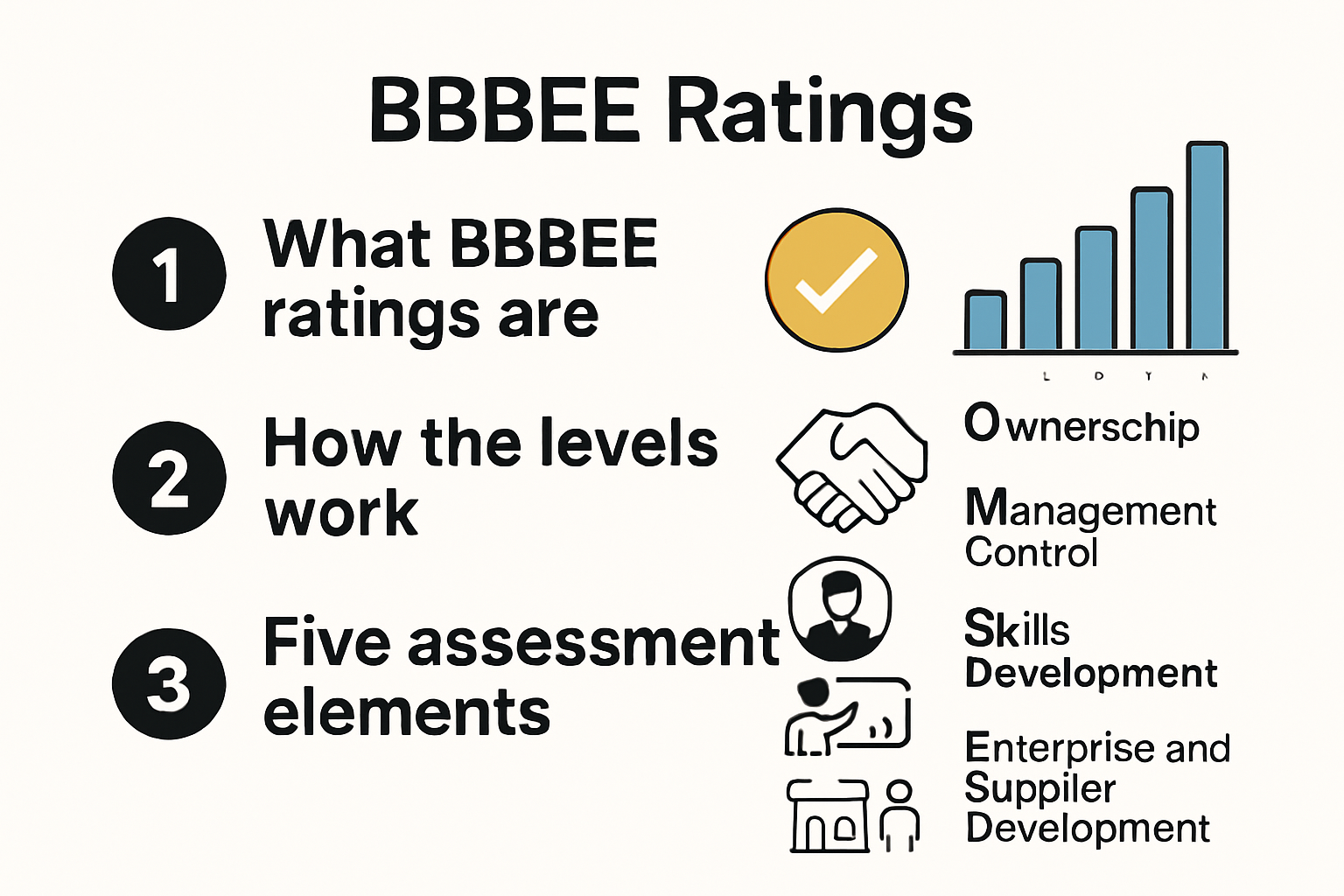
BBBEE ratings are not just bureaucratic numbers. They are a strategic tool designed to address historical economic inequalities. Clifford Dekker Hofmeyr explains that these ratings evaluate companies across five key elements: ownership, management control, skills development, enterprise and supplier development, and socio-economic development.
The rating system operates on a level-based approach, where companies can achieve ratings from Level 1 (highest recognition) to Level 8 (lowest recognition). Each level reflects a company’s commitment to transforming the economic landscape by creating opportunities for black professionals and businesses.
Strategic Importance for Businesses
Achieving a strong BBBEE rating goes beyond compliance. It represents a significant competitive advantage. Wikipedia highlights that these ratings directly impact a company’s ability to secure government contracts and participate in critical economic opportunities.
Businesses with higher BBBEE ratings gain preferential treatment in procurement processes. This means companies demonstrating genuine commitment to economic transformation can access more contracts, build stronger partnerships, and enhance their market positioning. The rating serves as a tangible measurement of a company’s social responsibility and strategic approach to inclusive economic growth.
Practical Implications for Organizational Strategy
Implementing an effective BBBEE strategy requires more than surface-level compliance. Companies must develop comprehensive approaches that genuinely support black ownership, skills development, and economic participation. This involves creating meaningful career paths, supporting black-owned suppliers, and investing in community development programs.
The rating system encourages businesses to view economic transformation not as a mandatory requirement but as a strategic opportunity for innovation, talent development, and sustainable growth. By aligning corporate strategies with BBBEE principles, organizations can create more dynamic, representative, and competitive business environments.
Understanding BBBEE ratings means recognizing them as more than a scorecard. They represent a blueprint for economic inclusivity, offering a structured pathway for businesses to contribute meaningfully to societal transformation while simultaneously enhancing their own competitive capabilities.
How the BBBEE Scorecard Works in 2025
The BBBEE scorecard in 2025 represents a sophisticated mechanism for evaluating corporate commitment to economic transformation. This comprehensive framework provides businesses with a structured approach to measuring their contributions towards creating more inclusive economic opportunities.
Core Components of the Scorecard
To help clarify the main elements and point system, the following table summarizes the core components of the 2025 BBBEE scorecard:
| Element | Maximum Points | Description |
|---|---|---|
| Ownership | 25 | Percentage of black ownership, voting rights, economic interest |
| Management Control | 19 | Black representation in board and executive management roles |
| Skills Development | 20 + 5 bonus | Investment in training, learnerships, and professional growth for black employees |
| Enterprise & Supplier Development | 40 + 4 bonus | Support for black-owned businesses; preferential procurement and development programs |
| Socio-Economic Development | 5 | Corporate social investment and broader community development initiatives |
Scoring and Level Determination
Companies accumulate points across these five elements, with a maximum potential score determining their BBBEE level. Wikipedia highlights the level structure ranging from Level 1 (highest recognition) to Level 8 (lowest recognition). The scoring mechanism encourages substantive engagement rather than superficial compliance.
For organizations looking to enhance their understanding of skills development within this framework, our guide on skills assessments provides additional context for implementing effective training strategies.
Strategic Implications for Businesses
The 2025 BBBEE scorecard goes beyond a simple compliance checklist. It represents a strategic tool for businesses to demonstrate genuine commitment to economic transformation. Companies must develop holistic approaches that integrate meaningful black economic participation across multiple organizational levels.
Successful navigation of the BBBEE scorecard requires proactive planning. Businesses need to develop comprehensive strategies that authentically address each scorecard element, moving beyond checkbox compliance to create real, sustainable economic opportunities.

Understanding the nuanced requirements of the BBBEE scorecard is crucial. It demands a forward-thinking approach that views economic transformation not as an obligation, but as a strategic opportunity for innovation, talent development, and creating more dynamic, representative business environments.
Steps to Improve Your BBBEE Rating
Improving a company’s BBBEE rating requires strategic and intentional approaches across multiple organizational dimensions. Success demands a comprehensive commitment to meaningful economic transformation beyond superficial compliance.
Ownership and Management Transformation
Pioneer Consulting emphasizes that ownership enhancement represents a critical first step in improving BBBEE ratings. Companies can strategically increase black ownership through several mechanisms:
- Selling equity shares to black shareholders
- Establishing employee share ownership programs
- Creating transparent pathways for black professionals to acquire meaningful economic stakes
Management control equally demands proactive strategies. This involves deliberately developing and promoting black talent into leadership positions, ensuring representation at board and executive levels. By creating genuine opportunities for career advancement, organizations demonstrate authentic commitment to transformation.
Skills Development and Training Investments
Bizcommunity recommends allocating approximately 6% of payroll towards accredited training programs. Effective skills development involves more than compliance. To truly improve BBBEE ratings, companies must design comprehensive learning initiatives that empower black employees.
For organizations seeking to optimize their training approaches, measuring employee training program effectiveness provides crucial insights into developing impactful skills development strategies. Key focus areas include:
- Implementing structured learnerships
- Creating targeted internship programs
- Offering meaningful bursary opportunities
- Developing clear career progression pathways
Enterprise and Supplier Development
SMEs South Africa highlights enterprise and supplier development as a substantial scorecard element. Companies can improve their BBBEE rating by strategically supporting black-owned businesses through:
- Preferential procurement practices
- Direct financial and mentorship support for emerging black enterprises
- Creating sustainable supplier development programs
- Implementing procurement policies that prioritize black-owned businesses
Successfully improving BBBEE ratings requires a holistic, genuine approach. Organizations must view these steps not as bureaucratic requirements but as opportunities to create meaningful economic transformation. By integrating these strategies comprehensively, businesses can simultaneously enhance their BBBEE ratings and contribute to broader societal development.
To provide at-a-glance guidance, the following table summarizes the main steps for improving BBBEE ratings and the core strategies under each area:
| Improvement Area | Key Strategies |
|---|---|
| Ownership Transformation | Sell equity to black shareholders, establish employee share ownership programs, enable acquisition |
| Management Control | Promote black talent to leadership, ensure board/executive representation, career advancement paths |
| Skills Development | Allocate 6% payroll to training, implement learnerships, run internships, bursaries, career pathways |
| Enterprise & Supplier Dev. | Preferential procurement, mentorship/financial support, develop suppliers, procurement policies |
BBBEE Ratings Impact on Business Opportunities
BBBEE ratings have transformed from a compliance requirement to a strategic business asset that directly influences organizational opportunities and market positioning. Understanding these ratings means recognizing their profound impact on business growth and competitive advantage.
Government Procurement and Tender Opportunities
Department of Trade, Industry, and Competition (DTIC) reveals that companies with higher BBBEE ratings experience a significant 20% increase in government contract engagements. This statistic underscores the critical role BBBEE ratings play in accessing lucrative public sector opportunities.
Government procurement policies now explicitly prioritize BBBEE-compliant businesses. Companies with Level 1 or Level 2 ratings receive substantial preferential treatment, often gaining automatic advantages in tender evaluations. This means organizations with robust BBBEE strategies can unlock access to government contracts across multiple sectors, from infrastructure development to service delivery.
Employment and Economic Expansion
Stats SA demonstrates that BBBEE-compliant businesses contribute to 50% more employment opportunities in critical sectors like construction and manufacturing. These ratings are not merely administrative checkboxes but powerful mechanisms for driving economic transformation.
For organizations looking to understand talent strategies within this framework, our guide on recruitment best practices offers additional insights into building diverse, dynamic workforces. Strategic recruitment aligned with BBBEE principles can help businesses create more inclusive professional environments while simultaneously improving their ratings.
Private Sector Partnerships and Investment
BBBEE ratings extend beyond government interactions. Private sector corporations increasingly use these ratings as key criteria when selecting business partners, suppliers, and investment targets. A strong BBBEE rating signals an organization’s commitment to ethical business practices and social responsibility.
Multinational corporations and large private enterprises often establish minimum BBBEE rating requirements for potential suppliers and partners. This means companies with higher ratings gain preferential access to valuable business networks, potential investors, and strategic collaborations. The rating becomes a form of competitive currency in the business ecosystem.
The impact of BBBEE ratings transcends numerical scores. They represent a comprehensive approach to economic empowerment, encouraging businesses to integrate transformation into their core strategic planning. By viewing these ratings as opportunities for genuine organizational development rather than mere compliance, companies can unlock significant competitive advantages and contribute to broader societal progress.
Frequently Asked Questions
What is the purpose of BBBEE ratings?
BBBEE ratings are designed to measure how effectively businesses contribute to creating inclusive economic opportunities for historically disadvantaged individuals in South Africa.
How does the BBBEE scorecard work in 2025?
The BBBEE scorecard evaluates companies based on five key elements: ownership, management control, skills development, enterprise and supplier development, and socio-economic development, with a level-based recognition structure from Level 1 to Level 8.
Why are higher BBBEE ratings important for businesses?
Higher BBBEE ratings provide companies with a competitive advantage, increasing their chances of securing government contracts and accessing more business opportunities, thereby contributing to overall economic growth.
What steps can companies take to improve their BBBEE rating?
To improve their BBBEE rating, companies can focus on increasing black ownership, promoting black talent into leadership roles, investing in skills development and training programs, and supporting black-owned enterprises through preferential procurement practices.
Take Your BBBEE Transformation Further with Peuneo’s Expertise
Are you struggling to turn BBBEE ratings into real opportunities for business growth? This article highlighted how vital it is to move from simple compliance toward meaningful transformation. Many South African companies hit roadblocks with skills development, talent advancement, and authentic ownership changes, especially when trying to navigate the BBBEE scorecard for 2025. At Peuneo, we know these pain points all too well. We help organizations like yours turn BBBEE requirements into a strategy for growth, not just paperwork. Our accredited training and customized consulting get results—so your BBBEE journey brings lasting business value.

Ready to see stronger BBBEE results this year? Discover how our skills development training and consulting services accelerate your rating and unlock new business opportunities. Explore our online learning portal for courses designed to fit your objectives and budget. Visit Peuneo’s homepage now and take the first step toward a more competitive, compliant, and sustainable future.
Recommended
- How to Evaluate Training Providers: A Complete Guide for 2025 – Peuneo
- How to Conduct Skills Assessments in 2025 – Peuneo
- Performance Management Systems: Key Benefits and Trends for 2025 – Peuneo
- Top Leadership Development Strategies for 2025: Success Across Sectors – Peuneo
- How to Improve Team Performance: Expert Strategies for 2025 – Peuneo
- Business Administration Essentials 2025: Key Skills and Best Practices – Peuneo
- Mastering How to Evaluate in Writing: Proven Strategies & Expert Techniques
- Best South African Safari Destinations for 2025 Adventures