


Leadership development is heading for a massive shift as we approach 2025. Organizations are set to spend $94.47 billion on leadership development by 2025, but here’s a curveball. Most companies are scrapping old one-size-fits-all programs. Instead, the real leaders are being forged with a blend of AI-powered learning, real-time feedback, and deeply personalized support networks. Turns out, the secret sauce for tomorrow’s top leaders is not just fancy technology or big budgets. It is the ability to match cutting-edge tools with real human connection and agile learning, pushing far beyond what’s been done before.
Table of Contents
- Understanding Key Leadership Development Strategies
- Effective Approaches For Diverse Organizations
- Measuring Impact And Adapting To Change
- Practical Steps To Start Your Leadership Journey
Quick Summary
| Takeaway | Explanation |
|---|---|
| Personalized Development Plans are Essential | Effective leadership development in 2025 focuses on tailored learning experiences that align with individual strengths, career goals, and organizational objectives, moving away from one-size-fits-all training. |
| Emphasizing Inclusive Leadership | Organizations must actively cultivate inclusive leadership mindsets to enhance innovation potential and financial performance by integrating diverse perspectives into decision-making. |
| Continuous Measurement of Impact | Systematic measurement of leadership development outcomes is crucial; leveraging data-driven evaluation frameworks enables organizations to correlate leadership training investments with improved performance indicators. |
| Building Support Networks | Aspiring leaders should establish robust support networks that encompass mentorship and professional relationships across diverse industries to enhance guidance and insights. |
| Integrating Technology into Learning | Leaders must embrace technological advancements, including AI and data analytics, to foster continuous learning and stay competitive in the evolving landscape of leadership development. |
Understanding Key Leadership Development Strategies
Leadership development strategies are transforming dramatically as organizations prepare for the complex challenges of 2025. The traditional approach of generic training programs is rapidly giving way to more nuanced, personalized, and technology-driven development methodologies.
The Evolution of Strategic Leadership Preparation
Modern leadership development requires a holistic approach that goes beyond conventional skill training. Organizations now recognize that effective leaders must possess a dynamic blend of technical expertise, emotional intelligence, and adaptive capabilities. The most successful leadership development strategies in 2025 will focus on cultivating leaders who can navigate uncertainty, drive innovation, and create resilient organizational cultures.
According to DDI World research, the most effective leadership development programs now emphasize three critical dimensions: continuous learning, technological integration, and human-centered leadership. Leaders must be equipped not just with technical skills, but with the ability to build trust, communicate effectively, and inspire teams through genuine connection.
Technology and Personal Development Intersect
Artificial intelligence and data analytics are revolutionizing how leadership potential is identified and nurtured. Personalized development plans now leverage sophisticated assessment tools that provide granular insights into individual strengths, potential growth areas, and leadership capacities. This approach moves beyond one-size-fits-all training toward targeted, adaptive learning experiences.
The integration of technology does not diminish the human element but enhances it. Advanced platforms now enable real-time feedback, mentorship matching, and predictive skill development tracking. Leaders can receive immediate, contextual guidance that helps them refine their approach in real-world scenarios.
Building Sustainable Leadership Ecosystems
Successful leadership development in 2025 requires creating comprehensive ecosystems that support continuous growth. This means developing programs that are not just episodic training events, but ongoing, integrated experiences that blend formal learning, mentorship, practical application, and reflective practice.
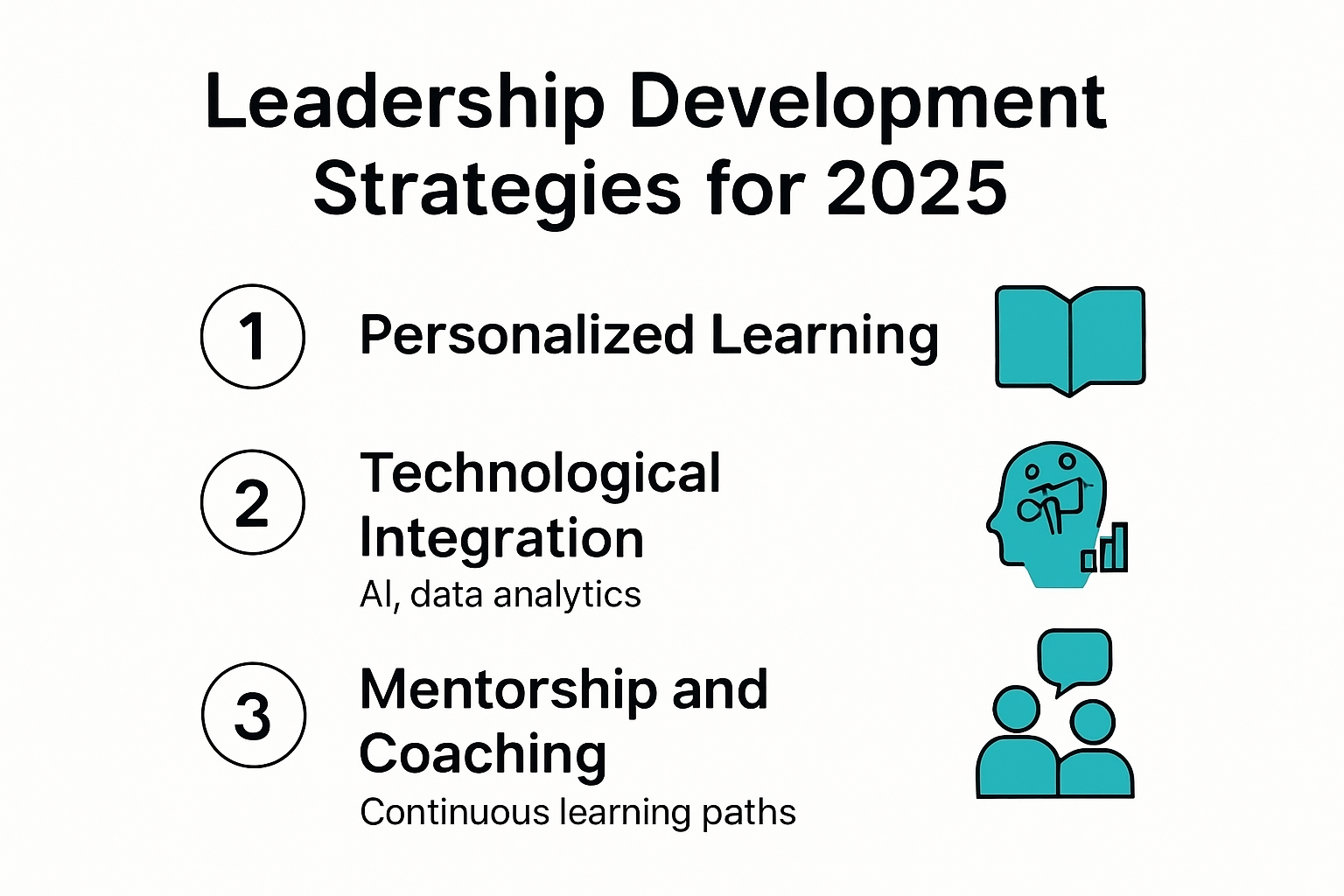
Key components of these leadership development strategies include:
- Personalized Learning Paths: Customized development plans that align with individual career trajectories and organizational goals
- Technological Integration: Utilizing AI-driven tools for skill assessment and targeted learning
- Mentorship and Coaching: Establishing robust support systems that provide ongoing guidance and real-world insights
For professionals looking to dive deeper into employee development strategies, our comprehensive guide on supporting employee growth offers additional insights into creating robust development frameworks.
The most effective leadership development strategies recognize that leadership is not a destination but a continuous journey of learning, adaptation, and personal growth. As organizations face increasingly complex global challenges, the ability to develop agile, empathetic, and technologically savvy leaders will be paramount to sustained success.
Effective Approaches for Diverse Organizations

In the rapidly evolving workplace of 2025, leadership development strategies must transcend traditional boundaries, embracing diversity as a fundamental organizational strength. The most successful organizations recognize that inclusive leadership is not just a moral imperative but a critical competitive advantage.
Cultivating Inclusive Leadership Mindsets
Research from the Neuroleadership Institute reveals that organizations with inclusive leaders demonstrate higher innovation potential and significantly improved financial performance. This requires a profound shift from merely acknowledging diversity to actively creating environments where different perspectives are genuinely valued and integrated into strategic decision-making.
Inclusive leadership development in 2025 demands a multifaceted approach. Leaders must develop cultural intelligence, empathy, and the ability to recognize and mitigate unconscious biases. This involves structured training programs that go beyond traditional diversity workshops, focusing instead on developing authentic understanding and meaningful cross-cultural communication skills.
Strategic Approaches to Diverse Talent Development
According to the Global Leadership Forecast 2025, organizations must implement targeted strategies that support diverse talent throughout their leadership pipeline. This means creating mentorship programs, providing equitable development opportunities, and establishing transparent advancement pathways that challenge historical organizational barriers.
Key strategies include:
- Comprehensive Talent Assessment: Implementing objective, skills-based evaluation methods that minimize unconscious bias
- Mentorship and Sponsorship: Developing robust programs that connect diverse talent with senior leadership
- Adaptive Learning Platforms: Utilizing technology to provide personalized development experiences that recognize individual strengths
Technology and Inclusive Leadership Development
Advanced technological tools are revolutionizing how organizations approach diverse leadership development. Insights from N2Growth highlight the importance of using data-driven approaches to identify and nurture diverse leadership potential.
Artificial intelligence and machine learning can help organizations:
- Identify hidden talent pools
- Create personalized development pathways
- Provide objective performance assessments
- Track progress and eliminate systemic barriers
For professionals seeking to enhance their team’s collaborative capabilities, our comprehensive guide to team building techniques offers additional insights into creating cohesive, inclusive work environments.
The future of leadership development is fundamentally about creating adaptive, empathetic, and culturally intelligent leaders who can navigate complex global environments. Organizations that embrace this holistic approach will not only attract top talent but also create more innovative, resilient, and successful teams.
Measuring Impact and Adapting to Change
In the dynamic landscape of leadership development, measuring impact and embracing adaptability are no longer optional strategies but critical survival mechanisms for organizations. The ability to quantify leadership growth and rapidly respond to emerging challenges has become a fundamental differentiator between successful and stagnant enterprises.
Quantifying Leadership Development Outcomes
Global research from DDI’s Leadership Forecast reveals that organizations systematically measuring their leadership development programs are 2.5 times more likely to achieve top financial performance. This underscores the critical importance of moving beyond subjective assessments to implementing rigorous, data-driven evaluation frameworks.
Effective impact measurement requires a multidimensional approach that goes beyond traditional metrics. Organizations must develop comprehensive assessment tools that capture:
- Behavioral Transformation: Tracking tangible changes in leadership behaviors and decision-making approaches
- Performance Metrics: Correlating leadership development investments with organizational key performance indicators
- Cultural Impact: Evaluating shifts in team dynamics, employee engagement, and organizational resilience
Technological Enablers of Adaptive Leadership
Insights from Korn Ferry’s Workforce 2025 report highlight how artificial intelligence and advanced analytics are revolutionizing leadership impact measurement. These technologies enable real-time performance tracking, predictive skill assessments, and personalized development recommendations.
Key technological strategies include:
- Implementing AI-driven assessment platforms
- Utilizing machine learning for skill gap identification
- Creating dynamic, continuous feedback mechanisms
- Developing predictive models for leadership potential
Continuous Learning and Strategic Flexibility
Global market analysis indicates that organizations are projected to invest $94.47 billion in leadership development by 2025, reflecting a strategic commitment to adaptability. This investment goes beyond traditional training, focusing on creating agile learning ecosystems that can rapidly respond to technological and market disruptions.
To truly measure and enhance leadership impact, organizations must embrace a holistic approach that combines:
- Regular skill reassessment
- Adaptive learning platforms
- Cross-functional development opportunities
- Robust mentorship and coaching programs
For professionals seeking deeper insights into evaluating training effectiveness, our comprehensive guide to measuring program success provides practical strategies and advanced assessment techniques.
The future of leadership development is not about creating static leaders but nurturing adaptive, learning-oriented professionals who can navigate complexity with strategic agility. Organizations that master the art of continuous measurement and flexible development will be best positioned to thrive in an increasingly unpredictable global business environment.
Practical Steps to Start Your Leadership Journey
Beginning a leadership journey in 2025 requires more than traditional ambition. It demands a strategic, intentional approach that combines self-awareness, continuous learning, and proactive skill development. Aspiring leaders must understand that leadership is not a destination but an ongoing process of growth and adaptation.
Self-Assessment and Personal Development
Research from DDI’s Leadership Trends emphasizes the critical importance of ongoing self-assessment as the foundation of leadership development. This means conducting honest evaluations of personal strengths, identifying potential skill gaps, and creating a targeted development strategy.
Key elements of effective self-assessment include:
- Seeking honest feedback from colleagues and mentors
- Utilizing professional assessment tools
- Maintaining a reflective leadership journal
- Identifying specific behavioral patterns that enhance or limit leadership potential
Successful leaders recognize that personal growth is a continuous journey. They approach self-improvement with curiosity, humility, and a commitment to lifelong learning. This mindset allows for adaptability and resilience in rapidly changing professional environments.
Building a Robust Support Network
Insights from Korn Ferry’s Leadership Trends highlight the importance of creating a comprehensive support system. This goes beyond traditional mentorship, encompassing a diverse network of professionals who can provide guidance, perspective, and strategic insights.
Strategies for building an effective leadership support network include:
- Connecting with mentors across different industries
- Participating in professional development groups
- Attending leadership conferences and workshops
- Engaging in cross-functional networking opportunities
- Leveraging online professional platforms for global connections
Embracing Technological Integration and Continuous Learning
Leadership in 2025 requires a sophisticated approach to technological integration and continuous learning. Emerging research indicates that leaders must develop skills in artificial intelligence, data analytics, and digital transformation to remain competitive.
Practical steps for technological and learning integration:
- Invest in online learning platforms
- Develop digital literacy skills
- Learn basic data analysis techniques
- Stay informed about emerging technological trends
- Practice adaptive learning strategies
For professionals seeking to maximize their career growth potential, our comprehensive guide to career development opportunities provides additional strategies and insights.
The leadership journey is not about perfection but about consistent growth, adaptability, and a genuine commitment to personal and professional development. By approaching leadership as a holistic, dynamic process, individuals can position themselves as effective, innovative leaders prepared to navigate the complex challenges of 2025 and beyond.
Frequently Asked Questions
What are the key leadership development strategies for 2025?
Leadership development strategies for 2025 emphasize personalized development plans, inclusive leadership, continuous measurement of impact, building support networks, and integrating technology into learning.
How can organizations create inclusive leadership mindsets?
Organizations can cultivate inclusive leadership mindsets by providing structured training on cultural intelligence, empathy, and unconscious bias recognition, integrating diverse perspectives into decision-making, and fostering genuine communication.
Why is technology important in leadership development?
Technology, including AI and data analytics, is crucial in leadership development as it enables personalized learning experiences, real-time feedback, and robust assessment tools that help identify and nurture leadership potential more effectively.
How can aspiring leaders start their leadership journey in 2025?
Aspiring leaders can start their journey by engaging in self-assessment to identify strengths and skill gaps, building a diverse support network, and embracing continuous learning and technological integration to remain competitive.
Ready to Transform Your 2025 Leadership Strategy?
Are you concerned your current leadership training is too generic or not keeping pace with technology? This article highlighted how traditional programs are out and agile, personalized development is now key. Top organizations in 2025 are accelerating leadership growth by blending tailored learning, real feedback, and inclusive support networks. But getting this right on your own can be overwhelming, especially if you need programs that fit your sector and meet compliance standards.

At Peuneo, we turn these new leadership challenges into real opportunities for your business. You get expert-guided, accredited training backed by our online learning portal for instant access to up-to-date courses and resources. Enhance your team’s impact with custom learning experiences that are aligned to the future of leadership development. Start building your next generation of leaders now by visiting Peuneo’s Online Platform and see how our solutions accelerate your growth. If you want to future-proof your organization and build a strong leadership pipeline tailored to your needs, enroll or consult with us today. Your 2025 advantage starts here.