
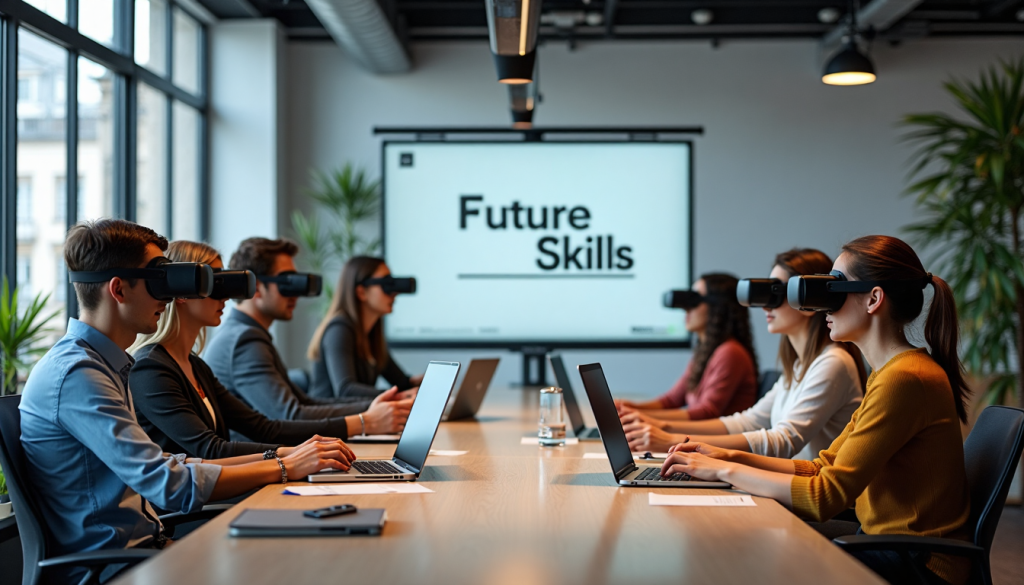
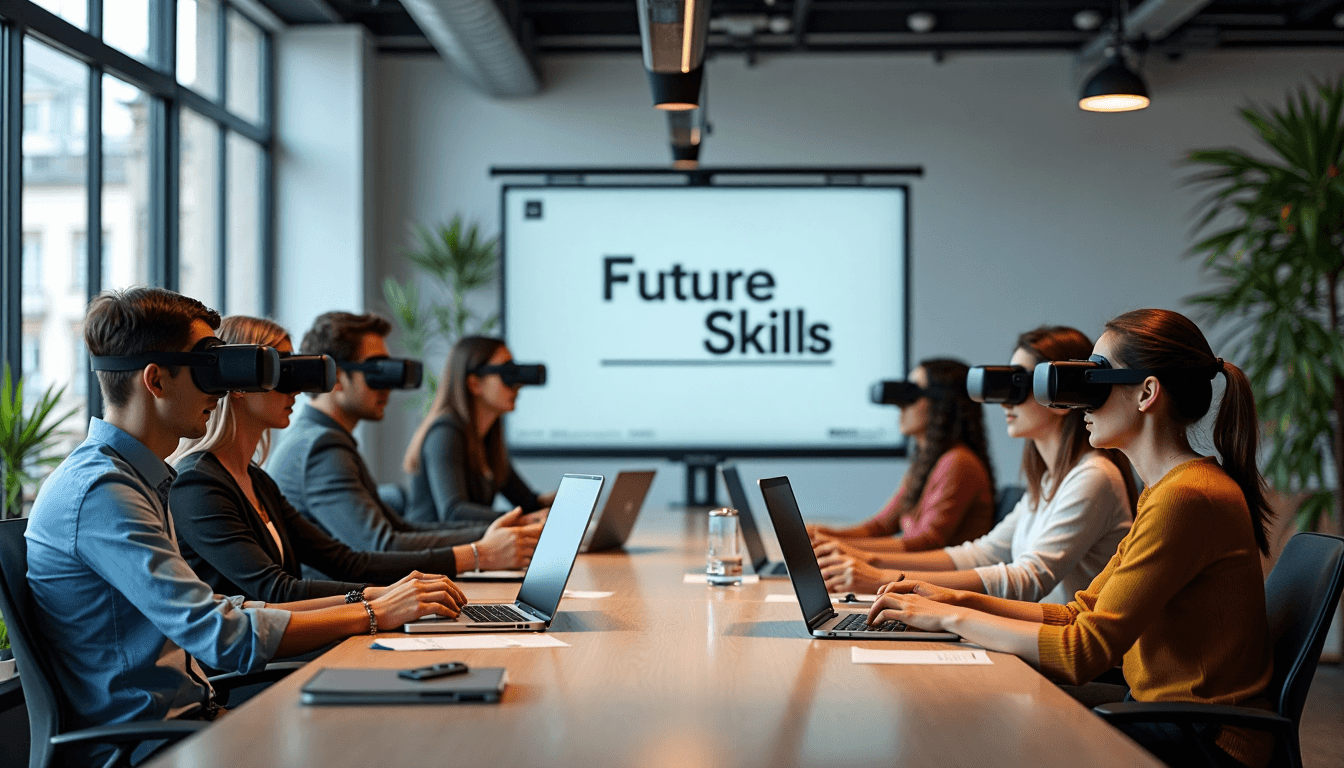
Employee training is getting a major upgrade as 2025 arrives, with companies embracing tools that once sounded like science fiction. Think everyone is just watching boring videos or sitting in endless seminars? Not even close. The big surprise is that over 90 percent of organizations now use advanced assessments and AI to tailor training, with virtual reality helping doctors and factory workers practice life-or-death skills in total safety. Here is what is really changing the game for learning at work.
Table of Contents
- Technology Advancements Shaping Training
- Personalization and Skills-Based Learning
- Measuring Training Impact in 2025
- Inclusive Strategies for All Learners
Quick Summary
| Takeaway | Explanation |
|---|---|
| Embrace AI for Personalization | Organizations should leverage AI algorithms to create hyper-personalized learning pathways that address individual employee skill gaps and learning styles. |
| Adopt Immersive Technologies | Using VR and AR can significantly enhance hands-on training and improve knowledge retention by enabling safe, simulation-based learning environments. |
| Shift to Continuous Learning Models | Companies should move towards continuous skill validation and adaptive learning systems to provide real-time feedback and foster ongoing employee development. |
| Implement Advanced Metrics for Training Impact | Organizations need to adopt comprehensive assessment strategies that connect training outcomes to business performance, utilizing AI to enhance analytics accuracy. |
| Focus on Inclusive Learning Strategies | Implementing inclusive training frameworks that recognize diverse learning experiences and promote collaborative models can drive innovation and engagement within teams. |
Technology Advancements Shaping Training
The landscape of employee training is undergoing a radical transformation driven by cutting-edge technological innovations. Organizations are rapidly adopting advanced solutions that promise to revolutionize how skills are developed, assessed, and enhanced.
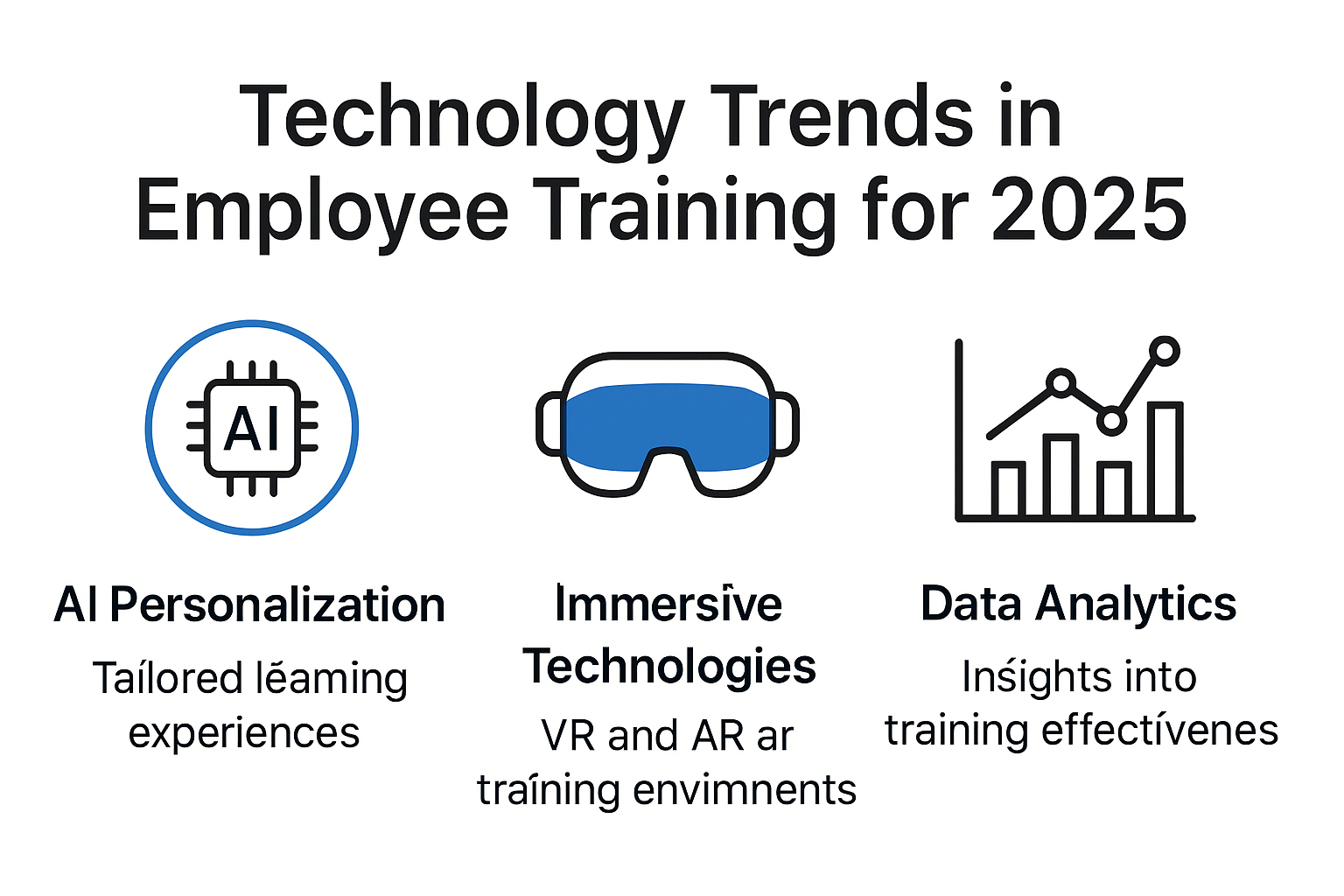
Artificial Intelligence Personalizing Learning Experiences
Artificial Intelligence is emerging as a game-changing force in corporate training. Advanced skill development strategies are now powered by AI algorithms that create hyper-personalized learning pathways. According to research from the Learning Guild, AI-driven training platforms can analyze individual employee performance data in real-time, identifying precise skill gaps and recommending targeted learning modules.
These intelligent systems go beyond traditional one-size-fits-all training approaches. They dynamically adjust content difficulty, learning pace, and instructional methods based on an employee’s unique learning style, prior knowledge, and performance metrics. This means employees receive training experiences tailored specifically to their professional development needs.
Immersive Technologies Transforming Skill Acquisition
Virtual Reality (VR) and Augmented Reality (AR) are redefining hands-on training across multiple industries. Research from industry experts demonstrates that immersive technologies can dramatically improve knowledge retention and skill mastery. High-risk sectors like healthcare, manufacturing, and emergency services are particularly benefiting from these simulation-based training environments.
These technologies create realistic, risk-free scenarios where employees can practice complex procedures, develop critical decision-making skills, and experience challenging workplace situations without real-world consequences. For instance, medical professionals can simulate intricate surgical techniques, while industrial workers can train on complex machinery operations in a completely safe virtual environment.
Data Analytics Driving Training Optimization

Data-driven approaches are becoming the cornerstone of modern Learning and Development (L&D) strategies. Organizations are leveraging advanced analytics to transform training from a traditional cost center into a strategic performance optimization tool. According to learning technology research, comprehensive data analytics enable businesses to:
- Measure Training Effectiveness: Track precise learning outcomes and skill acquisition rates
- Identify Skill Gaps: Pinpoint exact areas where employee performance can be improved
- Align Training with Business Objectives: Create targeted learning programs that directly support organizational goals
By integrating sophisticated analytics, companies can now make informed decisions about their training investments, ensuring that each learning initiative delivers measurable value and contributes directly to overall organizational performance.
As technology continues to evolve, the future of employee training looks increasingly personalized, immersive, and data-driven. Organizations that embrace these technological advancements will be best positioned to develop agile, skilled workforces capable of navigating complex professional landscapes.
Below is a summary table comparing the major technological advancements shaping employee training in 2025 and their key benefits:
| Technology | Main Application in Training | Key Benefits |
|---|---|---|
| Artificial Intelligence | Personalizing learning experiences | Tailored training, real-time skill gap analysis |
| Virtual/Augmented Reality (VR/AR) | Immersive skill simulations | Safe practice, improved retention, realistic scenarios |
| Data Analytics | Optimizing training strategies | Data-driven decisions, aligns with business goals |
Personalization and Skills-Based Learning
The traditional approach to employee training is rapidly giving way to more dynamic, individualized learning strategies that prioritize skills development and personalized growth pathways. Organizations are recognizing that a one-size-fits-all training model is no longer effective in addressing the complex and evolving workplace demands.
Adaptive Learning and Individual Skill Mapping
Modern organizations are implementing sophisticated adaptive learning systems that transform employee development. According to research from HR Today, AI-driven platforms can now create hyper-personalized learning experiences that dynamically adjust content based on an individual’s unique skills, learning pace, and career aspirations.
Skills development strategies are becoming increasingly granular. Instead of broad training programs, companies are now focusing on precise skill mapping that identifies exact competency gaps. These systems analyze an employee’s current skill set, performance metrics, and potential career trajectories to recommend targeted learning modules. This approach ensures that each learning intervention is directly relevant to the individual’s professional growth and organizational needs.
Skills-Based Talent Management
Emergent talent management approaches are shifting from traditional role-based models to skills-based frameworks. Research from industry experts indicates that by 2025, organizations will prioritize developing specific skills over predefined job roles. This transformation allows for greater workforce agility and more responsive talent development strategies.
Companies are creating internal talent marketplaces where employees can be matched with projects and opportunities based on their actual skills rather than their current job titles. This approach breaks down traditional departmental silos and enables more fluid, dynamic workforce deployment. Employees gain opportunities to develop cross-functional skills, while organizations benefit from increased flexibility and innovation.
Continuous Learning and Skill Validation
The concept of learning is evolving from periodic training events to a continuous, always-on model of skill development. According to learning technology research, adaptive learning systems now provide real-time feedback and skill validation, allowing employees to immediately apply and assess their learning.
Modern skill development platforms incorporate micro-credentials, digital badges, and comprehensive skill portfolios that provide tangible proof of an employee’s capabilities. These systems go beyond traditional certifications by offering granular, verifiable evidence of specific competencies. Employees can now demonstrate their skills through practical assessments, project-based learning, and continuous performance tracking.
As organizations continue to navigate rapidly changing business landscapes, personalized and skills-focused learning approaches will become critical differentiators. By investing in adaptive, individual-centric training strategies, companies can build more resilient, agile, and engaged workforces that are prepared to meet the challenges of an increasingly complex professional environment.
The following table summarizes the shift from traditional training models towards skills-based, personalized learning strategies in 2025:
| Approach | Main Focus | Key Features/Benefits |
|---|---|---|
| Traditional Training | Role-based, one-size-fits-all | Generic content, periodic events |
| Adaptive Learning | Individual skill mapping | Dynamic, personalized pathways, real-time feedback |
| Skills-Based Talent Management | Developing specific skills | Internal talent marketplaces, cross-functional opportunities |
| Continuous Skill Validation | Ongoing competency assessment | Micro-credentials, digital badges, direct proof of skills |
Measuring Training Impact in 2025
The landscape of training evaluation is undergoing a profound transformation as organizations seek more sophisticated and data-driven approaches to understanding the true value of their learning investments. Traditional metrics are giving way to comprehensive, nuanced assessment strategies that provide deeper insights into training effectiveness and organizational performance.
Advanced Metrics and Holistic Performance Analysis
Comprehensive training assessment techniques are replacing outdated evaluation methods. According to research from Training and Development organizations, only 30% of organizations effectively use learning program data to inform business decisions. This gap represents a critical opportunity for more strategic approach to training measurement.
Modern organizations are moving beyond simple completion rates and test scores. They are now implementing multi-dimensional assessment frameworks that connect training outcomes directly to key performance indicators. These advanced metrics examine not just knowledge acquisition, but behavioral changes, skill application, and tangible business impact. By tracking granular performance data, companies can demonstrate the direct relationship between learning interventions and organizational success.
AI-Powered Learning Analytics
Artificial Intelligence is revolutionizing how organizations measure training effectiveness. Research from technology experts reveals that AI and machine learning are increasingly employed to analyze training outcomes with unprecedented precision. These intelligent systems can track individual and collective learning progress, identify skill gaps in real-time, and provide predictive insights about potential performance improvements.
AI-driven analytics go beyond traditional assessment methods by:
- Personalized Performance Tracking: Monitoring individual learning trajectories
- Predictive Skill Gap Analysis: Identifying potential future skill requirements
- Real-time Learning Optimization: Dynamically adjusting training content based on ongoing performance data
Comprehensive Learning Validation Strategies
Over 90% of organizations now incorporate learning assessments into their training programs, as reported by industry research. However, the most progressive companies are developing more holistic validation strategies that extend far beyond traditional testing.
These comprehensive approaches include:
- Practical skill demonstrations
- Performance-based assessments
- Long-term behavioral tracking
- Cross-functional impact analysis
- Continuous feedback mechanisms
By implementing these multifaceted evaluation techniques, organizations can create a more nuanced understanding of training effectiveness. The goal is no longer simply to measure what employees have learned, but to understand how learning translates into tangible organizational capabilities and competitive advantage.
As we move into 2025, the most successful organizations will be those that view training measurement not as a compliance exercise, but as a strategic tool for continuous improvement and organizational development. The future of training impact measurement is data-driven, predictive, and deeply integrated with overall business strategy.
Inclusive Strategies for All Learners
The future of employee training demands a comprehensive approach that recognizes and celebrates the diverse learning needs, backgrounds, and capabilities of all individuals. Organizations are increasingly understanding that true inclusivity goes far beyond simple compliance and requires a holistic, intentional strategy for creating learning environments that empower every employee.
Understanding Intersectional Learning Experiences
Comprehensive learning approaches must acknowledge the complex, interconnected identities of employees. According to research from the Diversity Leadership Alliance, successful training programs in 2025 will emphasize intersectionality recognizing that individuals possess multiple, overlapping identities that influence their learning experiences.
This nuanced approach means moving beyond traditional demographic categories and understanding how factors like age, disability, cultural background, neurodiversity, and professional experience interact to shape an individual’s learning journey. By creating flexible, adaptive learning environments, organizations can ensure that training programs are genuinely accessible and meaningful for every employee.
Collaborative and Peer-Driven Learning Models
Inclusive learning strategies are increasingly prioritizing collaborative approaches that leverage collective knowledge and experience. Research indicates that peer mentoring and group learning models can dramatically enhance engagement and understanding across diverse teams.
These collaborative models offer multiple benefits:
- Mutual Understanding: Employees learn directly from each other’s experiences
- Safe Learning Environments: Peer groups create supportive, non-hierarchical learning spaces
- Cultural Knowledge Exchange: Diverse perspectives are shared and integrated naturally
By creating platforms where employees can share insights, challenge assumptions, and learn together, organizations can build more empathetic, connected workforces that value different perspectives and learning styles.
Leadership Accountability and Systemic Change
True inclusivity requires more than just training programs. Leadership experts emphasize that executive teams must be actively engaged in creating systemic change. This means moving beyond passive support to establish clear, measurable diversity, equity, and inclusion (DEI) objectives that are integrated into organizational key performance indicators.
Effective inclusive learning strategies demand:
- Transparent goal-setting for diversity and inclusion
- Regular assessment of training program accessibility
- Continuous feedback mechanisms from employees
- Accountability measures for leadership teams
- Investment in adaptive learning technologies
By embedding inclusivity into the core of organizational learning strategies, companies can create environments where every employee feels valued, heard, and empowered to grow. The most successful organizations in 2025 will be those that view diversity not as a checkbox, but as a fundamental strength that drives innovation, creativity, and organizational resilience.
As workplaces become increasingly complex and globally connected, inclusive learning strategies will be critical in building workforces that are not just diverse, but truly integrated and mutually supportive.
Frequently Asked Questions
What are the top trends in employee training for 2025?
Organizations are focusing on AI-driven personalization, immersive technologies like VR/AR, continuous learning models, advanced metrics for training impact, and inclusive learning strategies to enhance employee development.
How is AI changing employee training?
AI is personalizing learning experiences by analyzing individual performance data in real-time, identifying skill gaps, and recommending targeted learning paths tailored to each employee’s needs.
Why are immersive technologies important for training?
Immersive technologies like virtual reality (VR) and augmented reality (AR) provide realistic, risk-free training environments that enhance knowledge retention and allow employees to practice complex skills safely.
How can companies measure the effectiveness of their training programs?
Companies should use advanced metrics that connect training outcomes to business performance. This includes tracking behavior changes, skill application, and using AI-powered analytics to evaluate training impact.
Take the Next Step Toward Future-Ready Employee Training
Are you struggling to move beyond outdated, one-size-fits-all training? The trends in employee training for 2025 show that companies need adaptive, data-driven solutions to stay competitive. If you want to embrace personalization, immersive technology, and measurable results, it is time for a new approach. Discover how our Uncategorized Archives – Peuneo section showcases real examples of the latest learning strategies in action.

Peuneo offers accredited training, online learning, and expert consulting designed to align with emerging trends like AI-powered assessments, virtual simulations, and ongoing skills validation. Let us help you bridge today’s skill gaps with tomorrow’s workforce needs. Visit Peuneo’s main site now and see how you can upgrade your team’s development, achieve compliance, and unlock measurable growth.
Recommended
- 2025 Trends in Employee Development: 5 Key Strategies – Peuneo
- Current Trends in Employee Training for 2025 – Peuneo
- 2025 Essential Insights: The Importance of Training Programs – Peuneo
- Impact of Technology on Training 2025 | Improve Skills – Peuneo
- 2025 Training Course Benefits: Boost Skills & Growth – Peuneo
- How to Create a Training Culture That Drives Results in 2025 – Peuneo