


Most companies think a training program is working if employees finish the course and pass a quiz. However, completion certificates can hide the real story. In reality, companies spent an average of $954 per employee on training last year, yet less than half of workers consistently apply those new skills back on the job. You might expect technology to have solved this, but measuring whether training actually sticks is still one of the trickiest challenges for organizations. Here’s what separates mere participation from lasting organizational impact.
Table of Contents
- Key Metrics For Assessing Training Effectiveness
- Popular Models And Frameworks Used Today
- Tools And Techniques For Measurement
- Tips For Continuous Improvement In Training Programs
Quick Summary
| Takeaway | Explanation |
|---|---|
| Comprehensive Metrics Framework | Organizations should implement a robust metrics framework, such as the Kirkpatrick Model, to assess training effectiveness across multiple dimensions: reaction, learning, behavior, and results. |
| Focus on Key Training Metrics | Organizations must track essential metrics like training completion rates, knowledge retention rates, skills application rates, and training ROI to understand the true impact of their training programs. |
| Utilize Technology-Enabled Tools | Leverage advanced Learning Management Systems and skills analytics platforms for comprehensive insights into training effectiveness, allowing for continuous monitoring and improvement of learning initiatives. |
| Establish Continuous Feedback Mechanisms | Implement multi-layered feedback systems, including post-training surveys and long-term impact assessments, to gather actionable insights for ongoing training program enhancement. |
| Adopt a Data-Driven Approach | Organizations should employ quantitative and qualitative assessment methods to track improvements, enabling them to refine training initiatives effectively and proactively address future learning needs. |
Key Metrics for Assessing Training Effectiveness
Assessing training effectiveness requires a strategic approach that goes beyond simple completion rates. In 2025, organizations need comprehensive metrics that provide actionable insights into the true impact of their learning and development initiatives. The right metrics transform training from a checkbox exercise to a powerful driver of organizational performance.
Comprehensive Performance Measurement Framework
Modern training assessment demands a multifaceted approach. The Kirkpatrick Model remains the gold standard, offering a four-level framework that provides deep insights into training outcomes. Organizations should track metrics across these critical dimensions:
- Reaction Metrics: Measure participant engagement and immediate satisfaction
- Learning Metrics: Assess knowledge and skill acquisition
- Behavior Metrics: Evaluate actual workplace application of learned skills
- Results Metrics: Quantify business impact and return on investment
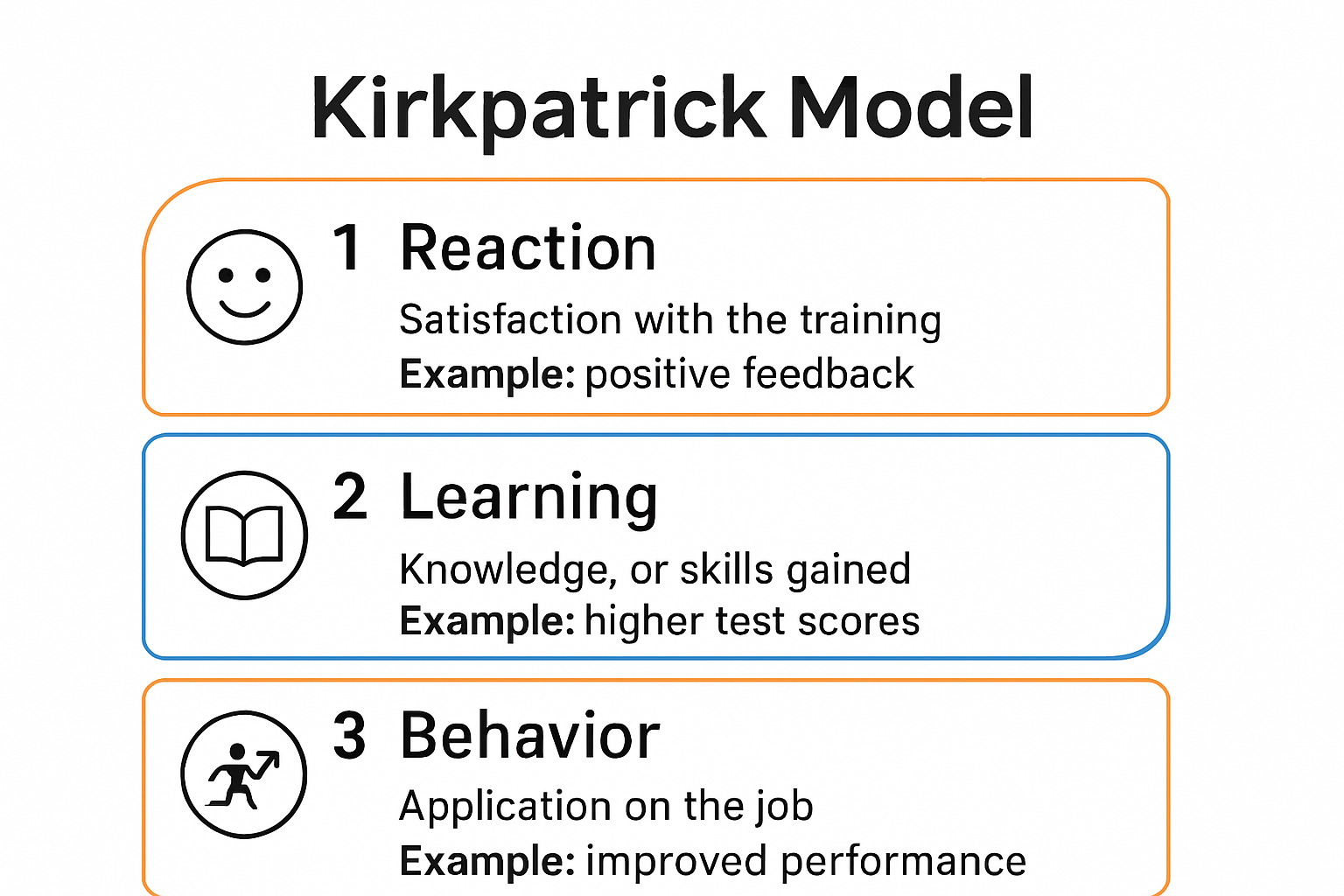
According to industry research, the most effective organizations focus on a comprehensive set of key performance indicators that provide a holistic view of training effectiveness.
Critical Training Effectiveness Metrics
To truly understand training impact, organizations should track these essential metrics:
-
Training Completion Rate: While basic, this metric provides initial insights into program accessibility and participant commitment.
-
Knowledge Retention Rate: Measures the percentage of information participants remember after a specific time period. This goes beyond simple completion to assess actual learning.
-
Skills Application Rate: Tracks how many participants actually implement learned skills in their daily work. This is a crucial indicator of training effectiveness.
-
Training ROI: Calculates the financial impact of training by comparing the cost of training against measurable business improvements. Recent data shows organizations spend an average of $954 per employee on training, making ROI calculation critical.
-
Performance Improvement Metrics: Directly measure changes in job performance before and after training, providing concrete evidence of training impact.

Organizations interested in a deeper dive into measuring training outcomes can explore our comprehensive guide on program evaluation.
The most successful organizations view training metrics as more than just numbers. These metrics tell a story about learning, growth, and organizational development. They provide actionable insights that help refine training strategies, allocate resources more effectively, and directly link learning initiatives to business performance.
By implementing a robust metrics framework, organizations can transform training from a cost center to a strategic asset that drives meaningful business results. The key is to move beyond surface-level measurements and create a comprehensive approach that captures the true value of learning and development initiatives.
Popular Models and Frameworks Used Today
Training effectiveness assessment has evolved significantly, with multiple robust models providing organizations comprehensive strategies to evaluate learning outcomes. Understanding these frameworks enables businesses to select the most appropriate approach for their unique organizational needs and learning objectives.
Foundational Evaluation Models
Several established models have emerged as industry standards for measuring training effectiveness. The Kirkpatrick Model remains the most recognized framework worldwide, offering a structured four-level approach to training evaluation:
- Reaction Level: Measures participant satisfaction and initial engagement with the training program
- Learning Level: Assesses knowledge and skill acquisition during the training
- Behavior Level: Evaluates changes in workplace performance and skill application
- Results Level: Examines the broader organizational impact of the training initiative
Building upon the Kirkpatrick Model, the Phillips ROI Methodology introduces a critical fifth dimension—Return on Investment (ROI). This approach adds a financial perspective by conducting detailed cost-benefit analysis to determine the monetary value generated from learning and development investments.
Contemporary Evaluation Approaches
Modern organizations are increasingly adopting more nuanced and comprehensive evaluation strategies. Industry research suggests that successful training assessment combines multiple metrics and approaches:
- Holistic Assessment Methods: Integrate quantitative and qualitative data collection techniques
- Continuous Feedback Mechanisms: Implement real-time monitoring and evaluation systems
- Technology-Enhanced Tracking: Utilize advanced learning management systems for detailed performance insights
For organizations seeking a structured approach to training program evaluation, our detailed guide offers comprehensive insights.
The most effective frameworks recognize that training evaluation is not a one-size-fits-all process. They provide flexible methodologies that can be customized to match an organization’s specific learning objectives, industry requirements, and strategic goals.
Successful implementation requires more than just selecting a model. Organizations must develop a culture of continuous learning, where training evaluation is seen as a strategic tool for organizational development rather than a mere compliance exercise.
By understanding and strategically applying these evaluation models, businesses can transform their learning and development initiatives from cost centers to powerful drivers of organizational performance and growth. The key lies in selecting the right framework, implementing it thoughtfully, and maintaining a commitment to ongoing improvement and adaptation.
Tools and Techniques for Measurement
Measuring training effectiveness requires a sophisticated approach that combines multiple tools and techniques to capture comprehensive insights into learning outcomes and organizational impact. In 2025, organizations have access to advanced methodologies that go far beyond traditional assessment strategies.
Comprehensive Assessment Techniques
Research from industry experts reveals a multifaceted approach to training measurement. Organizations can leverage several powerful techniques:
- Pre and Post-Training Assessments: Systematically measure knowledge gaps and skill improvements
- On-the-Job Observations: Track actual performance changes in real workplace environments
- 360-Degree Feedback: Gather holistic insights from managers, peers, and direct reports
- Performance Metric Tracking: Quantify tangible improvements in key business outcomes
- Simulated Scenario Evaluations: Test practical application of learned skills in controlled environments
Technology-Enabled Measurement Tools
Modern organizations are increasingly turning to advanced technological solutions for training effectiveness measurement. Learning Management Systems (LMS) provide robust analytics capabilities that transform how organizations track and evaluate training impact:
- Advanced Reporting Analytics: Detailed insights into learner progress and engagement
- Real-Time Performance Tracking: Continuous monitoring of skill development and application
- Comprehensive Engagement Metrics: Measuring participant interaction and learning depth
Skills analytics platforms now offer unprecedented depth of analysis. These tools generate detailed reports on skill improvements, identifying precise trends in learning outcomes and highlighting areas of maximum and minimal training effectiveness.
For organizations seeking to optimize their training measurement strategies, a strategic approach is critical. The most effective measurement techniques combine quantitative data with qualitative insights, providing a holistic view of training impact.
Technology has revolutionized training assessment, but human interpretation remains crucial. The most successful organizations view these tools as enablers of strategic decision-making, not just data collection mechanisms. They use these insights to continuously refine learning approaches, align training with business objectives, and create more targeted, effective development programs.
Ultimately, the goal of these tools and techniques is not just to measure training, but to transform learning into a strategic driver of organizational performance. By implementing a comprehensive, technology-enhanced measurement approach, organizations can turn training from a cost center into a powerful mechanism for continuous improvement and competitive advantage.
Tips for Continuous Improvement in Training Programs
Continuous improvement in training programs is not a destination but an ongoing journey that requires strategic planning, systematic evaluation, and adaptive methodologies. Organizations that successfully evolve their learning initiatives can transform training from a static process into a dynamic engine of organizational growth and development.
Establishing Robust Feedback Mechanisms
Research from industry experts highlights the critical importance of implementing comprehensive feedback systems. Effective continuous improvement strategies require multiple layers of insight collection:
- Post-Training Surveys: Capture immediate participant reactions and learning experiences
- Performance Tracking: Monitor skill application and behavioral changes over time
- Long-Term Impact Assessment: Evaluate sustained performance improvements
- Stakeholder Feedback: Gather perspectives from managers, peers, and participants
The key is creating a multi-dimensional feedback loop that provides nuanced, actionable insights into training effectiveness and potential areas of enhancement.
Data-Driven Program Refinement
Establishing baseline measurements before training and systematically comparing them with post-training results enables organizations to track progress with precision. This approach involves:
- Quantitative Performance Metrics: Track specific, measurable skill improvements
- Qualitative Assessment: Understand the contextual nuances of learning transfer
- Predictive Analytics: Anticipate future training needs and potential skill gaps
For organizations looking to develop more effective training strategies, a data-driven approach is essential. By leveraging advanced analytics and continuous measurement techniques, businesses can create more targeted, responsive learning experiences.
Established evaluation models like the Kirkpatrick Model and Phillips ROI Methodology provide structured frameworks for systematic assessment. These models enable organizations to evaluate training effectiveness across multiple dimensions: participant reaction, learning acquisition, behavioral change, and organizational results.
Successful continuous improvement requires more than just collecting data. It demands a cultural commitment to learning and adaptation. Organizations must create an environment that views training not as a one-time event, but as an ongoing process of skill development and organizational growth.
The most progressive organizations treat their training programs as living systems. They continuously experiment, measure, refine, and realign learning initiatives to match evolving business needs. This approach transforms training from a compliance requirement into a strategic tool for driving innovation, performance, and competitive advantage.
Ultimately, continuous improvement in training is about creating a learning ecosystem that is agile, responsive, and aligned with both individual potential and organizational objectives. By embracing a holistic, data-driven approach, organizations can develop training programs that not only meet current needs but anticipate and shape future capabilities.
Frequently Asked Questions
What are the key metrics to assess training effectiveness?
To measure training effectiveness, organizations should track key metrics such as training completion rates, knowledge retention rates, skills application rates, and training ROI. These metrics provide insights into how well training translates into practical skills and business outcomes.
How can the Kirkpatrick Model be applied to evaluate training programs?
The Kirkpatrick Model, consisting of four levels (reaction, learning, behavior, and results), is widely used to evaluate training programs. By assessing participant reactions, knowledge acquisition, behavioral changes, and overall results, organizations can gain a comprehensive understanding of training effectiveness and its impact on the business.
What tools can help measure training effectiveness?
Organizations can leverage technology-enabled tools such as Learning Management Systems (LMS) and skills analytics platforms. These tools provide advanced reporting analytics, real-time performance tracking, and comprehensive engagement metrics, helping organizations continuously monitor and improve training initiatives.
How can organizations implement continuous improvement in training programs?
To foster continuous improvement, organizations should establish robust feedback mechanisms, such as post-training surveys and long-term impact assessments. They should also adopt a data-driven approach, utilizing both quantitative and qualitative data to refine training strategies and align programs with evolving business needs.
Ready to Turn Your Training Data Into Real Results?
Struggling to see if employees are truly applying new skills after training? According to the article, too many organizations rely on completion certificates and miss out on performance or ROI. You may be facing similar frustrations with poor knowledge retention and little evidence of changed behavior. These gaps can turn your investment into a lost opportunity. Give your team the edge and discover the measurable impact your training deserves with a partner that understands the full cycle of effective learning.

Choose Peuneo to access accredited training and continuous support that bridges skill gaps and proves real business value. Explore our accredited courses and consulting to help your team gain lasting skills, not just certificates. Don’t let your training budget go to waste. Visit our site now to see how you can measure and maximize learning impact for 2025 and beyond.