
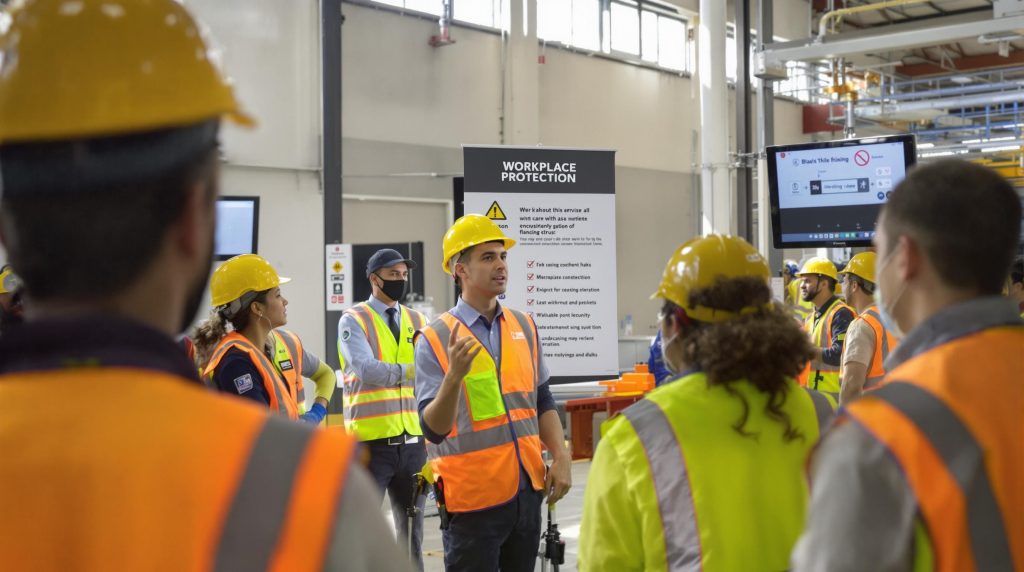
Workplace incidents cost U.S. companies over $167 billion each year, and safety officers stand on the front line to prevent them. Most people guess their job is just following regulations or ticking boxes, nothing more. But the real story is how cutting-edge safety officer training is completely evolving for 2025, unlocking advanced tech, smart certifications, and powerful new ways to protect workers before disaster ever strikes.
Table of Contents
- Core Skills Covered In Safety Officer Training
- Recognized Certifications And Program Options
- Best Practices For Corporate And Government Training
- Emerging Trends In Safety Officer Training For 2025
Quick Summary
| Takeaway | Explanation |
|---|---|
| Focus on Holistic Skills Development | Safety officer training must cover risk assessment, incident investigation, and communication proficiency. These skills are essential for workplace safety and risk management. |
| Pursue Recognized Certifications | Certifications such as OSHA and CSP lend credibility and demonstrate professional dedication in the field of safety. They validate expertise in workplace protection. |
| Integrate Advanced Technology in Training | Utilize immersive technologies and adaptive learning systems to enhance training effectiveness. These innovations enable safety professionals to practice skills in realistic simulations. |
| Transform Organizational Safety Culture | Effective training should promote a culture of safety that encourages shared responsibility among employees. It’s crucial for fostering long-term safety improvements. |
| Embrace Continuous Learning as a Requirement | Safety officers should view certifications and training as ongoing processes to adapt to changing workplace environments and emerging risks effectively. |
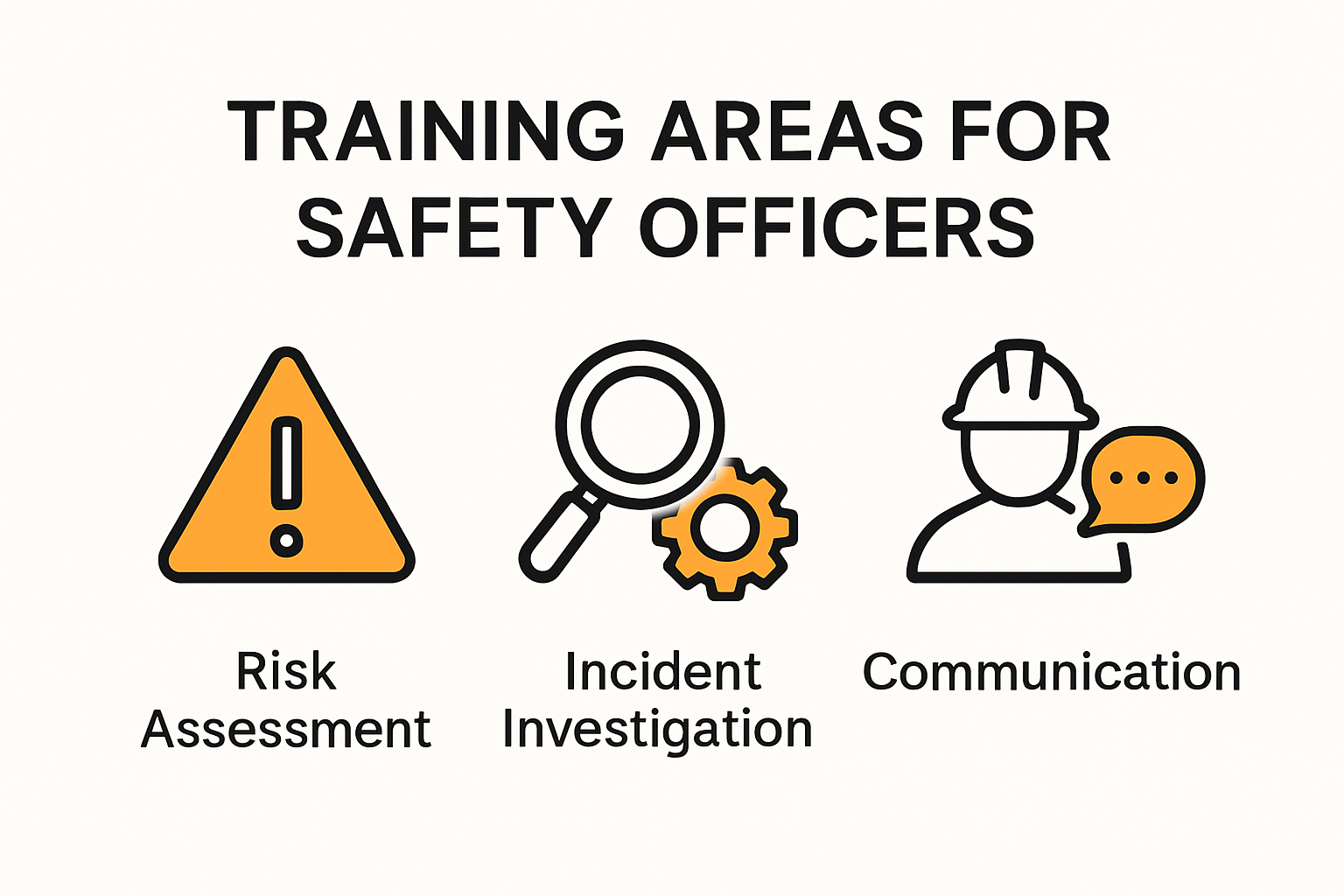
Core Skills Covered in Safety Officer Training
Safety officer training encompasses a comprehensive set of skills critical for workplace protection and risk management. Professionals in this field must develop a robust toolkit of competencies that go far beyond basic compliance. The most effective training programs focus on building holistic capabilities that enable safety officers to anticipate, recognize, and systematically address potential workplace hazards.
Risk Assessment and Hazard Identification
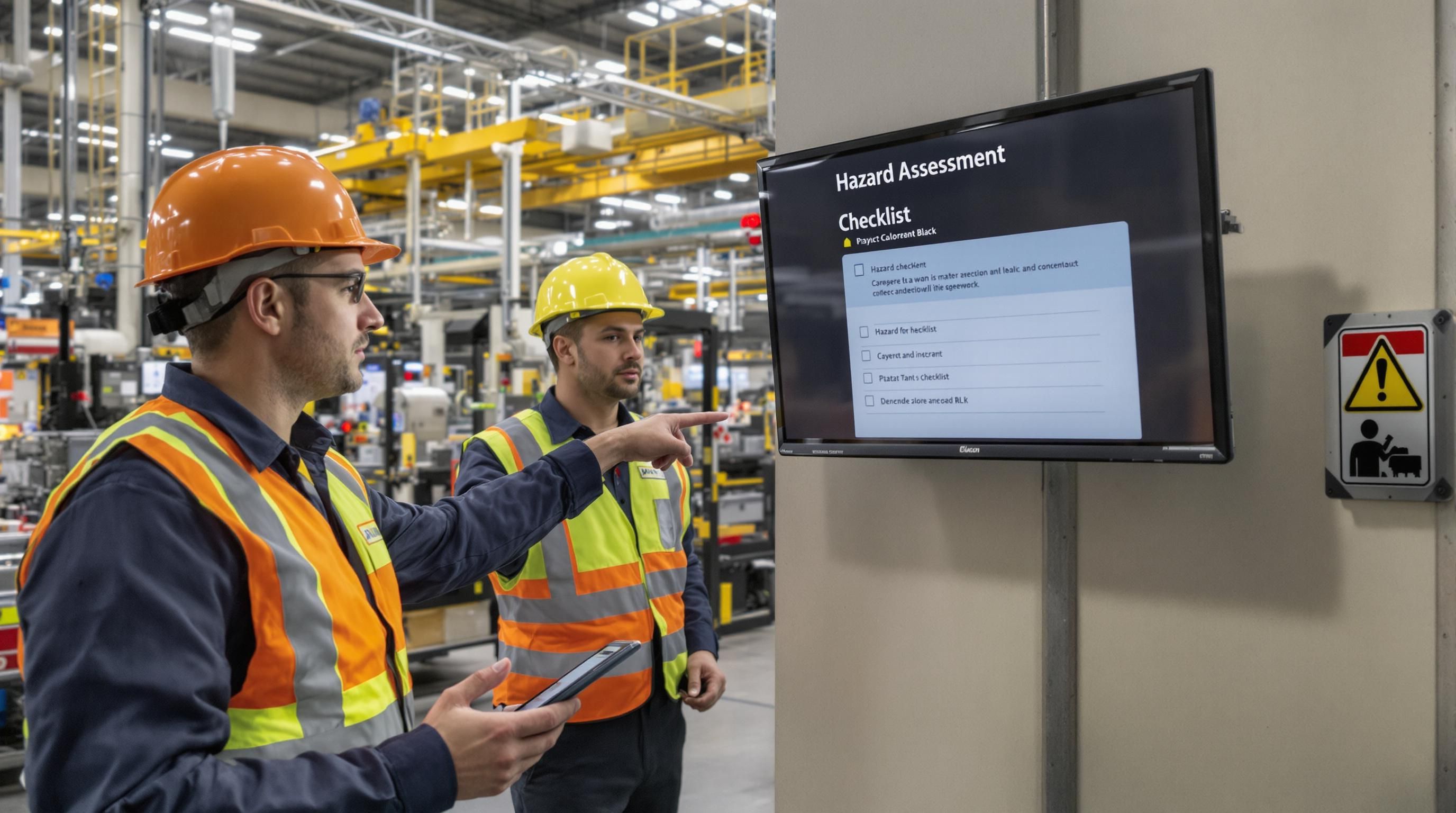
At the core of safety officer training lies the ability to conduct thorough risk assessments. Explore our comprehensive safety training guide to understand the nuanced approach required. According to OSHA’s training guidelines, safety officers must master advanced techniques for systematic hazard recognition across diverse workplace environments. This skill requires a keen eye for detail and the ability to analyze complex industrial settings.
Effective risk assessment involves multiple critical components. Safety officers learn to:
- Conduct comprehensive workplace inspections
- Evaluate potential equipment and process risks
- Develop predictive analysis frameworks
- Understand complex interaction between human factors and technological systems
Incident Investigation and Reporting
Professional safety officers must transform from reactive responders to proactive investigators. Training programs emphasize developing methodical approaches to understanding workplace incidents. This involves not just documenting what happened but critically analyzing root causes and systemic vulnerabilities.
Advanced training equips safety officers with sophisticated investigative techniques that include:
- Forensic documentation methods
- Statistical analysis of incident patterns
- Psychological understanding of workplace behavior
- Technical skills in data collection and preservation
The goal is not merely to record incidents but to create meaningful insights that prevent future occurrences. Safety officers learn to build comprehensive reports that serve as actionable blueprints for organizational improvement.
Communication and Regulatory Compliance
Beyond technical skills, safety officers must excel in communication and regulatory navigation. This involves translating complex safety protocols into clear, actionable guidance for employees at all organizational levels. Training programs focus on developing strong interpersonal skills, presentation abilities, and a deep understanding of current safety regulations.
Mastering communication requires safety officers to become adept at:
- Developing clear safety training materials
- Conducting effective safety briefings
- Negotiating compliance strategies
- Building positive safety cultures within organizations
Successful safety officers blend technical expertise with exceptional communication skills, transforming complex safety concepts into practical workplace strategies that protect human lives and organizational assets.
Recognized Certifications and Program Options
Safety officer certifications represent critical professional milestones that validate expertise and commitment to workplace protection. These credentials go beyond simple documentation and serve as comprehensive frameworks for professional development and organizational safety leadership.
OSHA Certification Pathways
Learn about accredited training programs that can help professionals navigate complex certification requirements. The Occupational Safety and Health Administration (OSHA) offers multiple certification tracks designed to meet diverse industry needs. Their Safety and Health Fundamentals Certificate Program stands out as a comprehensive professional development pathway, requiring participants to complete a minimum of 7 courses totaling at least 68 contact hours for Construction and General Industry sectors.
Key OSHA certification categories include:
- Construction Safety Certification
- General Industry Safety Certification
- Maritime Safety Certification
- Advanced Compliance Officer Training
Each certification track emphasizes specialized knowledge in occupational safety standards, hazard recognition, incident investigation, and regulatory compliance. Professionals must demonstrate proficiency across multiple technical and interpersonal competencies to earn these prestigious credentials.
Professional Association Certifications
Beyond OSHA, professional associations offer robust certification programs that validate safety officer expertise. The American Society of Safety Professionals (ASSP) provides multiple certification levels tailored to different career stages and specializations. According to their upcoming Safety 2025 conference details, industry trends increasingly emphasize continuous learning and professional development.
Notable professional certifications include:
- Certified Safety Professional (CSP)
- Associate Safety Professional (ASP)
- Certified Industrial Hygienist (CIH)
- Safety Management Specialist (SMS)
These certifications require a combination of formal education, professional experience, and rigorous examination processes. They demonstrate a commitment to maintaining the highest standards of workplace safety and risk management.
Specialized Training and Emerging Credentials
The safety officer profession continues evolving, with emerging credentials addressing technological advancements and complex workplace challenges. Modern certification programs now incorporate digital skills, data analysis, psychological safety principles, and advanced risk management techniques.
Emerging certification trends include:
- Digital Safety Management Credentials
- Psychological Safety Specialist Certification
- Advanced Risk Analytics Certification
- Environmental and Sustainability Safety Credentials
Professionals pursuing these advanced certifications demonstrate adaptability and forward thinking. They position themselves as innovative leaders capable of addressing complex safety challenges in rapidly changing work environments. The most successful safety officers view certifications not as endpoints but as continuous learning opportunities that reflect commitment to protecting human lives and organizational assets.
To help clarify the various certification options for safety officers, the following table summarizes major categories and example credentials referenced above.
| Certification Category | Example Credentials | Main Focus Area |
|---|---|---|
| OSHA Certification | Construction, General Industry, Maritime, Advanced Compliance | Specialized OSHA standards & compliance |
| Professional Association Certification | CSP, ASP, CIH, SMS | Professional safety leadership, broad EHS |
| Specialized & Emerging Credentials | Digital Safety Management, Psychological Safety, Risk Analytics | Tech skills, psychology, sustainability |
Best Practices for Corporate and Government Training
Training programs for safety officers in corporate and government sectors demand sophisticated, nuanced approaches that go beyond traditional instructional methods. The complexity of modern workplace safety requires comprehensive strategies that integrate technical knowledge, adaptive learning techniques, and organizational culture transformation.
Comprehensive Training Design and Delivery
Explore proven training strategies that set industry standards for effective safety education. According to OSHA’s training guidelines, successful programs must provide workers and managers with precise knowledge and skills to identify and mitigate workplace hazards. The most effective training designs incorporate multiple learning modalities, ensuring accessibility and comprehension across diverse workforce demographics.
Key elements of comprehensive training design include:
- Multilingual instructional materials
- Role-specific curriculum development
- Interactive learning techniques
- Scenario-based problem-solving exercises
Training programs must be meticulously crafted to address specific organizational needs while maintaining adaptability to evolving workplace safety challenges. This requires a dynamic approach that goes beyond standardized instruction.
Cultural Transformation and Engagement
Successful safety training transcends mere compliance. OSHA’s Harwood Training Grant program emphasizes the critical importance of creating training experiences that fundamentally transform organizational safety culture. According to industry research from ASIS International, effective programs must address potential communication barriers and create inclusive learning environments.
Cultural transformation strategies include:
- Peer-to-peer training methodologies
- Inclusive communication approaches
- Real-world scenario integration
- Psychological safety principles
Organizations must move beyond traditional top-down training models, creating collaborative environments where safety becomes a shared responsibility and collective commitment.
Technological Integration and Continuous Learning
Modern safety officer training demands sophisticated technological integration and continuous professional development. Digital platforms, simulation technologies, and adaptive learning systems are revolutionizing how safety professionals acquire and maintain critical skills.
Emerging technological training approaches feature:
- Virtual reality safety simulations
- Adaptive online learning platforms
- Data-driven performance tracking
- Personalized skill development modules
The most forward-thinking corporate and government training programs recognize that safety education is an ongoing journey. They create ecosystems of continuous learning that empower safety officers to anticipate, understand, and proactively address emerging workplace risks. By combining cutting-edge technology, comprehensive curriculum design, and a commitment to cultural transformation, these programs prepare safety professionals to become true organizational leaders in protecting human capital and preventing workplace incidents.
Emerging Trends in Safety Officer Training for 2025
The landscape of safety officer training is undergoing a profound transformation, driven by technological advancements, evolving workplace complexities, and the need for more adaptive, responsive training methodologies. As we move into 2025, safety professionals must embrace innovative approaches that go beyond traditional training models.
Immersive Technology and Simulation Training
Discover the latest safety training requirements that are reshaping professional development. According to groundbreaking research from VR Safety Training Studies, Virtual Reality (VR) is revolutionizing how safety officers prepare for complex workplace scenarios. The research demonstrates that immersive technologies can create hyper-realistic simulations that mirror actual industrial environments, allowing professionals to practice critical skills in risk-free digital spaces.
Cutting-edge immersive training technologies include:
- Multi-sensory virtual environments
- High-fidelity industrial hazard simulations
- Real-time emergency response scenarios
- Adaptive learning experience platforms
These technologies go beyond traditional training methods by engaging multiple sensory inputs. Research on multisensory virtual environments indicates that incorporating heat, smell, and tactile feedback can significantly enhance learning retention and skill development.
The following table summarizes some of the main features and benefits of emerging immersive training technologies described above.
| Technology Feature | Description | Training Benefit |
|---|---|---|
| Multi-sensory VR environments | Incorporates visuals, sound, touch, heat, smell | Increases skill retention & realism |
| Hazard scenario simulations | Realistic worksite hazards in virtual space | Enables safe practice of critical skills |
| Real-time emergency scenarios | Live-action emergency drills in digital format | Prepares officers for high-stress events |
| Adaptive experience platforms | Personalized skill modules and tracking | Targets skill gaps and progress |
Data-Driven and Adaptive Learning Systems
The future of safety officer training is inherently analytical and personalized. According to the 2024 State of Safety Training Survey, organizations are increasingly adopting flexible, technology-enabled training platforms that can dynamically adjust to individual learning needs and organizational requirements.
Key characteristics of modern adaptive learning systems include:
- Real-time performance tracking
- Personalized skill development pathways
- Predictive risk assessment modules
- Compliance analytics and reporting
These intelligent systems enable safety officers to receive targeted training that addresses specific skill gaps, creating a more efficient and effective learning experience.
Holistic and Interdisciplinary Training Approaches
Emerging trends highlight the need for safety officer training that transcends traditional disciplinary boundaries. Modern programs are integrating insights from psychology, data science, environmental studies, and technological innovation to create comprehensive safety professionals.
Cross-disciplinary training focus areas include:
- Psychological safety principles
- Advanced data analytics
- Sustainable workplace design
- Technological risk management
The most forward-thinking training programs recognize that safety is no longer just about compliance but about creating resilient, adaptive organizational cultures. Safety officers in 2025 must be systems thinkers who can navigate complex technological, human, and environmental interactions.
By embracing these emerging trends, safety officers can position themselves at the forefront of workplace protection, transforming from reactive responders to proactive innovators who anticipate and mitigate risks before they manifest.
Frequently Asked Questions
What are the core skills covered in safety officer training?
Safety officer training covers essential skills such as risk assessment, incident investigation, and effective communication. These skills enable safety officers to anticipate and address potential workplace hazards effectively.
What certifications are recognized for safety officers?
Recognized certifications for safety officers include OSHA certifications, such as Construction and General Industry Safety, as well as professional association certifications like Certified Safety Professional (CSP) and Associate Safety Professional (ASP). These credentials validate expertise and commitment to workplace safety.
How is technology integrated into safety officer training?
Training for safety officers increasingly includes advanced technology such as virtual reality (VR) simulations, adaptive learning platforms, and data-driven performance tracking systems. These tools enhance training effectiveness by providing realistic scenarios and personalized learning experiences.
What are the emerging trends in safety officer training for 2025?
Emerging trends for safety officer training in 2025 include immersive technology for simulation training, data-driven adaptive learning systems, and holistic interdisciplinary approaches that combine insights from various fields like psychology and environmental studies.
Stay Ahead of Safety Risks with Proven Training Solutions
Are you struggling to keep up with the rapid changes in safety officer training and the new 2025 standards? The article highlighted how technology, evolving certifications, and interdisciplinary skills are now essential for modern safety professionals. If you are worried about compliance, skill development, or making sure your team is prepared for emerging hazards, you are not alone. Most organizations find it challenging to design training that goes beyond basic box-checking and actually prepares staff for real-world risk scenarios.

Peuneo specializes in accredited safety training, consulting, and comprehensive online learning designed for both corporate and government sectors. Our online learning portal makes it simple to enroll in up-to-date courses that align with industry best practices discussed in this guide. If you want your team to master risk assessment, incident investigation, and regulatory communication, visit Peuneo’s official website today. Act now to close the gap between compliance and true safety leadership with solutions tested across South Africa. Take the next step and explore our accredited training programs to future-proof your organization.