
Safety training is getting serious attention in 2025 for one big reason. Workplaces that invest in comprehensive safety training see workplace injury rates drop by up to 42 percent among young workers. Most people assume these programs are just another checkbox to avoid fines or keep insurance costs down. The surprise is that real safety training transforms entire teams, fueling confidence and boosting productivity in ways numbers alone cannot explain.
Table of Contents
- How Safety Training Prevents Workplace Accidents
- Legal Requirements And Regulatory Compliance Explained
- Boosting Team Productivity And Employee Confidence
- Choosing The Right Safety Training Programs In 2025
Quick Summary
| Takeaway | Explanation |
|---|---|
| Comprehensive Safety Training Reduces Accidents | Systematic safety training significantly decreases workplace accidents by fostering a proactive safety culture among employees and enhancing risk awareness, procedural knowledge, and behavioral modification. |
| Legal Compliance is Essential for Worker Safety | Organizations must adhere to OSHA regulations and ensure that safety training is clear, comprehensive, and documented, as failing to do so can lead to legal repercussions and reputational damage. |
| Safety Training Boosts Productivity and Confidence | Effective safety programs enhance team performance by reducing workplace interruptions and increasing employee confidence, leading to higher morale and improved overall organizational resilience. |
| Criteria for Effective Training Program Selection | When choosing safety training programs, organizations should prioritize customization, interactive learning, comprehensive coverage, and integration of modern technology to address specific workplace risks effectively. |
| Future-Proofing Training is Key | Organizations should invest in dynamic safety training solutions that include technological advancements and continuous skill development to ensure ongoing compliance and employee engagement. |
How Safety Training Prevents Workplace Accidents
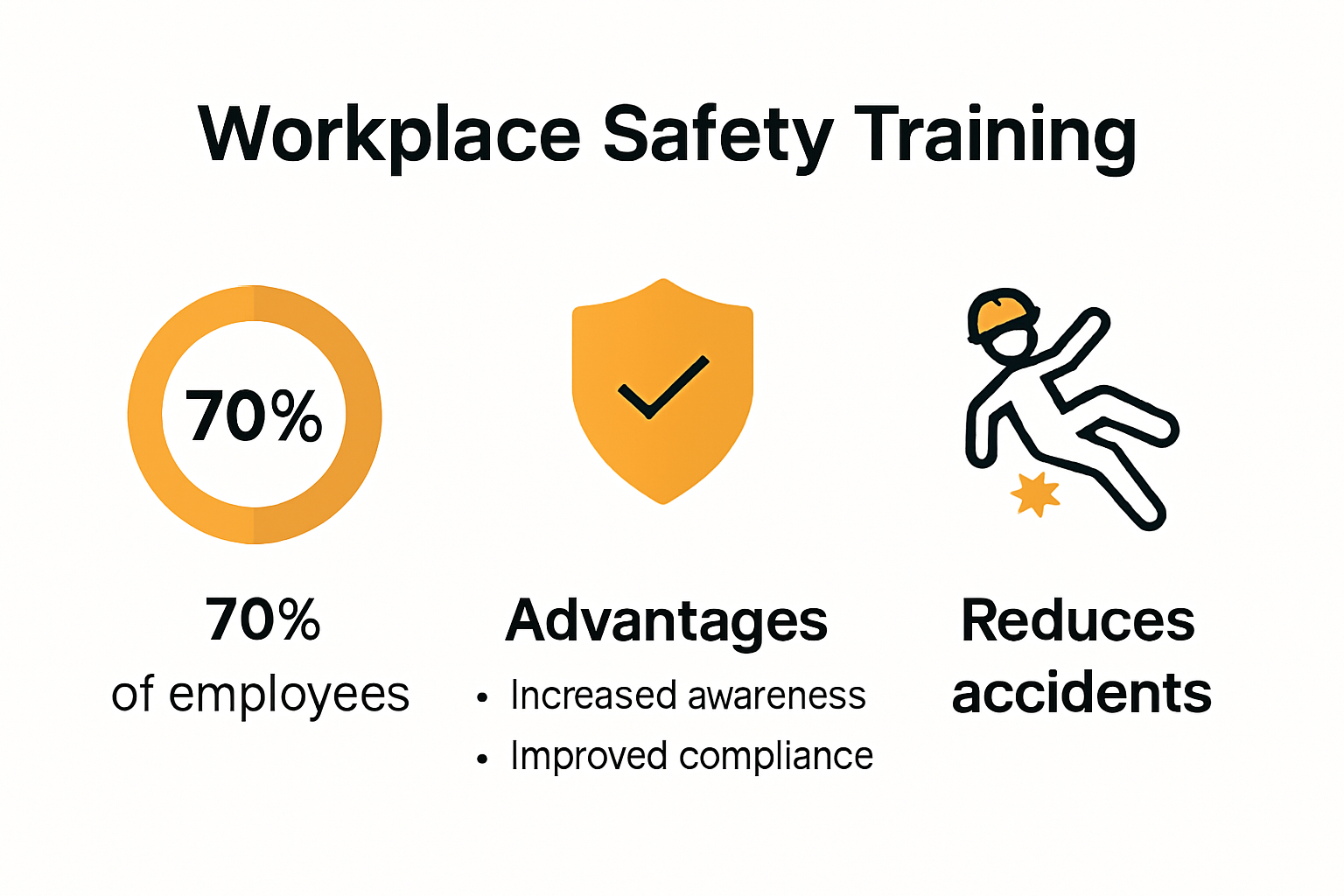
Workplace accidents represent a significant challenge for organizations across multiple industries. Understanding how comprehensive safety training acts as a critical preventive mechanism is essential for protecting workers and minimizing organizational risks.
The Systematic Impact of Safety Interventions
Research demonstrates that safety training goes far beyond simple compliance. A systematic review revealed that occupational safety interventions targeting group or organizational levels are substantially more effective in reducing workplace accidents compared to individual-focused approaches. Researchers found that strategic, comprehensive training programs create a holistic safety culture that fundamentally transforms workplace behavior.
The most successful safety training programs incorporate multiple layers of intervention. These include:
- Risk Awareness: Helping workers identify potential hazards before they become critical incidents
- Procedural Knowledge: Teaching precise steps to mitigate and respond to potential workplace dangers
- Behavioral Modification: Developing a proactive safety mindset that extends beyond formal training sessions
Here is a summary table organizing the key layers of effective safety training interventions and their main focus:
| Layer of Intervention | Main Focus |
|---|---|
| Risk Awareness | Identifying potential hazards before incidents occur |
| Procedural Knowledge | Teaching steps to mitigate and respond to dangers |
| Behavioral Modification | Developing a proactive, safety-oriented mindset |
Quantifiable Reduction in Workplace Incidents
Empirical evidence highlights the tangible benefits of safety training. A study analyzing construction laborers in Washington State uncovered compelling statistics that underscore training’s effectiveness. Workers who received comprehensive safety and health training were 12% less likely to file workers’ compensation claims. Even more impressively, among workers aged 16 to 24, the reduction in claims reached an extraordinary 42%.
These numbers are not merely statistical abstractions but represent real human lives protected through systematic educational interventions. By implementing robust safety training requirements, organizations can create environments where accidents are anticipated and prevented rather than merely responded to after the fact.
Below is a table summarizing key statistics related to safety training’s effectiveness in reducing workplace incidents:
| Group | Reduction in Workers’ Compensation Claims |
|---|---|
| All Workers (General) | 12% |
| Young Workers (Age 16-24) | 42% |
Building a Proactive Safety Culture
Effective safety training transcends mechanical instruction. It cultivates a cultural transformation where every worker becomes an active participant in maintaining workplace safety. This approach recognizes that preventing accidents is a collective responsibility that requires continuous education, awareness, and commitment.
While research from the CDC suggests that high-quality evidence directly linking training to injury reduction remains complex, the indirect benefits are undeniable. Safety training programs positively influence workers’ safety behaviors, creating a ripple effect of increased awareness and risk mitigation.
Organizations that invest in comprehensive safety training are not just checking a regulatory box. They are making a profound commitment to their most valuable asset: their workforce. By transforming safety from a passive concept to an active, engaging practice, these organizations minimize risks, reduce potential financial losses, and most importantly, protect human lives.
Legal Requirements and Regulatory Compliance Explained
Navigating the complex landscape of legal requirements and regulatory compliance is crucial for organizations committed to workplace safety. Understanding these mandates goes beyond mere administrative tasks it represents a fundamental responsibility to protect workers and maintain operational integrity.
Foundational Safety Regulations
Workplace safety regulations form the backbone of employee protection. The Occupational Safety and Health Administration (OSHA) mandates that employers provide safety training in a language and vocabulary workers can comprehend. This requirement ensures that critical safety information is not just communicated but genuinely understood by all employees.
Key regulatory expectations include:
- Clear Communication: Training materials must be accessible and comprehensible to all workers
- Comprehensive Coverage: Detailed explanation of potential workplace hazards
- Documented Training: Maintaining accurate records of safety education sessions
Compliance Beyond Basic Requirements
Legal experts emphasize that compliance with occupational safety regulations is not just a legal obligation but a critical strategy for safeguarding workers. Organizations must develop robust safety training programs that address specific industry risks and evolving workplace challenges.
The financial implications of non-compliance can be substantial. Organizations that fail to meet regulatory standards may face significant penalties, including:
- Substantial monetary fines
- Potential legal actions from injured workers
- Reputational damage that can impact business relationships
Evolving Regulatory Landscape
Regulatory requirements are not static. They continuously adapt to technological advancements, emerging workplace risks, and new understanding of occupational health. Successful organizations recognize that compliance is an ongoing process requiring continuous learning and adaptation.
Modern safety compliance demands more than checking boxes. It requires a proactive approach that integrates legal requirements with a genuine commitment to worker protection. This means regularly updating training materials, conducting comprehensive risk assessments, and creating a culture of safety that extends beyond mere regulatory compliance.
By understanding and meticulously implementing legal requirements, organizations demonstrate their commitment to their most valuable asset their workforce. Regulatory compliance is not just about avoiding penalties it is about creating a safe, respectful, and productive work environment where employees can thrive without fear of potential harm.
Boosting Team Productivity and Employee Confidence
Safety training extends far beyond preventing workplace accidents. It serves as a powerful catalyst for enhancing team productivity and building robust employee confidence. Organizations that strategically implement comprehensive safety programs unlock significant performance potential.
The Productivity Performance Connection
Research indicates that effective safety training can reduce workplace injuries and illnesses by up to 50%. This dramatic reduction translates directly into operational efficiency. When employees feel secure and well-prepared, they can focus more intently on their core responsibilities without the persistent underlying anxiety of potential workplace hazards.
Key productivity benefits include:
- Reduced Workplace Interruptions: Fewer accidents mean less operational downtime
- Enhanced Worker Concentration: Employees can dedicate mental energy to tasks instead of worrying about potential risks
- Streamlined Workflow: Comprehensive safety protocols create more predictable and efficient work environments
Building Organizational Confidence
Comprehensive safety training programs demonstrate an organization’s genuine commitment to employee well-being. This commitment significantly boosts team morale and individual confidence. Workers who understand their environment and feel protected are more likely to engage proactively, suggest improvements, and contribute innovative solutions.
The psychological impact is profound. When employees recognize that their organization prioritizes their safety, they develop a deeper sense of loyalty and motivation. This emotional investment translates into higher job satisfaction and increased discretionary effort.
Strategic Performance Enhancement
OSHA emphasizes that safety training is more than a compliance requirement it is a strategic performance tool. Organizations can leverage these programs to improve team performance by creating a culture of mutual respect, continuous learning, and proactive risk management.
Emergent benefits of strategic safety training include:
- Increased employee engagement
- Higher retention rates
- More collaborative team dynamics
- Improved overall organizational resilience
By viewing safety training as an investment in human capital rather than a mandatory expense, organizations can transform their workplace culture. The result is not just a safer environment but a more productive, confident, and innovative workforce ready to meet complex challenges head-on.
Choosing the Right Safety Training Programs in 2025
Selecting the most effective safety training programs requires strategic insight and a forward-thinking approach. In 2025, organizations must move beyond traditional training methodologies and embrace comprehensive, dynamic solutions that address evolving workplace challenges.
Key Criteria for Program Selection
Research from OSHA demonstrates that effective safety training programs can reduce workplace injuries and illnesses by 20 to 40 percent. When choosing a program, organizations should prioritize several critical factors:
- Customization: Programs tailored to specific industry risks
- Interactive Learning: Engaging training methods that promote active participation
- Comprehensive Coverage: Addressing both theoretical knowledge and practical skills
- Technological Integration: Utilizing modern learning platforms and digital resources
Evaluating Program Effectiveness
Comprehensive safety training goes beyond simple information delivery. It enhances employee awareness of workplace hazards, equipping workers with the knowledge to identify, report, and control potential risks. When assessing potential training programs, organizations should consider:
- Depth of content relevant to specific workplace environments
- Ability to provide real-world scenario-based learning
- Mechanisms for ongoing skill assessment and reinforcement
- Alignment with current regulatory requirements
Below is a checklist table highlighting best practices for evaluating the effectiveness of safety training programs:
| Evaluation Criteria | How It’s Addressed |
|---|---|
| Depth of Relevant Content | Fits the specific workplace |
| Scenario-Based Learning | Uses real-world examples |
| Ongoing Skill Assessment | Includes reinforcement mechanisms |
| Regulatory Alignment | Meets current standards |
Future-Proofing Safety Training
University research highlights that implementing robust safety training programs impacts more than accident prevention. These programs significantly improve employee morale and productivity by creating a sense of security and organizational commitment.
Organizations can future-proof their safety training by exploring comprehensive training requirements that incorporate:
- Emerging technological tools like virtual reality simulations
- Adaptive learning platforms
- Continuous skill development modules
- Data-driven performance tracking
The most successful safety training programs in 2025 will be those that view safety education as a dynamic, ongoing process rather than a static compliance requirement. They will leverage technology, prioritize employee engagement, and create a culture of continuous learning and risk awareness.
By investing in sophisticated, adaptable safety training programs, organizations can simultaneously protect their workforce, enhance productivity, and demonstrate a genuine commitment to employee well-being. The right training program becomes more than an educational tool it becomes a strategic asset that drives organizational excellence and builds a culture of proactive safety management.
Frequently Asked Questions
What are the benefits of safety training in the workplace?
Comprehensive safety training reduces workplace injury rates, fosters a proactive safety culture, boosts employee confidence, and enhances overall productivity.
How much can safety training reduce workplace accidents?
Workplaces that implement effective safety training can see injury rates drop by up to 42% among young workers, and up to 12% overall in worker’s compensation claims.
Why is legal compliance important in safety training?
Adhering to legal regulations, such as those set by OSHA, ensures that safety training is effective, comprehensive, and protects organizations from potential fines and reputational damage.
What factors should organizations consider when selecting a safety training program?
Organizations should prioritize customization, interactive learning methods, comprehensive content coverage, and the integration of modern technology to effectively address specific workplace risks.
Transform Your Safety Culture with Accredited Training
You have seen how critical comprehensive safety training is when it comes to reducing workplace injuries and building a confident, productive team. The article highlights the struggle many organizations face: moving beyond checklists and outdated compliance to create a proactive safety culture. Achieving real change means more than meeting legal requirements. It requires a trusted partner who knows how to turn regulations into results and empower every worker.

If you are ready to raise your workplace’s safety standards in 2025, Peuneo is here to help. Discover accredited, industry-tailored safety training and consulting services designed for South African businesses at every level. Take the next step by learning more about our safety training solutions or explore our full range of programs on Peuneo’s official website. Do not wait for compliance deadlines—start building a safer, more resilient organization today.