
Occupational health training is transforming the way workplaces protect their teams and boost productivity. Surprise awaits here. For every dollar invested in employee health initiatives, companies can save an average of $3.27 in healthcare costs. Yet most organizations still overlook the hidden advantages beyond simple compliance. The real payoff comes from dynamic training strategies that do far more than just tick boxes—they create safer, smarter, and more resilient workforces.
Table of Contents
- Key Components Of Occupational Health Training Programs
- Benefits For Employers, Agencies, And Workers
- Latest Trends And Requirements In 2025
- Choosing The Right Occupational Health Training Provider
Quick Summary
| Takeaway | Explanation |
|---|---|
| Comprehensive Hazard Training is Essential | Effective occupational health training must include robust hazard recognition techniques, focusing on identifying physical, chemical, and ergonomic risks, alongside implementing the hierarchy of controls. |
| Tailored Training Programs Maximize Impact | Specialized training must be adaptive to industry-specific requirements, employing interactive methods such as simulations and real-world application to ensure effective learning. |
| Continuous Learning is Critical | Training programs should not be static; they need regular updates and opportunities for worker feedback to enhance engagement and knowledge retention. |
| Economic Benefits are Substantial | Employers can expect reduced healthcare costs, decreased absenteeism, and enhanced productivity through robust health training investments. |
| Choosing the Right Provider is Key | Selecting a training provider with recognized credentials, innovative methodologies, and a commitment to long-term value is essential for fostering workplace safety and employee development. |
Key Components of Occupational Health Training Programs
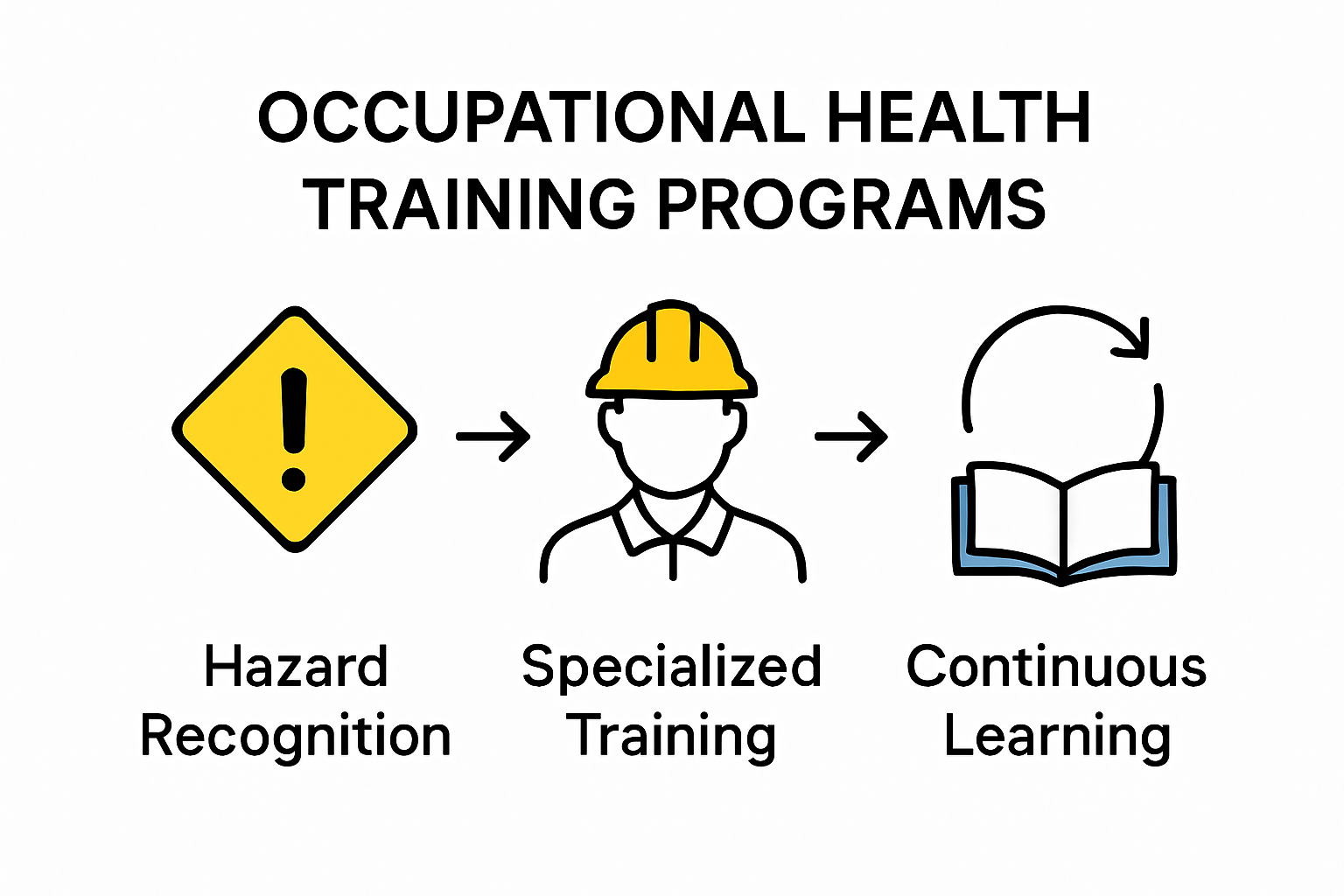
Occupational health training programs represent a strategic approach to protecting workers and creating safer workplace environments. These comprehensive programs go beyond basic safety protocols by integrating targeted educational strategies that address multiple dimensions of workplace health and risk management.
Comprehensive Hazard Recognition and Control
Effective occupational health training must start with robust hazard identification techniques. Learn more about workplace safety protocols that help workers recognize potential risks. According to the Occupational Safety and Health Administration, comprehensive training should equip employees with skills to systematically identify workplace hazards through techniques like job hazard analysis. This involves understanding different categories of workplace risks:
- Physical Hazards: Identifying potential dangers from machinery, equipment, noise, radiation, and environmental conditions
- Chemical Hazards: Recognizing toxic substances, understanding material safety data sheets, and proper handling procedures
- Ergonomic Risks: Assessing workplace design, equipment layout, and potential strain or repetitive injury sources
Training programs must move beyond mere identification and focus on implementing effective control strategies. This means teaching workers the hierarchy of controls: elimination, substitution, engineering controls, administrative controls, and personal protective equipment (PPE).
Here is a summary table outlining the main hazard types and key components of the hierarchy of controls discussed above.
| Hazard Type | Examples | Hierarchy of Controls (from most to least effective) |
|---|---|---|
| Physical | Machinery, noise, radiation, environmental hazards | Elimination, Substitution, Engineering Controls, Administrative Controls, PPE |
| Chemical | Toxic substances, improper handling, MSDS knowledge | Elimination, Substitution, Engineering Controls, Administrative Controls, PPE |
| Ergonomic | Poor workspace design, repetitive motion, strain | Elimination, Substitution, Engineering Controls, Administrative Controls, PPE |
Specialized Training and Skill Development
Occupational health training in 2025 demands a nuanced approach that addresses specific industry requirements. Modern programs must be adaptive, recognizing that different sectors have unique health and safety challenges. Research from the National Institute for Occupational Safety and Health emphasizes the importance of tailored training modules that consider:
- Industry-specific risk profiles
- Technological advancements affecting workplace safety
- Emerging health and environmental considerations
- Legal and regulatory compliance requirements
Successful training programs incorporate interactive learning methods such as simulations, hands-on demonstrations, scenario-based training, and digital learning platforms. These approaches ensure that workers not only understand theoretical concepts but can apply them effectively in real-world scenarios.
Continuous Learning and Program Evolution
Occupational health training is not a static process but a dynamic, ongoing journey. Organizations must commit to continuous improvement and regular program updates. According to OSHA guidelines, effective training programs should:
- Provide opportunities for worker feedback
- Regularly assess and update training content
- Ensure training is conducted in accessible language
- Cover emergency response and incident reporting procedures
- Protect workers’ rights to report concerns without fear of retaliation
By embracing a holistic, adaptive approach to occupational health training, organizations can create safer workplaces, reduce incidents, and foster a culture of proactive safety awareness. The key lies in understanding that training is not just a compliance requirement but a critical investment in human capital and organizational resilience.

Benefits for Employers, Agencies, and Workers
Occupational health training delivers substantial advantages across multiple organizational levels, creating a comprehensive ecosystem of workplace safety and professional development. Understanding these multifaceted benefits helps stakeholders recognize the strategic importance of robust training programs.
Economic and Productivity Advantages
Employers stand to gain significant financial benefits from comprehensive occupational health training. Research from the Centers for Disease Control and Prevention indicates that workplace wellness programs can generate substantial returns on investment. According to the study, organizations implementing structured health training experience:
- Reduced Healthcare Costs: An average reduction of $3.27 for every dollar invested in employee health initiatives
- Decreased Absenteeism: Potential savings of $2.73 per dollar spent on training programs
- Enhanced Productivity: Improved worker performance and reduced workplace interruptions
These economic advantages demonstrate that occupational health training is not merely a compliance requirement but a strategic investment in organizational resilience. By proactively addressing workplace health challenges, companies can create more efficient and sustainable work environments.
The following table organizes the key economic benefits and average savings associated with occupational health training programs, as highlighted in the content above.
| Benefit | Description | Average Savings/Impact |
|---|---|---|
| Reduced Healthcare Costs | Lower medical expenses for employers | $3.27 saved per $1 invested |
| Decreased Absenteeism | Fewer missed work days, increased presence | $2.73 saved per $1 spent on programs |
| Enhanced Productivity | Improved worker performance, less disruption | Higher efficiency, fewer interruptions |
Legal Compliance and Risk Management
For government agencies and regulatory bodies, occupational health training serves as a critical mechanism for ensuring workplace safety standards. According to the Occupational Safety and Health Administration, comprehensive training programs help organizations meet legal requirements while minimizing potential liabilities. Agencies benefit by:
- Establishing clear safety protocols
- Monitoring and enforcing workplace health standards
- Reducing workplace injury and illness rates
- Creating standardized training frameworks
Moreover, read more about professional development strategies that can complement these compliance efforts, helping workers understand their rights and responsibilities within complex regulatory landscapes.
Individual Worker Empowerment
Beyond organizational benefits, occupational health training profoundly impacts individual workers. Research from the National Institute for Occupational Safety and Health highlights that effective training programs contribute to:
- Increased worker confidence and competence
- Better understanding of personal health and safety risks
- Enhanced skill development and career progression opportunities
- Improved mental health through reduced workplace stress
Workers who receive comprehensive occupational health training become active participants in maintaining workplace safety. They develop critical skills in hazard recognition, risk mitigation, and proactive health management. This empowerment translates into more engaged, resilient, and adaptable workforce members who can navigate complex professional environments.
By recognizing and leveraging these multidimensional benefits, employers, agencies, and workers can collaboratively create safer, more productive, and more supportive workplace ecosystems. Occupational health training emerges not just as a regulatory requirement but as a strategic tool for holistic organizational development and individual professional growth.
Latest Trends and Requirements in 2025
The landscape of occupational health training is rapidly evolving, driven by technological advancements, changing workplace dynamics, and emerging global challenges. As we navigate the complexities of 2025, organizations must stay ahead of cutting-edge trends that reshape how we approach workplace safety and professional development.
Technological Integration and Digital Learning
Digital transformation is revolutionizing occupational health training methodologies. Research from leading technology institutes highlights the emergence of sophisticated learning technologies that are redefining professional training. Learn more about online learning innovations that are transforming workplace education.
Key technological trends include:
- Virtual Reality (VR) Simulations: According to cutting-edge research, immersive VR environments now allow workers to practice complex emergency protocols and equipment handling in risk-free digital spaces. These simulations provide unprecedented opportunities for experiential learning without physical risks.
- Artificial Intelligence (AI) Risk Analysis: Advanced AI systems can now analyze vast datasets to predict potential workplace hazards, enabling proactive risk management strategies.
- Wearable Health Technologies: Smart devices now track real-time health metrics, allowing immediate intervention and personalized health monitoring in professional environments.
Adaptive and Personalized Training Approaches
Traditional one-size-fits-all training models are being replaced by highly personalized learning experiences. Research from the National Institute of Occupational Safety and Health emphasizes the importance of adaptive training methodologies that consider individual learning styles, skill levels, and specific workplace contexts.
Modern occupational health training in 2025 focuses on:
- Customized learning pathways
- Microlearning modules
- Adaptive assessment techniques
- Continuous skill development frameworks
- Personalized risk management strategies
Regulatory Compliance and Global Standards
The regulatory landscape for occupational health training continues to evolve, reflecting increasing complexity and global interconnectedness. Occupational Safety and Health Administration (OSHA) guidelines indicate a growing emphasis on:
- Comprehensive digital documentation
- Cross-industry training standards
- Enhanced worker protection protocols
- Increased transparency in safety reporting
- Integration of mental health considerations
Organizations must now view occupational health training as a dynamic, continuous process that goes beyond traditional compliance. The convergence of technology, personalized learning, and comprehensive regulatory frameworks is creating a more holistic approach to workplace safety and professional development.
By embracing these emerging trends, organizations can create more resilient, adaptive, and health-conscious workplace environments that prioritize both technological innovation and human-centric safety strategies.
Choosing the Right Occupational Health Training Provider
Selecting an appropriate occupational health training provider is a critical decision that can significantly impact workplace safety, employee development, and organizational compliance. The right provider transforms training from a mandatory requirement into a strategic investment in human capital and organizational resilience.
Credentials and Accreditation Essentials
Research from industry experts emphasizes the importance of choosing a training provider with robust credentials. Organizations must carefully evaluate potential providers based on several key factors:
- Recognized Certifications: Look for providers accredited by national and international safety organizations
- Industry-Specific Experience: Providers with demonstrated expertise in your specific sector
- Regulatory Compliance: Proven track record of meeting current safety and training standards
Discover comprehensive guidelines for training provider selection that can help streamline your decision-making process. According to OSHA guidelines, credible training providers should demonstrate:
- Clear curriculum development processes
- Regular content updates
- Qualified and experienced instructors
- Comprehensive assessment methodologies
Training Methodology and Delivery Approaches
Interdisciplinary research highlights the critical importance of innovative training methodologies. Modern occupational health training providers must offer dynamic and adaptive learning experiences:
- Blended Learning Options: Combination of online and in-person training
- Interactive Simulation Technologies: Practical, scenario-based learning environments
- Customizable Training Modules: Tailored to specific organizational needs
- Continuous Learning Platforms: Ongoing skill development and knowledge updates
Effective providers understand that training is not a one-time event but a continuous process of skill enhancement and risk management.
Cost-Effectiveness and Long-Term Value
Choosing a training provider involves more than comparing price tags. According to workplace safety experts, organizations should evaluate providers based on comprehensive value metrics:
- Total cost of training implementation
- Potential reduction in workplace incidents
- Quality of learner engagement
- Long-term skill retention
- Measurable performance improvements
The most cost-effective training provider delivers not just information, but transformative learning experiences that fundamentally improve workplace safety culture. This means looking beyond surface-level compliance to providers who demonstrate a commitment to meaningful skill development and risk mitigation.
Navigating the complex landscape of occupational health training providers requires a strategic approach. By prioritizing credentials, innovative methodologies, and demonstrable long-term value, organizations can select partners who will genuinely contribute to workplace safety and employee development. The right training provider is an investment in your most valuable asset: your workforce.
Frequently Asked Questions
What are the key components of occupational health training programs?
The key components of occupational health training programs include comprehensive hazard recognition and control, specialized training and skill development tailored to industry needs, and continuous learning to evolve programs based on worker feedback and changing regulations.
How can employers benefit from investing in occupational health training?
Employers can experience significant economic benefits, including reduced healthcare costs, decreased absenteeism, and enhanced productivity. For every dollar invested in health initiatives, companies can save an average of $3.27 in healthcare costs.
What trends are shaping occupational health training in 2025?
In 2025, trends in occupational health training include the integration of technology like virtual reality for simulations, adaptive and personalized training approaches, and a focus on regulatory compliance with global standards.
How should organizations choose the right occupational health training provider?
Organizations should consider providers with recognized credentials, demonstrated industry-specific experience, and innovative training methodologies that emphasize interactive and adaptive learning experiences. It’s also essential to evaluate the long-term value and cost-effectiveness of the training program.
Ready to Transform Your Occupational Health Training in 2025?
Workplace safety and compliance are evolving, and your organization cannot afford outdated methods. As addressed in the article, one-size-fits-all training leaves critical gaps. Challenges such as hazard recognition, continuous learning, and keeping pace with changing regulations put your team at risk. Professionals are asking for more than compliance: they want robust, accredited programs and tools that empower employees while protecting your business.

Take advantage of Peuneo’s accredited occupational health training, consulting, and digital learning solutions. Our online portal offers customizable courses matching the latest 2025 requirements. Act now to boost compliance, reduce incidents, and strengthen your workforce with real, measurable results. Visit Peuneo’s website to enroll, request consulting, or discover how we support your compliance and safety goals.
Recommended
- Safety Training Requirements Employers Need to Know | 2025 Guide – Peuneo
- 2025 Essential Insights: The Importance of Training Programs – Peuneo
- How to Create a Training Culture That Drives Results in 2025 – Peuneo
- 2025 Training Course Benefits: Boost Skills & Growth – Peuneo
- 2025 Trends in Employee Development: 5 Key Strategies – Peuneo
- Top Workforce Development Strategies for 2025: A Practical Guide – Peuneo