


Finding accredited training programs can feel overwhelming in today’s educational landscape. But here’s a startling fact: Companies that invest in accredited training programs see a 218% increase in income per employee. Surprising, right? The truth is, these programs offer far more than just a paycheck boost. They serve as a gateway to higher professional credibility and career advancement, ensuring you gain the skills employers value most. Are you ready to unlock your potential?
Table of Contents
- Accredited Training Programs Finding Them
- How To Find Accredited Training Programs
- Benefits Of Accredited Training Programs
- Resources For Accredited Programs
Quick Summary
| Takeaway | Explanation |
|---|---|
| Accredited training ensures quality | Programs undergo rigorous evaluations by recognized accrediting bodies to meet high-quality standards. |
| Verifying accreditation is essential | Prospective learners should assess the credentials of accrediting bodies and confirm the current accreditation status of programs through official databases. |
| Accredited programs enhance career prospects | Nationally recognized qualifications from accredited training can significantly improve professional credibility, employability, and earning potential. |
| Use multiple resources to find accredited programs | Leverage government databases, industry-specific accreditation sources, and international directories for comprehensive verification of accredited training offerings. |
| Training drives organizational success | Companies that invest in accredited training programs see improved performance, higher income per employee, and increased profitability. |
What are Accredited Training Programs?
Accredited training programs represent a gold standard in professional education and skill development, offering learners and organizations a validated pathway to high-quality learning experiences. These programs undergo a rigorous evaluation process that ensures they meet established quality standards set by recognized accrediting bodies.
Understanding Program Accreditation
At its core, accredited training programs are comprehensive educational offerings that have been thoroughly reviewed and approved by official credentialing organizations. ABET explains that accreditation involves a meticulous assessment of a program’s curriculum, instructional quality, institutional resources, and overall effectiveness in delivering professional training.
The accreditation process is not a one-time event but a continuous commitment to maintaining exceptional educational standards. Training providers must demonstrate consistent excellence in several key areas:
- Curriculum Relevance: Ensuring course content aligns with current industry requirements
- Instructor Qualifications: Verifying that teaching staff possess appropriate expertise
- Learning Outcomes: Documenting measurable skills and competencies students will acquire
Benefits of Choosing Accredited Training
Opting for an accredited training program provides significant advantages for both individual learners and organizations. NCFE highlights that these programs offer nationally recognized qualifications that enhance professional credibility and employability.
For organizations, accredited training programs translate into tangible benefits:
- Enhanced workforce competency
- Standardized skill development
- Reduced training risks
- Improved organizational performance
Individual professionals also gain substantial advantages. An accredited training program serves as a credible endorsement of one’s skills, signaling to employers that the individual has completed a rigorous, industry-validated learning experience. This can differentiate job candidates in competitive markets and provide a clear pathway for career advancement.
The Accreditation Verification Process
Verifying the authenticity of an accredited training program requires careful investigation. AAA Accreditation recommends that learners and organizations:
- Check the credentials of the accrediting body
- Review the specific standards used for program evaluation
- Confirm the accreditation’s current status and renewal date
- Examine the scope of accreditation for specific training domains
By understanding what constitutes an accredited training program, professionals can make informed decisions about their educational investments, ensuring they receive high-quality, recognized training that meets industry standards and supports their career objectives.
How to Find Accredited Training Programs
Navigating the landscape of professional training requires strategic approaches to identifying and verifying accredited training programs. With numerous educational options available, professionals must employ systematic methods to ensure they select high-quality, recognized learning experiences that align with their career goals.
Utilizing Official Accreditation Databases
The most reliable method for finding accredited training programs involves leveraging official databases and resources maintained by recognized educational authorities. The U.S. Department of Education’s Database of Accredited Postsecondary Institutions and Programs (DAPIP) provides a comprehensive searchable platform where learners can verify the accreditation status of various educational programs.
Key strategies for using these databases include:
- Filtering search results by specific industry or professional field
- Checking the current accreditation status of programs
- Verifying the recognition of specific accrediting bodies
- Cross-referencing multiple official sources
Researching Industry-Specific Accreditation Sources
Different professional sectors have specialized accreditation organizations that maintain rigorous standards for training programs. For instance, CAAHEP (Commission on Accreditation of Allied Health Education Programs) offers a targeted database for healthcare-related training programs, allowing professionals to find precisely accredited educational offerings in their specific domain.
Professionals should consider the following approach when researching industry-specific accreditations:
- Identify the primary accrediting body in their professional field
- Review the organization’s current list of accredited programs
- Evaluate the specific standards used for program evaluation
- Check the frequency and process of program re-accreditation
Comprehensive Verification Techniques
Beyond database searches, a comprehensive approach to finding accredited training programs involves multiple verification techniques. The Council for Higher Education Accreditation (CHEA) recommends a multi-step verification process that goes beyond simple database searches.
Comprehensive verification techniques include:
- Contacting professional associations directly
- Requesting official accreditation documentation from training providers
- Consulting with industry mentors or professional networks
- Reviewing independent educational quality assessment reports
Professionals should also pay attention to warning signs that might indicate questionable accreditation, such as:
- Accreditation from unrecognized or non-standard organizations
- Lack of transparency in program credentials
- Inability to provide clear documentation of accreditation status
- Significantly lower costs compared to industry-standard programs
By employing a systematic and thorough approach to finding accredited training programs, professionals can make informed decisions that support their career development and ensure they receive high-quality, recognized learning experiences. The key is to be diligent, use multiple verification sources, and prioritize programs with clear, verifiable accreditation credentials.
Benefits of Accredited Training Programs
Accredited training programs offer a strategic advantage for both individual professionals and organizations seeking to enhance their capabilities and competitive edge. These programs provide far-reaching benefits that extend beyond traditional learning experiences, delivering measurable value across multiple professional dimensions.
Organizational Performance and Productivity
Research from industry experts reveals that companies investing in comprehensive training programs experience remarkable performance improvements. Organizations with accredited training programs can generate 218% higher income per employee compared to those without formalized training initiatives.
The productivity gains from accredited training are substantial and multifaceted:
- Enhanced Workforce Competency: Structured, validated learning pathways
- Standardized Skill Development: Consistent performance benchmarks
- Reduced Training Risks: Systematically validated educational content
- Strategic Talent Management: Clear professional development frameworks
Professional Credibility and Career Advancement
The HR Certification Institute highlights that approximately 65% of employers recognize certification programs as critical for developing a more productive and knowledgeable workforce. Accredited training programs serve as powerful credentials that distinguish professionals in competitive job markets.

Key advantages for individual professionals include:
- Nationally recognized qualifications
- Verified skill sets
- Enhanced employability
- Increased earning potential
- Continuous learning documentation
Economic and Performance Impact
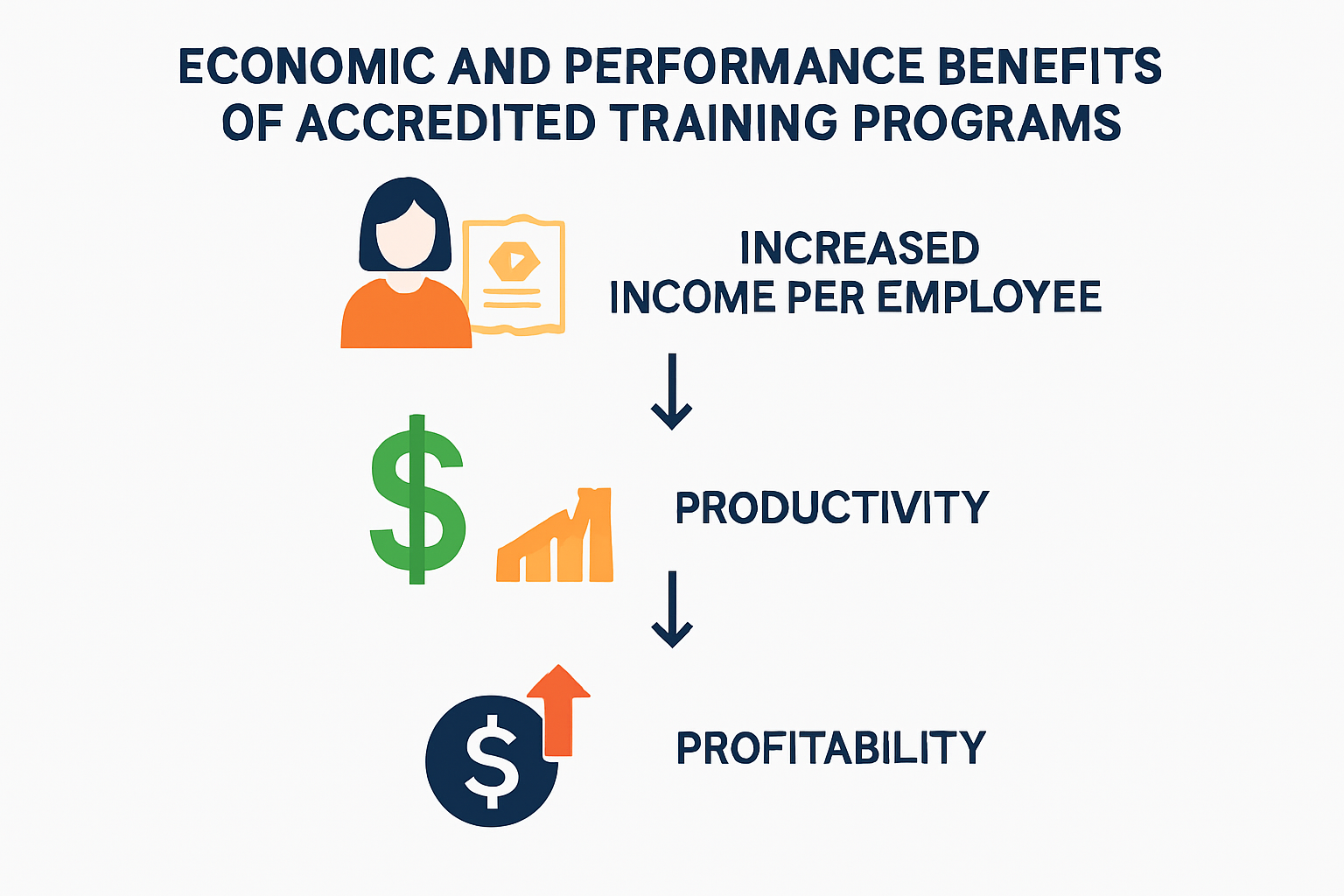
Workplace learning studies demonstrate that organizations become measurably more successful when they prioritize employee training. Businesses implementing comprehensive training programs experience a 17% increase in productivity and a remarkable 21% boost in overall profitability.
The economic benefits of accredited training programs extend beyond immediate performance metrics. They represent a strategic investment in human capital that yields long-term organizational resilience and individual professional growth. By providing structured, validated learning experiences, these programs create a robust ecosystem of continuous improvement and skill development.
Professionals and organizations choosing accredited training programs are not merely purchasing educational experiences; they are investing in a proven pathway to excellence. The combination of rigorous standards, industry-validated curricula, and measurable outcomes makes these programs an essential tool for navigating the complex, rapidly evolving professional landscape of the 21st century.
Resources for Accredited Programs
Navigating the complex landscape of accredited training programs requires access to reliable, comprehensive resources that provide accurate and up-to-date information. Professionals and organizations seeking quality educational opportunities can leverage multiple authoritative platforms to verify and discover accredited training programs across various industries and disciplines.
Government and Official Accreditation Databases
The U.S. Department of Education’s Database of Accredited Postsecondary Institutions and Programs (DAPIP) stands as a premier official resource for verifying accreditation status. This comprehensive platform offers an extensive, government-backed directory that allows users to search and confirm the legitimacy of educational programs and institutions nationwide.
Key features of official accreditation databases include:
- Comprehensive program listings
- Real-time accreditation status updates
- Official government verification
- Multiple search filtering options
- Transparent institutional information
International and Professional Accreditation Directories
The Council for Higher Education Accreditation (CHEA) provides an expansive international resource, maintaining a worldwide directory of over 550 accreditation and quality assurance bodies. This platform enables professionals to verify program credentials across more than 170 countries, offering unprecedented global insight into educational standards.
Professionals can benefit from these directories by:
- Comparing international accreditation standards
- Identifying recognized credentialing organizations
- Validating cross-border educational qualifications
- Understanding global training ecosystem variations
- Exploring specialized accreditation frameworks
Specialized Training and Continuing Education Resources
The International Association for Continuing Education and Training (IACET) offers a specialized global search directory designed to help individuals and organizations find accredited training providers across diverse disciplines. This resource is particularly valuable for professionals seeking ongoing education and skill development opportunities.
Strategic approaches to using these specialized resources include:
- Filtering search results by industry
- Examining provider credentials
- Reviewing continuing education units (CEUs)
- Comparing program offerings
- Assessing professional development pathways
Beyond these primary resources, professionals should also consider supplementary verification methods such as:
- Professional association recommendations
- Industry-specific credentialing websites
- Academic institution guidance
- Career counseling services
- Network professional insights
The digital era has transformed access to accreditation information, empowering professionals to make informed educational decisions. By leveraging these comprehensive resources, individuals and organizations can confidently navigate the complex landscape of accredited training programs, ensuring they invest in high-quality, recognized educational experiences that align with their professional development goals.
Frequently Asked Questions
What are accredited training programs?
Accredited training programs are educational offerings that have been thoroughly reviewed and approved by recognized accrediting bodies, ensuring they meet established quality standards in curriculum, instruction, and overall effectiveness.
How can I find accredited training programs?
To find accredited training programs, utilize official accreditation databases like the U.S. Department of Education’s Database of Accredited Postsecondary Institutions and Programs. Additionally, research industry-specific accreditation sources and employ comprehensive verification techniques.
What are the benefits of choosing accredited training?
Choosing accredited training enhances your professional credibility and employability, provides nationally recognized qualifications, and improves organizational performance, leading to higher income per employee and increased productivity.
How do I verify the accreditation status of a training program?
To verify a training program’s accreditation status, check the credentials of the accrediting body, review the specific standards used for evaluation, confirm the current accreditation status and renewal date, and examine the scope of the accreditation for specific training areas.
Unlock Your Future with Accredited Training from Peuneo
Navigating the world of accredited training programs can be daunting. With the right qualifications, however, the potential for career advancement and increased earning power is within your reach! At Peuneo, we understand the challenges you face—seeking accredited training that truly enhances your skills and credibility in the marketplace. The investment in accredited training translates to higher income and improved employability, which is exactly what we offer. Our programs are tailored to meet industry standards, providing you with recognized qualifications that employers value.

Don’t wait to elevate your career. Join our diverse online learning platform today and enroll in accredited courses designed to equip you with the skills you need. Seize the opportunity to invest in your future and ensure your professional credibility with Peuneo’s expertly crafted training programs. Visit peuneo.co.za now, and take the first step towards a brighter, more successful career!