
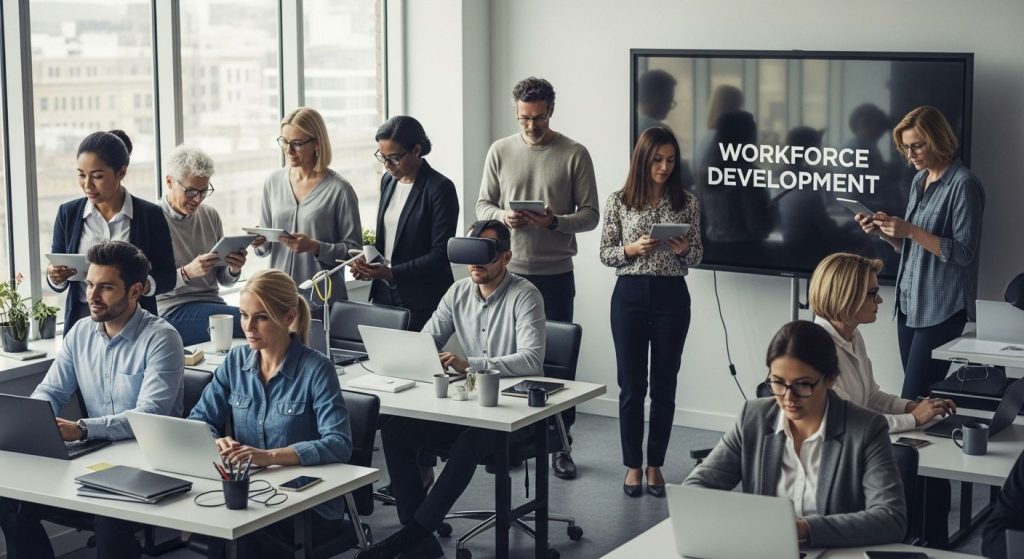
Workforce development is undergoing a radical shift as new technology transforms how companies train, hire, and compete. The demand for digital skills is exploding and almost 70 percent of employers say they struggle to find workers with the right tech expertise. You might expect that training programs are keeping up with this fast pace, but most organizations still rely on outdated models that do not match real-world needs. The biggest breakthroughs right now come from unlikely partnerships and the rapid rise of immersive technologies, turning old ideas about workplace learning completely upside down.
Table of Contents
- Key Drivers Of Innovation In Workforce Development
- Emerging Technologies Shaping Workforce Solutions
- Collaborative Approaches For Improved Workforce Growth
- Best Practices For Implementing Workforce Innovations
Quick Summary
| Takeaway | Explanation |
|---|---|
| Embrace technological integration | Organizations must adopt technology-enhanced learning to remain competitive and effective in workforce development. |
| Foster strategic partnerships | Collaborations with academic institutions and industries are vital for creating relevant training programs that address skill gaps. |
| Utilize competency-based training | Shift to personalized, competency-focused approaches that cater to individual learning styles and facilitate practical skill application. |
| Leverage emerging immersive technologies | Implement VR and AR tools to create engaging and realistic training environments, enhancing skill retention and application. |
| Commit to continuous improvement | Regularly analyze performance data to refine workforce training programs, ensuring alignment with changing industry needs and trends. |
Key Drivers of Innovation in Workforce Development
Workforce development is experiencing a transformative era where innovation becomes the critical catalyst for organizational success. The landscape of professional growth and skills enhancement is rapidly evolving, driven by technological advancements, changing market dynamics, and the urgent need for adaptive learning strategies.
Technological Integration and Digital Skills Transformation
Technology stands at the forefront of innovation in workforce development. According to RAND Corporation research, technological adoption is a principal driver reshaping how organizations approach skills training and employee development. Companies are increasingly recognizing that digital literacy is no longer optional but essential for competitive advantage.
Digital transformation requires a holistic approach to skill development. This means moving beyond traditional training models to create immersive, technology-enhanced learning experiences. Organizations are implementing adaptive learning platforms, artificial intelligence-driven training modules, and virtual reality simulations that provide realistic and engaging skill-building environments.
Strategic Partnerships and Collaborative Learning Ecosystems
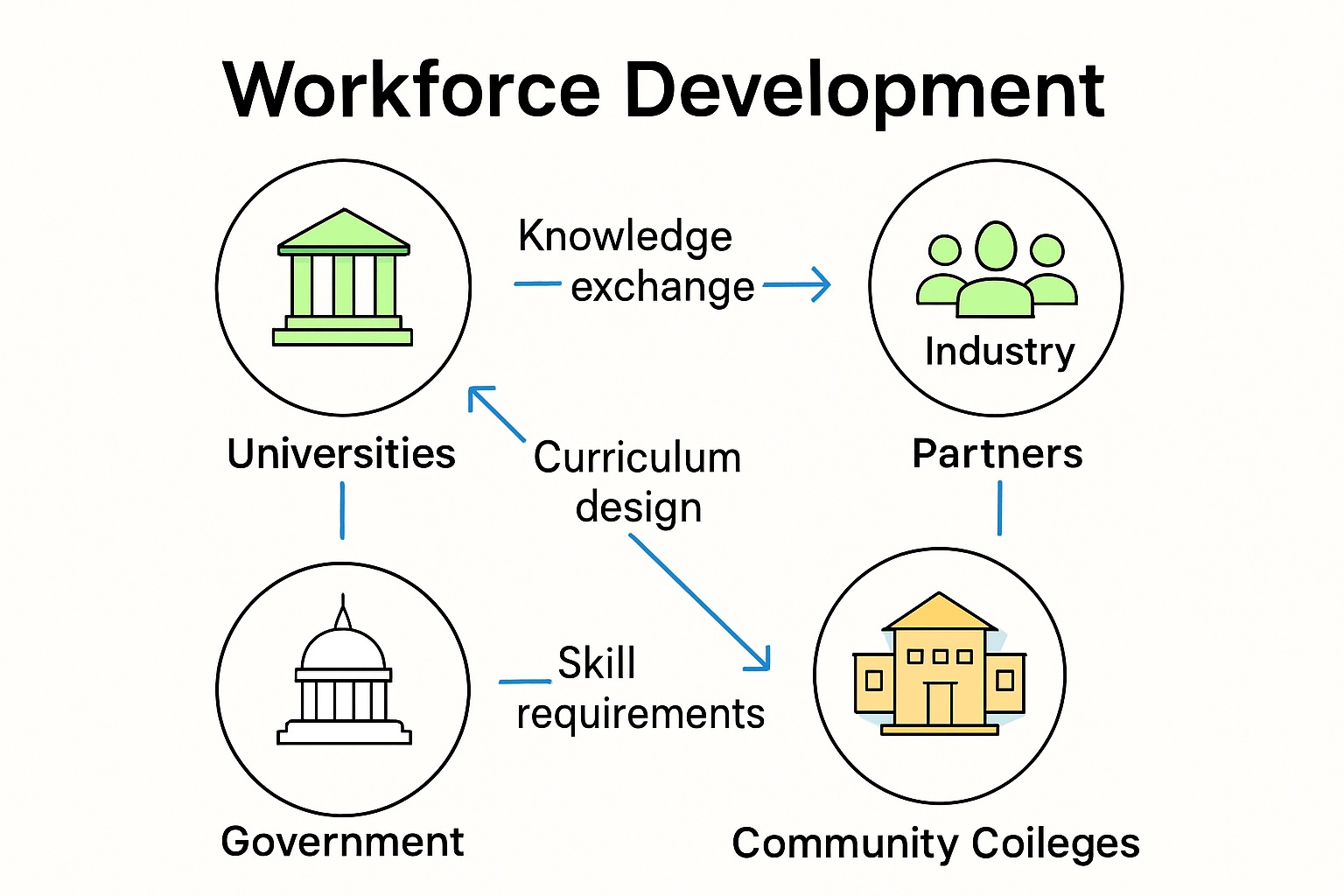
Innovation in workforce development is not happening in isolation. Public-private partnerships are emerging as a powerful mechanism for creating responsive and dynamic training programs. By bridging academic institutions, government agencies, and private sector organizations, these collaborative ecosystems can develop targeted training initiatives that directly address industry skill gaps.
These strategic partnerships enable a more agile approach to workforce development. They allow for rapid curriculum design that can quickly adapt to emerging technological trends and market demands. Check out our guide on workforce development strategies to understand how these collaborative models are reshaping professional training.
Competency-Based Training and Personalized Learning Pathways
Traditional one-size-fits-all training models are becoming obsolete. Modern workforce development focuses on personalized, competency-based approaches that recognize individual learning styles, professional backgrounds, and specific skill requirements. This shift allows organizations to create more targeted, efficient, and meaningful learning experiences.
Competency-based training emphasizes practical skill demonstration over time-based completion. By implementing advanced assessment techniques and granular skill tracking, organizations can ensure that employees are genuinely acquiring and applying the knowledge critical to their professional roles. This approach not only enhances individual performance but also creates a more adaptable and resilient workforce capable of navigating complex professional challenges.
The future of workforce development lies in its ability to embrace innovation, leverage technology, and create flexible, responsive learning environments that empower professionals to continuously grow and adapt.
Emerging Technologies Shaping Workforce Solutions
The rapid evolution of technology is fundamentally transforming workforce solutions, creating unprecedented opportunities for skill development, training, and organizational performance. Emerging technologies are no longer futuristic concepts but practical tools reshaping how professionals learn, work, and adapt in a dynamic global environment.
Artificial Intelligence and Machine Learning in Workforce Development
Artificial Intelligence (AI) and machine learning are revolutionizing workforce solutions by providing sophisticated, personalized learning experiences. According to a comprehensive study on AI technologies for HR management, these technologies enable unprecedented levels of skill assessment, predictive learning paths, and targeted training interventions.
AI-powered platforms can analyze individual employee performance, identify skill gaps, and recommend customized learning modules. This approach moves beyond traditional training models, creating adaptive learning experiences that respond in real time to an individual’s unique professional development needs. Machine learning algorithms can predict future skill requirements, helping organizations proactively design training programs that align with emerging industry trends.
Immersive Technologies and Experiential Learning
Virtual Reality (VR), Augmented Reality (AR), and simulation technologies are creating immersive learning environments that dramatically enhance skill acquisition and retention. Research on workplace technologies demonstrates how these tools provide safe, controlled environments for practicing complex professional skills without real-world risks.
For instance, medical professionals can simulate critical surgical procedures, industrial workers can train on complex machinery operations, and customer service representatives can practice challenging interactions. These immersive technologies offer realistic scenarios that traditional training methods cannot replicate. Explore our insights on future job skills to understand how these technologies are reshaping professional training.
Connected Worker Solutions and Wearable Technologies
Wearable technologies and connected worker solutions represent a new frontier in workforce development. These innovative tools go beyond traditional training, providing real-time performance monitoring, safety enhancements, and continuous learning opportunities. According to research on workplace technologies, these solutions can track worker movements, provide immediate feedback, and create data-driven insights into individual and team performance.
Connected worker technologies integrate sensors, mobile devices, and advanced analytics to create comprehensive professional development ecosystems. They enable organizations to monitor employee wellness, identify potential safety risks, and provide immediate, contextual learning interventions. This approach transforms workforce development from a periodic training event to a continuous, adaptive learning journey.
To help compare some of the most important emerging technologies shaping workforce development, the table below organizes each by their main features and advantages as described in the article.
| Technology | Key Features | Primary Advantages |
|---|---|---|
| Artificial Intelligence & Machine Learning | Personalized learning, skill gap analysis | Targeted training, predictive skill needs |
| Immersive Technologies (VR/AR) | Realistic simulations, safe practice environments | Enhanced engagement, higher skill retention |
| Connected Worker Solutions & Wearables | Real-time monitoring, feedback, analytics | Safety improvements, continuous learning |
As technological innovations continue to emerge, the most successful organizations will be those that embrace these transformative tools, creating flexible, responsive workforce solutions that empower professionals to continuously learn, adapt, and excel in an ever-changing professional landscape.
Collaborative Approaches for Improved Workforce Growth
Workforce growth is no longer a siloed endeavor but a complex ecosystem requiring strategic collaboration across multiple stakeholders. By breaking down traditional barriers between educational institutions, industries, government agencies, and professional networks, organizations can create more dynamic and responsive workforce development strategies.
Interdisciplinary Partnerships and Knowledge Exchange
Cross-disciplinary collaboration represents a critical mechanism for driving workforce innovation. Research on materials informatics workforce training demonstrates how interdisciplinary partnerships can generate transformative learning experiences. These collaborative models bring together experts from different domains, enabling knowledge transfer and creating comprehensive skill development frameworks.
Universities, research institutions, and industry leaders are increasingly forming integrated networks that allow for rapid skill adaptation. By sharing insights, resources, and research findings, these partnerships can identify emerging skill requirements and design targeted training programs that address real-world professional challenges. Learn more about our workforce development strategies to understand how collaborative approaches are reshaping professional training.
Community and Institutional Collaboration
Successful workforce growth requires robust connections between community colleges, secondary schools, and local industries. A comprehensive case study on rural workforce development highlights the importance of having committed team members who can bridge institutional gaps and create meaningful learning pathways.
These collaborative ecosystems enable seamless transitions between educational stages, ensuring that curriculum design directly reflects industry needs. By aligning academic programs with regional economic requirements, communities can create targeted workforce development initiatives that support local employment and economic growth. This approach helps students acquire relevant skills while providing businesses with well-prepared talent pools.
Multi-Stakeholder Learning Platforms
Advanced collaborative platforms are emerging as powerful tools for workforce growth. These platforms integrate input from employers, educational institutions, government agencies, and professional associations to create comprehensive skill development strategies. By leveraging collective expertise, these multi-stakeholder approaches can develop more nuanced and adaptive training programs.
Technology plays a crucial role in facilitating these collaborations, enabling real-time information sharing, joint curriculum development, and coordinated training interventions. Digital platforms allow stakeholders to track skill trends, share best practices, and quickly respond to changing industry requirements.
The following table summarizes the key collaborative approaches for workforce growth discussed in the article, outlining the main participants, description, and intended outcomes.
| Approach | Main Participants | Description | Intended Outcome |
|---|---|---|---|
| Interdisciplinary Partnerships & Knowledge Exchange | Universities, industry, researchers | Cross-domain collaboration for skill transfer | Broader, adaptable skills development |
| Community & Institutional Collaboration | Schools, colleges, local industries | Alignment of education with local needs | Better-prepared, locally employed workforce |
| Multi-Stakeholder Learning Platforms | Employers, academia, government | Digital platforms for joint training efforts | Responsive, comprehensive skill solutions |
The future of workforce development lies in our ability to create flexible, interconnected learning ecosystems that transcend traditional organizational boundaries. By embracing collaborative approaches, we can build more resilient, adaptable, and skilled professional communities capable of navigating complex global challenges.
Best Practices for Implementing Workforce Innovations
Implementing workforce innovations requires a strategic, comprehensive approach that goes beyond traditional training methodologies. Organizations must develop robust frameworks that enable continuous learning, adaptability, and skills alignment with emerging market demands.
Strategic Alignment and Organizational Readiness
Successful workforce innovation begins with comprehensive organizational assessment and strategic planning. According to the National Academies of Sciences report, organizations must create a holistic ecosystem that supports continuous learning and technological adaptation. This involves developing clear innovation strategies that integrate workforce development into broader organizational objectives.
Leadership commitment is crucial in driving these transformative initiatives. Organizations need to establish dedicated innovation teams, allocate sufficient resources, and create cultural environments that encourage experimentation and continuous skill development. Explore our workforce development strategies to understand how strategic planning can revolutionize professional growth.
Competency-Based Learning and Flexible Skill Frameworks
Modern workforce innovations demand a shift from traditional time-based training to competency-based learning models. The US Department of Labor’s Workforce Innovation and Opportunity Act emphasizes the importance of creating flexible, skills-focused learning pathways that can quickly adapt to changing industry requirements.
Competency-based approaches allow organizations to design precise, targeted learning interventions. By mapping specific skills against performance outcomes, companies can create more efficient and personalized development programs. This approach enables employees to demonstrate mastery through practical application rather than adhering to rigid, time-consuming training schedules.
Technology-Enabled Learning and Continuous Improvement
Technology plays a pivotal role in implementing workforce innovations. Advanced learning management systems, artificial intelligence-driven skill assessment tools, and adaptive learning platforms enable organizations to create dynamic, responsive training ecosystems.
Continuous improvement mechanisms are essential in maintaining the relevance of workforce development programs. This involves regularly collecting performance data, analyzing skill gaps, and iteratively refining training approaches. Organizations must develop robust feedback loops that allow for real-time adjustments to learning strategies, ensuring that training remains aligned with emerging industry trends and technological advancements.
The most successful organizations will be those that view workforce innovation not as a one-time initiative but as an ongoing, integrated approach to professional development. By embracing flexible, technology-enabled learning models and maintaining a commitment to continuous improvement, companies can build resilient, adaptive workforces capable of thriving in an increasingly complex professional landscape.

Frequently Asked Questions
What are the key drivers of innovation in workforce development?
The key drivers include technological integration, strategic partnerships, competency-based training, and personalized learning pathways that adapt to the changing demands of the workforce.
How can organizations effectively adopt technology in workforce training?
Organizations can integrate technology by utilizing adaptive learning platforms, AI-driven training modules, and immersive technologies like VR and AR to create engaging, realistic learning experiences tailored to individual needs.
What role do strategic partnerships play in workforce development?
Strategic partnerships enable collaboration between academic institutions, government agencies, and private sectors, allowing for the rapid development of targeted training programs that address skill gaps in the workforce.
Why is competency-based training important for workforce development?
Competency-based training focuses on practical skill application and mastery rather than time-based completion, making training more relevant and effective in preparing employees for specific job roles.
Transform Workforce Innovation Into Real Results With Peuneo
You have seen how advancements such as immersive technologies, competency-based learning, and strategic partnerships are reshaping workforce development. But recognizing new trends is only half the journey. Many organizations in South Africa still face challenges such as outdated training models, lack of digital skills, and difficulty finding accredited programs that truly bridge the gap between learning and workplace readiness. If you want to move beyond these barriers and align your workforce strategies with the latest best practices discussed in our article, practical solutions are within reach.

Explore how Peuneo, a trusted Level 1 BEE partner, delivers accredited training, expert consulting, and a wide range of online learning opportunities designed specifically to meet the needs highlighted in our workforce development insights. Whether your goal is to close skill gaps, achieve industry compliance, or accelerate employee growth, our solutions can turn your vision into measurable progress. Visit https://peuneo.co.za today to access tailored programs and take the next step toward building a more agile and future-ready workforce.