
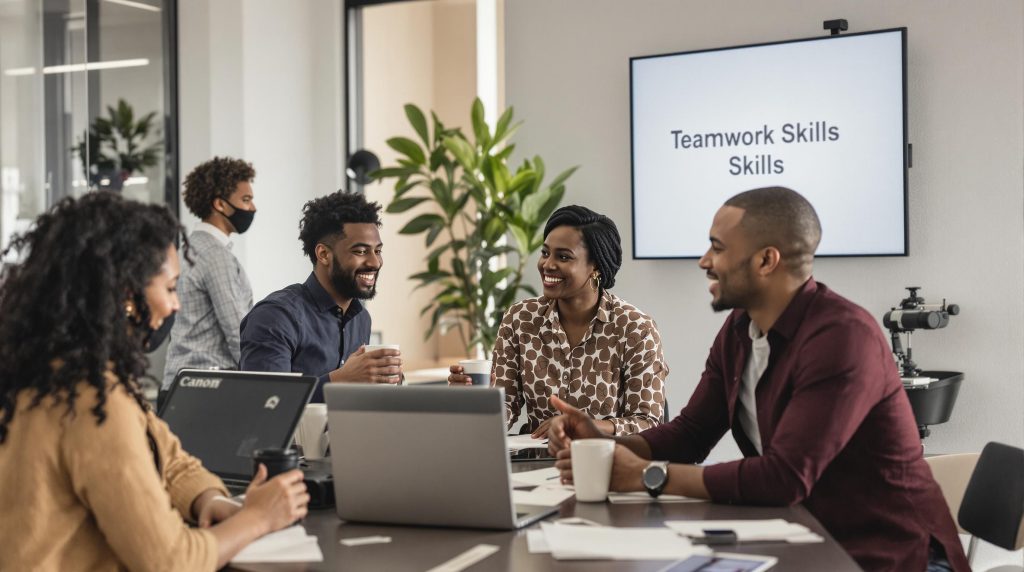
Teamwork is not just a buzzword for 2025. Teams with strong collaboration skills are delivering real impact, with companies reporting up to 30 percent higher productivity when employees work together effectively. Most people assume technical knowledge is enough to stand out at work. That belief is actually costing them valuable opportunities, because the real advantage now comes from mastering teamwork skills that drive innovation, trust, and personal growth.
Table of Contents
- Why Teamwork Skills Matter In Modern Workplaces
- Key Teamwork Skills Employers Value Today
- Building Stronger Teams Through Effective Training
- Real-World Benefits Of Teamwork Skills For All Sectors
Quick Summary
| Takeaway | Explanation |
|---|---|
| Teamwork skills are essential for success in 2025 | Collaborating effectively across diverse teams is crucial for both organizational and individual growth in a complex work environment. |
| Key skills include communication, problem solving, and adaptability | Employers prioritize these skills to navigate challenges and foster effective teamwork in a rapidly changing landscape. |
| Team training enhances collaborative performance | Structured training programs focused on teamwork systematically improve skills and boost overall team effectiveness. |
| Psychological safety fosters teamwork and innovation | Creating supportive environments leads to stronger collaboration, trust, and resilience within teams across all sectors. |
| Teamwork transcends industry boundaries for performance | Effective teamwork skills drive operational efficiency and innovation universally, making them crucial for all professionals. |
Why Teamwork Skills Matter in Modern Workplaces
Modern workplaces are transforming dramatically, demanding more collaborative and adaptable approaches to solving complex challenges. The importance of teamwork skills has become a critical differentiator for professional success in 2025.
The Evolution of Workplace Collaboration
Workplace dynamics have shifted significantly from traditional hierarchical structures to more fluid, interconnected environments. Research from Yale University emphasizes that effective teamwork is now essential for organizational success, highlighting how diverse perspectives and collective expertise drive innovation and performance.
The modern workplace requires professionals who can seamlessly integrate their skills with others, breaking down silos and creating synergistic work environments. This means moving beyond individual achievements to understanding how collective intelligence can solve more complex problems faster and more efficiently.
Key Drivers of Collaborative Performance
A groundbreaking study published on arXiv revealed critical factors that distinguish high-performing teams. Trust, shared values, and expert coordination emerge as fundamental elements that transform groups of individuals into powerful collaborative units. Professionals who can cultivate these skills become invaluable assets to their organizations.
Key characteristics of effective team contributors include:
- Communication Mastery: Articulating ideas clearly and listening actively
- Emotional Intelligence: Understanding and managing interpersonal dynamics
- Adaptability: Quickly adjusting to changing team requirements and challenges
To clarify the key characteristics, here is a summary table presenting the primary attributes of effective team contributors:
| Characteristic | Description |
|---|---|
| Communication Mastery | Articulating ideas clearly and listening actively |
| Emotional Intelligence | Understanding and managing interpersonal dynamics |
| Adaptability | Adjusting quickly to changing team requirements and challenges |
Strategic Implications for Professional Growth
Professionals who invest in developing robust teamwork skills position themselves at a significant advantage. Organizations increasingly seek talent capable of navigating complex collaborative environments. These skills transcend traditional technical competencies, offering a comprehensive approach to professional effectiveness.
The ability to work effectively in diverse teams has become a non-negotiable skill in 2025. Whether in technology, healthcare, finance, or creative industries, professionals who can collaborate seamlessly will drive organizational innovation and personal career advancement.
Understanding the nuanced dynamics of teamwork is no longer optional. It represents a fundamental competency that separates exceptional professionals from average performers. Those who can build trust, communicate effectively, and contribute meaningfully to collective goals will find themselves at the forefront of their respective fields.
As workplace technologies continue to evolve and global challenges become more interconnected, the importance of teamwork skills will only increase. Professionals who recognize and develop these skills will not just survive but thrive in the complex, collaborative landscape of modern work environments.
Key Teamwork Skills Employers Value Today
In the rapidly evolving professional landscape, employers are increasingly prioritizing specific teamwork skills that enable organizations to navigate complex challenges and drive collective success. The skills required go far beyond technical competencies and focus on interpersonal dynamics and collaborative capabilities.
Communication and Interpersonal Dynamics
Research from the National Association of Colleges & Employers reveals that communication remains a top priority for employers in 2025. Effective teamwork hinges on professionals who can articulate ideas clearly, listen actively, and engage constructively with diverse team members.
Key communication skills include:
- Active Listening: Understanding and processing information shared by team members
- Constructive Feedback: Providing and receiving input with empathy and professionalism
- Cross-Cultural Communication: Navigating linguistic and cultural differences with respect and understanding
Problem Solving and Collaborative Intelligence
The U.S. Department of Labor emphasizes critical thinking and collaborative problem solving as essential workplace skills. Modern teams require professionals who can analyze complex situations, generate innovative solutions, and work collectively towards shared objectives.
Essential problem solving attributes include:
- Analytical Thinking: Breaking down complex challenges into manageable components
- Creative Collaboration: Generating innovative solutions through collective brainstorming
- Conflict Resolution: Addressing disagreements constructively and maintaining team cohesion
Adaptability and Emotional Intelligence
Research from St. John’s University highlights emotional intelligence and adaptability as critical teamwork skills in 2025. Professionals who can manage their emotions, understand team dynamics, and quickly adjust to changing work environments are highly valued.
Professionals can develop these skills by:
- Practicing Self Awareness: Understanding personal emotional triggers and responses
- Developing Resilience: Maintaining composure during challenging team interactions
- Embracing Flexibility: Adapting quickly to new team structures and work methodologies
Organizations today seek professionals who can demonstrate comprehensive soft skills that enhance team performance. By cultivating communication, problem solving, and emotional intelligence, individuals can position themselves as valuable team contributors in an increasingly collaborative professional world.
The most successful professionals will be those who view teamwork not as a task but as a strategic approach to achieving collective excellence. As workplace technologies and global challenges become more complex, the ability to work effectively within diverse teams will remain a critical competitive advantage.
Building Stronger Teams Through Effective Training
Effective team training has become a critical strategy for organizations seeking to enhance collaborative performance and adapt to rapidly changing workplace dynamics. Creating robust training programs that systematically develop teamwork skills is no longer optional but essential for sustainable organizational success.
Scientific Foundations of Team Training
A comprehensive meta-analysis of 51 studies revealed compelling evidence that targeted teamwork training interventions produce significant positive effects on team behaviors and overall performance. This scientific validation underscores the importance of structured, intentional approaches to developing collective capabilities.
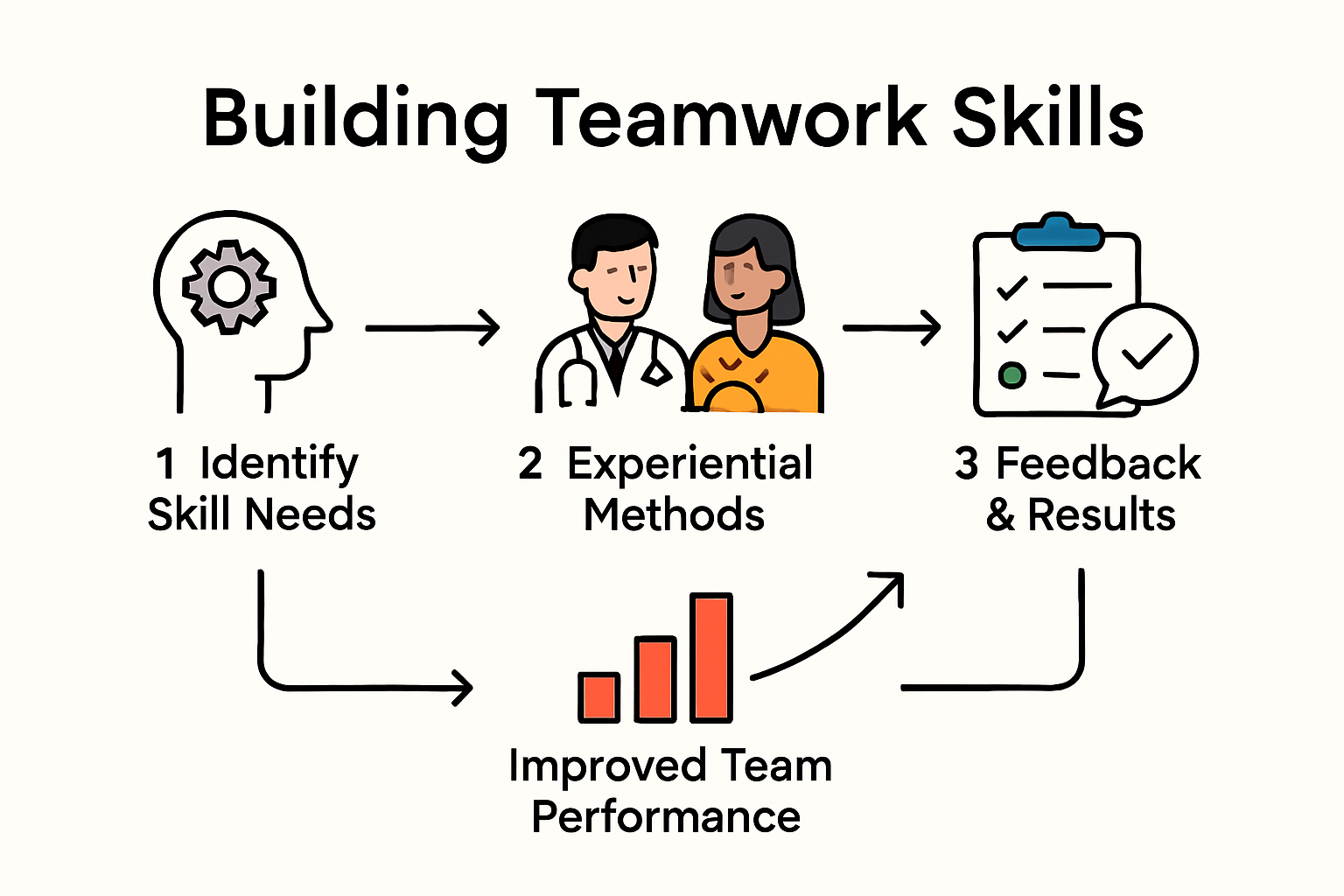
Key elements of successful team training include:
- Targeted Skill Development: Focusing on specific collaborative competencies
- Experiential Learning: Creating realistic scenarios that simulate workplace challenges
- Continuous Feedback: Providing immediate and constructive performance insights
Designing Comprehensive Training Interventions
Research examining 93 effect sizes demonstrated that team training effectiveness depends on multiple contextual factors. Organizations must carefully consider team composition, training content, and implementation strategies to maximize learning outcomes.
Effective training programs typically incorporate:
- Simulation-Based Learning: Recreating complex workplace scenarios
- Interactive Workshops: Encouraging active participation and skill practice
- Personalized Coaching: Addressing individual and collective development needs
The following table summarizes key components of effective training programs mentioned in the content:
| Training Method | Core Focus | Benefit |
|---|---|---|
| Simulation-Based Learning | Recreating complex workplace scenarios | Practical skill application |
| Interactive Workshops | Active participation and skill practice | Enhanced engagement and retention |
| Personalized Coaching | Individual and collective development needs | Tailored growth and improvement |
Sector-Specific Training Approaches
A systematic review of healthcare interventions highlighted the significance of training programs in developing critical non-technical skills. While the research focused on healthcare, the principles apply across various professional sectors.
Cross-sector training strategies should emphasize:
- Communication Protocols: Establishing clear interaction frameworks
- Conflict Resolution Techniques: Teaching constructive problem-solving
- Emotional Intelligence Development: Enhancing interpersonal understanding
Organizations seeking to implement cutting-edge training methods must recognize that team development is an ongoing process. Successful training goes beyond single workshops, requiring continuous learning environments that adapt to evolving workplace challenges.
The most progressive organizations understand that team training represents a strategic investment in human capital. By systematically developing collaborative skills, companies can create resilient, high-performing teams capable of navigating complex professional landscapes.
As workplace technologies and global challenges become increasingly intricate, the ability to develop and sustain effective team training programs will distinguish industry leaders from average performers. Professionals and organizations committed to continuous collaborative learning will be best positioned to thrive in the dynamic work environments of 2025 and beyond.
Real-World Benefits of Teamwork Skills for All Sectors
Teamwork skills have transcended traditional workplace boundaries, becoming a critical asset across diverse industries and professional environments. Understanding the tangible benefits of collaborative capabilities reveals how these skills drive organizational success and individual professional growth.
Safety and Performance in High-Stakes Environments
Research in Health Services demonstrates that effective teamwork is fundamental in high-reliability organizations like healthcare and aviation. Crew Resource Management techniques have revolutionized how professionals collaborate, significantly reducing errors and enhancing overall performance through improved communication and collective decision-making.
Key safety benefits include:
- Error Reduction: Minimizing risks through coordinated team efforts
- Collective Awareness: Identifying potential challenges before they escalate
- Rapid Problem Resolution: Leveraging diverse perspectives to address complex issues
Psychological and Organizational Dynamics
An extensive review in Organizational Psychology highlights critical team-level factors that transform workplace interactions. Psychological safety, team trust, and shared mental models emerge as crucial elements that drive organizational effectiveness across multiple sectors.
Critical psychological benefits encompass:
- Enhanced Trust: Building stronger interpersonal relationships
- Improved Collaboration: Creating supportive work environments
- Increased Resilience: Developing team capabilities to navigate challenges
Cross-Sector Performance Transformation
A comprehensive meta-analysis in the Journal of Applied Psychology confirms that well-designed teamwork training programs produce significant performance improvements across industries. From technology and healthcare to manufacturing and service sectors, collaborative skills serve as a universal performance multiplier.

Universal performance advantages include:
- Innovation Acceleration: Combining diverse expertise and perspectives
- Operational Efficiency: Streamlining complex work processes
- Adaptability: Responding effectively to dynamic workplace challenges
Organizations seeking to transform their workforce development strategies must recognize teamwork as more than a soft skill. It represents a fundamental organizational capability that distinguishes high-performing teams from average groups.
The most successful professionals and organizations understand that teamwork skills are not just desirable but essential. By cultivating collaborative capabilities, teams can create synergies that transcend individual limitations, driving innovation, safety, and performance across every imaginable professional context.
As global challenges become increasingly complex, the ability to work seamlessly across diverse teams will remain a critical competitive advantage. Professionals who invest in developing robust teamwork skills will position themselves at the forefront of their respective industries, ready to tackle unprecedented challenges with collective intelligence and shared purpose.
Frequently Asked Questions
What are the key teamwork skills employers value in 2025?
Employers in 2025 prioritize skills such as communication mastery, problem solving, emotional intelligence, and adaptability. These skills are essential for effective collaboration and navigating complex work environments.
Why are teamwork skills important for professional growth?
Teamwork skills have become a critical differentiator for professional success, enabling individuals to collaborate effectively across diverse teams, drive innovation, and enhance career advancement opportunities.
How can organizations effectively train their teams for better collaboration?
Organizations can enhance teamwork through targeted skill development, experiential learning, and continuous feedback. Structured training programs focused on teamwork are essential for improving collaborative performance.
What are the benefits of teamwork skills across different industries?
Effective teamwork skills lead to operational efficiency, improved safety, and enhanced innovation across various sectors. Organizations that prioritize collaboration see significant performance improvements and adaptability to dynamic challenges.
Unlock the Real Potential of Your Team in 2025
Have you noticed your team struggling to communicate clearly or adapt to new projects, despite having technical knowledge? As revealed in this article, many professionals lose valuable opportunities because they lack critical teamwork skills like trust-building, adaptability, and collaborative problem solving. These skills are now the true drivers of career advancement and business innovation in 2025.

Peuneo specializes in turning these challenges into real growth. Explore our accredited training and consulting services to build the high-performing teams your organization needs. Our online portal offers practical courses in communication and collaboration, ensuring your people develop the teamwork and leadership abilities most valued by modern employers. Take action today and visit Peuneo’s main site to see how upskilling your teams now can lead to measurable results and lasting business success.