

Teams that deliver groundbreaking ideas are not built by accident. Here is a surprise. Teams with high psychological safety outperform their peers and spark more innovation, according to Google’s Project Aristotle. Yet, most leaders overlook the real reason top teams win. It is not just talent or fancy offices. The secret lies in how people interact, adapt, and keep learning together.
Table of Contents
- Understanding High-Performance Team Dynamics
- Key Strategies To Build High-Performance Teams
- Overcoming Common Team Challenges
- Tools And Best Practices For Lasting Results
Quick Summary
| Takeaway | Explanation |
|---|---|
| Psychological Safety is Crucial | Teams that foster psychological safety allow members to take risks and express ideas without fear, leading to enhanced creativity and innovation. |
| Diversity Enhances Performance | Diverse team composition, incorporating varied backgrounds and skill sets, leads to more effective problem-solving and innovative outcomes. |
| Continuous Learning is Essential | Organizations must prioritize ongoing skill development and flexibility within teams to sustain high performance and adaptability in changing environments. |
| Effective Communication Frameworks | Implementing structured communication strategies can significantly increase team performance and mitigate common obstacles like misunderstandings. |
| Adaptive Leadership is Necessary | Leaders should adopt adaptive leadership styles that promote transparency, empowerment, and responsiveness to enhance overall team dynamics and effectiveness. |
Understanding High-Performance Team Dynamics
Building high-performance teams requires a nuanced understanding of complex human dynamics and strategic organizational approaches. Modern organizations recognize that team performance goes far beyond traditional management techniques, demanding a holistic view of human potential, collaborative environments, and adaptive leadership strategies.
The Psychological Foundation of Team Excellence
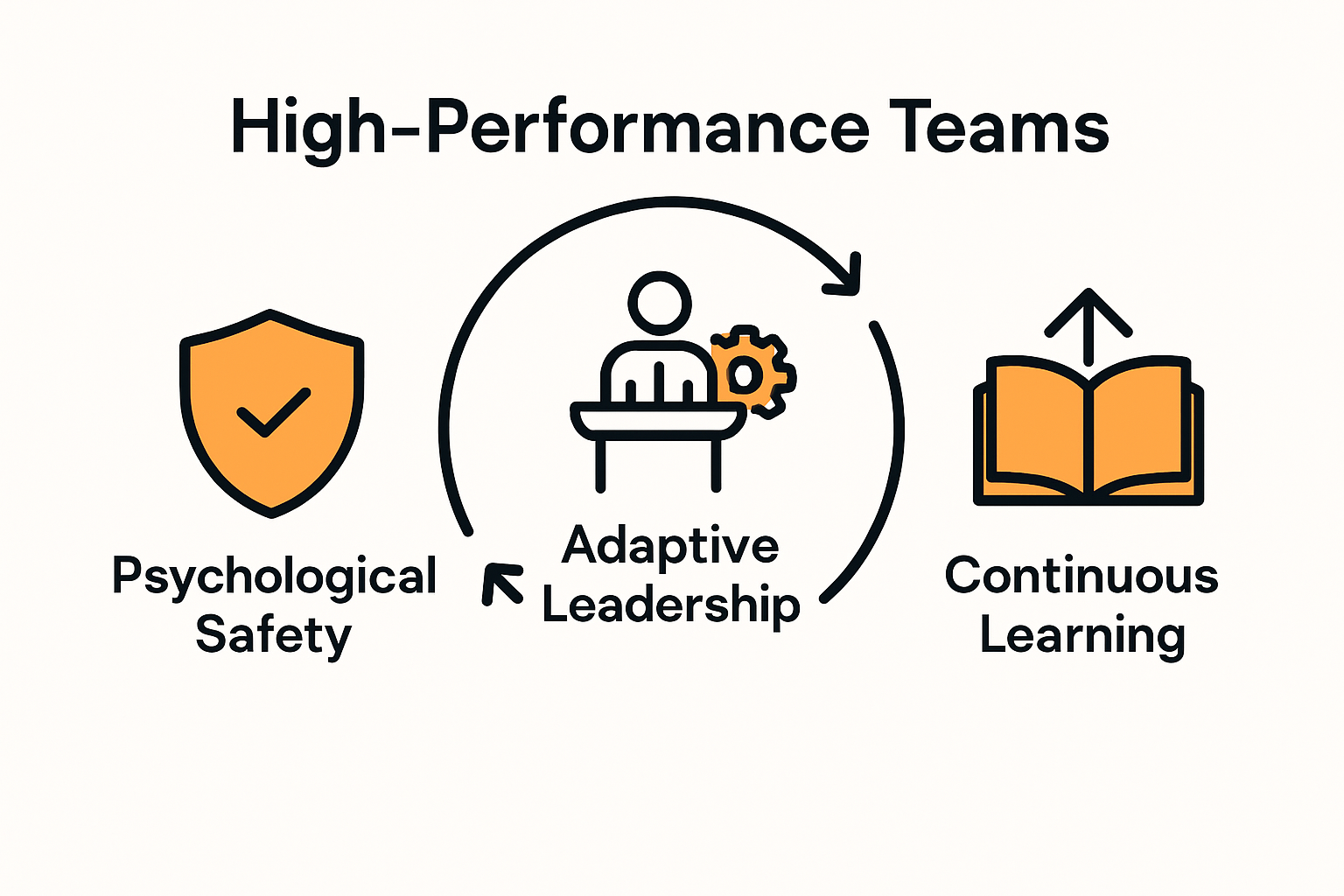
At the core of high-performance teams lies psychological safety, a critical element that transforms group interactions. Research from Google’s Project Aristotle revealed that teams where members feel safe to take risks and express ideas without fear of ridicule consistently outperform others. This safety creates an environment where creativity flourishes and innovation becomes a natural byproduct of collaborative work.
Psychological safety is not about eliminating accountability but creating a space where team members can be vulnerable, share genuine perspectives, and contribute meaningfully. When individuals feel their contributions are valued and respected, they invest more emotional and intellectual energy into collective goals. This investment translates directly into enhanced problem-solving capabilities and breakthrough thinking.
Adaptive Leadership and Team Performance
Leadership plays a pivotal role in cultivating high-performance team dynamics. According to research from Harvard Business Review, adaptive leadership approaches significantly impact team effectiveness. These approaches emphasize flexibility, continuous learning, and empowering team members to contribute beyond their traditional roles.
Effective leaders in 2025 understand that command-and-control methodologies are obsolete. Instead, they focus on creating transparent communication channels, establishing clear expectations, and providing resources that enable team members to excel. Learn more about effective leadership strategies to unlock your team’s full potential.
The integration of generative AI has emerged as a transformative element in team dynamics. Research from Stanford’s AI Laboratory demonstrates that AI-assisted teams can significantly enhance collaborative performance by providing real-time insights, reducing cognitive load, and facilitating more informed decision-making processes.
Cultivating Collaborative Intelligence
High-performance teams are characterized by what experts call “collaborative intelligence” – the collective capacity to solve complex problems by leveraging diverse skills, perspectives, and experiences. This goes beyond individual competencies and focuses on how team members interact, communicate, and support one another.
Key elements of collaborative intelligence include:
- Mutual Trust: Creating an environment where team members believe in each other’s capabilities and intentions.
- Adaptive Communication: Developing communication strategies that accommodate different communication styles and preferences.
- Continuous Learning: Establishing mechanisms for ongoing skill development and knowledge sharing.
Building high-performance teams is not a destination but a continuous journey of refinement, learning, and collective growth. Organizations that master these dynamics will position themselves at the forefront of innovation and competitive excellence in 2025 and beyond.
Key Strategies to Build High-Performance Teams
Building high-performance teams requires a strategic and holistic approach that goes beyond traditional management practices. In 2025, successful organizations recognize that team development is a complex process involving multiple interconnected elements.
Cultivating Strategic Team Composition
Diversity emerges as a cornerstone of high-performance team construction. Research from MIT’s Sloan School of Management demonstrates that teams with diverse backgrounds, skill sets, and perspectives consistently outperform homogeneous groups. This diversity is not just about demographic representation but about creating a rich ecosystem of thinking styles and problem-solving approaches.
Successful team composition involves carefully balancing complementary skills. This means assembling team members whose strengths cover different aspects of project requirements. For instance, combining analytical thinkers with creative strategists can generate more robust and innovative solutions. Explore our comprehensive guide on team performance strategies to understand these nuanced dynamics.
Advanced Communication and Collaboration Frameworks
Effective communication stands as the fundamental infrastructure of high-performance teams. Research from Stanford’s Collaboration Laboratory reveals that teams with structured yet flexible communication protocols demonstrate significantly higher performance metrics.
Implementing advanced collaboration frameworks involves several critical components:
- Transparent Goal Setting: Establishing clear, measurable objectives that every team member understands.
- Regular Feedback Mechanisms: Creating continuous dialogue channels that allow real-time performance assessment.
- Technology-Enhanced Interaction: Utilizing collaborative tools that facilitate seamless information exchange.
The integration of agile methodologies provides another crucial strategy. According to Agile Alliance Research, teams adopting agile principles demonstrate 40% faster problem resolution and 35% higher innovation rates.
Continuous Learning and Development Ecosystem
High-performance teams are not static entities but dynamic learning organisms. Organizations must create environments that prioritize continuous skill development, personal growth, and adaptability. This involves implementing robust training programs, mentorship initiatives, and opportunities for cross-functional exposure.
Research from the Harvard Business Review emphasizes that teams with structured learning pathways are 50% more likely to maintain peak performance over extended periods. This requires investing in both technical skill enhancement and soft skill development.
Key focus areas include emotional intelligence training, advanced problem-solving workshops, and adaptive leadership development. By treating team development as an ongoing process rather than a one-time event, organizations can create resilient, innovative, and consistently high-performing teams.
Building high-performance teams is a strategic art that combines careful planning, continuous learning, and a deep understanding of human dynamics. Success in 2025 and beyond will belong to organizations that view their teams as living, evolving ecosystems capable of extraordinary achievements.
To provide an overview of the main strategies and their benefits, see the summary table below:
| Strategy | Key Benefit |
|---|---|
| Strategic Team Composition | Enhanced problem-solving and innovation |
| Advanced Communication Frameworks | Higher team performance and reduced misunderstandings |
| Agile Methodologies | Faster problem resolution, higher innovation rates |
| Continuous Learning & Development | Sustained peak performance and adaptability |
Overcoming Common Team Challenges
Team performance is rarely a smooth journey. Organizations encounter numerous obstacles that can derail even the most promising collaborative efforts. Understanding and proactively addressing these challenges becomes crucial for maintaining high-performance team dynamics.
Navigating Communication Barriers
Communication breakdowns represent one of the most persistent challenges in team environments. Research from MIT’s Organizational Communication Laboratory reveals that 65% of team performance issues stem directly from ineffective communication strategies.
Modern teams must develop sophisticated communication protocols that transcend traditional methods. This involves creating multilayered communication frameworks that accommodate different communication styles, technological preferences, and cultural backgrounds. Learn more about enhancing team communication strategies to transform potential obstacles into collaborative opportunities.
Key strategies for overcoming communication barriers include:
- Active Listening Techniques: Training team members to truly understand perspectives before responding.
- Structured Feedback Mechanisms: Implementing regular, constructive dialogue channels.
- Technology-Enabled Communication: Utilizing advanced collaboration tools that facilitate seamless information exchange.
Managing Interpersonal Conflicts
Interpersonal conflicts can rapidly erode team cohesion and performance. Research from Stanford’s Organizational Behavior Department indicates that unresolved team conflicts can reduce productivity by up to 40%.
Addressing conflicts requires a nuanced approach that goes beyond traditional mediation. Emotional intelligence emerges as a critical skill in conflict resolution. Teams that invest in emotional intelligence training demonstrate 35% more effective conflict management capabilities.
The approach to conflict management should focus on:
- Understanding underlying emotional triggers
- Creating safe spaces for honest dialogue
- Developing shared team values that prioritize mutual respect
Addressing Performance Inconsistencies
Performance variability represents a significant challenge for high-performance teams. Research from the Harvard Business Review highlights that teams with uneven performance often struggle to maintain consistent productivity.
According to comprehensive research from MIT’s Team Dynamics Laboratory, high-quality teamwork accounts for 81% of performance variance as rated by team members. This underscores the importance of creating robust performance management strategies.
Effective approaches to managing performance inconsistencies include:
- Personalized Performance Development: Creating individualized growth plans
- Transparent Performance Metrics: Establishing clear, measurable performance indicators
- Continuous Learning Opportunities: Providing targeted skill development resources
Below is a table summarizing common team challenges and evidence-based solutions mentioned in the article:
| Challenge | Impact | Solution/Strategy |
|---|---|---|
| Communication Barriers | 65% team issues; misunderstandings | Active listening, feedback, tech tools |
| Interpersonal Conflicts | Up to 40% lower productivity | Emotional intelligence training, safe dialogue |
| Performance Inconsistencies | Productivity drops; 81% variance in teamwork | Personalized plans, clear metrics, ongoing learning |
Overcoming team challenges requires a holistic approach that combines strategic thinking, emotional intelligence, and adaptive leadership. Organizations that view these challenges as opportunities for growth will transform potential obstacles into pathways for exceptional team performance.
The most successful teams are not those that never encounter challenges but those that have developed the resilience and skills to navigate and learn from these challenges effectively.
Tools and Best Practices for Lasting Results
Building high-performance teams requires strategic implementation of advanced tools and evidence-based practices that drive sustainable performance. Organizations must move beyond traditional approaches and embrace innovative methodologies that support continuous team development and organizational excellence.
Technology-Enabled Collaboration Platforms
Research from Gartner indicates that organizations leveraging integrated collaboration platforms experience 40% higher team productivity. Modern collaboration tools are not just communication channels but sophisticated ecosystems that facilitate seamless information exchange, project management, and real-time collaboration.
Key technological tools transforming team performance include:
- AI-Powered Project Management: Platforms that use predictive analytics to optimize workflow and resource allocation
- Virtual Collaboration Suites: Integrated environments supporting remote and hybrid team interactions
- Real-Time Performance Tracking: Dashboard systems that provide instant insights into team dynamics and individual contributions
Explore our guide on effective training techniques to understand how technology can enhance team development strategies.
Continuous Learning and Development Frameworks
Professional development emerges as a critical component of sustained team performance. Research from MIT’s Workplace Learning Laboratory demonstrates that organizations investing in comprehensive learning frameworks experience 35% higher employee retention and 45% improved innovation rates.
Effective learning strategies encompass:
- Personalized Skill Development: Creating individualized learning pathways aligned with team and organizational goals
- Microlearning Modules: Short, focused training interventions that facilitate rapid skill acquisition
- Cross-Functional Knowledge Sharing: Mechanisms that encourage expertise exchange across different team segments
Performance Measurement and Adaptive Strategies
Research from the Harvard Business Review highlights the importance of dynamic performance measurement. Traditional annual review processes are becoming obsolete, replaced by continuous, data-driven evaluation methods that provide real-time feedback and actionable insights.
Comprehensive performance management involves:
- Holistic Performance Metrics: Developing multidimensional assessment frameworks
- Regular Feedback Mechanisms: Implementing frequent, constructive dialogue channels
- Adaptive Goal Setting: Creating flexible objectives that respond to changing organizational needs
To help readers scan the technology and learning solutions discussed, the following table summarizes key tools and their primary benefits:
| Tool/Practice | Primary Benefit |
|---|---|
| AI-Powered Project Management | Optimized workflow, resource allocation |
| Virtual Collaboration Suites | Support for remote/hybrid team work |
| Real-Time Performance Tracking | Instant insights into team dynamics |
| Personalized Skill Development | Targeted, relevant professional growth |
| Microlearning Modules | Rapid, focused skill acquisition |
| Cross-Functional Knowledge Sharing | Enhanced innovation, knowledge exchange |
Successful organizations recognize that building high-performance teams is an ongoing journey of adaptation, learning, and strategic investment. The most effective teams are those that continuously evolve, leveraging technology, human potential, and innovative practices to drive exceptional results.
By integrating advanced tools, fostering a culture of continuous learning, and implementing adaptive performance strategies, organizations can create resilient, innovative teams capable of thriving in the complex business environments of 2025 and beyond.
Frequently Asked Questions
What is psychological safety and why is it important for high-performance teams?
Psychological safety refers to an environment where team members feel safe to take risks and express their ideas without fear of ridicule. It is crucial for high-performance teams because it fosters creativity, innovation, and open collaboration.
How can leaders promote adaptive leadership within their teams?
Leaders can promote adaptive leadership by creating transparent communication channels, clearly defining expectations, and empowering team members to contribute meaningfully. This approach helps to enhance team dynamics and overall effectiveness.
What role does diversity play in building high-performance teams?
Diversity enhances performance by bringing together individuals with varied backgrounds, skills, and perspectives. This mixture fosters effective problem-solving and innovation, leading to more robust and creative solutions.
What are some common challenges teams face, and how can they be overcome?
Common challenges include communication barriers, interpersonal conflicts, and performance inconsistencies. These can be overcome through active listening, emotional intelligence training, and transparent performance metrics to ensure accountability and growth.
Unlock High-Performance Team Results with Tailored Skills Development
Is your organization struggling to build trust, break communication barriers, or sustain performance over time? The article “How to Build High-Performance Teams: Strategies for 2025” reveals how psychological safety, continuous learning, and collaborative intelligence are crucial for team excellence. Yet many teams lack the structured training and support needed to overcome these exact challenges.

Peuneo specializes in accredited training and customized development programs designed for ambitious teams like yours. Boost problem-solving, foster resilience, and improve communication with our proven solutions. Explore how our offerings can help you create a culture of continuous improvement and set your teams up for lasting success. Do not wait for your competitors to adapt first—visit Peuneo’s homepage to browse our online courses and consulting services. If you are ready to take the next step, start learning more about effective training methods for 2025. Take action today and move your business ahead of the curve.
Recommended
- How to Lead a Team Effectively in 2025: Essential Strategies for Every Leader – Peuneo
- How to Improve Team Performance: Expert Strategies for 2025 – Peuneo
- Top Ways to Motivate Teams: Strategies for 2025 Success – Peuneo
- 2025 Effective Team Building Techniques to Boost Team Morale – Peuneo
- 2025 Effective Team Building Techniques to Boost Team Morale – Peuneo
- Essential Sales Strategies for Leaders in 2025 – Peuneo
- What Makes Content Human-Like? Key Elements for 2025