

Compliance training is everywhere these days, touching every industry from finance to healthcare. It is not just about ticking boxes or keeping up with regulations. In fact, companies that invest in strong compliance training can reduce legal risks and reputational damage by up to 46 percent. Most people think these programs are boring or just a formality. The real surprise is how much compliance training actually shapes a company’s culture and long-term success.
Table of Contents
- Understanding Compliance Training Requirements
- The Core Components Of Compliance Training
- Implementing Effective Compliance Training Strategies
- Key Laws And Industry Regulations
- Federal And National Regulatory Frameworks
- Industry-Specific Compliance Regulations
- Emerging Regulatory Trends And Compliance Challenges
- Who Needs Compliance Training And Why
- Universal Compliance Training Requirements
- Industry-Specific Compliance Training Needs
- Risk Mitigation And Organizational Performance
- Best Practices To Meet Training Standards
- Designing Comprehensive Training Frameworks
- Implementing Effective Training Delivery Methods
- Monitoring And Continuous Improvement
Quick Summary
| Takeaway | Explanation |
|---|---|
| Understand compliance training objectives | Compliance training ensures adherence to laws, ethics, and regulations, protecting organizations from legal risks and promoting accountability. |
| Tailor training to specific roles | Different positions require unique compliance training that addresses role-specific risks and responsibilities for effective learning. |
| Adopt dynamic training strategies | Use interactive and real-world scenario-based training to enhance knowledge retention and behavioral change among employees. |
| Monitor and refine training programs | Regular assessments and updates to training materials are essential for staying compliant and addressing knowledge gaps effectively. |
| Invest in continuous learning culture | Encourage ongoing education and awareness to create a proactive approach to risk management and ethical behavior within the organization. |
Understanding Compliance Training Requirements
Compliance training requirements are structured protocols designed to ensure organizations and employees adhere to legal standards, industry regulations, and ethical practices. These comprehensive training programs protect businesses from potential legal risks while establishing a culture of accountability and professional responsibility.
The Core Components of Compliance Training
Regulatory Knowledge forms the foundation of effective compliance training. Organizations must develop training programs that cover specific legal requirements relevant to their industry. According to OSHA, workplace safety training is a critical example where understanding regulatory standards becomes paramount. These programs educate employees about specific rules, potential consequences of non-compliance, and strategies for maintaining professional standards.
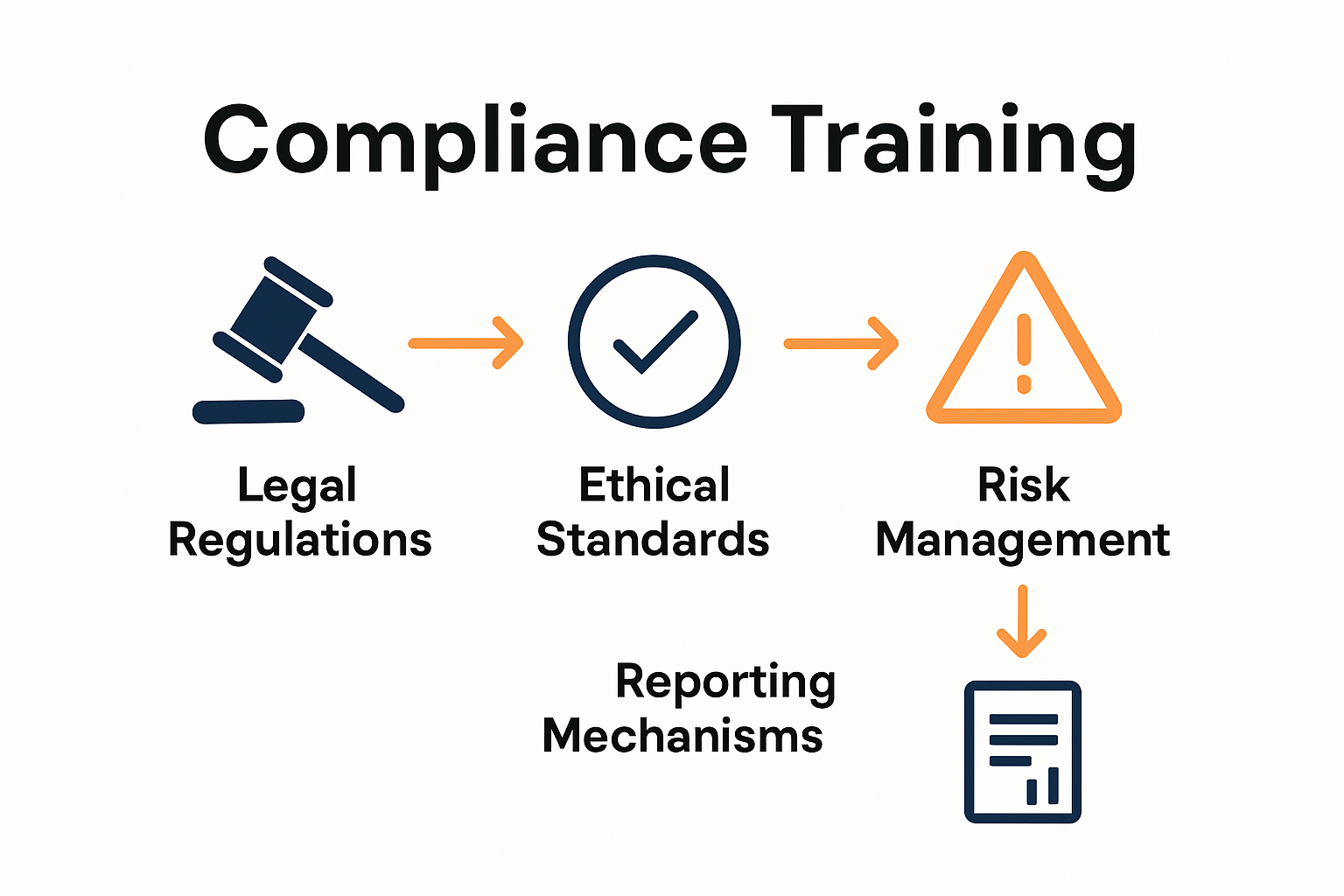
Comprehensive compliance training typically addresses multiple critical areas. Key focus domains include:
- Legal Regulations: Understanding current laws and statutory requirements
- Ethical Standards: Establishing clear behavioral expectations
- Risk Management: Identifying potential organizational vulnerabilities
- Reporting Mechanisms: Creating transparent communication channels for potential violations
Implementing Effective Compliance Training Strategies
Successful compliance training goes beyond mere information transfer. It requires a strategic approach that engages employees and transforms theoretical knowledge into practical understanding. Research from Corporate Compliance Insights highlights that interactive, scenario-based training modules significantly improve knowledge retention and behavioral change.
Organizations must design training programs that are not only informative but also adaptable to evolving regulatory landscapes. This means regularly updating content, incorporating real-world case studies, and creating mechanisms for continuous learning. Check out our comprehensive guide on safety training requirements for deeper insights into developing robust compliance education strategies.
The most effective compliance training programs recognize that one-size-fits-all approaches are ineffective. Different roles within an organization may require specialized training modules tailored to their specific responsibilities and potential compliance risks. By customizing content and delivery methods, organizations can ensure that each employee receives relevant, targeted information that directly applies to their professional context.
Ultimately, compliance training is an ongoing process of education, awareness, and organizational cultural development. It represents a proactive approach to risk management that protects both the organization and its employees by establishing clear expectations, promoting ethical behavior, and creating a transparent operational environment.
To provide a clear overview, the table below lists the main components commonly found in effective compliance training programs, as discussed above.
| Component | Description |
|---|---|
| Legal Regulations | Covers current laws and statutory requirements |
| Ethical Standards | Sets clear expectations for ethical behavior |
| Risk Management | Identifies and addresses potential organizational risks |
| Reporting Mechanisms | Establishes channels for reporting compliance concerns |
Key Laws and Industry Regulations
Compliance training requirements are deeply intertwined with a complex network of laws and industry-specific regulations that organizations must navigate carefully. These legal frameworks establish the foundational standards that guide organizational behavior, protect stakeholders, and maintain ethical business practices across various sectors.
Federal and National Regulatory Frameworks
The landscape of compliance training is shaped by numerous federal and national regulations that mandate specific educational requirements for organizations. According to the U.S. Department of Health and Human Services Office of Inspector General, organizations must develop comprehensive training programs that address specific legal requirements tailored to their industry and operational context.
Key regulatory areas that demand focused compliance training include:
- Workplace Safety: Occupational health and safety standards
- Data Privacy: Protection of personal and sensitive information
- Financial Reporting: Transparency and accuracy in financial disclosures
- Anti-Discrimination: Equal employment and fair treatment practices
Industry-Specific Compliance Regulations
Different industries face unique regulatory challenges that require specialized compliance training approaches. Strategic Management Services highlights that the United States Sentencing Commission and Department of Justice emphasize the critical nature of industry-specific compliance education. For instance, healthcare organizations must comply with HIPAA regulations, financial institutions must adhere to anti-money laundering laws, and technology companies must navigate complex data protection standards.
Emerging Regulatory Trends and Compliance Challenges
The regulatory landscape continues to evolve, presenting organizations with increasingly complex compliance training requirements. Emerging trends such as digital privacy regulations, cybersecurity standards, and global business ethics create additional layers of complexity. Learn more about our comprehensive approach to safety training requirements to understand how organizations can stay ahead of these evolving regulatory challenges.
Organizations must adopt a proactive approach to compliance training that goes beyond mere legal adherence. This means developing dynamic training programs that:
- Anticipate regulatory changes
- Provide real-world context for complex legal requirements
- Encourage a culture of ethical decision-making
- Integrate continuous learning and adaptation
Successful compliance training is not just about avoiding legal penalties. It represents a strategic approach to risk management that protects the organization, empowers employees, and demonstrates a commitment to ethical business practices. By understanding and effectively implementing key laws and industry regulations, organizations can create a robust compliance framework that supports long-term success and organizational integrity.
Who Needs Compliance Training and Why
Compliance training is a critical organizational requirement that extends far beyond traditional assumptions about who needs such education. Every employee, from entry-level staff to senior executives, plays a crucial role in maintaining organizational integrity and mitigating potential risks.
Universal Compliance Training Requirements
According to OSHA, compliance training is mandatory across multiple sectors and organizational levels. The scope of training encompasses various professional roles and industries, ensuring that every team member understands their responsibilities in maintaining legal and ethical standards.
Key organizational groups requiring comprehensive compliance training include:
- Executive Leadership: Strategic oversight and ethical decision-making
- Management Personnel: Implementing compliance protocols
- Frontline Employees: Direct implementation of regulatory standards
- Human Resources: Monitoring and enforcing compliance mechanisms
- Technical and Specialized Staff: Industry-specific regulatory adherence
The following table summarizes which groups within an organization require compliance training and their primary responsibilities, as outlined above.
| Group | Primary Responsibility |
|---|---|
| Executive Leadership | Oversight and ethical decision-making |
| Management Personnel | Implementing compliance protocols |
| Frontline Employees | Applying regulatory standards |
| Human Resources | Monitoring and enforcing compliance mechanisms |
| Technical/Specialized Staff | Industry-specific regulatory adherence |
Industry-Specific Compliance Training Needs
Research from the National Institutes of Health highlights that compliance training requirements vary significantly across different industries. Healthcare organizations, financial institutions, technology companies, and government agencies each have unique regulatory landscapes that demand specialized training approaches.
For instance, healthcare professionals require training on patient privacy regulations, financial sector employees must understand anti-money laundering protocols, and technology companies need comprehensive data protection education. Explore our detailed guide on safety training requirements to understand the nuanced compliance needs across different professional domains.
Risk Mitigation and Organizational Performance
Compliance training is not merely a legal obligation but a strategic investment in organizational resilience. By educating employees about potential risks, legal requirements, and ethical standards, organizations can:
- Reduce potential legal and financial penalties
- Create a culture of transparency and accountability
- Protect organizational reputation
- Minimize operational risks
- Enhance overall employee performance and understanding
The most effective compliance training programs recognize that every employee contributes to organizational risk management. These programs go beyond traditional checklist-based approaches, incorporating interactive learning methods, real-world scenarios, and continuous education strategies.
Ultimately, compliance training is about empowering employees with knowledge, creating a proactive approach to risk management, and fostering an organizational culture that values ethical behavior and legal adherence. By understanding who needs compliance training and why, organizations can develop more robust, responsive, and responsible operational frameworks that protect both their employees and their long-term business interests.
Best Practices to Meet Training Standards
Meeting compliance training standards requires a strategic, comprehensive approach that goes beyond simple box-checking. Organizations must develop robust training programs that are dynamic, engaging, and precisely tailored to their specific operational contexts and regulatory requirements.
Designing Comprehensive Training Frameworks
According to the Federal Reserve, effective compliance training programs must be timely, comprehensive, and specifically aligned with job responsibilities. This means creating training modules that are not generic but precisely targeted to the unique risks and regulatory landscape of each organizational role.
Key elements of a comprehensive training framework include:
- Targeted Content: Developing role-specific compliance modules
- Regular Updates: Incorporating the latest regulatory changes
- Interactive Learning: Using scenario-based training approaches
- Measurement Tools: Implementing assessment mechanisms to verify understanding
- Continuous Improvement: Regularly evaluating and refining training programs
Implementing Effective Training Delivery Methods
Research from the Medical Group Management Association emphasizes the importance of scenario-based learning that mimics real-life experiences. This approach transforms compliance training from a passive information transfer to an active, engaging learning experience that helps employees genuinely understand and apply complex regulatory requirements.
Effective training delivery methods should:
- Utilize multiple learning formats (video, interactive modules, live workshops)
- Provide practical, context-specific examples
- Offer opportunities for practical application
- Incorporate real-world case studies
- Explore our comprehensive guide on developing effective training programs to understand advanced implementation strategies
Monitoring and Continuous Improvement
Compliance training is not a one-time event but an ongoing process of education, assessment, and refinement. Organizations must establish robust mechanisms for tracking training effectiveness, identifying knowledge gaps, and continuously updating their training approaches.
Key monitoring strategies include:
- Regular knowledge assessments
- Tracking compliance incident rates
- Collecting employee feedback
- Analyzing training completion and comprehension rates
- Adapting training content based on emerging regulatory trends
Successful compliance training goes beyond mere regulatory adherence. It represents a holistic approach to organizational risk management that empowers employees, protects the organization, and creates a culture of continuous learning and ethical awareness.
By implementing these best practices, organizations can transform compliance training from a mandatory requirement into a strategic tool for enhancing operational excellence, reducing risks, and fostering a proactive approach to regulatory compliance. The most effective training programs view compliance not as a burden, but as an opportunity to strengthen organizational resilience and professional competence.

Frequently Asked Questions
What are compliance training requirements?
Compliance training requirements are structured protocols that ensure organizations and employees adhere to legal standards, industry regulations, and ethical practices to mitigate risks and establish a culture of accountability.
Who needs compliance training in an organization?
Every employee, from entry-level staff to senior executives, needs compliance training. Key groups include executive leadership, management personnel, frontline employees, human resources, and technical staff, as they all play a vital role in maintaining compliance and mitigating risks.
What are the core components of effective compliance training?
Effective compliance training typically includes legal regulations, ethical standards, risk management strategies, and reporting mechanisms to create a comprehensive framework that addresses specific industry requirements.
How can organizations implement effective compliance training strategies?
Organizations can implement effective compliance training strategies by designing role-specific training modules, utilizing interactive learning methods, regularly updating training content to reflect regulatory changes, and conducting assessments to monitor understanding and effectiveness.
Unlock Effortless Compliance and Transformational Training with Peuneo
Struggling to keep up with complex compliance requirements, evolving regulations, and the pressure of building a culture of accountability? You are not alone. Many organizations find compliance training overwhelming, especially when each role demands tailored knowledge and every mistake could impact your business. Peuneo understands these real challenges. With a focus on accredited training, continuous learning, and effective risk mitigation as outlined in the “What Are Compliance Training Requirements? 2025 Guide,” we bring clarity and confidence back to your team.

Empower your workforce and gain peace of mind knowing your compliance needs are covered. Discover accredited online courses, expert consulting, and practical frameworks designed specifically for South African businesses.
Get started today at Peuneo’s main site, where you can also learn how our safety training strategies make compliance easy. Invest in your team’s compliance confidence now and secure your place as a compliant, future-ready organization.
Recommended
- Safety Training Requirements Employers Need to Know | 2025 Guide – Peuneo
- Training for Safety Officers: Essential Programs and 2025 Updates – Peuneo
- The Importance of Safety Training: Key Benefits in 2025 – Peuneo
- 2025 Essential Insights: The Importance of Training Programs – Peuneo
- Working at Height Regulations South Africa: Essential 2025 Guide – Sterling Access
- GDPR Compliant Testing in 2025: No Cookies, No Problems