

Everyone wants to be more organized at work, but the real challenge is knowing where to start. Here’s the surprise. Professionals who use digital tools like Notion or Trello report up to 30 percent higher productivity compared to traditional methods. Yet, relying only on technology is not the winning formula. The real edge comes from blending high tech with sharp cognitive strategies, creating organizational habits that actually last.
Table of Contents
- Understanding The Core Of Organizational Skills
- Proven Methods To Improve Organizational Skills
- Practical Tools And Techniques For Daily Use
- Fostering Organizational Skills Across Teams And Organizations
Quick Summary
| Takeaway | Explanation |
|---|---|
| Organizational skills are foundational for productivity | These skills encompass strategic management of time, resources, and personal energy, crucial for achieving efficient outcomes in professional environments. |
| Integrate technology with cognitive strategies | Effective organizational skills in 2025 require blending technological tools with cognitive strategies for enhanced adaptability and strategic thinking. |
| Continuous learning fosters resilience | Viewing organizational skills as evolving competencies enables professionals to adapt and grow through deliberate practice and reflection, turning challenges into innovation opportunities. |
| Utilize digital tools for practical implementation | Leveraging applications like Notion or Trello can help structure workflows, tracking tasks and improving time management in real-time. |
| Cultivate a culture of organizational excellence | Developing collective organizational skills involves fostering psychological safety, transparent communication, and ongoing skill development within teams. |
Understanding the Core of Organizational Skills
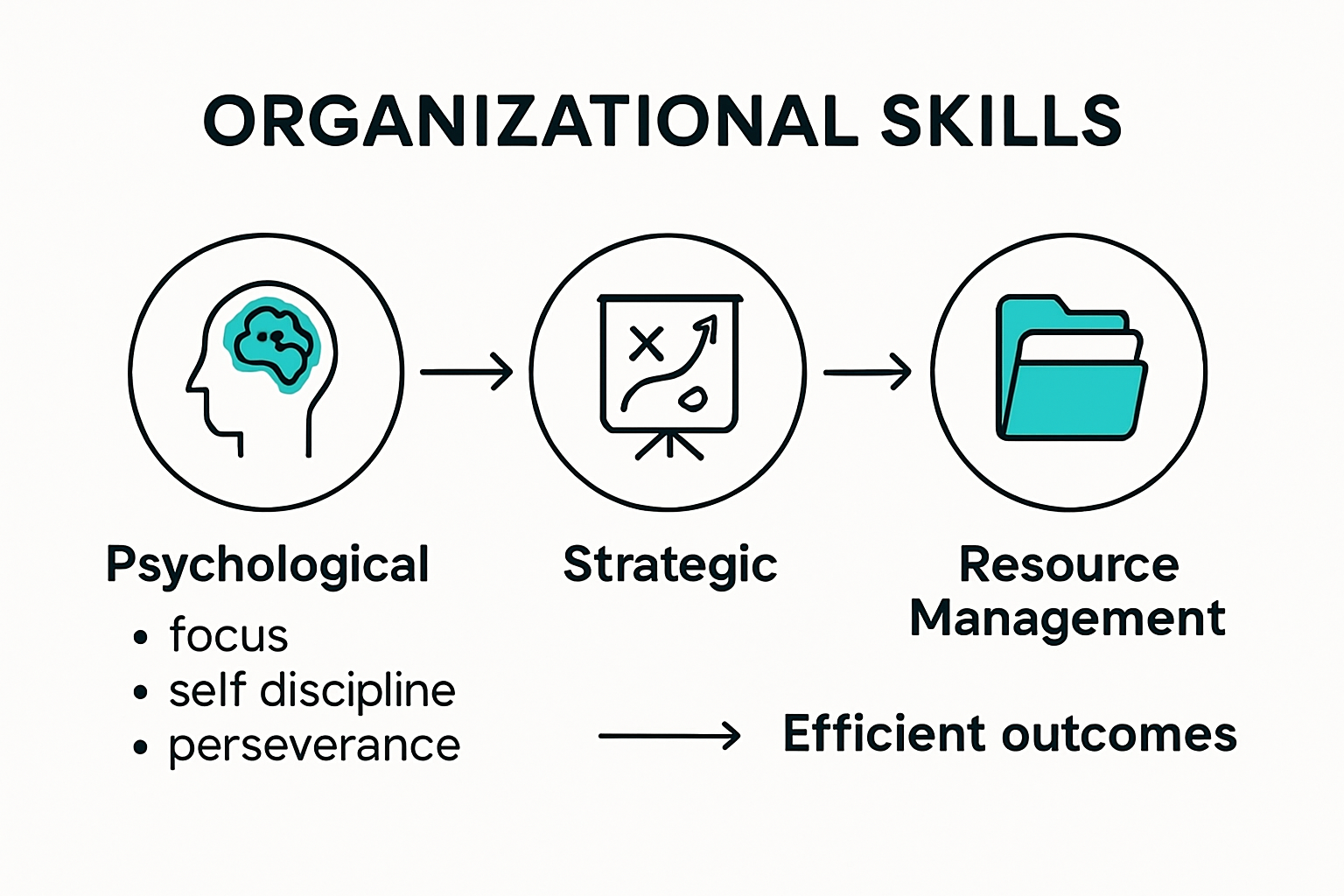
Organizational skills represent the foundational framework that transforms individual potential into systematic productivity. At their core, these skills encompass the ability to strategically manage time, resources, information, and personal energy to achieve consistent and efficient outcomes.
The Psychological Blueprint of Effective Organization
Beyond mere task management, organizational skills are deeply rooted in psychological principles of cognitive efficiency. Research from leading behavioral psychologists reveals that effective organization is not just about external systems but about internal mental processes. Individuals with strong organizational capabilities demonstrate superior executive functioning, which includes critical cognitive abilities like planning, prioritization, and adaptive thinking.
The human brain naturally seeks structure, and organizational skills provide that critical cognitive scaffolding. When people develop robust organizational strategies, they reduce cognitive load, minimize decision fatigue, and create mental bandwidth for creative problem solving. This psychological optimization allows professionals to navigate complex work environments with greater clarity and precision.
Technological and Cognitive Convergence in Organizational Competence
In 2025, organizational skills are evolving beyond traditional time management techniques. According to organizational development experts, the most effective professionals integrate technological tools with advanced cognitive strategies. This means leveraging digital platforms while simultaneously developing metacognitive skills that enable rapid adaptation and strategic thinking.
Modern organizational competence requires a holistic approach that balances technological proficiency with emotional intelligence. Leaders who cultivate these skills can create adaptive work environments that respond dynamically to changing business landscapes. The ability to seamlessly integrate digital tools with human intuition becomes a powerful competitive advantage.
Building Organizational Resilience Through Continuous Learning
Organizational skills are not static capabilities but dynamic competencies that require continuous refinement. Research from agility experts highlights that organizations thriving in 2025 will prioritize continuous learning and skill development. Professionals must view organizational skills as an evolving toolkit, constantly updated through deliberate practice, reflection, and strategic adaptation.
This perspective transforms organizational skills from a rigid set of techniques into a fluid, responsive system of personal and professional development. By embracing a growth mindset, individuals can transform potential challenges into opportunities for strategic innovation. For professionals committed to excellence, organizational skills become more than a productivity mechanism they represent a sophisticated approach to navigating complex professional ecosystems.
To support your journey of skill development, our comprehensive guide on professional growth offers deeper insights into building sustainable organizational capabilities.
Proven Methods to Improve Organizational Skills
Improving organizational skills requires a strategic and multifaceted approach that integrates practical techniques, technological tools, and personal development strategies. The most effective methods focus on creating sustainable systems that enhance productivity and reduce cognitive overwhelm.
Digital Tools and Technological Integration
In the modern professional landscape, technological solutions play a crucial role in organizational skill development. Research from digital learning experts highlights the effectiveness of digital productivity tools that help professionals structure their workflow. The Pomodoro Technique stands out as a scientifically validated method for maintaining focus and managing time effectively.
Digital productivity platforms offer advanced features like task prioritization, time tracking, and collaborative project management. These tools enable professionals to break complex projects into manageable segments, set clear milestones, and monitor progress in real time. By leveraging technology, individuals can create personalized organizational systems that adapt to their unique work styles and professional requirements.
Cognitive Strategies and Personal Development
Effective organizational skills extend beyond external tools and involve developing internal cognitive strategies. According to organizational development research, engaging in developmental assignments and job rotation can significantly enhance an individual’s ability to manage complex tasks and improve overall organizational performance.
Key cognitive strategies include:
- Mental Mapping: Creating visual representations of tasks and their interconnections
- Prioritization Techniques: Using methods like the Eisenhower Matrix to categorize tasks
- Mindful Planning: Developing a proactive approach to task management
These strategies help professionals transform reactive work patterns into intentional, strategic approaches. By training the brain to think systematically, individuals can develop more robust organizational capabilities that transcend traditional time management techniques.
Practical Implementation and Skill Refinement
Educational research from Edutopia emphasizes the importance of practical implementation in skill development. Color-coded systems, whether digital or physical, can dramatically improve information management and task tracking. This approach helps create visual cues that enhance memory and reduce cognitive load.
Consistent practice and reflection are essential for skill refinement. Professionals should regularly assess their organizational methods, identifying areas for improvement and experimenting with new techniques. This iterative approach transforms organizational skills from static abilities into dynamic, adaptive competencies.
For professionals seeking to deepen their understanding of effective management techniques, our comprehensive guide to management skills provides additional insights into developing professional organizational capabilities.
To clarify and compare the various methods for improving organizational skills discussed above, here’s a table summarizing their focus and core benefits:
| Method | Focus Area | Key Benefit |
|---|---|---|
| Digital Tools Integration | Workflow structure, task management | Enhanced efficiency and real-time tracking |
| Cognitive Strategies | Internal mental processes, planning | Improved prioritization and intentionality |
| Practical Implementation | Routine practice, reflection | Adaptability and continuous improvement |
Practical Tools and Techniques for Daily Use
Transforming organizational skills from theoretical concepts into actionable daily practices requires strategic tools and practical techniques that integrate seamlessly into professional workflows. The most effective approaches combine technological solutions with cognitive frameworks to create sustainable productivity systems.
Digital Applications and Productivity Platforms
Research from digital learning experts reveals that modern professionals can dramatically enhance their organizational capabilities through strategic digital tool selection. Applications like Notion, Trello, and Google Calendar offer comprehensive solutions for task tracking, scheduling, and project management.

These digital platforms provide features that go beyond simple task listing. They enable users to create visual workflows, set priority levels, track time allocation, and collaborate with team members in real time. The key is selecting tools that align with individual work styles and professional requirements. Customizable interfaces allow professionals to design organizational systems that feel intuitive and responsive to their unique needs.
Prioritization and Decision Making Frameworks
According to organizational development research, the Eisenhower Matrix stands out as a powerful technique for effective task management. This method categorizes tasks into four quadrants based on urgency and importance:
- Urgent and Important: Immediate action required
- Important but Not Urgent: Strategic planning and personal development
- Urgent but Not Important: Potential delegation opportunities
- Neither Urgent nor Important: Tasks to eliminate
By systematically applying this framework, professionals can transform reactive work patterns into proactive strategic approaches. The matrix helps individuals make conscious decisions about task allocation, reducing mental clutter and increasing overall productivity.
To better illustrate how the Eisenhower Matrix aids in task management, the following table summarizes its four quadrants and actions to take:
| Quadrant | Description | Suggested Action |
|---|---|---|
| Urgent and Important | Requires immediate attention | Do immediately |
| Important but Not Urgent | Contributes to long-term goals | Schedule/Plan |
| Urgent but Not Important | Interrupts but less value | Delegate if possible |
| Neither Urgent nor Important | Minimal impact on outcomes | Eliminate/Ignore |
Action Learning and Continuous Improvement
Research from action learning experts emphasizes the importance of reflective practices in organizational skill development. Action learning involves a cyclical process of taking deliberate actions, reflecting on outcomes, and continuously refining strategies based on insights gained.
This approach encourages professionals to view organizational skills as dynamic competencies rather than static techniques. Key components include regular self assessment, seeking feedback, experimenting with new methods, and maintaining a growth mindset. Professionals who embrace this iterative approach can adapt their organizational strategies to evolving work environments and personal development goals.
For professionals looking to dive deeper into productivity strategies, our comprehensive guide to personal effectiveness offers additional insights and practical recommendations for skill enhancement.
Fostering Organizational Skills Across Teams And Organizations
Developing organizational skills is not an individual pursuit but a collective organizational strategy that requires intentional design, leadership commitment, and systemic support. Successful organizations recognize that cultivating robust organizational capabilities necessitates a holistic approach that integrates individual potential with collaborative frameworks.
Creating a Culture of Organizational Excellence
Research from organizational psychology experts reveals that an open organizational culture significantly impacts an organization’s capacity to learn, innovate, and sustain quality improvement. This culture is characterized by encouraging behaviors, supportive attitudes, constructive feedback mechanisms, and continuous interaction.
Key elements of such a culture include:
- Psychological Safety: Enabling team members to share ideas without fear of ridicule
- Transparent Communication: Establishing clear channels for information exchange
- Continuous Learning: Promoting ongoing skill development and knowledge sharing
By intentionally designing environments that support these principles, organizations can transform organizational skills from individual competencies into collective strengths.
Leadership Strategies for Skill Development
According to transformational leadership research, effective leaders play a crucial role in developing organizational skills across teams. Transformational leadership approaches inspire and motivate employees, create opportunities for professional growth, and encourage collaborative experimentation.
Leaders can foster organizational skills by:
- Modeling effective organizational behaviors
- Providing structured learning opportunities
- Recognizing and rewarding systematic thinking
- Creating cross functional learning experiences
These strategies help translate individual organizational skills into broader organizational capabilities that drive innovation and adaptability.
Distributed Leadership and Collaborative Frameworks
Research on shared leadership structures demonstrates that distributing leadership roles among team members promotes a cooperative work atmosphere, increases creativity, and enhances overall team effectiveness. This approach moves beyond traditional hierarchical models, enabling organizations to develop more flexible and responsive organizational skills.
Implementing collaborative frameworks involves:
- Rotating leadership responsibilities
- Encouraging peer to peer learning
- Creating cross functional project teams
- Developing mentorship programs
By embracing these collaborative approaches, organizations can create dynamic ecosystems where organizational skills are continuously developed, shared, and refined.
For professionals seeking deeper insights into building high performing teams, our comprehensive guide to team performance provides additional strategies and practical recommendations.
Frequently Asked Questions
How can I improve my organizational skills?
Improving organizational skills involves integrating digital tools like Notion or Trello, implementing cognitive strategies such as mental mapping and prioritization techniques, and refining these skills through continuous practice and feedback.
What are some effective digital tools for improving organization?
Applications like Notion, Trello, and Google Calendar are effective for task tracking and project management. These tools allow you to visualize workflows, set priorities, and collaborate with team members in real time.
What role does continuous learning play in developing organizational skills?
Continuous learning fosters resilience by allowing professionals to refine their skills over time. Viewing organizational skills as evolving competencies encourages adaptation and innovation in response to new challenges.
How can teams improve their organizational skills collectively?
To improve organizational skills collectively, teams should foster a culture of psychological safety, encourage transparent communication, and implement structured learning opportunities. Leadership plays a key role in modeling these behaviors and facilitating collaborative environments.
Ready to Transform Your Organizational Skills into Lasting Success?
If you are feeling overwhelmed by digital tools that do not deliver real results or you struggle to keep up with shifting work demands, you are not alone. This guide showed that true organizational excellence comes from blending technology with cognitive strategies and continuous learning. Now is your chance to move from theory to practice and unlock the full potential of your professional growth.

Discover how Peuneo can help you put these strategies into action. Our accredited training and consulting services are designed to address the very pain points discussed here, from smart time management to building resilient teams. Explore hands-on skills development solutions and access tailored training programs that turn organizational skills into a competitive advantage. Take control of your future with Peuneo and start building habits and systems for 2025 success. Visit Peuneo’s website now and make organizational excellence your reality.
Recommended
- Essential Skills for Managers in 2025: Guide for Leaders and Teams – Peuneo
- Essential Effective Management Techniques for 2025 – Peuneo
- Top Leadership Development Strategies for 2025: Success Across Sectors – Peuneo
- How to Lead a Team Effectively in 2025: Essential Strategies for Every Leader – Peuneo
- How to Improve Team Performance: Expert Strategies for 2025 – Peuneo
- How to Enhance Personal Productivity in 2025: Strategies for All Professionals – Peuneo
- How to Write Engaging Statistics Articles