

Decision-making is getting more complicated every year. In 2025, professionals will face choices influenced by more data and faster-changing situations than ever before. But even with AI and analytical tools flooding the workplace, most people still rely on intuition for key decisions. Surprise. Studies show that structured decision frameworks can cut personal bias by up to 30 percent. Instead of just hoping for better instincts, the real edge comes from combining constant learning, mental flexibility, and using these frameworks to make every choice smarter.
Table of Contents
- Understanding Essential Decision-Making Skills
- Practical Techniques to Boost Decision-Making
- Building a Decision-Making Culture in Organizations
- Tools and Resources for Continual Growth
Quick Summary
| Takeaway | Explanation |
|---|---|
| Develop cognitive flexibility | Adapt your thinking when faced with new information or changes. This helps prevent sticking to outdated strategies. |
| Utilize structured decision frameworks | Implement frameworks like the DECIDE model to systematically analyze decisions and reduce biases. |
| Embrace continuous learning | Regularly update your knowledge and challenge your mental models to stay adaptable and improve decision-making. |
| Foster a decision-making culture | Create an environment that encourages collaboration, transparency, and learning from mistakes among team members. |
| Leverage analytical tools | Use technological tools for data-driven insights and predictive modeling to enhance the decision-making process. |
Understanding Essential Decision-Making Skills
Professional decision-making represents a complex cognitive process that goes far beyond simple choices. In 2025, successful professionals must develop a sophisticated approach to evaluating information, understanding context, and making strategic selections that drive organizational success.
The Cognitive Framework of Decision-Making
Decision-making is not an innate talent but a skill that can be systematically developed and refined. Research from the National Institutes of Health reveals that effective decision-making hinges on three critical cognitive components: cognitive flexibility, metacognition, and evidence-based analysis. These elements work together to create a robust framework for professional judgment.
Cognitive flexibility allows professionals to adapt their thinking processes when confronted with new information or changing circumstances. This skill enables quick pivots and prevents rigid adherence to outdated strategies. Metacognition represents the ability to understand and monitor one’s own thought processes, helping individuals recognize potential biases and blind spots that might compromise decision quality.
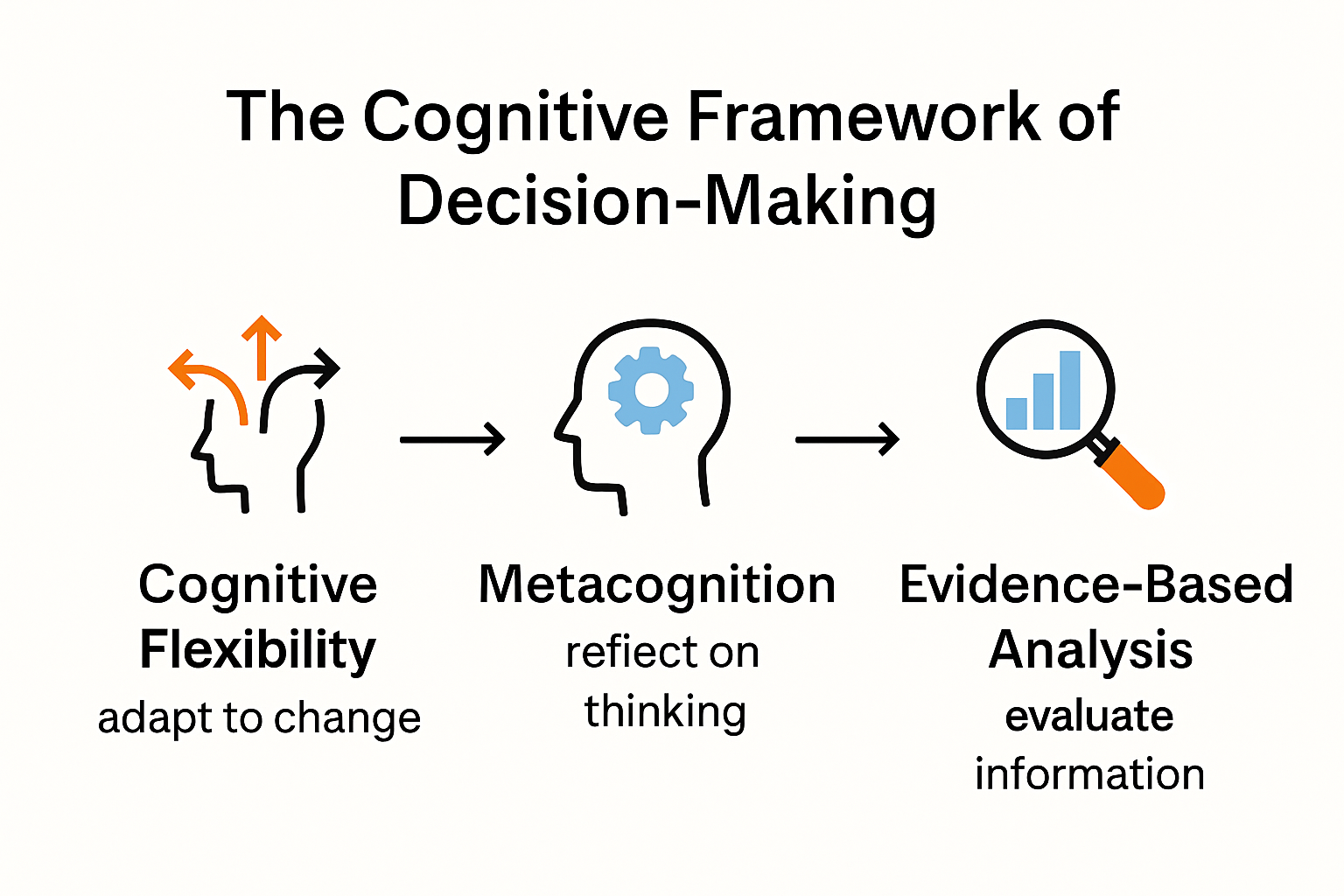
Below is a summary table outlining the three main cognitive components of effective decision-making discussed in this section and their roles for professionals:
| Cognitive Component | Description | Benefit to Professionals |
|---|---|---|
| Cognitive Flexibility | Ability to adapt thinking processes to new information or changing circumstances | Enables quick pivots and prevents rigid thinking |
| Metacognition | Awareness and monitoring of one’s own thought processes | Helps recognize biases and improve judgment |
| Evidence-Based Analysis | Use of data and objective information to evaluate decisions | Increases accuracy and reduces subjective errors |
Strategic Components of Professional Decision-Making
Successful decision-making in professional environments requires a multifaceted approach. Analytical thinking stands as a foundational skill, enabling professionals to break down complex problems into manageable components. This involves gathering relevant data, identifying patterns, and evaluating potential outcomes with precision.
Emotional intelligence plays an equally crucial role. Professionals must balance rational analysis with an understanding of emotional dynamics within their teams and organizational contexts. By recognizing emotional undercurrents, decision-makers can anticipate potential resistance, build consensus, and implement strategies more effectively.
Developing a Holistic Decision-Making Approach
Effective decision-making transcends individual skills and requires a systematic approach. Professionals must cultivate a practice of continuous learning, regularly updating their knowledge base and challenging their existing mental models. According to experts in organizational psychology, this approach involves maintaining intellectual humility and remaining open to alternative perspectives.
For those looking to enhance their professional development, our comprehensive guide on leadership skills provides additional insights into building robust decision-making capabilities. The journey toward exceptional decision-making is ongoing, requiring dedication, self-reflection, and a commitment to personal and professional growth.
Practical Techniques to Boost Decision-Making
Decision-making skills are not static but dynamic capabilities that can be systematically enhanced through deliberate practice and strategic techniques. Professionals seeking to elevate their decision-making prowess must embrace a multifaceted approach that combines cognitive strategies, practical tools, and continuous learning.
Structured Decision-Making Frameworks
Research from the National Institutes of Health highlights the importance of adopting structured decision-making frameworks. These frameworks provide a systematic approach to analyzing complex scenarios and reducing cognitive biases. One powerful technique is the DECIDE model: Define the problem, Establish criteria, Consider alternatives, Identify best solutions, Develop an action plan, and Evaluate results.
Here’s a step-by-step breakdown of the DECIDE decision-making framework highlighted above:
| Step | Description |
|---|---|
| Define the problem | Clearly articulate what needs to be decided |
| Establish criteria | Set standards to judge the alternatives |
| Consider alternatives | List possible options or courses of action |
| Identify best solutions | Evaluate alternatives and select the most suitable |
| Develop an action plan | Outline steps for implementing the chosen solution |
| Evaluate results | Review the outcome and refine the approach if needed |
Professionals can further refine their approach by implementing techniques like the six thinking hats method, which encourages looking at decisions from multiple perspectives. This approach involves deliberately examining problems through different lenses: emotional, logical, critical, creative, optimistic, and procedural. By consciously shifting perspectives, decision-makers can uncover insights that might otherwise remain hidden.
Cognitive Tools and Mental Models
Cognitive enhancement plays a crucial role in improving decision-making capabilities. Medical Education Online research identifies key strategies that professionals can adopt, including seeking objective perspectives, managing emotional responses, and anticipating potential consequences.
Mental models serve as powerful cognitive tools for complex decision-making. These include techniques like first principles thinking, which involves breaking down complicated problems into their most fundamental elements. By understanding core principles, professionals can develop more innovative and robust solutions. Another effective mental model is probabilistic thinking, which helps evaluate potential outcomes by considering likelihood and potential impact.
Practical Implementation and Continuous Learning
Transforming decision-making skills requires more than theoretical knowledge. Practical implementation is key. Professionals should create deliberate practice environments where they can test and refine their decision-making approaches. This might involve scenario planning, simulation exercises, or structured reflection sessions where decisions are critically analyzed post-implementation.
Technology can also play a significant role in decision-making skill development. Our guide on leadership skills offers insights into leveraging digital tools and analytics platforms that can provide data-driven decision support. By combining technological insights with human judgment, professionals can create more nuanced and effective decision-making processes.
Continuous learning remains the cornerstone of decision-making excellence. Professionals should maintain a growth mindset, actively seek feedback, and be willing to deconstruct their decision-making processes. This approach transforms decision-making from a static skill to a dynamic, evolving capability that adapts to changing professional landscapes.
Building a Decision-Making Culture in Organizations
Creating a robust decision-making culture represents a strategic imperative for organizations aiming to thrive in the complex professional landscape of 2025. This approach transcends individual skills and requires a comprehensive organizational transformation that embeds effective decision-making principles into every aspect of institutional practice.
Establishing Organizational Decision-Making Infrastructure
Research from the Journal of Risk Research reveals that successful decision-making cultures depend on creating structured frameworks that align strategic objectives with risk management. Organizations must develop clear decision-making protocols that balance autonomy with accountability, enabling professionals to make informed choices while maintaining organizational alignment.
Key infrastructure components include transparent communication channels, well-defined decision-making hierarchies, and systematic processes for evaluating and implementing strategic choices. This involves creating platforms where information flows freely, alternative perspectives are welcomed, and decisions can be traced and analyzed retrospectively.
Cultivating Organizational Learning and Adaptability
Organizational learning stands as a critical foundation for effective decision-making cultures. According to BMC Health Services Research, implementing evidence-informed decision-making requires dedicated strategies for staff knowledge development and establishing specialized roles that facilitate strategic thinking.
Professionals should be encouraged to view decisions as learning opportunities rather than binary success-failure scenarios. This involves creating psychological safety where team members can discuss mistakes openly, analyze decision outcomes critically, and continuously refine organizational approaches. Organizations can support this by implementing regular reflection sessions, cross-functional knowledge-sharing platforms, and mentorship programs that transfer decision-making expertise.
Leadership and Cultural Transformation
The American Journal of Public Health emphasizes that building a decision-making culture requires committed leadership that models strategic thinking and embraces evidence-based approaches. Leaders must demonstrate transparency, encourage calculated risk-taking, and create environments where diverse perspectives are genuinely valued.
Transforming organizational culture involves systematic interventions beyond traditional training. This includes redesigning performance management systems to reward strategic thinking, implementing collaborative decision-making tools, and developing reward mechanisms that recognize both successful outcomes and intelligent risk-taking.
Our comprehensive guide on organizational effectiveness provides deeper insights into creating adaptive professional environments. By viewing decision-making as a collective capability rather than an individual skill, organizations can develop more resilient, innovative, and responsive strategies that position them for success in an increasingly complex professional landscape.
Ultimately, building a decision-making culture is an ongoing journey of continuous learning, adaptation, and institutional commitment to excellence. It requires patience, strategic investment, and a genuine belief in the collective intelligence of professional teams.
Tools and Resources for Continual Growth
Continual professional development represents a critical strategy for professionals seeking to enhance their decision-making capabilities in 2025. As the professional landscape becomes increasingly complex, individuals must proactively leverage diverse tools and resources that support ongoing skill refinement and strategic learning.
Advanced Learning Platforms and Educational Resources
Yale School of Management’s online program offers sophisticated insights into decision-making processes, providing professionals with cutting-edge theoretical models and practical frameworks. These specialized courses cover cognitive processes, psychological foundations, and advanced decision-making techniques that enable participants to understand the intricate mechanisms underlying strategic choices.
Digital learning platforms have revolutionized skill development, offering unprecedented access to expert-curated content. Online courses, webinars, and interactive modules provide flexible learning opportunities that accommodate diverse professional schedules. Professionals can now engage with world-class instructors and research-backed curricula without geographical constraints, making continuous learning more accessible than ever before.
Technological Tools and Analytical Platforms
Decision support technologies have emerged as powerful resources for professional growth. Harvard Kennedy School’s Leadership Decision Making program highlights the integration of big data, behavioral economics, and psychological insights to enhance organizational performance.
Modern professionals can leverage advanced analytical tools that provide data-driven insights, predictive modeling, and scenario planning capabilities. These technologies enable more nuanced risk assessment, help identify potential cognitive biases, and support more informed decision-making processes. Machine learning algorithms and artificial intelligence platforms can now provide real-time recommendations and strategic insights, transforming how professionals approach complex decisions.
Professional Development and Networking Strategies
The National Institutes of Health’s critical thinking course demonstrates the importance of structured professional development programs. Beyond formal training, professionals should cultivate diverse networking strategies that expose them to varied perspectives and innovative thinking approaches.
Mentorship programs, professional associations, and cross-industry forums offer invaluable opportunities for knowledge exchange. These platforms allow professionals to learn from experienced practitioners, share complex decision-making challenges, and gain insights from diverse industry perspectives. Peer learning groups and collaborative workshops can provide safe environments for testing decision-making strategies and receiving constructive feedback.
Our comprehensive guide on professional development provides deeper insights into creating a personalized growth strategy. The most successful professionals view learning as a continuous journey, actively seeking opportunities to challenge their existing mental models and expand their cognitive capabilities.
Ultimately, tools and resources for continual growth are most effective when approached with curiosity, humility, and a genuine commitment to personal and professional transformation. By embracing a multifaceted approach to skill development, professionals can position themselves as adaptive, strategic thinkers capable of navigating increasingly complex professional landscapes.

Frequently Asked Questions
How can I improve my decision-making skills as a professional?
To improve decision-making skills, professionals should develop cognitive flexibility, utilize structured decision frameworks like the DECIDE model, and embrace continuous learning to challenge existing mental models.
What is the DECIDE model in decision-making?
The DECIDE model is a structured decision-making framework that involves defining the problem, establishing criteria, considering alternatives, identifying the best solutions, developing an action plan, and evaluating results to reduce biases and enhance decision quality.
How does emotional intelligence influence decision-making?
Emotional intelligence helps professionals balance rational analysis with an understanding of emotional dynamics, enabling them to anticipate resistance, build consensus, and implement strategies more effectively.
Why is cultivating a decision-making culture important in organizations?
Cultivating a decision-making culture fosters collaboration, transparency, and learning from mistakes, which can lead to more effective and agile decision-making processes within the organization.
Turn Better Judgment Into Real-World Results With Peuneo
If you have ever struggled to turn information overload, changing conditions, or organizational complexity into clear and confident decisions, you are not alone. The article above explores why modern professionals need cognitive flexibility and proven frameworks, yet so many remain trapped by bias or outdated thinking. What if you could actually transform these insights into practical skills for yourself or your team?

Start building a stronger decision-making foundation today with Peuneo’s accredited training and consulting solutions. Whether your goal is to improve analytical thinking, nurture a decision-smart culture, or use technology for better outcomes, Peuneo’s online courses and expert guidance deliver measurable results. Visit Peuneo’s website to explore programs that help you put evidence-based frameworks and continuous learning strategies to work—because your next big professional leap starts with better decisions right now.
Recommended
- Essential Skills for Managers in 2025: Guide for Leaders and Teams – Peuneo
- How to Improve Organizational Skills: Strategies for 2025 Success – Peuneo
- Essential Workforce Skills for Career Success in 2025 – Peuneo
- How to Develop Leadership Skills in 2025: Essential Steps for Teams and Professionals – Peuneo