

Productivity tips are everywhere and everyone claims to have the secret sauce. Some insist it’s all about the latest app or waking up at 5 a.m. But studies show that practicing deliberate energy management can boost productive output by up to 40 percent without burnout. The real breakthrough for 2025 is not just about working harder or even smarter. It’s about completely rethinking how we mix psychology, environment, and personal energy to get results most people never see coming.
Table of Contents
- Understanding What Drives Productivity
- Effective Time Management Techniques for 2025
- Leveraging Technology and Tools for Better Results
- Building a Culture of High Performance
Quick Summary
| Takeaway | Explanation |
|---|---|
| Understand productivity drivers | Recognize psychological, environmental, and personal factors affecting productivity. Addressing these can enhance individual performance effectively. |
| Implement strategic task prioritization | Use dynamic approaches like the Eisenhower Matrix to prioritize tasks by urgency and importance, optimizing productivity. |
| Leverage technology for productivity | Utilize intelligent platforms and tools that adapt to work patterns to streamline processes and enhance efficiency. |
| Promote psychological safety at work | Create a supportive environment where employees feel safe to share ideas and take risks, fostering creativity and engagement. |
| Focus on continuous learning | Encourage ongoing skill development and personalized learning opportunities to maintain adaptability and a competitive edge in the workplace. |
Understanding What Drives Productivity
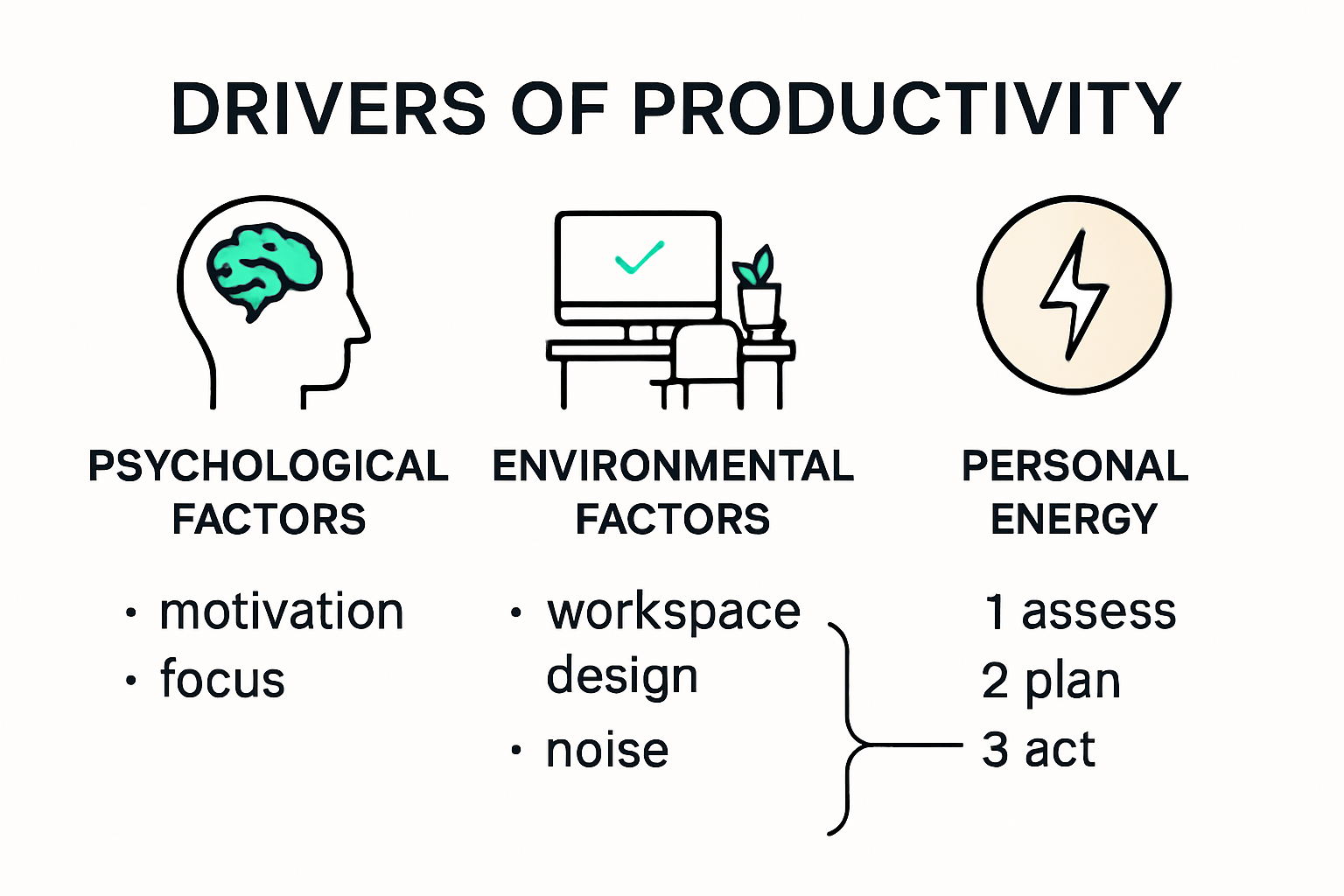
Productivity is not a mysterious force but a complex interplay of psychological, environmental, and personal factors that determine how effectively individuals accomplish their goals. Understanding these underlying drivers is crucial for developing targeted strategies that genuinely enhance work performance and personal efficiency.
The Psychological Foundations of Productivity
At the core of productivity lie intrinsic psychological mechanisms that motivate human behavior. Research from Harvard Business Review reveals that motivation is not simply about working harder but about creating an environment and mindset that naturally propels individuals toward their objectives. Psychological elements such as clear goal setting, personal autonomy, and meaningful engagement play critical roles in determining productivity levels.
Motivation researchers have consistently demonstrated that individuals are most productive when they experience a sense of purpose and control over their work. This means understanding personal motivations goes beyond external rewards and taps into deeper psychological needs for achievement, growth, and self actualization. Psychological studies from Stanford University indicate that people who connect their daily tasks to broader life goals are significantly more likely to maintain high productivity levels.
Environmental and Systemic Influences
Productivity cannot be understood in isolation from the surrounding environment. Work settings, organizational culture, technological infrastructure, and personal support systems all contribute significantly to an individual’s performance capacity. Modern workplaces increasingly recognize that productivity is not about constant activity but about creating conditions that allow individuals to perform at their peak.
Critical environmental factors include workspace design, noise levels, technological tools, and interpersonal dynamics. An optimal productive environment provides minimal distractions, ergonomic comfort, and technological resources that streamline work processes. Companies that invest in understanding and designing conducive work environments see measurable improvements in employee output and satisfaction.
Personal Energy Management
Beyond psychological and environmental factors, productivity fundamentally depends on personal energy management. This involves understanding individual biological rhythms, managing cognitive resources, and developing sustainable work practices. High performers recognize that productivity is not about working longer but working smarter by aligning tasks with personal energy levels and implementing strategic recovery periods.
Effective energy management includes techniques like prioritizing complex tasks during peak mental alertness, incorporating regular breaks, maintaining physical health through exercise and nutrition, and developing mental resilience strategies. Neuroscience research from MIT suggests that individuals who practice deliberate energy management can increase their productive output by up to 40% without experiencing burnout.
Understanding productivity requires a holistic approach that recognizes the interconnected nature of psychological, environmental, and personal factors. By developing comprehensive strategies that address these multifaceted dimensions, individuals and organizations can create more effective, sustainable, and fulfilling work experiences. For more insights on personal productivity techniques, explore our comprehensive guide that breaks down practical strategies for modern professionals.
Effective Time Management Techniques for 2025
Time management has evolved dramatically in the digital age, transforming from simple scheduling to a sophisticated approach that integrates technology, psychological insights, and strategic personal planning. As we move into 2025, effective time management requires a nuanced understanding of how to optimize personal and professional productivity in an increasingly complex work environment.
Strategic Prioritization and Task Management
The cornerstone of modern time management is strategic prioritization. Research from Harvard Summer School highlights the critical importance of creating personalized systems that align with individual work styles and goals. The traditional to-do list has been replaced by more dynamic task management approaches that emphasize value-based prioritization and adaptive scheduling.
Effective prioritization involves more than simply listing tasks. It requires a comprehensive approach that considers task complexity, potential impact, and personal energy levels. The Eisenhower Matrix, a time-tested method, categorizes tasks into four quadrants based on urgency and importance, allowing professionals to focus on high-impact activities that drive meaningful progress. Project management research suggests that individuals who master this approach can increase their productivity by up to 30% by eliminating low-value activities.
Technology-Enhanced Time Management
Technology has revolutionized time management, offering sophisticated tools that go beyond simple calendar applications. Modern professionals leverage advanced productivity platforms that integrate artificial intelligence, machine learning, and predictive analytics to optimize time allocation. Wikipedia’s comprehensive overview of time management techniques highlights emerging methods like the Pomodoro Technique, which breaks work into focused 25-minute intervals followed by short breaks.
Digital tools now offer intelligent features such as automatic task prioritization, energy level tracking, and predictive scheduling. These technologies can analyze work patterns, suggest optimal working times, and help individuals create more balanced and efficient schedules. The key is not to become overwhelmed by technology but to select tools that genuinely enhance personal productivity and align with individual work preferences.
Holistic Time Management Approach
Time management in 2025 transcends traditional productivity metrics, embracing a more holistic approach that considers mental well-being, personal energy, and life balance. Research from the Boys & Girls Clubs of America emphasizes the importance of creating flexible schedules that accommodate personal growth, learning, and recovery.
This approach recognizes that true productivity is not about working more hours but about creating sustainable work patterns that prevent burnout and support long-term performance. Successful time management now includes strategies for mental health, such as incorporating mindfulness practices, setting clear boundaries between work and personal life, and designing schedules that allow for creative thinking and personal development.
As we navigate the complexities of modern work environments, time management becomes a critical skill that determines professional success and personal satisfaction. For comprehensive strategies to transform your productivity, professionals must remain adaptable, embrace technological tools, and develop personalized systems that align with their unique goals and work styles.
Leveraging Technology and Tools for Better Results
In the rapidly evolving digital landscape of 2025, technology has become an indispensable ally in enhancing productivity. The strategic integration of advanced tools and platforms is no longer a luxury but a fundamental requirement for professionals seeking to optimize their performance and stay competitive in an increasingly complex work environment.
Intelligent Productivity Platforms
Modern productivity technologies go far beyond simple task management applications. Research from the U.S. Government Accountability Office highlights how sophisticated digital tools can dramatically transform workflow efficiency. Artificial intelligence and machine learning now power intelligent platforms that adapt to individual work patterns, providing personalized recommendations and predictive insights.
These advanced systems analyze work habits, suggest optimal task scheduling, and identify potential productivity bottlenecks before they become significant problems. Adaptive workflow technologies can now predict energy levels, recommend breaks, and even suggest the most appropriate tasks based on an individual’s cognitive state and historical performance patterns. By leveraging these intelligent platforms, professionals can create more dynamic and responsive work strategies that align with their natural productivity rhythms.
Collaborative Digital Ecosystems
Technology has revolutionized collaboration, breaking down traditional geographical and organizational barriers. Virtual collaboration tools now integrate seamlessly with project management platforms, communication systems, and data sharing environments. Our guide on team performance strategies emphasizes the importance of creating interconnected digital workspaces that enable real-time communication and collective productivity.
Advanced collaboration technologies offer features like simultaneous document editing, AI-powered translation, context-aware communication channels, and intelligent task allocation. These tools not only facilitate communication but also enhance collective problem-solving capabilities. Machine learning algorithms can now analyze team interactions, suggest optimal collaboration strategies, and identify potential communication barriers before they impact project outcomes.
Automation and Cognitive Enhancement
Automation technologies have evolved from simple repetitive task management to sophisticated cognitive enhancement tools. Professionals can now leverage robotic process automation (RPA), artificial intelligence, and machine learning to offload routine cognitive tasks, freeing mental resources for more complex and creative work.
Critical cognitive enhancement technologies include AI-powered research assistants, automated data analysis tools, and predictive decision-making platforms. These technologies can process vast amounts of information, identify patterns, and generate insights far beyond human cognitive capabilities. By strategically implementing these tools, professionals can dramatically reduce administrative overhead and focus on high-value strategic activities that require human creativity and emotional intelligence.
The future of productivity lies in the seamless integration of human potential and technological capabilities. Professionals must develop a nuanced understanding of available technologies, critically evaluating tools that genuinely enhance their work rather than create additional complexity. For deeper insights into technological productivity strategies, explore our comprehensive approach to navigating the technological landscape of modern work environments.
Building a Culture of High Performance
Creating a high-performance culture is more than implementing isolated strategies. It represents a comprehensive approach to organizational development that integrates individual potential, collective capabilities, and strategic alignment. In 2025, successful organizations recognize that sustainable performance emerges from intentional cultural design that prioritizes human potential, continuous learning, and adaptive capabilities.
Psychological Safety and Performance
Research from the National Institutes of Health demonstrates that high-performance work systems fundamentally depend on creating environments of psychological safety. This means developing workplace cultures where individuals feel empowered to take calculated risks, share innovative ideas, and contribute without fear of punitive consequences.
Psychological safety involves more than passive tolerance. It requires active leadership commitment to transparent communication, constructive feedback, and collaborative problem solving. Organizations that successfully implement these principles see significant improvements in team creativity, individual engagement, and overall organizational resilience. Leaders must transition from traditional hierarchical models to more fluid, supportive frameworks that encourage intellectual curiosity and continuous personal development.
Continuous Learning and Skill Development
High-performance cultures are characterized by their commitment to ongoing learning and adaptive skill development. This goes beyond traditional training programs, emphasizing personalized learning pathways that align individual growth with organizational objectives. Our comprehensive guide on building high-performance teams highlights the importance of creating dynamic learning ecosystems that support professional evolution.
Effective skill development strategies include mentorship programs, cross-functional training opportunities, micro-learning platforms, and personalized skill assessment tools. These approaches enable professionals to continuously expand their capabilities, remain adaptable in rapidly changing work environments, and maintain competitive edge through targeted, relevant learning experiences.
Performance Recognition and Motivation
Traditional performance management models are rapidly becoming obsolete. Modern high-performance cultures replace annual performance reviews with continuous, meaningful feedback mechanisms that provide real-time insights and support. Recognition has transformed from standardized reward systems to nuanced, personalized approaches that acknowledge individual contributions and potential.
Advanced performance recognition strategies integrate data-driven insights with human-centric approaches. This means using technological tools to track performance metrics while simultaneously creating qualitative frameworks that celebrate creativity, collaboration, and innovative thinking. The goal is to create motivational environments that intrinsically inspire professionals to excel, rather than relying on external compliance mechanisms.
Building a high-performance culture requires a holistic, integrated approach that balances technological sophistication with deep human understanding. Organizations must view performance not as a mechanical process but as a dynamic, evolving ecosystem of human potential. For deeper insights into creating transformative performance cultures, explore strategies that blend technological innovation with profound human-centric design.

To clarify the roles of psychological, environmental, and personal factors in productivity, here is a summary table highlighting their unique contributions and examples:
| Factor Type | Key Contribution | Example Strategies |
|---|---|---|
| Psychological | Drives motivation and engagement | Clear goals, personal autonomy, meaning |
| Environmental | Shapes work context and enables or hinders output | Ergonomic workspace, tech tools, low distraction |
| Personal Energy | Determines ability to sustain and focus effort | Align work with energy peaks, regular breaks |
The following table provides a quick comparison of cutting-edge digital productivity tools and strategies mentioned, helping readers understand how these technologies support productivity:
| Technology Type | Main Benefit | Example Feature |
|---|---|---|
| Intelligent Productivity Platform | Personalized workflow optimization | Task prediction, energy-level tracking |
| Collaborative Digital Ecosystem | Enhanced teamwork and communication | Real-time editing, AI translation |
| Automation/Cognitive Enhancement | Reduce mental load / boost insight | AI assistants, automated analytics |
Frequently Asked Questions
What are the key factors that drive productivity?
Productivity is driven by three main factors: psychological, environmental, and personal energy. Understanding these can help you implement strategies to enhance performance effectively.
How can I manage my time more effectively in 2025?
Employ strategic prioritization techniques, such as the Eisenhower Matrix, and utilize technology-enhanced tools to create a balanced schedule that adapts to your personal work style and energy levels.
What role does technology play in enhancing productivity?
Technology, particularly intelligent productivity platforms and collaborative digital ecosystems, helps optimize workflows, improve communication, and automate routine tasks, allowing professionals to focus on high-value work.
How can I build a high-performance culture in my organization?
Promote psychological safety, commit to continuous learning, and implement personalized performance recognition systems to foster an environment that supports innovation, collaboration, and individual growth.
Ready to Turn Productivity Insights Into Real Results?
You have just discovered the science behind productivity, from mastering psychological drivers to harnessing new technologies. The next challenge is knowing how to apply these advanced strategies across your team or organization, especially when it comes to embedding sustainable energy management and nurturing high-performance cultures. If you want to go beyond theory and see noticeable change, you need a proven roadmap and a partner dedicated to skills development.

Now is the time to invest in your growth. At Peuneo, our accredited training, consulting, and digital learning programs are built to help you implement world-class productivity solutions in the South African context. Explore our diverse expertise and discover how to turn ideas into action. Visit our category of educational resources or start your journey at https://peuneo.co.za today and transform your approach to performance before your competitors do.
Recommended
- How to Enhance Personal Productivity in 2025: Strategies for All Professionals – Peuneo
- How to Improve Organizational Skills: Strategies for 2025 Success – Peuneo
- How to Lead a Team Effectively in 2025: Essential Strategies for Every Leader – Peuneo
- The Importance of Team Building: Key Benefits for 2025 – Peuneo