


Personal productivity is about to get a serious upgrade in 2025. The old routine of working longer hours has lost its edge. Here is a surprise: automation now saves professionals up to five hours every week and that is only scratching the surface. Most people think it is all about clever scheduling or disciplined habits, but the real progress happens when you combine strategic routines with smart technology and even short, science-backed breaks. The best strategies ahead might just flip everything you thought you knew about getting things done.
Table of Contents
- Mastering Time Management Techniques
- Building Effective Productivity Habits
- Leveraging Technology And Tools For Productivity
- Fostering A Productive Workplace Environment
Quick Summary
| Takeaway | Explanation |
|---|---|
| Strategic Prioritization | Utilize the Eisenhower Matrix to categorize tasks into urgent and important quadrants for effective focus on high-impact activities. |
| Structured Work Intervals | Implement techniques like the Pomodoro Technique to manage work in focused intervals of 25 minutes followed by short breaks, enhancing sustained concentration. |
| Automate Repetitive Tasks | Leverage automation to save time on repetitive tasks, allowing more focus on strategic thinking and high-value work. |
| Emphasize Wellbeing | Cultivate a workplace culture that prioritizes employee wellbeing through flexible work arrangements, mental health support, and continuous learning opportunities. |
| Leverage AI Tools | Integrate AI-powered productivity solutions to enhance task management, optimize workflows, and increase overall productivity by adapting to individual and organizational needs. |
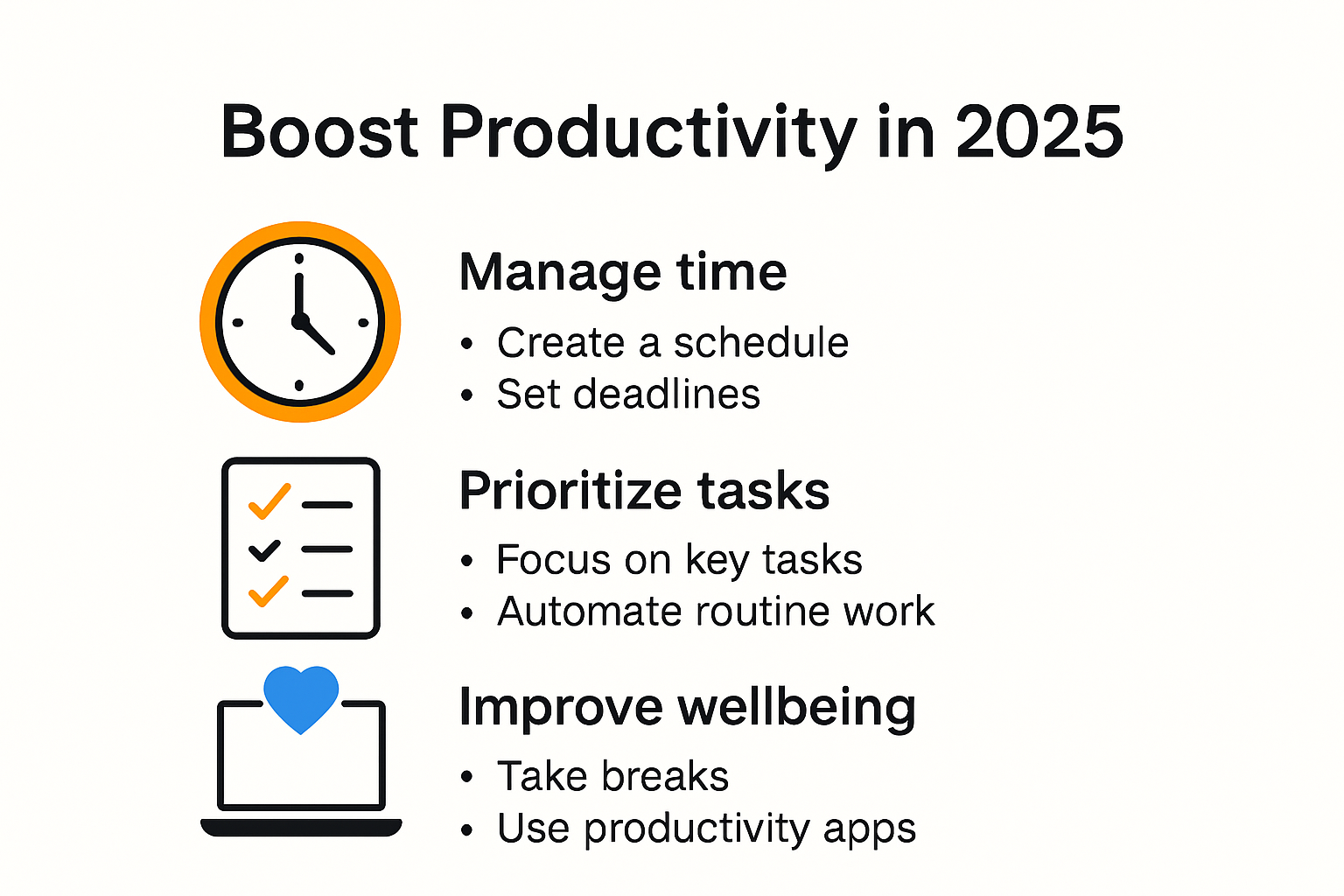
Mastering Time Management Techniques
Time management represents the critical foundation of personal productivity, transforming how professionals navigate their increasingly complex work environments. Understanding and implementing strategic techniques can dramatically improve your ability to control your schedule, reduce stress, and achieve meaningful results.
Strategic Prioritization Methods
Successful time management begins with intelligent task prioritization. The Eisenhower Matrix offers a powerful framework for categorizing tasks based on their urgency and importance. By systematically evaluating work assignments, professionals can allocate their energy more effectively. According to productivity research, users who implement this method report feeling 50% more in control of their daily responsibilities.
The matrix divides tasks into four distinct quadrants:
- Urgent and Important: Immediate actions requiring direct attention
- Important but Not Urgent: Strategic planning and development activities
- Urgent but Not Important: Potential distractions to minimize
- Neither Urgent nor Important: Tasks to eliminate or delegate
This approach enables professionals to focus on high-impact activities while minimizing time spent on low-value work. By consistently applying these prioritization principles, individuals can transform their productivity trajectory.

Structured Work Interval Techniques
Time blocking and interval management represent another critical strategy for enhancing personal productivity. The Pomodoro Technique has gained significant traction among professionals seeking structured work approaches. This method involves working in concentrated 25-minute intervals followed by short breaks, creating a rhythm that maintains focus and prevents mental fatigue.
Research demonstrates that 60% of participants successfully manage their tasks using structured interval techniques four or five days per week. The technique works by leveraging our natural attention spans and providing clear boundaries between work and rest periods. Professionals can customize these intervals based on their specific work requirements, making it a flexible productivity tool.
Strategic Daily Planning
Perhaps the most transformative time management technique involves intentional daily planning. Productivity experts suggest that spending just 10 minutes organizing your day can save up to two hours of potential lost productivity. This brief investment creates a strategic roadmap, helping professionals anticipate challenges, set clear objectives, and maintain a proactive approach to their workload.
Effective daily planning involves three key components:
- Reviewing previous day’s accomplishments
- Identifying top priorities for the current day
- Allocating realistic time blocks for critical tasks
By integrating these time management techniques, professionals can create a comprehensive approach to productivity that goes beyond simple task completion. The goal is not just managing time but maximizing personal effectiveness and achieving meaningful professional growth.
For professionals looking to dive deeper into advanced project management strategies that complement these time management techniques, explore our comprehensive guide on 2025 project management best practices.
Building Effective Productivity Habits
Productivity is not just about working harder but creating sustainable, repeatable systems that consistently drive professional performance. Building effective productivity habits requires intentional strategies that transform how professionals approach their work and personal development.
Designing High-Impact Morning Routines
The foundation of productive habits starts with how professionals begin their day. Productivity research emphasizes the critical importance of starting each morning by tackling your highest impact task. This approach ensures that your peak energy is invested in work that directly advances your most significant professional goals.
Successful morning routines often incorporate several key elements:
- Strategic Task Prioritization: Identifying and addressing the most crucial work first
- Mental Preparation: Engaging in brief mindfulness or reflection exercises
- Physical Activation: Light exercise or movement to energize the body
- Clear Goal Setting: Defining specific, achievable objectives for the day
By consistently implementing these elements, professionals create a predictable framework that minimizes decision fatigue and maximizes morning productivity.
Automation and Efficiency Techniques
Modern professionals can significantly enhance their productivity by strategically automating repetitive tasks. Research indicates that automation can save up to five hours per week, allowing more time for strategic thinking and high-level problem solving.
Automation strategies include:
- Using task management software to streamline workflow
- Implementing email filtering and response templates
- Creating standardized document templates
- Utilizing scheduling tools for meetings and appointments
The goal is not to replace human judgment but to eliminate mundane tasks that consume valuable mental energy. By reducing cognitive load through intelligent automation, professionals can redirect their focus toward more complex and creative work.
Intentional Break and Recovery Strategies
Contrary to traditional productivity myths, consistent breaks are not a hindrance but a critical component of sustained high performance. Workplace studies demonstrate that regular breaks, especially those taken away from screens, dramatically improve focus, concentration, and overall productivity.
Effective break strategies include:
- Microbreaks: 2-5 minute intervals of complete mental disengagement
- Physical Movement: Short walks or stretching sessions
- Screen-Free Moments: Periodic disconnection from digital devices
- Mindful Breathing: Brief meditation or deep breathing exercises
These recovery techniques prevent mental fatigue, reduce stress, and help maintain consistent performance throughout the workday. Professionals who integrate deliberate break strategies report higher job satisfaction and lower burnout rates.
For professionals seeking to enhance their collaborative skills and understand how effective habits translate into team performance, explore our comprehensive guide on team building techniques.
Leveraging Technology and Tools for Productivity
In 2025, technology has transformed from a mere productivity assistant to a critical strategic partner for professionals across industries. Understanding and effectively integrating technological tools can dramatically enhance work performance, streamline complex processes, and unlock unprecedented levels of efficiency.
AI-Powered Productivity Solutions
Artificial intelligence represents the cutting edge of productivity enhancement. McKinsey research reveals that 94% of employees and 99% of C-suite leaders now recognize generative AI tools as integral to workplace performance. These advanced technologies go beyond traditional automation, offering intelligent solutions that adapt to individual work styles and organizational needs.
Key AI productivity tools include:
- Intelligent Task Management: AI systems that predict project timelines and resource allocation
- Smart Writing Assistants: Tools that help draft communications and refine professional documents
- Predictive Analytics: Software that provides insights for strategic decision making
- Personalized Workflow Optimization: Platforms that learn and suggest productivity improvements
Companies implementing these AI tools can experience up to a 20% increase in overall productivity, transforming how work gets accomplished.
Collaborative Digital Workspaces
The evolution of digital collaboration tools has fundamentally reshaped professional interaction. Technology experts emphasize that modern productivity platforms are no longer just communication channels but comprehensive ecosystems that support complex team dynamics.
Effective digital workspace strategies involve:
- Real-time project tracking and management
- Integrated communication platforms
- Cloud-based document collaboration
- Secure remote work infrastructure
These tools enable seamless communication across distributed teams, breaking down geographical barriers and creating more flexible, responsive work environments.
Intelligent Performance Tracking
Advanced technological tools now offer unprecedented insights into individual and team productivity. Performance tracking has evolved from basic metrics to sophisticated analysis that provides actionable intelligence about work patterns, efficiency, and potential improvement areas.
Modern performance tracking technologies offer:
- Automated Time Logging: Precise tracking of work hours and project contributions
- Productivity Visualization: Graphical representations of work efficiency
- Energy Management Insights: Understanding personal and team performance rhythms
- Skill Development Recommendations: Personalized suggestions for professional growth
By providing data-driven insights, these tools empower professionals to make informed decisions about their work strategies and personal development.
For professionals seeking deeper understanding of how technology transforms professional development, explore our comprehensive guide on technology’s impact on training. This resource offers critical insights into leveraging technological advancements for continuous learning and skill enhancement.
Fostering a Productive Workplace Environment
Creating a productive workplace environment extends far beyond physical infrastructure. In 2025, successful organizations recognize that workplace productivity is a complex ecosystem involving culture, technology, leadership, and individual wellbeing. Strategic approaches that holistically address these interconnected elements define truly high-performance workplaces.
Cultivating Organizational Culture
Research from Global Wellness Institute highlights that embedding wellbeing into organizational culture represents a critical strategy for sustainable performance. This approach requires intentional leadership that goes beyond traditional management models, focusing on creating environments where employees can thrive professionally and personally.
Key elements of a productive organizational culture include:
- Psychological Safety: Environments where employees feel comfortable sharing ideas
- Transparent Communication: Clear, consistent information sharing across all levels
- Recognition and Appreciation: Systematic acknowledgment of individual and team contributions
- Continuous Learning: Opportunities for professional growth and skill development
Organizations that successfully implement these cultural elements see significant improvements in employee engagement, retention, and overall productivity.
Technology Integration and Training
Productivity experts emphasize that simply acquiring advanced technologies is insufficient. The critical factor is comprehensive training and strategic implementation that enables employees to leverage these tools effectively.
Effective technology integration strategies involve:
- Systematic skill development programs
- Regular technology onboarding sessions
- Personalized learning pathways
- Ongoing technical support and resources
- Feedback mechanisms for tool improvement
By treating technology as a collaborative partner rather than a replacement for human skills, organizations can unlock unprecedented levels of efficiency and innovation.
Holistic Employee Wellbeing Approach
Modern workplace productivity recognizes that employee wellbeing is not a peripheral concern but a core strategic priority. This approach encompasses physical health, mental wellness, professional development, and work life balance.
Comprehensive wellbeing strategies include:
- Flexible Work Arrangements: Options for remote and hybrid work models
- Mental Health Support: Accessible counseling and stress management resources
- Physical Wellness Programs: Health screenings, fitness incentives, ergonomic workspaces
- Financial Wellness Education: Workshops on personal financial management
These multifaceted approaches demonstrate organizational commitment to employee success, which directly translates into higher motivation and productivity.
For leaders seeking deeper insights into nurturing workplace potential, explore our comprehensive guide on supporting employee development and discover advanced strategies for creating high-performance teams.
Frequently Asked Questions
What are effective time management techniques for enhancing productivity in 2025?
Successful time management techniques include strategic prioritization with the Eisenhower Matrix, structured work intervals like the Pomodoro Technique, and intentional daily planning to set clear objectives.
How can automation improve personal productivity?
Automation can save professionals up to five hours a week by streamlining repetitive tasks, allowing more focus on strategic thinking and high-value work.
What role does technology play in boosting productivity in 2025?
Technology, particularly AI-powered tools, enhances productivity by optimizing workflows, enabling real-time collaboration, and providing intelligent performance tracking insights, leading to increased efficiency.
How can I cultivate a productive workplace environment?
A productive workplace environment can be cultivated by fostering an organizational culture that prioritizes wellbeing, integrating technology effectively, and implementing training programs that empower employees.
Take Charge of Your Productivity With Peuneo’s Training Solutions
Are you tired of feeling overwhelmed despite trying every new productivity hack? If you struggle to break free from endless busywork or want to unlock your team’s true potential, you are not alone. This article uncovered how strategic habits, technology, and smarter routines can transform daily performance. Now, it is time to turn that knowledge into real action. Dive deeper with Peuneo’s extensive range of business development and training programs—all tailored to South African professionals who want to thrive in 2025 and beyond.

Build focused habits, streamline your workday, and become the most productive version of yourself with practical guidance from our accredited courses and expert consultants. Visit Peuneo now for programs that deliver lasting results in skills development, productivity, and career growth. Take your next step today and see measurable results you can feel every day.