
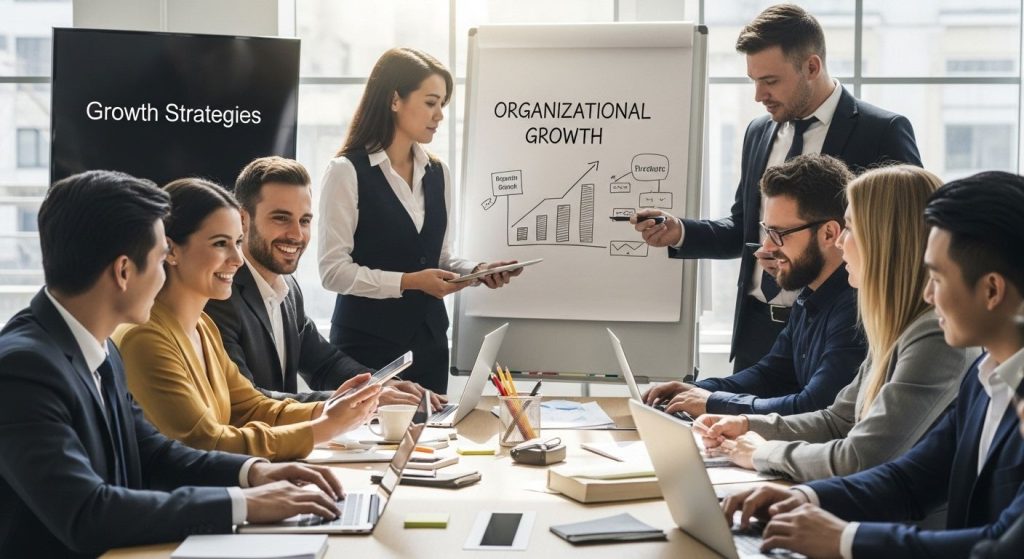
Every leader wants their company to grow faster and thrive in 2025. Most think it starts with hiring more people or launching bold ideas. Yet new research shows that companies integrating Environmental, Social, and Governance practices report stronger performance and resilience than those chasing old-school growth tactics. The secret advantage is a smarter approach to leadership, feedback, and culture that most businesses still overlook.
Table of Contents
- Key Drivers Of Organizational Growth
- Practical Steps To Improve Company Performance
- Developing A Growth-Focused Workplace Culture
- Leveraging Training And Technology For Expansion
Quick Summary
| Takeaway | Explanation |
|---|---|
| Invest in Leadership Development | Enhance adaptability through comprehensive training programs for leaders to navigate complex challenges. |
| Adopt Real-Time Performance Feedback | Move beyond annual reviews; implement continuous feedback mechanisms for better employee engagement. |
| Foster a Culture of Psychological Safety | Create environments where team members feel safe to express ideas and learn from failures. |
| Utilize Adaptive Learning Technologies | Leverage AI to personalize training experiences, enhancing skill development tailored to individual needs. |
| Integrate Technology with Human Development | Align technological advancements with strategic upskilling efforts to empower employees effectively. |
Key Drivers of Organizational Growth
Successful organizational growth requires a strategic approach that goes beyond traditional business practices. Modern organizations must recognize and leverage multiple interconnected drivers that propel sustainable development and competitive advantage.
Strategic Talent Development and Leadership Capabilities
Talent remains the most critical asset for organizational expansion. Research from the Association for Talent Development (ATD) highlights that developing leadership capabilities to navigate uncertainty is paramount. Organizations must invest in comprehensive leadership programs that equip managers with skills to manage complex, rapidly changing business environments.
Effective talent development involves more than traditional training. It requires creating adaptive learning ecosystems that support continuous skill enhancement. This approach includes mentorship programs, cross-functional experiences, and personalized development pathways that align individual growth with organizational objectives.
Performance and Productivity Optimization
The Society for Human Resource Management (SHRM) emphasizes the critical ‘4 P’s’ framework: people, productivity, profitability, and prosperity. Organizations must develop robust performance management systems that go beyond annual reviews, implementing real-time feedback mechanisms and data-driven performance tracking.
Productivity optimization involves leveraging technology, streamlining processes, and creating an environment that encourages innovation. This requires breaking down departmental silos, promoting collaboration, and implementing agile methodologies that enable quick adaptation to market changes.
Sustainable Practices and Holistic Growth
Research published on arXiv demonstrates that integrating Environmental, Social, and Governance (ESG) practices significantly impacts organizational performance. Companies that prioritize sustainable strategies not only attract top talent but also create more resilient and adaptable organizational structures.
Holistic growth means considering stakeholder value beyond financial metrics. This includes creating inclusive workplace cultures, investing in employee well-being, and developing strategies that balance economic objectives with social responsibility. By adopting a comprehensive approach, organizations can build long-term competitive advantages.
Leaders looking to enhance their organizational growth strategies can explore our comprehensive guide on organizational effectiveness for practical implementation insights. Understanding these key drivers provides a roadmap for transformative growth in an increasingly complex business landscape.
To further clarify the distinct focus areas within the key drivers of organizational growth, the following table summarizes their main features and organizational benefits.
| Growth Driver | Focus Areas | Organizational Benefits |
|---|---|---|
| Strategic Talent Development & Leadership | Leadership programs, mentorship, adaptive learning ecosystems | Stronger leadership, improved adaptability |
| Performance & Productivity Optimization | Real-time feedback, data-driven tracking, agile methodologies | Increased productivity, faster innovation |
| Sustainable Practices & Holistic Growth | ESG integration, inclusive culture, stakeholder value | Attraction of talent, long-term resilience |
Practical Steps to Improve Company Performance
Improving organizational performance requires a systematic and strategic approach that addresses multiple dimensions of business operations. Companies must move beyond traditional performance metrics and adopt comprehensive strategies that enhance overall effectiveness and competitiveness.
Performance Measurement and Goal Alignment
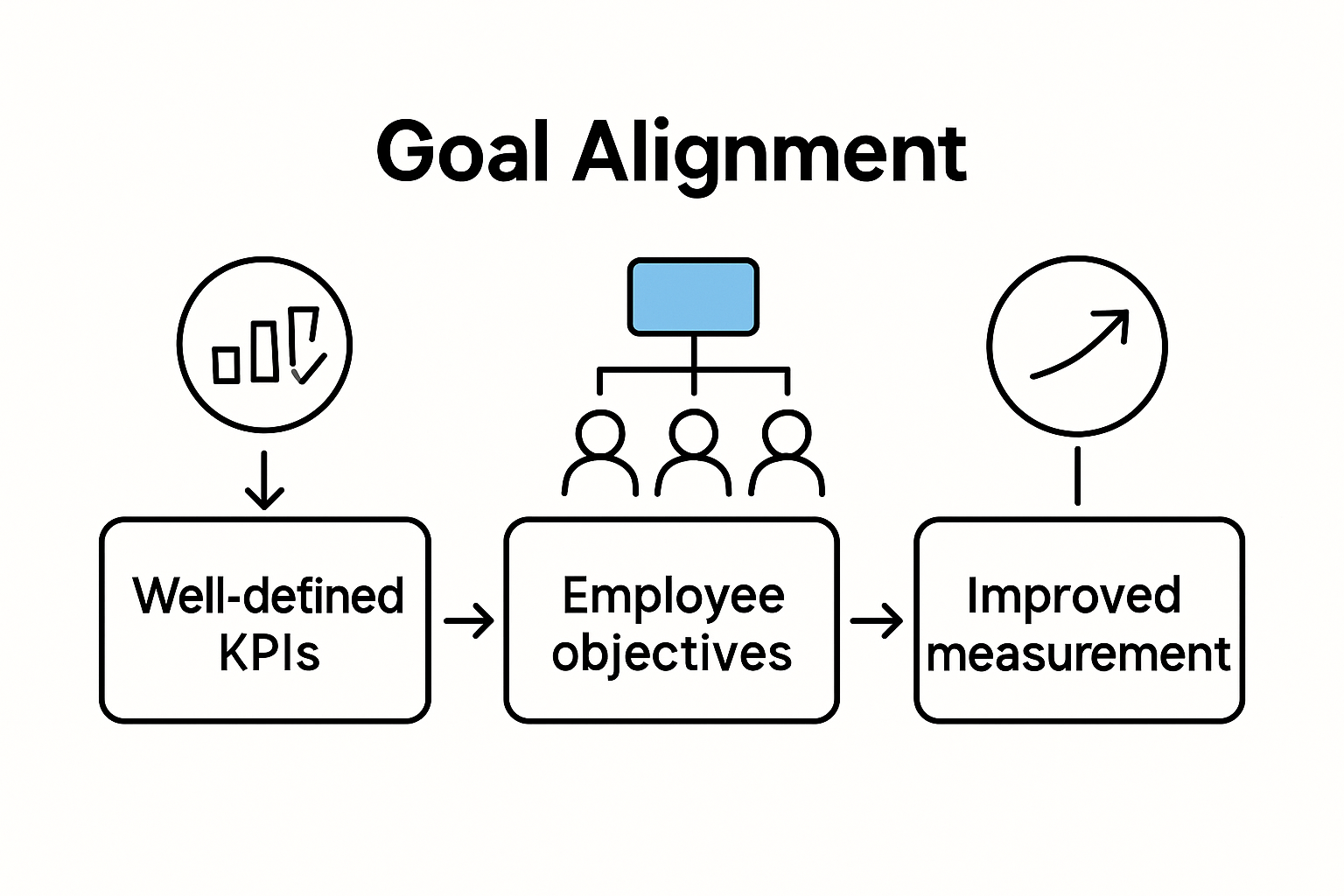
Research from the U.S. Government Accountability Office (GAO) emphasizes the critical importance of using precise performance measures and fostering a results-oriented culture. Organizations must develop clear, measurable objectives that cascade through all levels of the company. This involves creating key performance indicators (KPIs) that are specific, achievable, relevant, and time-bound.
Effective goal alignment means ensuring that individual team member objectives directly connect to broader organizational strategies. This approach creates a sense of purpose and helps employees understand how their work contributes to overall company success. Regular performance reviews and transparent communication are essential in maintaining this alignment.
Process Optimization and Continuous Improvement
Streamlining organizational processes is fundamental to enhancing performance. Companies need to regularly audit their workflows, identifying bottlenecks and inefficiencies that hinder productivity. This requires a commitment to continuous improvement, where teams are encouraged to propose and implement process enhancements.
Technology plays a crucial role in process optimization. Implementing advanced analytics, automation tools, and integrated management systems can significantly reduce manual work and improve accuracy. Organizations should invest in technologies that provide real-time insights and enable data-driven decision-making.
Talent Engagement and Performance Culture
Creating a high-performance culture goes beyond traditional management approaches. It involves developing an environment that supports employee growth, encourages innovation, and rewards exceptional contributions. Learn more about our comprehensive approach to employee performance management for deeper insights into building a robust performance ecosystem.
Talent engagement requires a multifaceted strategy that includes professional development opportunities, transparent feedback mechanisms, and recognition programs. Companies must invest in training that not only enhances technical skills but also develops critical soft skills like adaptability, communication, and collaborative problem-solving.
Successful performance improvement is an ongoing journey that demands commitment, flexibility, and a holistic approach. By focusing on precise measurement, continuous optimization, and meaningful talent engagement, organizations can create a dynamic environment that consistently drives exceptional results.
This table outlines practical steps discussed in this section for improving company performance, mapping them to specific actions and their purpose.
| Step | Specific Actions | Purpose/Outcome |
|---|---|---|
| Performance Measurement & Alignment | Set clear KPIs, cascade goals, regular reviews | Clarifies expectations, boosts accountability |
| Process Optimization & Improvement | Audit workflows, eliminate bottlenecks, use automation | Increases efficiency, reduces errors |
| Talent Engagement & Performance | Offer development, feedback, recognition programs | Boosts motivation, enhances performance culture |
Developing a Growth-Focused Workplace Culture
Creating a growth-focused workplace culture requires intentional strategies that transform organizational mindset and operational approaches. Successful companies recognize that culture is not just a buzzword but a critical driver of performance, innovation, and sustainable development.
Psychological Safety and Learning Environment
Establishing psychological safety forms the foundation of a growth-oriented culture. Teams must feel empowered to take calculated risks, share innovative ideas, and learn from failures without fear of punishment. This means creating an environment where curiosity is celebrated and mistakes are viewed as opportunities for improvement.
Leaders play a crucial role in modeling this approach. They must demonstrate vulnerability, actively listen to team members, and create transparent communication channels. By showing that learning and personal development are valued more than perfection, organizations can unlock tremendous potential for creativity and continuous improvement.
Continuous Learning and Skill Development
A growth-focused culture demands commitment to ongoing learning and skill enhancement. Organizations must move beyond traditional training models and embrace dynamic, personalized learning experiences. Explore our comprehensive guide to supporting employee development to understand how strategic learning initiatives can transform workplace potential.
Effective skill development involves multiple approaches: mentorship programs, cross-functional training, digital learning platforms, and opportunities for employees to work on challenging projects outside their immediate role. Companies should create individual development plans that align personal career aspirations with organizational goals, ensuring mutual growth and engagement.
Adaptive Leadership and Empowerment
Growth-focused cultures require leaders who understand the importance of empowerment and distributed decision-making. Traditional hierarchical models are increasingly becoming obsolete. Modern organizations need leaders who can coach, inspire, and create environments where team members feel genuinely motivated to contribute their best work.
This approach involves developing leadership capabilities that emphasize emotional intelligence, strategic thinking, and the ability to navigate complexity. Leaders must be equipped to provide clear guidance while simultaneously giving team members autonomy to innovate and solve problems creatively.
Developing a growth-focused workplace culture is not a one-time initiative but an ongoing commitment. It requires consistent effort, genuine leadership, and a holistic approach that values human potential. By creating environments that prioritize learning, psychological safety, and meaningful empowerment, organizations can build resilient, adaptive cultures capable of thriving in an increasingly dynamic business landscape.
Leveraging Training and Technology for Expansion

In the rapidly evolving business landscape, organizations must strategically integrate advanced training methodologies and cutting-edge technologies to drive sustainable expansion. This approach goes beyond traditional skill development, creating dynamic ecosystems that continuously adapt and grow.
Adaptive Learning Technologies
Modern training demands intelligent, personalized learning platforms that can dynamically adjust to individual learner needs. Artificial intelligence and machine learning enable organizations to create customized learning experiences that track progress, identify skill gaps, and recommend targeted development pathways.
These adaptive technologies allow for real-time skill assessment and immediate feedback. By utilizing data-driven insights, companies can design more effective training programs that directly align with organizational objectives. Microlearning modules, interactive simulations, and AI-powered coaching tools are transforming how professionals acquire and refine their capabilities.
Technology-Enhanced Skills Development
Discover how technology is revolutionizing training approaches through innovative digital learning solutions. Virtual reality, augmented reality, and immersive simulation technologies are creating unprecedented opportunities for experiential learning. These tools enable employees to practice complex skills in risk-free environments, accelerating competency development and reducing traditional training costs.
Cloud-based learning management systems provide scalable, accessible training infrastructure that supports global workforce development. These platforms enable seamless knowledge sharing, collaborative learning, and consistent skill development across dispersed teams. By breaking geographical barriers, organizations can create unified learning experiences that drive collective growth.
Strategic Technology Integration
Successful organizational expansion requires more than implementing new technologies. It demands a holistic approach that aligns technological capabilities with strategic human capital development. Companies must invest in upskilling programs that help employees understand and leverage emerging technologies effectively.
This integration involves creating cross-functional teams that combine technical expertise with domain knowledge. By fostering collaborative environments where technology and human creativity intersect, organizations can unlock innovative solutions and competitive advantages. Leadership must champion a culture of continuous learning that views technological adaptation as an ongoing strategic imperative.
Leveraging training and technology for expansion is not about replacing human talent but empowering professionals to achieve unprecedented levels of performance. By embracing intelligent learning technologies, organizations can create agile, responsive ecosystems that continuously evolve and drive sustainable growth in an increasingly complex business environment.
Frequently Asked Questions
What are the key drivers of organizational growth for 2025?
The key drivers include strategic talent development and leadership capabilities, performance and productivity optimization, and sustainable practices that focus on holistic growth.
How can organizations improve performance measurement and goal alignment?
Organizations can improve by setting clear, measurable objectives, cascading goals through all company levels, and regularly reviewing performance against these targets to enhance accountability and motivation.
What role does psychological safety play in a growth-focused workplace culture?
Psychological safety allows team members to express ideas freely, take risks, and learn from failures without fear, fostering a culture of innovation and continuous improvement.
How can technology enhance skills development in organizations?
Technology can enhance skills development through adaptive learning technologies that personalize training, create immersive learning experiences, and facilitate cloud-based knowledge sharing across diverse teams.
Ready to Transform Your Organizational Growth in 2025?
Are you struggling to build leadership, drive real productivity, or create a future-ready culture in your organization? This article made it clear that many companies are missing out on key opportunities like strategic talent development, performance measurement, and innovative training solutions. You want real progress. You want resilient teams and measurable results. The good news is you do not have to navigate this path alone.

Peuneo offers accredited training and consulting that directly addresses the pain points discussed here. From developing leadership skills to creating a culture of continuous learning, our solutions are designed for real-world impact. Explore our online learning portal and range of business solutions to discover how you can:
- Upskill your teams through tailored courses and adaptive technology
- Align leadership development with your strategic goals
- Promote a resilient, performance-driven culture
Do not let your competitors get ahead. Take the next step with Peuneo now and unlock your company’s full growth potential today.
Recommended
- How to Enhance Organizational Effectiveness in 2025: Practical Steps for All Sectors – Peuneo
- How to Improve Organizational Skills: Strategies for 2025 Success – Peuneo
- Top Leadership Development Strategies for 2025: Success Across Sectors – Peuneo
- How to Lead a Team Effectively in 2025: Essential Strategies for Every Leader – Peuneo