
Workforce development might sound straightforward, but the real numbers tell a different story. Up to 375 million workers worldwide could need to switch jobs by 2030 due to automation and new technologies. You’d expect most organizations to be focused on new tech or flashy platforms right now. The shocking reality is that the organizations breaking ahead are the ones building adaptable learning cultures and flexible skill maps before they even touch fancy tech. Everyone is talking about digital disruption, but the leaders are quietly investing in resilience and strategic partnerships that reshape how employees learn for the long run.
Table of Contents
- Designing Workforce Programs For Tomorrow’s Needs
- Leveraging Technology And Digital Learning Platforms
- Building Partnerships Across Sectors And Industries
- Measuring Success And Adapting Strategies Over Time
Quick Summary
| Takeaway | Explanation |
|---|---|
| Strategic Skills Mapping Is Essential | Organizations must conduct comprehensive skills mapping to identify future competencies and create flexible learning pathways to address emerging industry needs. |
| Leverage Technology for Personalized Learning | Implement advanced learning management systems and AI-driven platforms to provide personalized, dynamic learning experiences that adapt to individual skill levels. |
| Develop Collaborative Partnerships | Establish partnerships across sectors to enhance skill development, aligning educational curricula with industry needs and fostering a responsive workforce ecosystem. |
| Measure Success and Adapt Strategies | Utilize comprehensive performance metrics and data-driven approaches to continuously evaluate and refine workforce development strategies for ongoing improvement. |
| Cultivate Resilient Learning Cultures | Foster a workplace culture that encourages continuous learning and development, emphasizing transparent communication and leadership commitment to employee growth. |
Designing Workforce Programs for Tomorrow’s Needs
Workforce development strategies are rapidly evolving to meet the complex demands of a transforming global economy. Organizations must proactively design programs that anticipate future skill requirements and create adaptive learning environments that can quickly respond to technological and market shifts.
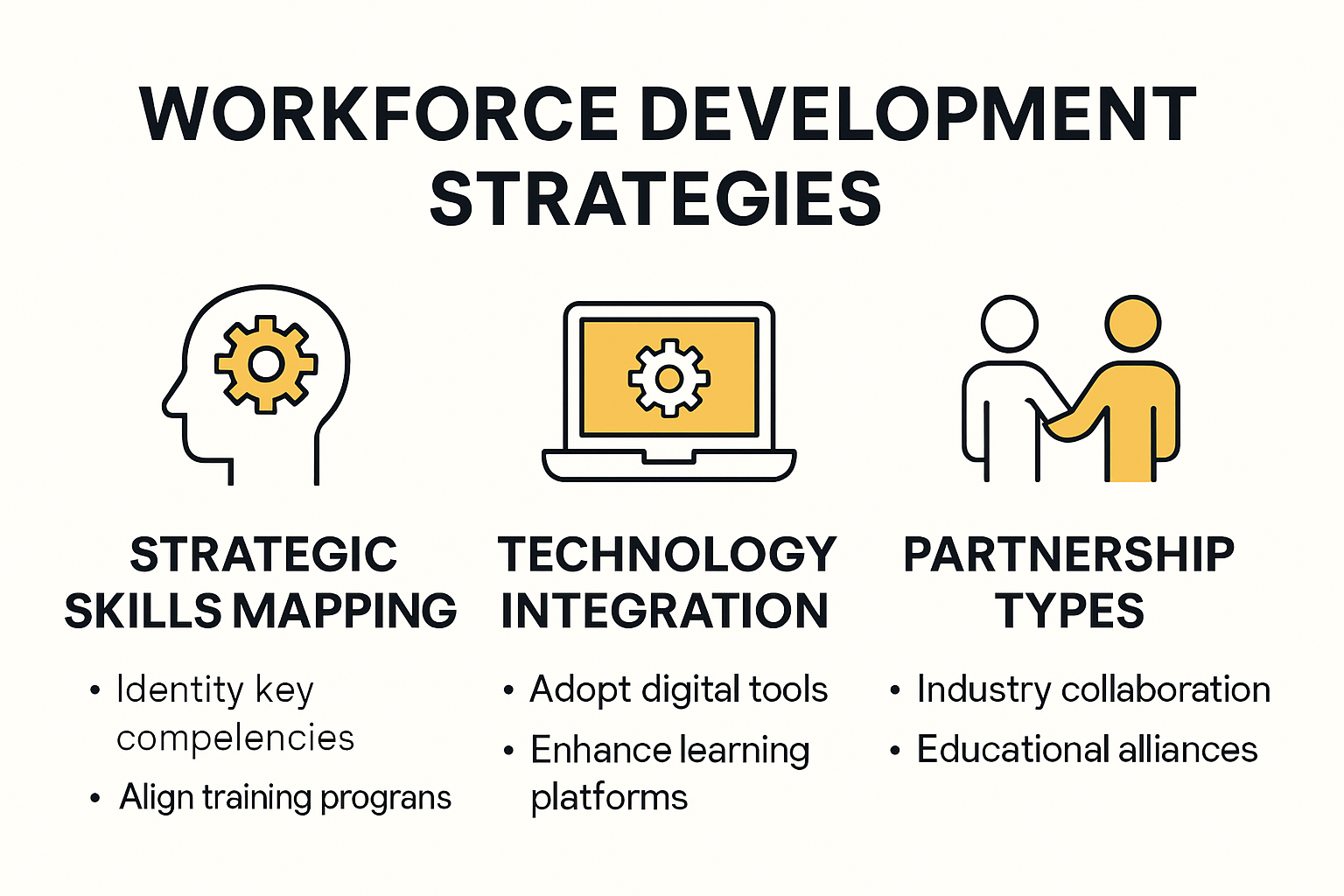
Strategic Skills Mapping and Future Readiness
Successful workforce programs start with comprehensive skills mapping. This process involves deep analysis of emerging industry trends, technological advancements, and potential skill gaps. Companies need to move beyond traditional training models and develop dynamic learning ecosystems that enable continuous skill development.
Effective skills mapping requires organizations to:
- Anticipate Future Trends: Continuously monitor technological and industry shifts
- Identify Critical Competencies: Pinpoint skills that will be crucial in the next 3-5 years
- Create Flexible Learning Pathways: Design modular training programs adaptable to changing requirements
According to McKinsey Global Institute, up to 375 million workers globally might need to switch occupational categories by 2030 due to technological disruption. This statistic underscores the critical importance of proactive workforce development strategies.
Technology-Enabled Learning Architectures
Modern workforce development demands sophisticated technological integration. Learning platforms must leverage artificial intelligence, machine learning, and adaptive technologies to create personalized learning experiences. Check out our guide on modern employee training approaches for deeper insights into technological learning strategies.
Key technological considerations include:
- Personalized Learning Paths: AI-driven recommendation systems that tailor training to individual skill levels
- Microlearning Modules: Short, focused learning units that can be quickly consumed and immediately applied
- Real-time Skill Assessment: Continuous monitoring and evaluation of skill progression
Building Resilient Learning Cultures
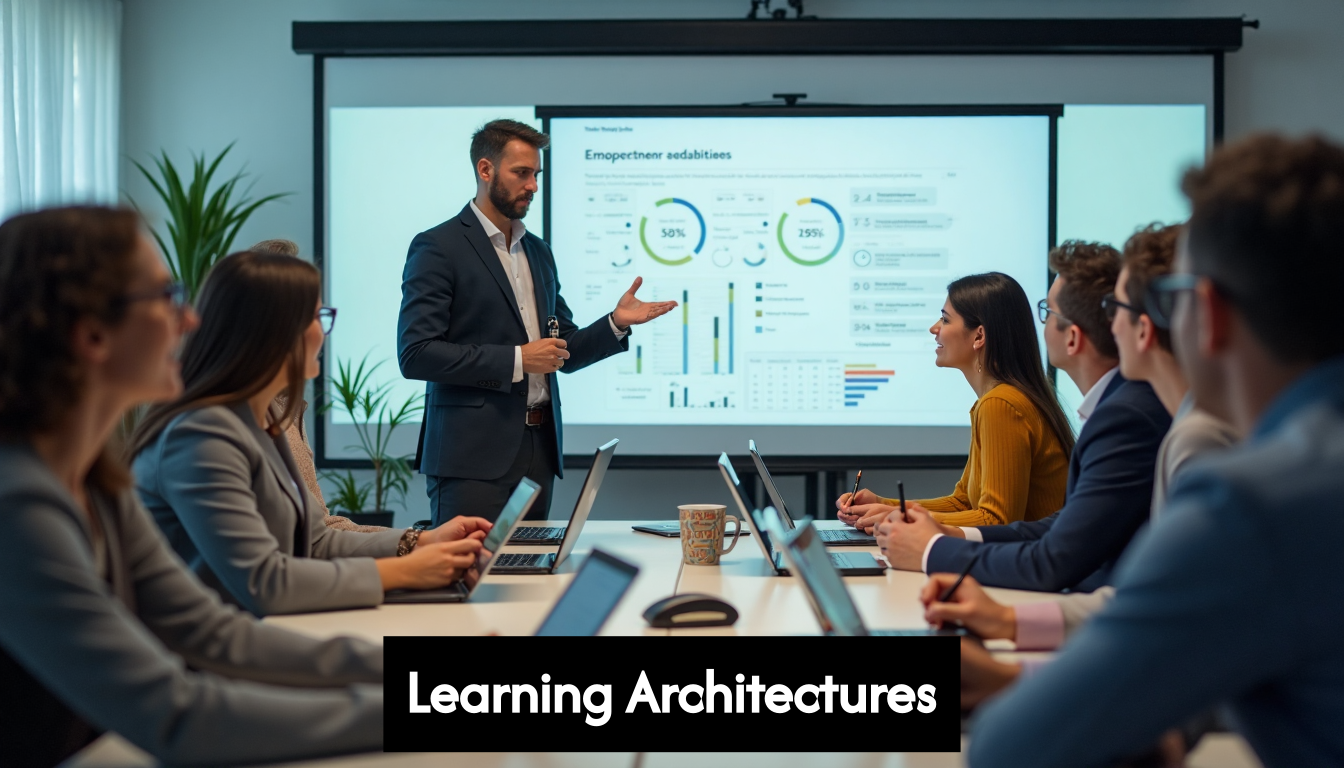
Beyond technological tools, organizations must cultivate learning cultures that encourage continuous skill development. This involves creating psychological safety, providing resources for self-directed learning, and aligning individual growth with organizational objectives.
Resilient learning cultures are characterized by:
- Transparent communication about skill requirements
- Leadership commitment to employee development
- Rewards and recognition for continuous learning
The future of workforce development is not about predicting exact skills but creating adaptable, responsive learning systems that empower employees to continuously evolve and contribute meaningfully to organizational success.
Leveraging Technology and Digital Learning Platforms
The technological revolution is fundamentally transforming workforce development strategies. Digital learning platforms are no longer supplementary tools but essential infrastructure for organizational skill advancement and employee growth.
Advanced Learning Management Systems
Modern Learning Management Systems (LMS) represent a quantum leap from traditional training approaches. These sophisticated platforms integrate artificial intelligence, predictive analytics, and personalized learning pathways to create dynamic educational experiences.
Key technological capabilities include:
- Adaptive Learning Algorithms: Systems that customize content based on individual learner performance
- Comprehensive Skill Tracking: Real-time monitoring of employee competency development
- Integrated Performance Analytics: Connecting learning outcomes directly to organizational performance metrics
Research from Deloitte indicates that companies with robust digital learning platforms are 46% more likely to be industry leaders in employee skill development.
Immersive Learning Technologies
Emergent technologies are revolutionizing how professionals acquire and retain knowledge. Virtual reality, augmented reality, and simulation-based training platforms provide unprecedented immersive learning experiences. Explore our comprehensive guide on digital training innovations to understand these transformative approaches.
Immersive learning technologies offer:
- Safe Skill Practice: Realistic simulations without real-world consequences
- Enhanced Engagement: Interactive experiences that boost knowledge retention
- Scenario-Based Learning: Complex problem-solving in controlled environments
According to PwC research, virtual reality training can be up to 4 times more focused than traditional classroom learning and significantly reduces training time.
AI-Powered Personalized Learning Experiences
Artificial intelligence is transforming digital learning platforms from standardized training programs to highly personalized skill development journeys. AI algorithms analyze individual learning patterns, recommend targeted content, and predict potential skill gaps before they become critical.
AI-driven learning platforms excel at:
- Personalized Content Curation: Dynamically adjusting learning paths
- Predictive Skill Gap Analysis: Identifying potential developmental needs
- Continuous Learning Recommendations: Suggesting relevant upskilling opportunities
The future of workforce development lies not in rigid training programs but in flexible, intelligent learning ecosystems that adapt in real-time to individual and organizational needs. Technology is no longer just a tool for learning but a strategic partner in continuous professional growth.
Building Partnerships Across Sectors and Industries
Effective workforce development requires a collaborative approach that transcends traditional organizational boundaries. Strategic partnerships between educational institutions, industry leaders, government agencies, and private training organizations are becoming essential for creating comprehensive skill development ecosystems.
Cross-Sector Collaboration Frameworks
Successful workforce development partnerships are built on mutual understanding and aligned objectives. Organizations must develop robust collaboration frameworks that enable seamless knowledge exchange and coordinated skill development initiatives.
Key elements of effective cross-sector partnerships include:
- Shared Strategic Vision: Establishing common goals for workforce skill enhancement
- Flexible Collaboration Models: Creating adaptable partnership structures
- Transparent Communication Channels: Ensuring open dialogue between stakeholders
World Economic Forum research suggests that collaborative approaches can reduce skill gaps by up to 35% across industries by creating more responsive training ecosystems.
Industry-Academic Knowledge Transfer
Bridging the gap between academic training and industry requirements is crucial for developing workforce readiness. Educational institutions and industry partners must work together to design curricula that directly address emerging skill needs. Learn more about our industry collaboration strategies to understand how these partnerships drive skill development.
Effective knowledge transfer strategies involve:
- Curriculum Co-Design: Developing programs with direct industry input
- Work-Integrated Learning: Creating internship and apprenticeship opportunities
- Research Collaboration: Joint projects exploring emerging skill requirements
According to McKinsey Global Institute, companies that actively engage with educational institutions are 50% more likely to successfully navigate technological workforce transitions.
Public-Private Skill Development Initiatives
Government agencies and private organizations are increasingly recognizing the importance of collaborative workforce development strategies. These partnerships create comprehensive support systems that address national skill development priorities while meeting specific industry needs.
Public-private skill development initiatives typically focus on:
- National Skills Frameworks: Developing standardized competency models
- Funding Collaborative Training Programs: Shared investment in workforce development
- Policy Development: Creating supportive regulatory environments for skill enhancement
The future of workforce development lies in creating interconnected, responsive ecosystems where knowledge flows seamlessly across traditional organizational boundaries. By fostering strong partnerships, stakeholders can build more agile, adaptive, and resilient workforce development strategies that anticipate and respond to rapidly changing skill requirements.
Measuring Success and Adapting Strategies Over Time
Workforce development is not a static process but a dynamic journey of continuous improvement. Organizations must implement robust measurement frameworks that provide actionable insights into the effectiveness of their skill development strategies and enable rapid strategic pivots.
Comprehensive Performance Metrics
Effective workforce development demands sophisticated performance measurement approaches that go beyond traditional quantitative indicators. Modern organizations need holistic metrics that capture both tangible skill progression and intangible learning outcomes.
Key performance measurement strategies include:
- Skill Proficiency Tracking: Quantitative assessments of competency levels
- Behavioral Change Indicators: Qualitative measurements of workplace performance
- Return on Learning Investment: Direct correlation between training and organizational productivity
Gartner research suggests that companies with advanced performance measurement systems are 3.5 times more likely to successfully implement workforce development initiatives.
Data-Driven Strategy Adaptation
Continuous learning requires continuous evaluation. Organizations must develop agile frameworks that enable real-time strategy adjustments based on comprehensive performance data. Learn more about our approach to adaptive training strategies to understand how data transforms workforce development.
Data-driven adaptation involves:
- Predictive Analytics: Anticipating future skill requirements
- Feedback Loop Mechanisms: Integrating learner and manager insights
- Rapid Curriculum Modification: Quickly updating training content
According to McKinsey Global Institute, organizations that implement data-driven learning strategies see a 20% improvement in overall workforce capabilities within 18 months.
Continuous Improvement Frameworks
Successful workforce development is an iterative process that requires systematic evaluation and refinement. Organizations must create structured approaches that promote ongoing learning, feedback, and strategic realignment.
Continuous improvement frameworks typically encompass:
- Regular Skill Assessments: Periodic comprehensive competency evaluations
- 360-Degree Feedback Mechanisms: Multidimensional performance insights
- Strategic Realignment Protocols: Systematic process for updating development strategies
The future of workforce development lies in creating adaptive, responsive systems that can quickly evolve alongside technological and market changes. By implementing sophisticated measurement and adaptation strategies, organizations can build resilient, future-ready workforces that continuously learn, grow, and deliver exceptional value.
Frequently Asked Questions
What are the key workforce development strategies for 2025?
Organizations should focus on strategic skills mapping, leveraging technology for personalized learning, creating collaborative partnerships, and implementing robust measurement frameworks to adapt their workforce development strategies.
How can organizations implement strategic skills mapping?
Organizations can implement strategic skills mapping by continuously monitoring industry trends, identifying critical competencies required for the future, and designing flexible learning pathways that adapt to changing skill needs.
What role does technology play in workforce development?
Technology plays a crucial role by enabling personalized learning experiences through advanced learning management systems, AI-driven platforms, and immersive learning technologies that enhance employee engagement and skill retention.
Why are partnerships important for workforce development?
Partnerships are essential for workforce development as they facilitate knowledge transfer between sectors, align educational curricula with industry needs, and create robust skill development initiatives that address labor market demands.
Transform Strategic Workforce Development Into Lasting Results
Are you struggling to keep up as skills in your organization quickly become outdated? The article highlights how companies risk falling behind if they only focus on short-term tech upgrades instead of building adaptable learning cultures and continuous skills mapping. You want solutions that go beyond traditional training programs and help your teams stay future-ready. But finding the right blend of accredited training, agile learning paths, and ongoing support feels overwhelming.

Let Peuneo help you bridge the gap between strategy and action. As a leading BEE Level 1 provider specializing in accredited skills development and compliance training, we deliver learning ecosystems that grow with your goals. From our online learning portal packed with industry-relevant courses, to professional consulting that guides your workforce transformation, Peuneo empowers your team to build real career resilience. Visit Peuneo’s website to see the latest courses and solutions and take the next step toward a future-proof workforce. The world of work is changing fast—act now to keep your organization ahead.