
Talent management is on every leader’s radar right now and for good reason. Companies that use effective talent management strategies are 2.2 times more likely to outperform competitors in profitability and productivity. Most people think technology and big paychecks are what matter most. The reality is, organizations winning in 2025 are those blending smart analytics with real human connection and continuous feedback—completely changing what it means to keep top talent.
Table of Contents
- Understanding What Is Talent Management
- Key Talent Management Processes Explained
- Benefits And Challenges For Different Organizations
- Best Practices For Effective Talent Management In 2025
Quick Summary
| Takeaway | Explanation |
|---|---|
| Talent management is a strategic approach | It focuses on attracting, developing, and retaining employees as valuable organizational assets. |
| Data analytics enhance talent management | Leveraging data-driven insights allows organizations to make informed decisions about workforce development and retention. |
| Continuous feedback fosters employee growth | Ongoing, open dialogues replace traditional reviews, promoting alignment and professional development. |
| Agile systems adapt to workforce changes | Organizations must develop flexible talent management frameworks to respond to evolving skill requirements and market demands. |
| Well-being initiatives enhance engagement | Prioritizing employee well-being leads to meaningful work experiences and higher retention rates in competitive environments. |
Understanding What Is Talent Management
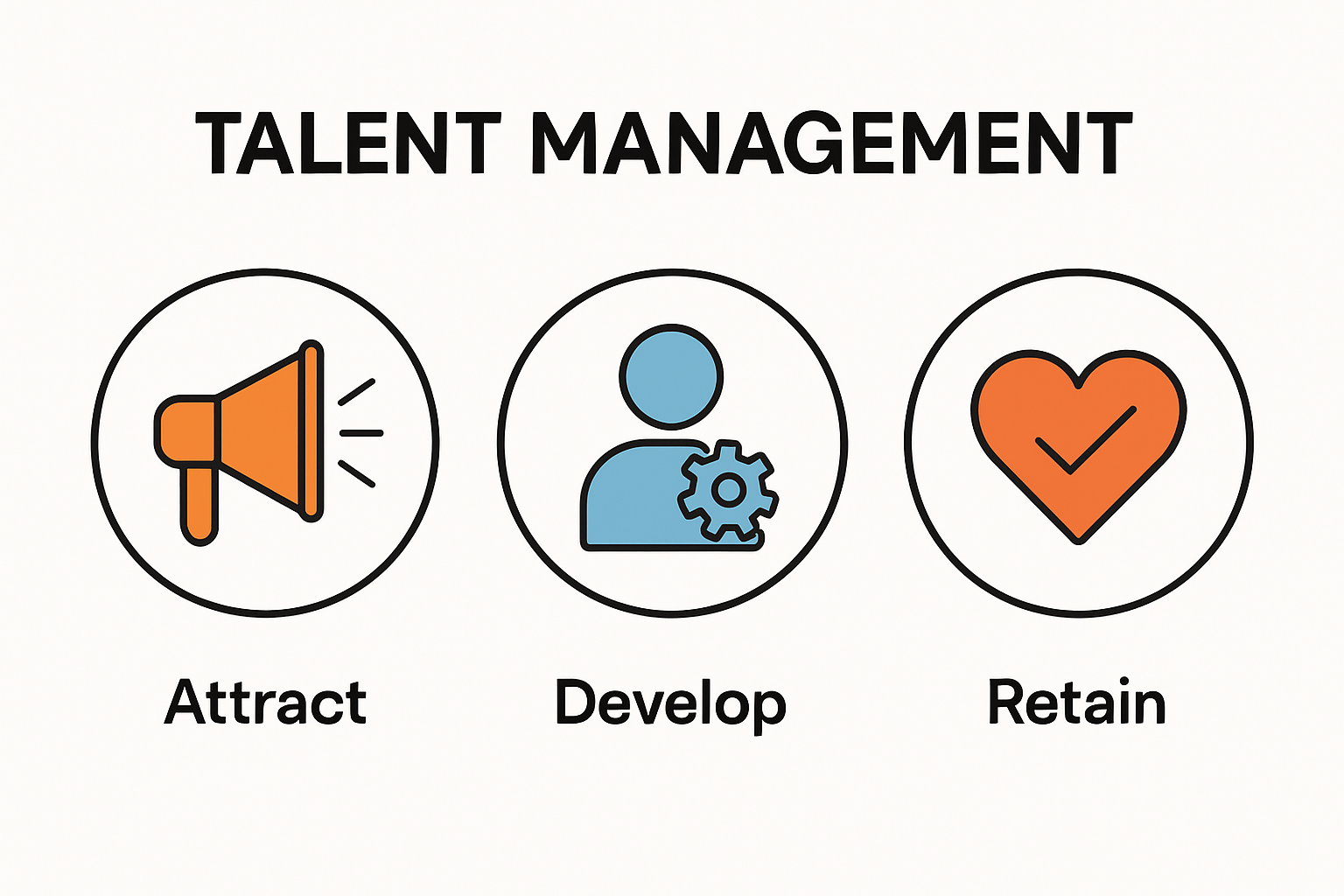
Talent management represents a comprehensive strategic approach that organizations use to attract, develop, and retain their most valuable asset: human capital. At its core, talent management transforms traditional human resources practices into a dynamic, forward-thinking process that aligns employee potential with organizational goals.
The Fundamental Definition
According to the Administrative Sciences journal, talent management is a structured process designed for attracting, developing, motivating, and retaining key individuals within an organization. This definition highlights the multifaceted nature of managing talent beyond simple recruitment and retention.
At its essence, talent management encompasses several critical components: strategic workforce planning, talent acquisition, performance management, employee development, succession planning, and talent retention. It goes far beyond traditional human resources functions by treating employees as strategic assets whose growth directly impacts organizational success.
Strategic Importance in Modern Organizations
EBSCO Research Starters emphasizes that talent management is a strategic approach acknowledging employees as valuable assets. In an increasingly competitive global marketplace, organizations recognize that their workforce’s skills, creativity, and potential are primary differentiators.
Modern talent management strategies focus on creating holistic employee experiences that nurture individual potential while simultaneously meeting broader organizational objectives. This approach involves understanding each employee’s unique strengths, providing personalized development opportunities, and creating environments that encourage continuous learning and innovation.
Emerging Trends and Future Perspectives
As we approach 2025, talent management continues to evolve with technological advancements and changing workforce dynamics. Organizations are increasingly leveraging data analytics, artificial intelligence, and sophisticated assessment tools to identify, develop, and retain top talent. Explore our comprehensive guide on talent management strategies to understand how cutting-edge approaches are reshaping workforce development.
The future of talent management lies in creating adaptive, flexible systems that can quickly respond to technological disruptions, shifting market demands, and emerging skill requirements. This means developing agile talent management frameworks that prioritize continuous learning, digital upskilling, and creating meaningful employee experiences that go beyond traditional compensation and benefits.
Successful talent management in 2025 will require organizations to adopt a more holistic, human-centric approach that balances technological innovation with genuine employee engagement and personal growth opportunities.
Key Talent Management Processes Explained
Talent management is a complex, interconnected system of strategic processes designed to maximize an organization’s human capital potential. As technology and workplace dynamics evolve, these processes become increasingly sophisticated and critical for organizational success.
Recruitment and Talent Acquisition
According to TechTarget, talent management involves multiple strategic components beginning with workforce planning and talent acquisition. Organizations must develop robust recruitment strategies that go beyond traditional hiring methods. This means identifying precise skill requirements, creating compelling employer branding, and implementing advanced screening techniques.
The recruitment process now involves sophisticated tools like AI-driven candidate matching, predictive analytics for candidate potential, and comprehensive assessment frameworks. Companies are moving away from generic job postings toward targeted, personalized recruitment approaches that align candidates’ unique capabilities with organizational needs. Learn more about effective recruitment strategies to understand how modern organizations attract top talent.
Performance Management and Development
Valamis highlights that talent management involves organizing work, learning, development, and performance appraisals. Performance management has transformed from annual reviews to continuous feedback mechanisms. Modern approaches emphasize real-time performance tracking, personalized development plans, and data-driven performance insights.

Effective performance management now incorporates regular check-ins, 360-degree feedback systems, skill gap analysis, and individualized growth trajectories. Organizations are creating adaptive learning environments that support employee potential through targeted training, mentorship programs, and cross-functional exposure.
Strategic Succession and Retention Planning
As Wikipedia explains, talent management fundamentally involves anticipating human capital needs and strategically planning to meet organizational goals. Succession planning has become a critical process for ensuring organizational continuity and maintaining competitive advantage.
Modern succession strategies focus on identifying high-potential employees, creating clear career progression pathways, and developing comprehensive leadership development programs. This approach goes beyond traditional hierarchical models, emphasizing lateral movement, skill diversification, and creating an internal talent ecosystem that can adapt to changing business requirements.
Successful talent management in 2025 will require organizations to view these processes not as isolated functions but as an integrated, dynamic system that continuously evolves with technological advancements and workforce expectations. By implementing holistic, technology-enabled talent management processes, companies can build resilient, innovative, and high-performing teams that drive sustainable business growth.
Benefits and Challenges for Different Organizations
Talent management strategies are not universal. Each organizational sector encounters unique opportunities and obstacles when implementing comprehensive talent management approaches. Understanding these nuanced challenges helps leaders develop targeted strategies that address specific institutional requirements.
Public Sector Talent Management Dynamics
The U.S. Government Accountability Office reveals significant challenges federal agencies face in talent management. Government organizations struggle with complex issues such as aligning human capital strategies with mission requirements, acquiring top talent, creating effective incentive structures, and maintaining high employee engagement levels.
Public sector talent management requires intricate approaches that balance bureaucratic constraints with innovative recruitment methods. These organizations must develop robust frameworks that attract skilled professionals while maintaining strict compliance with governmental regulations. Learn more about enhancing organizational effectiveness to understand how different sectors can optimize their talent strategies.
Corporate and Private Sector Perspectives
Research published in the MDPI Sustainability journal highlights how talent management directly sustains organizational performance. Private sector companies benefit from strategic talent management by creating knowledge repositories, identifying potential future leaders, and developing growth strategies aligned with organizational missions.
Corporate talent management typically involves more aggressive development approaches, including:
- Competitive compensation packages
- Advanced leadership development programs
- Global mobility opportunities
- Technology-enabled performance tracking
These strategies enable private organizations to remain agile, innovative, and competitive in rapidly changing market environments.
Emerging Challenges in Talent Management
Modern organizations across all sectors face unprecedented talent management challenges. Technological disruption, generational workforce shifts, remote work dynamics, and increasing skill complexity demand sophisticated, adaptive talent management approaches.
To illustrate the unique benefits and challenges faced by public and private sector organizations, the following table presents a comparison based on the article’s key points:
Organizations in different sectors face unique benefits and challenges in talent management. The table below summarizes these differences for clarity.
| Sector | Key Benefits | Main Challenges |
|---|---|---|
| Public Sector | Alignment with mission, attracting skilled professionals, compliance | Bureaucracy, complex incentive systems, engagement difficulties |
| Corporate/Private | Competitive compensation, leadership programs, agility, tech tools | Market competition, skill gaps, need for constant innovation |
Key emerging challenges for all organizations are outlined in the next table.
The following checklist summarizes the emerging challenges in talent management that organizations must address, as identified in the article.
| Emerging Challenge | Present in 2025? |
|---|---|
| Bridging generational communication gaps | Yes |
| Managing distributed/remote workforce | Yes |
| Creating inclusive development | Yes |
| Continuous learning frameworks | Yes |
| Balancing tech and human-centricity | Yes |
Successful talent management in 2025 will require organizations to develop flexible, responsive strategies that can quickly adapt to technological and workforce transformations. This means moving beyond traditional talent management models toward more holistic, dynamic human capital development approaches that recognize individual potential while meeting broader organizational objectives.
Organizations that can successfully navigate these complex talent management landscapes will be better positioned to attract, develop, and retain exceptional talent across diverse sectors and industries.
Best Practices for Effective Talent Management in 2025
As organizations navigate the complex landscape of workforce development in 2025, implementing strategic talent management practices becomes crucial for sustainable success. The most effective approaches blend technological innovation, human-centric strategies, and forward-thinking methodologies.
Data-Driven Talent Insights
HR Addict emphasizes the growing importance of data analytics in talent management. Advanced people analytics provide comprehensive insights into employee engagement, performance, and potential retention challenges. Organizations can now leverage sophisticated tools that transform raw workforce data into actionable intelligence.
Data-driven talent management enables precise decision-making by identifying skill gaps, predicting future talent needs, and measuring the return on investment of development initiatives. These technological capabilities allow HR professionals to move from reactive to proactive talent strategies, creating more targeted and effective workforce development approaches.
Cultivating a Culture of Continuous Feedback
Forbes Business Council highlights the significance of creating a culture of radical candor through open, consistent feedback mechanisms. Modern talent management transcends traditional annual performance reviews, focusing instead on ongoing, constructive dialogues that foster professional growth and organizational alignment.
Explore our comprehensive talent management strategies to understand how organizations can implement effective feedback frameworks. Key elements include:
- Regular check-ins
- 360-degree feedback systems
- Transparent communication channels
- Individual development planning
Employee Well-being and Engagement Strategies
According to LinkedIn research, employee engagement remains a critical component of successful talent management. Organizations must prioritize holistic approaches that address both professional development and personal well-being.
Effective talent management in 2025 requires comprehensive strategies that include:
- Comprehensive wellness programs
- Mental health support initiatives
- Flexible work arrangements
- Personalized professional development pathways
- Technology-enabled learning platforms
These practices recognize that top talent seeks more than competitive compensation. Employees want meaningful work experiences that support their personal and professional growth, provide clear career progression, and demonstrate genuine organizational commitment to their overall well-being.
By integrating advanced technologies, human-centric approaches, and data-driven insights, organizations can create talent management strategies that not only attract exceptional professionals but also nurture, develop, and retain them in an increasingly competitive global marketplace.
Frequently Asked Questions
What is talent management?
Talent management is a strategic approach focused on attracting, developing, and retaining an organization’s most valuable asset: human capital. It involves various processes, including recruitment, performance management, and succession planning.
Why is talent management important for organizations?
Effective talent management enhances organizational performance by improving profitability and productivity. It helps organizations align employee skills and potential with overall business goals, fostering a more engaged and productive workforce.
What are some key processes in talent management?
Key processes in talent management include recruitment and talent acquisition, performance management and development, and strategic succession and retention planning, which all work together to maximize employee potential and meet organizational objectives.
How can organizations implement effective talent management strategies in 2025?
Organizations can implement effective talent management strategies by leveraging data-driven insights, fostering a culture of continuous feedback, and prioritizing employee well-being and engagement to create a holistic and adaptive approach to workforce development.
Ready to Transform Your Talent Management Strategy for 2025?
Are you struggling to keep up with evolving workforce needs, adapting to continuous feedback models, or integrating data-driven talent insights? The article highlighted that traditional methods are no longer enough. Companies now need agile, tech-driven solutions that respond to new skill demands and foster real employee engagement. If you feel your organization is falling behind or worried about talent retention, it is time to take action.

Make talent management your advantage with Peuneo’s accredited training and consulting solutions. Explore our online learning portal and tailored courses to start upskilling your workforce today. Or, discover how our consulting services help you build a future-ready team with strategic succession planning and advanced talent analytics. Do not wait for competitors to outpace you. Visit Peuneo now and take your first step toward a resilient, high-performing organization.