

Recruitment Process Outsourcing is changing how companies find and hire top talent. Many brands are surprised when they realize that RPO can cut recruitment costs by up to 50% while actually improving the speed and quality of hires. Most think outsourcing means sacrificing control or culture, but today’s RPO goes far beyond standard staffing and delivers smarter, tech-driven solutions that fit even the most demanding hiring needs.
Table of Contents
- Understanding Recruitment Process Outsourcing Basics
- How Rpo Works For Different Organizations
- Key Benefits And Challenges Of Rpo Solutions
- Steps To Implement Rpo Successfully In 2025
Quick Summary
| Takeaway | Explanation |
|---|---|
| RPO enhances recruitment efficiency and quality | Organizations can reduce costs by up to 50% while improving hiring speed and quality through RPO solutions. |
| Technology integration is essential in RPO | Advanced recruitment technologies, including AI and analytics, optimize candidate sourcing and enhance the hiring process. |
| Tailored RPO solutions address specific needs | RPO models are adaptable, catering to diverse sectors from SMEs to government agencies, ensuring alignment with unique recruitment challenges. |
| Collaboration is crucial for successful RPO partnerships | Successful RPO implementation depends on strong communication and alignment of organizational goals with external providers. |
| Continuous optimization is necessary for RPO effectiveness | Organizations must regularly assess and refine their RPO strategies to adapt to changing market conditions and improve recruitment outcomes. |
Understanding Recruitment Process Outsourcing Basics
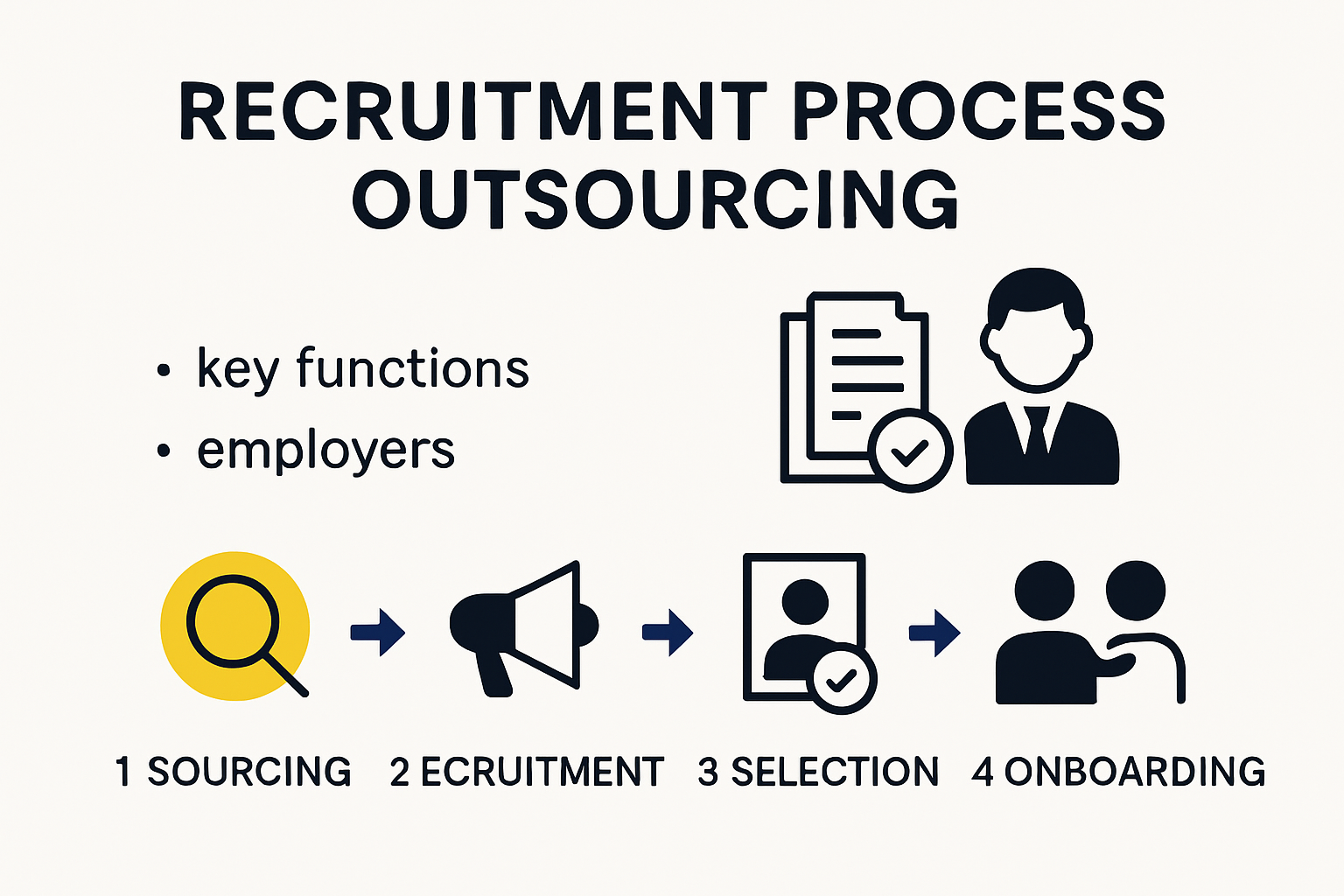
Recruitment Process Outsourcing (RPO) represents a strategic approach where organizations transfer all or part of their recruitment functions to an external service provider. Unlike traditional recruitment methods, RPO goes beyond simple staffing by providing end-to-end talent acquisition solutions that align with a company’s specific hiring needs and organizational culture.
What Defines Recruitment Process Outsourcing
At its core, RPO is more than just hiring external recruiters. Learn more about strategic recruitment approaches that transform talent acquisition. RPO providers take comprehensive responsibility for designing and managing the entire recruitment lifecycle. This includes critical processes such as job analysis, candidate sourcing, screening, interviewing, assessment, selection, and onboarding.
According to Everest Group Research, RPO solutions can help organizations reduce recruitment costs by up to 50% while improving overall hiring quality and speed. The strategic nature of RPO means providers don’t just fill positions but develop customized recruitment strategies that match an organization’s unique talent requirements.
Key Components of RPO Services
Successful RPO implementations typically encompass several sophisticated components. Technology integration plays a crucial role, with providers utilizing advanced applicant tracking systems, AI-powered screening tools, and data analytics platforms to optimize recruitment processes. These technologies enable precise candidate matching, predictive hiring insights, and streamlined communication channels.
Another critical aspect is talent pool development. RPO providers continuously build and maintain extensive candidate networks across various industries and skill domains. This proactive approach ensures organizations have access to high-quality talent pipelines, reducing time-to-hire and mitigating talent acquisition challenges.
Moreover, RPO services extend beyond traditional recruitment boundaries. They often include employer branding support, candidate experience enhancement, diversity and inclusion strategies, and comprehensive workforce planning. According to Deloitte’s Human Capital Trends Report, organizations leveraging RPO demonstrate significantly higher recruitment effectiveness and strategic talent management capabilities.
By partnering with specialized RPO providers, companies can transform recruitment from a transactional process to a strategic business function. This approach allows internal HR teams to focus on higher-value activities like employee engagement, talent development, and organizational culture building. The result is a more agile, efficient, and responsive recruitment ecosystem that drives competitive advantage in talent acquisition.
How RPO Works for Different Organizations
Recruitment Process Outsourcing (RPO) is not a one-size-fits-all solution but a flexible strategy that adapts to the unique recruitment challenges and organizational structures across various sectors. Different types of organizations leverage RPO models to address specific talent acquisition needs, ranging from small startups to large government agencies.
RPO Implementation in Private Sector Organizations
Private sector companies represent the most diverse and dynamic landscape for RPO implementation. Explore our strategic recruitment approaches to understand the nuanced application of RPO. According to RAND Corporation research, technology and rapidly evolving industries like healthcare, finance, and technology benefit significantly from RPO models.
Technology companies, for instance, utilize RPO to access specialized talent pools in highly competitive markets. These organizations require rapid recruitment processes that can identify and attract top-tier technical professionals. RPO providers offer advanced screening mechanisms, technical assessment tools, and targeted sourcing strategies that enable tech firms to build high-performance teams quickly.
Manufacturing and industrial sectors often face unique recruitment challenges involving specialized skills and complex workforce requirements. RPO solutions in these industries focus on developing comprehensive talent acquisition strategies that address skills gaps, support workforce planning, and ensure compliance with industry-specific regulations.
Public Sector and Government RPO Strategies

Government agencies and public sector organizations present a distinctive RPO implementation framework. Peer-reviewed research highlights how RPO models in these sectors prioritize regulatory compliance, transparent hiring processes, and equitable recruitment practices.
Public sector RPO solutions typically emphasize:
- Standardized recruitment protocols
- Comprehensive candidate tracking
- Objective selection mechanisms
- Cost-effective talent acquisition
Healthcare institutions represent a prime example of complex public sector RPO implementation. These organizations require recruitment strategies that balance immediate staffing needs with long-term workforce development. RPO providers develop specialized approaches to recruit medical professionals, addressing challenges like skill shortages, competitive job markets, and stringent credentialing requirements.
Emerging RPO Models for Small and Medium Enterprises
Small and medium enterprises (SMEs) increasingly recognize RPO as a strategic tool for competing with larger organizations in talent acquisition. Unlike traditional recruitment models, RPO offers SMEs scalable and cost-effective solutions that provide access to advanced recruitment technologies and expertise.
For SMEs, RPO represents more than outsourcing recruitment. It becomes a partnership that provides:
- Flexible recruitment infrastructure
- Access to broader talent networks
- Advanced candidate screening technologies
- Reduced administrative burden
These organizations benefit from RPO’s ability to provide enterprise-level recruitment capabilities without significant internal infrastructure investments. By leveraging external expertise, SMEs can develop robust talent acquisition strategies that support growth and competitive positioning in their respective markets.
The versatility of RPO demonstrates its potential to transform recruitment across organizational types. Whether supporting a fast-growing technology startup, a complex government agency, or a local manufacturing firm, RPO offers tailored solutions that address unique talent acquisition challenges while maintaining operational efficiency and strategic alignment.
To help visualize the differences in RPO focus and implementation across organization types, the table below summarizes key characteristics and priorities for each sector:
| Organization Type | RPO Focus Areas | Key Priorities |
|---|---|---|
| Private Sector | Specialized talent access, rapid hiring, scalable solutions | Speed, technical expertise, scalability |
| Public Sector/Government | Regulatory compliance, transparency, equitable processes | Fairness, compliance, cost-effectiveness |
| SMEs | Infrastructure flexibility, advanced screening, admin support | Affordability, agility, access to recruitment tech |
Key Benefits and Challenges of RPO Solutions
Recruitment Process Outsourcing (RPO) offers organizations a complex landscape of strategic advantages and potential obstacles. Understanding these nuanced dimensions helps businesses make informed decisions about implementing RPO solutions that align with their talent acquisition goals.
Strategic Advantages of RPO Implementation
RPO provides transformative benefits that extend far beyond traditional recruitment approaches. Discover strategic recruitment optimization techniques to understand the comprehensive impact. According to research published in the National Center for Biotechnology Information, organizations can experience significant improvements in recruitment efficiency and talent acquisition strategies.
Key strategic advantages include:
- Cost Reduction: RPO eliminates extensive internal recruitment infrastructure expenses
- Scalability: Flexible recruitment models adapt to organizational growth and fluctuating workforce needs
- Access to Advanced Technologies: Sophisticated recruitment tools and analytics platforms
- Specialized Talent Acquisition: Expertise in targeting and attracting high-performance professionals
By leveraging external recruitment expertise, organizations can transform talent acquisition from a transactional process to a strategic business function. RPO providers bring sophisticated methodologies, cutting-edge technologies, and comprehensive talent market insights that internal HR teams might struggle to develop independently.
Potential Challenges in RPO Implementation
While RPO offers substantial benefits, organizations must carefully navigate potential implementation challenges. Data security, cultural alignment, and maintaining organizational identity represent critical considerations in successful RPO partnerships.
Significant challenges include:
- Data Privacy Concerns: Protecting sensitive candidate and organizational information
- Cultural Misalignment: Ensuring external providers understand and represent organizational values
- Communication Complexity: Managing interfaces between internal teams and external recruitment providers
- Performance Measurement: Establishing clear metrics and accountability frameworks
Successful RPO implementation requires robust communication protocols, clearly defined expectations, and continuous performance monitoring. Organizations must view RPO as a collaborative partnership rather than a purely transactional service relationship.
Emerging RPO Trends and Mitigation Strategies
Modern RPO solutions are increasingly sophisticated, addressing traditional challenges through innovative approaches. Advanced providers now offer comprehensive solutions that go beyond basic recruitment functions, integrating advanced technologies like artificial intelligence, predictive analytics, and machine learning.
To clarify the relationship between RPO challenges and their recommended mitigation strategies, the table below maps the main obstacles to effective solutions discussed in the article:
| RPO Challenge | Mitigation Strategy |
|---|---|
| Data Privacy Concerns | Establish secure data policies & compliance |
| Cultural Misalignment | Engage in cultural exchange/onboarding programs |
| Communication Complexity | Set robust, clear communication protocols |
| Performance Measurement | Implement regular performance evaluations |
Effective mitigation strategies include:
- Comprehensive Onboarding Processes: Detailed orientation programs for RPO providers
- Continuous Performance Evaluation: Regular assessments of recruitment outcomes
- Technology Integration: Seamless connection between organizational systems and RPO platforms
- Cultural Exchange Programs: Opportunities for mutual understanding between internal teams and RPO providers
The future of RPO lies in creating adaptive, intelligent recruitment ecosystems that balance technological innovation with human expertise. Organizations that approach RPO as a strategic partnership, rather than a simple outsourcing transaction, are more likely to realize significant competitive advantages in talent acquisition.
Ultimately, RPO represents a powerful tool for organizations seeking to optimize their recruitment processes. By carefully evaluating potential benefits and proactively addressing challenges, businesses can transform their approach to talent acquisition and build more dynamic, responsive workforce strategies.
Steps to Implement RPO Successfully in 2025
Implementing Recruitment Process Outsourcing (RPO) requires a strategic and methodical approach that goes beyond traditional recruitment methodologies. As organizations prepare for workforce challenges in 2025, a comprehensive implementation strategy becomes crucial for successful talent acquisition transformation.
Pre-Implementation Assessment and Planning
Learn about strategic recruitment optimization to understand the foundational elements of successful RPO implementation. According to Forbes research, organizations must conduct a thorough internal assessment before engaging an RPO provider.
Critical pre-implementation steps include:
- Comprehensive Organizational Audit: Evaluate current recruitment processes, technological infrastructure, and talent acquisition challenges
- Define Clear Recruitment Objectives: Establish specific, measurable goals for RPO implementation
- Budget Allocation: Determine financial resources and expected return on investment
- Stakeholder Alignment: Secure buy-in from key organizational leaders
The initial assessment phase determines the compatibility and potential success of RPO integration. Organizations must approach this stage with precision, understanding their unique recruitment ecosystem and identifying specific areas requiring transformation.
RPO Partner Selection and Solution Design
Selecting the right RPO partner represents a pivotal decision that significantly influences implementation success. The RPO Association recommends a comprehensive evaluation process that extends beyond superficial vendor comparisons.
Key considerations for RPO partner selection include:
- Technological Capabilities: Advanced recruitment technologies and analytics platforms
- Industry Expertise: Proven track record in your specific sector
- Cultural Compatibility: Alignment with organizational values and communication style
- Scalability: Ability to adapt to changing organizational requirements
During the solution design phase, organizations and RPO providers collaborate to develop a customized recruitment framework. This involves mapping existing processes, identifying improvement opportunities, and creating a detailed implementation roadmap that addresses potential challenges and sets clear performance expectations.
Implementation and Continuous Optimization
Successful RPO implementation is not a one-time event but an ongoing strategic process. According to AGSI Implementation Guide, organizations must adopt a phased approach that allows for continuous refinement and adaptation.
Implementation stages typically involve:
- Pilot Program: Initial limited-scope deployment to test and validate the RPO model
- Comprehensive Rollout: Gradual expansion across different departments or recruitment channels
- Performance Monitoring: Regular assessment of key recruitment metrics
- Continuous Improvement: Iterative adjustments based on data-driven insights
For a clearer overview, the table below summarizes the main steps to implement RPO successfully as outlined in the article:
| Step | Description |
|---|---|
| Pre-Implementation Assessment | Evaluate current recruitment & align stakeholders |
| Partner Selection | Assess RPO providers for tech, expertise, and cultural fit |
| Solution Design | Collaborate to create a custom recruitment process |
| Pilot Program | Test RPO model on a small scale |
| Comprehensive Rollout | Gradually expand RPO across the organization |
| Performance Monitoring | Regularly track key recruitment metrics |
| Continuous Improvement | Refine strategies using data-driven insights |
Advanced RPO implementations in 2025 will leverage artificial intelligence, predictive analytics, and machine learning to create more intelligent, responsive recruitment ecosystems. Organizations must remain flexible, viewing RPO as a dynamic partnership rather than a static service arrangement.
The future of recruitment lies in creating adaptive, technology-enabled strategies that balance human expertise with innovative solutions. By following a structured implementation approach, organizations can transform their talent acquisition processes, gain competitive advantages, and build more resilient workforce strategies for the evolving business landscape.
Frequently Asked Questions
What is Recruitment Process Outsourcing (RPO)?
Recruitment Process Outsourcing (RPO) is a strategic approach where organizations transfer all or part of their recruitment functions to an external service provider, encompassing the entire recruitment lifecycle from sourcing to onboarding.
What are the benefits of using RPO for organizations?
RPO can reduce recruitment costs by up to 50%, enhance the speed and quality of hires, provide access to advanced recruitment technologies, and allow internal HR teams to focus on higher-value activities.
How does RPO work for different types of organizations?
RPO is flexible and can be tailored to meet the unique needs of various sectors, including private companies, government agencies, and small and medium enterprises, addressing specific recruitment challenges and objectives.
What are common challenges in implementing RPO?
Challenges include data privacy concerns, cultural misalignment with external providers, communication complexity between internal and external teams, and the need for effective performance measurement strategies.
Transform Recruitment with RPO and Power Up Your Team’s Skills
Are you ready to close the skills gap and maximize the impact of Recruitment Process Outsourcing? The article explains how organizations can cut recruitment costs and improve quality by making strategic changes, but many struggle with talent shortages, compliance hurdles, and rapid technology shifts. If your organization wants to unlock the full value of RPO, you need a partner who understands South African business needs and offers more than just hiring solutions.

Peuneo delivers accredited training and expert consulting to help you get the most out of your RPO investment. Our tailored programs address the specific workforce development and compliance needs highlighted in the guide. Give your teams the competitive edge they need. Visit Peuneo’s main site to explore our skills development options and discover how our business solutions can support your recruitment and talent goals. Empower your workforce and stay ahead of market changes—enroll or connect today.