


Recruitment spending is often viewed as a necessary expense, but it can actually be a game changer for organizations. A staggering 46% faster hiring cycle is reported by companies using AI-powered assessment tools. However, you might be surprised to learn that traditional methods often lead to inflated costs. The unexpected truth is that by leveraging digital platforms and optimizing internal processes, companies can vastly improve their recruitment efficiency and quality, turning what many see as a cost burden into a valuable investment.
Table of Contents
- Analyze Current Recruitment Spending
- Identify Key Recruiting Costs
- Implement Cost-Saving Recruitment Strategies
- Measure Recruitment ROI
Quick Summary
| Takeaway | Explanation |
|---|---|
| Analyze Current Recruitment Spending | Conduct a comprehensive analysis of recruitment expenditures to identify inefficiencies and allocate resources effectively. Regular reviews and benchmarking against industry standards can help optimize spending. |
| Identify Key Recruiting Costs | Understand both direct and indirect recruiting expenses, including job advertising, technology investments, and hidden costs like team salaries and onboarding. This holistic view is essential for developing effective budgets. |
| Implement Cost-Saving Recruitment Strategies | Leverage digital platforms, optimize internal processes, and explore alternative recruitment models to reduce costs while maintaining quality candidate acquisition. Be strategic in balancing efficiency with talent needs. |
| Measure Recruitment ROI | Employ a dual approach by combining quantitative metrics (like cost per hire) with qualitative assessments (such as employee performance) to gauge recruitment effectiveness and align strategies with business objectives. |
Analyze Current Recruitment Spending
Understanding and dissecting your organization’s current recruitment spending is a critical first step in optimizing your recruitment budget. Without a comprehensive analysis, companies risk inefficient resource allocation and missed opportunities for strategic talent acquisition.
Breaking Down Recruitment Cost Components
To effectively optimize recruitment spending, organizations must first deconstruct their current expenditure into precise categories. Recruitment costs typically encompass multiple interconnected elements that require granular examination. These include job advertising expenses, recruitment technology investments, external agency fees, internal recruiting team salaries, and candidate assessment and screening costs.
According to Mercer’s Global Talent Trends, data-driven spend analysis has become crucial for aligning budget allocation with talent acquisition goals. Companies need to track each spending component meticulously to understand where resources are being utilized most effectively.
Identifying Spending Patterns and Inefficiencies
Detailed financial analysis reveals critical insights into recruitment spending patterns. By mapping expenditures against hiring outcomes, organizations can pinpoint areas of potential waste or underinvestment. Key metrics to examine include cost-per-hire, time-to-fill, and the quality of candidates sourced through different channels.
Research from ANSR suggests that enhanced hiring strategies expected in 2025 will focus on reducing recruitment costs through strategic resource optimization. This means going beyond simple cost-cutting and understanding the nuanced relationship between spending and talent acquisition effectiveness.

Organizations should create a comprehensive spending analysis that includes:
- Detailed breakdown of recruitment channel expenses
- Comparative analysis of internal versus external recruitment costs
- Return on investment (ROI) for different recruitment technologies and platforms
- Candidate sourcing expenses versus candidate quality metrics
Strategic Spending Evaluation
Regular and rigorous evaluation of recruitment spending is not a one-time exercise but an ongoing process. Hunter Recruitment Insights emphasizes that recruitment costs and organizational needs can fluctuate dramatically due to economic shifts or internal changes.
A strategic approach involves:
- Quarterly financial reviews of recruitment expenditures
- Benchmarking spending against industry standards
- Developing flexible budget allocation models
- Implementing technology-driven tracking and reporting mechanisms
By adopting a systematic and data-driven approach to analyzing current recruitment spending, organizations can transform their talent acquisition strategy from a cost center to a strategic investment, ensuring every dollar spent contributes meaningfully to building a high-performance workforce.
Identify Key Recruiting Costs
Identifying and understanding key recruiting costs is essential for developing a strategic and cost-effective talent acquisition approach. Organizations must recognize that recruitment expenses extend far beyond simple job posting fees, encompassing a complex ecosystem of direct and indirect expenditures.
Direct Recruitment Expenditures
Direct recruitment costs represent the most visible and immediately quantifiable expenses in the talent acquisition process. These include job advertising platforms, recruitment marketing channels, and external recruiting agency fees. Talent Management Solutions reports that employer branding budgets have surged by 107% in the past five years, underscoring the growing investment in attracting top-tier talent.
Key direct costs organizations should track include:
- Job board and specialized platform posting fees
- Recruitment advertising expenses across digital and traditional media
- External recruitment agency commissions
- Background check and candidate screening costs
- Assessment and evaluation tool subscriptions
Technology And Infrastructure Investments
Modern recruitment increasingly depends on sophisticated technological solutions that streamline hiring processes. Recruitment technology investments have become a significant and strategic cost center for organizations seeking efficiency and competitive advantage. According to industry research, companies utilizing AI-powered assessment tools report 46% faster hiring cycles, demonstrating the potential return on technological investments.
Technology-related recruiting costs encompass:
- Applicant tracking system (ATS) subscriptions
- Video interviewing platform licenses
- AI-powered candidate screening and matching tools
- Data analytics and recruitment intelligence software
- Candidate relationship management (CRM) systems
Hidden And Indirect Recruitment Expenses
Beyond tangible costs, organizations must account for less visible recruitment expenditures that significantly impact overall talent acquisition budgets. Recruitment Process Outsourcing (RPO) trends indicate an expected growth of 18.5% annually, reflecting the complex nature of modern recruitment spending.
Indirect recruitment costs include:
- Internal recruiting team salaries and overhead
- Time spent by hiring managers in interview processes
- Productivity losses during extended recruitment periods
- Onboarding and initial training expenses
- Potential revenue impact from unfilled positions
Successful organizations approach recruiting cost identification as a holistic and dynamic process. By comprehensively mapping both visible and hidden expenses, companies can develop more nuanced, efficient, and strategic talent acquisition budgets that balance financial prudence with the imperative of securing top-tier talent.
Implement Cost-Saving Recruitment Strategies
Implementing cost-saving recruitment strategies requires a strategic approach that balances financial efficiency with talent acquisition quality. Organizations must develop innovative methods to reduce spending while maintaining the ability to attract top-tier candidates.
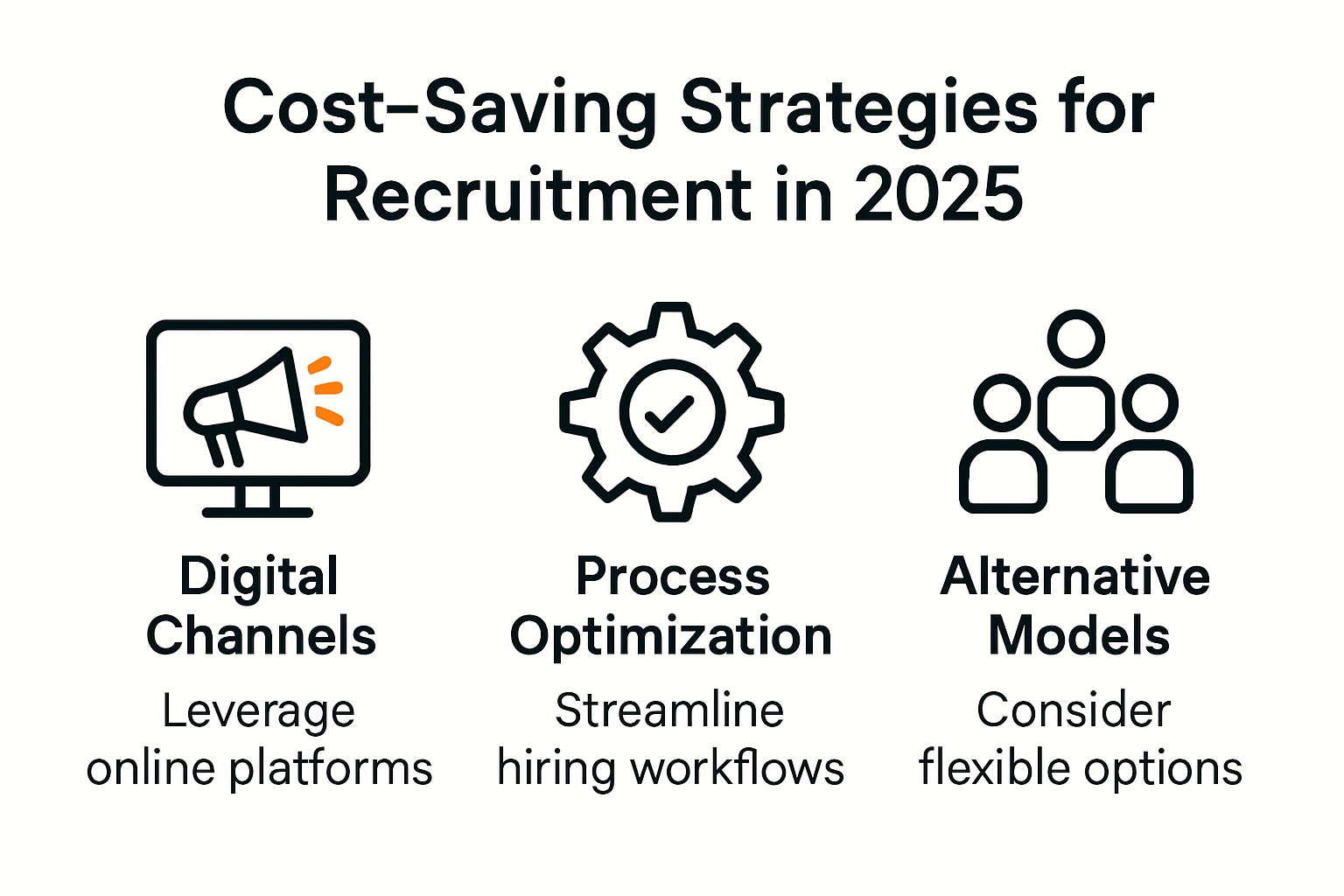
Leverage Digital And Low-Cost Recruitment Channels
Modern recruitment strategies prioritize digital platforms and cost-effective sourcing methods. ALP Consulting highlights the effectiveness of utilizing targeted advertising on free platforms like LinkedIn and Google for Jobs. These channels offer significant cost reductions compared to traditional recruitment advertising methods.
Strategic digital recruitment approaches include:
- Maximizing free job posting platforms
- Developing robust social media recruitment campaigns
- Creating engaging employer branding content
- Utilizing professional networking sites for targeted candidate outreach
- Implementing advanced Boolean search techniques for candidate sourcing
Optimize Internal Recruitment Processes
Internal process optimization represents a critical avenue for reducing recruitment expenditures. ANSR’s Talent Acquisition Trends emphasizes the importance of data-driven strategic talent planning to optimize resources and minimize recruitment costs.
Key optimization strategies encompass:
- Developing comprehensive internal talent mobility programs
- Implementing streamlined interview processes
- Creating standardized candidate evaluation frameworks
- Investing in technology that automates repetitive recruitment tasks
- Developing a robust employee referral program
Explore Alternative Recruitment Models
Organizations can significantly reduce recruitment expenses by exploring innovative recruitment approaches. Recruitment Process Outsourcing (RPO) offers a compelling solution for companies seeking to transfer end-to-end recruitment activities to external experts.
Alternative recruitment models to consider:
- Partial or full recruitment process outsourcing
- Hybrid recruitment models combining internal and external resources
- Talent pooling and continuous candidate engagement strategies
- Performance-based recruitment agency partnerships
- Utilizing gig economy platforms for specialized talent acquisition
Successful cost-saving recruitment strategies require a holistic approach that goes beyond simple expense reduction. The goal is to create a more efficient, targeted, and strategic recruitment process that delivers high-quality candidates while maintaining financial discipline. By continuously evaluating and adapting recruitment strategies, organizations can build a more agile and cost-effective talent acquisition approach that supports long-term business objectives.
Measure Recruitment ROI
Measuring recruitment return on investment (ROI) is a critical process that transforms recruitment from a cost center to a strategic business function. By quantifying the financial and qualitative impact of talent acquisition efforts, organizations can make data-driven decisions that optimize their recruitment strategies.
Quantitative ROI Calculation Methods
Calculating recruitment ROI requires a comprehensive approach that goes beyond simple financial metrics. SourceBae provides a standard formula for measuring recruitment return on investment:
Recruitment ROI (%) =
[(Total Value of Hires – Total Cost of Recruitment) ÷ Total Cost of Recruitment] × 100
Key quantitative metrics to track include:
- Cost per hire
- Time to fill positions
- Offer acceptance rates
- Source of hire effectiveness
- Revenue generated by new hires
Qualitative Performance Measurement
InFeedo AI emphasizes the importance of combining quantitative metrics with qualitative assessments. Holistic ROI measurement extends beyond numerical data to include:
- New hire performance evaluations
- Employee retention rates
- Cultural fit and team integration
- Long-term contribution to organizational goals
- Skills and innovation brought by new talent
Advanced ROI Tracking Strategies
GoBoon’s Recruitment Insights recommends a multi-dimensional approach to tracking recruitment investment returns. Advanced strategies include:
- Implementing sophisticated analytics tools
- Creating comprehensive talent acquisition dashboards
- Developing predictive hiring models
- Continuous benchmarking against industry standards
- Regular performance and cost efficiency reviews
Successful ROI measurement requires a dynamic and nuanced approach. Organizations must view recruitment as a strategic investment, continuously refining their methodologies to align talent acquisition with broader business objectives. By developing robust measurement frameworks, companies can transform recruitment from a transactional process into a critical driver of organizational success and competitive advantage.
Frequently Asked Questions
What are the key components of recruitment spending?
Recruitment spending typically includes job advertising expenses, recruitment technology investments, external agency fees, internal recruiting team salaries, and candidate assessment costs. Breaking these down helps in identifying inefficiencies.
How can I identify inefficiencies in my recruitment budget?
To identify inefficiencies, conduct a detailed analysis of your recruitment expenditures, mapping them against key hiring outcomes such as cost-per-hire and the quality of candidates sourced to pinpoint areas of waste.
What cost-saving strategies can I implement for recruitment?
Leverage digital and low-cost recruitment channels, optimize internal processes, and explore alternative recruitment models like recruitment process outsourcing (RPO) to reduce costs while maintaining recruitment quality.
How do I measure the return on investment (ROI) of my recruitment efforts?
Recruitment ROI can be measured using the formula: (Total Value of Hires – Total Cost of Recruitment) / Total Cost of Recruitment, combined with qualitative assessments such as new hire performance and employee retention rates.
Transform Recruitment Spending into Strategic Success!
Are you tired of watching recruitment costs spiral out of control? As discussed in the article, optimizing your recruitment budget is crucial for reducing inefficiencies and enhancing your talent acquisition process. With our innovative training and consulting solutions at Peuneo, you can align your recruitment strategy with industry best practices, ensuring every dollar spent contributes to building a skilled and compliant workforce.

Don’t wait to enhance your hiring outcomes! Dive into our accredited training programs tailored specifically for skills development across various sectors. Join companies leveraging our expertise to streamline their hiring processes while adhering to industry standards. Visit Peuneo today and see how we can empower your organization to optimize recruitment and performance. Your future starts now—let us help you build a talent acquisition strategy that truly works!