


Motivating teams in 2025 is nothing like handing out pizza parties and hoping for the best. Nearly every leader talks about engagement, but companies that organize structured recognition actually see engagement skyrocket by 784 percent. That sounds massive, right? Here is the catch. Most businesses still overlook the everyday actions that make team members feel valued, trusted, and truly connected. The real edge comes from understanding the science behind recognition, building measurable trust, and syncing team goals seamlessly with the big-picture vision. Ready to discover what sets high-performing teams apart in the year ahead?
Table of Contents
- Promoting Team Engagement Through Recognition
- Building Trust And Collaboration In Teams
- Aligning Team Goals With Organizational Vision
- Innovative Tools And Techniques For Team Motivation
Quick Summary
| Takeaway | Explanation |
|---|---|
| Recognition Drives Engagement | Organizations with strong recognition programs experience 784% higher engagement levels, making appreciation a strategic approach to building motivated teams. |
| Trust is a Performance Accelerator | High trust levels within teams lead to 50% higher productivity and enhanced collaboration, highlighting the need for transparency and vulnerability in communications. |
| Goal Alignment Matters | Regular communication of organizational vision and integrating individual, team, and organizational goals enhances employee motivation and commitment to results. |
| Embrace Gamification for Motivation | Implementing gamification strategies can boost engagement by converting work processes into dynamic experiences, making professional development feel engaging and rewarding. |
| Adopt Holistic Motivation Strategies | Investing in structured well-being plans, mental health resources, and personalized development pathways treats employees as whole individuals, fostering intrinsic motivation. |
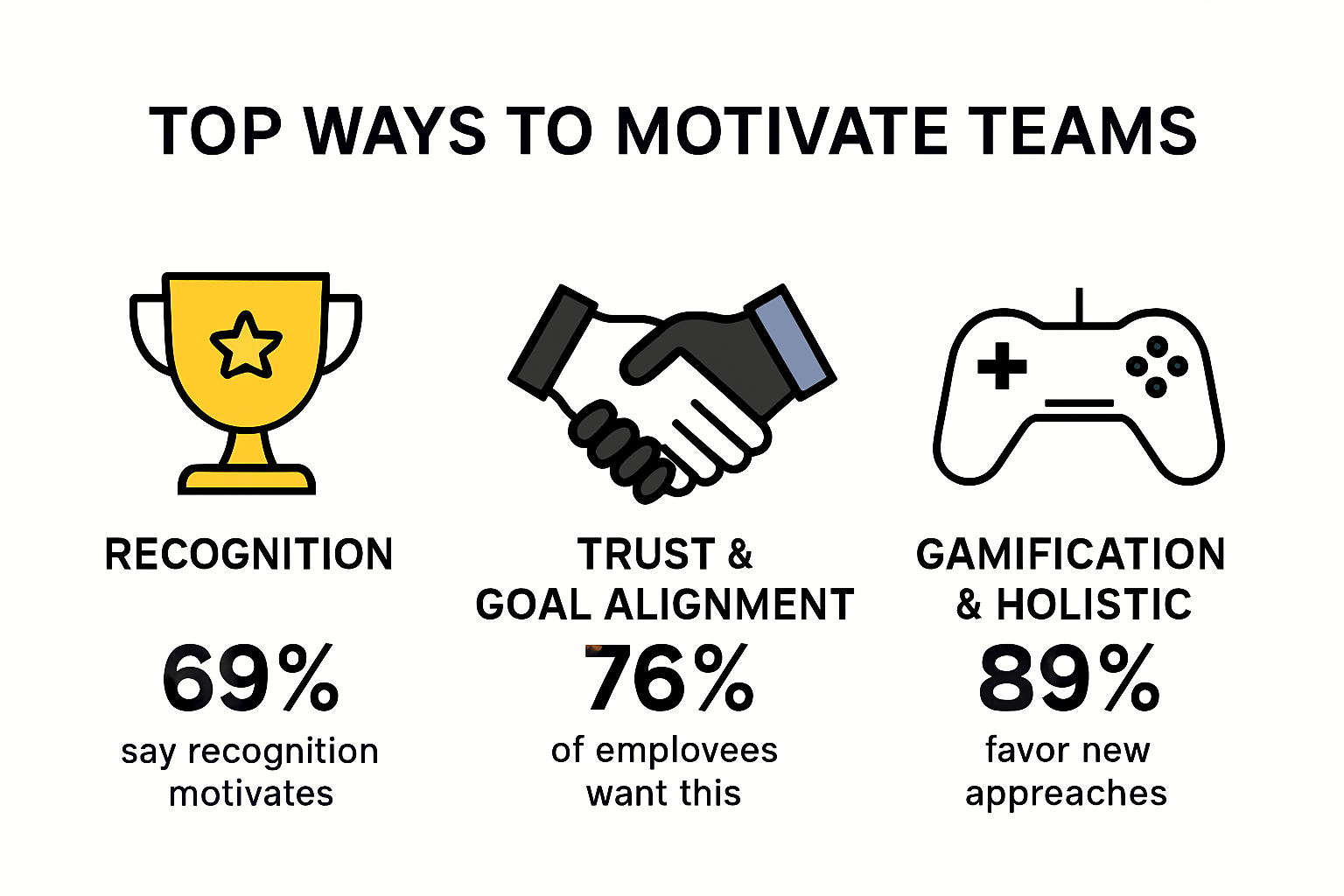
Promoting Team Engagement Through Recognition
Recognition transforms workplace dynamics by creating powerful emotional connections that drive team performance. In 2025, successful organizations understand that appreciation goes far beyond simple praise – it’s a strategic approach to building motivated, high-performing teams.
The Science of Recognition
Recognition triggers fundamental psychological needs for validation and belonging. According to research from Lumapps, organizations with strong recognition programs experience a remarkable 784% higher engagement level compared to companies without structured appreciation strategies. This statistic reveals the profound impact of meaningful acknowledgment.
Team members who feel consistently recognized demonstrate higher levels of discretionary effort. They are more likely to go beyond basic job requirements, innovate proactively, and maintain exceptional performance standards. Recognition serves as an intrinsic motivator that transforms workplace culture from transactional to inspirational.
Digital Recognition Strategies for 2025

Modern recognition approaches leverage technology to create instant, meaningful connections. Our team building guide highlights emerging digital appreciation techniques that resonate with contemporary workforce expectations. Global data shows that 79% of employees report receiving recognition in the past year, indicating a growing organizational commitment to appreciation.
Effective digital recognition strategies include:
- Real-time Feedback Channels: Implementing instant “kudos” messaging platforms that allow immediate peer and management acknowledgment
- Digital Appreciation Badges: Creating visual recognition systems that showcase individual and team achievements
- Performance Visualization Tools: Developing transparent systems that publicly highlight exceptional contributions
These digital approaches transcend traditional recognition models by providing immediate, contextual, and shareable appreciation moments. They transform recognition from an occasional event into a continuous, engaging dialogue that strengthens team connections.
Personalized Recognition Approaches
Successful recognition strategies recognize individual preferences. What motivates one team member might not resonate with another. Some professionals value public acknowledgment, while others prefer private, personalized appreciation. Understanding these nuanced preferences requires active listening and emotional intelligence.
Organizations should develop multifaceted recognition frameworks that accommodate diverse motivational triggers. This might involve a combination of verbal praise, written commendations, professional development opportunities, and targeted rewards that align with individual career aspirations.
By treating recognition as a strategic, data-informed process, teams can create environments where appreciation becomes a powerful catalyst for sustained high performance. The most successful organizations in 2025 will be those that transform recognition from a transactional practice to a genuine cultural cornerstone.
Building Trust and Collaboration in Teams
Trust represents the foundational element that transforms individual contributors into high-performing, interconnected teams. In 2025, successful organizations recognize that collaboration is not merely about working together but creating an environment where team members feel psychologically safe, valued, and empowered to contribute their best work.
The Neuroscience of Team Trust
According to research from Harvard Business Review, teams with high trust levels demonstrate extraordinary performance metrics. These teams experience 50% higher productivity, 76% more engagement, and 74% less stress. This scientific perspective reveals that trust is not a soft skill but a critical performance accelerator.
Neurologically, trust triggers the release of oxytocin, a hormone that promotes bonding, reduces stress, and enhances cooperative behaviors. When team members feel psychologically safe, their brains are more likely to engage in creative problem-solving, open communication, and collaborative thinking. This biological response underscores why trust is a fundamental driver of team success.
Strategies for Building Collaborative Trust
Our team leadership guide emphasizes that building trust requires intentional, consistent actions. Effective strategies include:
- Transparent Communication: Creating consistent, clear channels where information flows freely and openly
- Vulnerability Sharing: Leaders demonstrating openness about challenges and personal learning experiences
- Consistent Follow-through: Ensuring promises are kept and commitments are honored
These approaches create an environment where team members feel secure in taking calculated risks, sharing innovative ideas, and supporting one another through complex challenges. Trust becomes the invisible infrastructure that enables seamless collaboration.
Measuring and Nurturing Team Trust
Modern organizations are developing sophisticated approaches to quantifying and enhancing team trust. This involves regular pulse surveys, 360-degree feedback mechanisms, and data-driven insights into team dynamics. The goal is not just to measure trust but to create targeted interventions that systematically strengthen team connections.
Leaders must recognize that trust is not a static condition but a dynamic process requiring continuous investment. This means creating opportunities for team members to interact beyond formal work contexts, developing shared experiences, and fostering genuine interpersonal connections.
By treating trust as a strategic priority, organizations can create resilient, adaptable teams capable of navigating complex challenges. The most successful teams in 2025 will be those that understand trust is not a nice-to-have attribute but a fundamental performance accelerator that transforms potential into exceptional collective achievement.
Aligning Team Goals With Organizational Vision
Alignment between team objectives and organizational vision represents the critical bridge that transforms strategic intentions into tangible results. In 2025, successful organizations recognize that goal synchronization is not a one-time event but a continuous, dynamic process that requires deliberate strategy and consistent communication.
The Strategic Importance of Goal Alignment
According to research from Staff Force, regularly communicating organizational vision and progress toward goals significantly enhances employees’ sense of purpose and belonging. This connection directly translates into higher motivation and superior performance. When team members understand how their individual contributions connect to broader organizational objectives, they become more engaged and committed.
Effective goal alignment goes beyond simple directive communication. It involves creating a comprehensive ecosystem where individual, team, and organizational goals are seamlessly integrated. This approach transforms abstract strategic visions into concrete, actionable plans that every team member can understand and execute.
Implementing Robust Goal-Setting Frameworks
Explore our leadership development strategies to understand how modern organizations approach goal alignment. According to The Executive Learning Lab, implementing frameworks like SMART (Specific, Measurable, Achievable, Relevant, Time-bound) ensures that team goals are directly connected to broader organizational strategies.
Key components of effective goal alignment include:
- Cascading Goal Setting: Creating a hierarchical goal structure where organizational objectives filter down to team and individual levels
- Transparent Performance Metrics: Developing clear, measurable indicators that demonstrate progress toward strategic objectives
- Regular Collaborative Review: Scheduling consistent check-ins to reassess and recalibrate goals based on changing organizational needs
Leadership’s Role in Vision Synchronization
Leaders play a pivotal role in transforming vision into reality. According to insights from organizational development experts, successful vision alignment requires leaders to consistently embody and reinforce organizational goals through daily actions and communications.
This means moving beyond traditional top-down communication models. Modern leadership involves creating participatory environments where team members actively contribute to goal-setting processes. By soliciting input, acknowledging diverse perspectives, and demonstrating genuine commitment to shared objectives, leaders can cultivate a sense of collective ownership.
Successful organizations in 2025 will distinguish themselves not just by having clear visions, but by creating adaptive, collaborative frameworks that transform those visions into tangible achievements. Goal alignment becomes more than a management strategy – it becomes a cultural philosophy that empowers teams to achieve extraordinary results.
Innovative Tools and Techniques for Team Motivation
Motivation in 2025 transcends traditional reward systems, requiring sophisticated, multifaceted approaches that engage teams on psychological and professional levels. Modern organizations recognize that motivation is a complex interplay of technological tools, psychological understanding, and strategic engagement techniques.
Gamification and Performance Engagement
Our team building techniques guide highlights the transformative power of gamification in workplace motivation. According to research from Meditopia, implementing competitive and reward-based systems can dramatically enhance employee engagement. These systems tap into fundamental human desires for achievement, recognition, and progression.
Gamification strategies might include:
- Point-based Achievement Systems: Creating transparent tracking mechanisms for professional milestones
- Competitive Challenges: Designing team and individual performance competitions
- Visual Progress Tracking: Implementing interactive dashboards that showcase individual and collective accomplishments
These approaches convert work processes into engaging experiences, making professional development feel more like a dynamic game than a monotonous routine.
Innovation and Creativity Platforms
Innovation days represent a revolutionary approach to team motivation. Organizational development experts recommend dedicated time where employees step outside routine tasks to explore passion projects, solve complex problems, or brainstorm transformative ideas. This technique not only motivates teams but also generates unexpected innovative solutions.
Successful innovation platforms typically include:
- Structured brainstorming sessions
- Cross-departmental collaboration opportunities
- Mechanisms for evaluating and potentially implementing creative proposals
- Recognition and potential rewards for breakthrough ideas
Holistic Motivation Strategies
According to insights from corporate happiness researchers, a comprehensive approach to team motivation requires investing in structured well-being plans. These strategies go beyond financial incentives, focusing on psychological safety, personal growth, and meaningful work experiences.
Key elements of holistic motivation include:
- Personalized Development Pathways: Creating individualized career progression frameworks
- Mental Health Support: Providing robust wellness resources and professional counseling
- Flexible Work Arrangements: Offering adaptive work models that respect individual preferences
The most effective motivation strategies in 2025 will be those that treat employees as whole individuals, recognizing their professional aspirations, personal well-being, and intrinsic need for meaningful contribution. By combining technological tools, psychological insights, and flexible frameworks, organizations can create environments where motivation emerges naturally from engagement, recognition, and personal growth.
Frequently Asked Questions
What are effective ways to motivate teams in 2025?
Motivating teams in 2025 involves structured recognition programs, building trust, aligning team goals with the organizational vision, and using innovative tools like gamification. These strategies create a supportive and engaging work environment that fosters high performance.
How does recognition impact team engagement?
Structured recognition programs can lead to a staggering 784% increase in employee engagement. Recognizing team members’ contributions fosters a sense of belonging and appreciation, motivating them to perform at higher levels.
What role does trust play in team performance?
Trust is a crucial element that accelerates team performance. High trust levels can increase productivity by up to 50% and enhance collaboration, making it essential for leaders to cultivate transparent and open communication.
Why is aligning team goals with organizational vision important?
Aligning team goals with the organizational vision helps employees understand their contributions towards broader objectives. This connection increases motivation and commitment, leading to better overall performance and goal achievement.
Unlock Your Team’s Full Potential for 2025
Is your organization struggling to build trust or keep teams motivated, even after trying recognition programs or digital rewards? The article highlights how the right strategies—structured recognition, trust-building, and goal alignment—lead to real, measurable gains. But knowing these methods and actually putting them to work are two different challenges. Many leaders feel the pressure to boost engagement, yet lack tailored tools or training solutions that actually move the needle for their unique team needs.

Now is the time to act. Bring your team’s motivation and results to new heights with Peuneo’s accredited skills development and training programs. Our proven courses combine the science of recognition with practical leadership guidance, ensuring your business thrives in 2025 and beyond. Explore our online learning portal or request a consultation today and see how Peuneo delivers a direct path to higher trust, stronger collaboration, and lasting team success.