

Everyone talks about technical skills, but the real unlock for career success in 2025 is something less obvious and far more powerful. Turns out, 93 percent of employers say soft skills are just as important or even more important than technical skills. That means the difference between average performance and rapid career growth is not what you know, but how you connect, communicate, and think on your feet.
Table of Contents
- Why Soft Skills Matter In Today’s Workplace
- Top Soft Skills Employers Value Most
- Ways To Develop Soft Skills For Lasting Success
- Soft Skills Training Solutions For Organizations
Quick Summary
| Takeaway | Explanation |
|---|---|
| Soft skills are essential for career success | Technical skills alone are insufficient in today’s workplace; soft skills differentiate exceptional candidates. |
| Key soft skills include communication and emotional intelligence | Employers highly value abilities like effective communication and emotional intelligence for teamwork and leadership. |
| Develop soft skills through intentional practice | Professionals should seek learning opportunities and actively apply skills in real-world situations to improve. |
| Organizations benefit from soft skills training | Investing in targeted soft skills training enhances productivity and employee retention in competitive environments. |
| Continuous learning is vital for soft skills enhancement | Soft skills development is a journey requiring ongoing practice, feedback, and adaptation to new challenges. |
Why Soft Skills Matter in Today’s Workplace
The professional world is undergoing a transformative shift where technical skills alone no longer guarantee career success. Soft skills have emerged as the critical differentiator in a complex and rapidly evolving workplace. Learn how to develop essential career skills that will set you apart in 2025 and beyond.
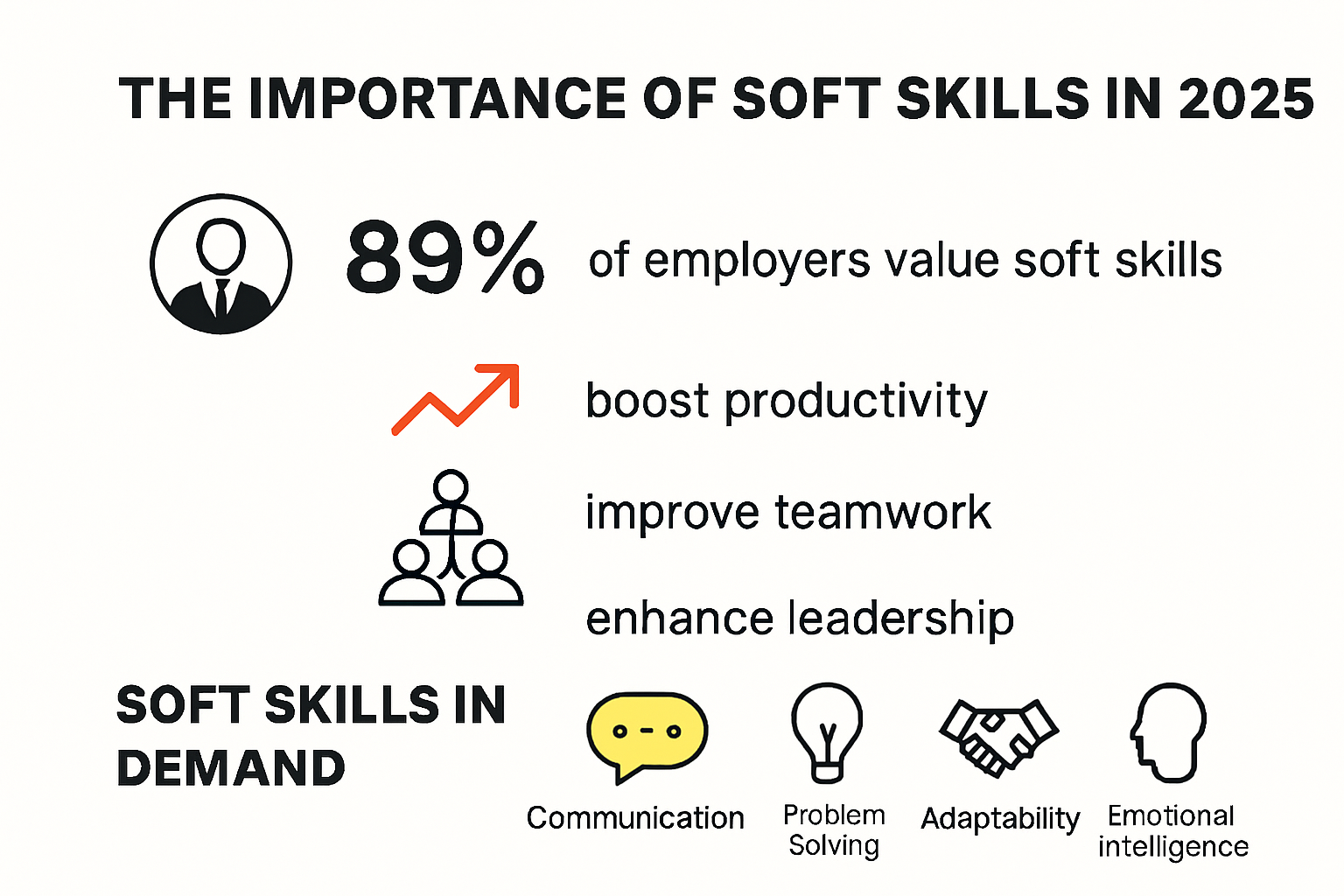
The Changing Landscape of Professional Competence
Modern workplaces demand more than just technical expertise. According to research by the National Association of Colleges and Employers, employers consistently rank interpersonal skills as critically important for new graduates. Communication, adaptability, teamwork, and problem-solving have become the cornerstone of professional excellence.
The traditional view of professional success centered on technical prowess is rapidly becoming obsolete. Employers now recognize that employees who can navigate complex social dynamics, communicate effectively, and adapt to changing environments are significantly more valuable. These soft skills enable professionals to collaborate seamlessly, resolve conflicts constructively, and drive organizational innovation.
Impact on Career Progression and Organizational Success
Soft skills directly influence career trajectory and organizational performance. Professionals who demonstrate strong emotional intelligence, effective communication, and collaborative abilities are more likely to advance in their careers. They become natural leaders who can inspire teams, manage relationships, and create positive workplace cultures.
Research indicates that organizations with employees possessing robust soft skills experience higher productivity, better team dynamics, and improved overall performance. The ability to understand and manage interpersonal relationships becomes a strategic asset. Professionals who can read social cues, communicate clearly, and work effectively across diverse teams are increasingly seen as invaluable resources.
Moreover, the rising complexity of global business environments demands a holistic skill set. Technical knowledge provides the foundation, but soft skills enable professionals to apply that knowledge creatively, solve complex problems, and drive meaningful organizational change. The importance of soft skills extends beyond individual performance to become a critical factor in organizational adaptability and resilience.
Developing Soft Skills: A Continuous Journey
Recognizing the importance of soft skills is just the first step. Developing these skills requires consistent effort, self-reflection, and a commitment to personal growth. Professionals must actively seek opportunities to enhance their communication, emotional intelligence, and interpersonal capabilities.
Workshops, professional development programs, mentorship, and deliberate practice can help individuals refine their soft skills. The most successful professionals view these skills not as innate traits but as muscles that can be strengthened through continuous learning and application.
In an era of technological disruption and rapid change, soft skills represent the human element that cannot be easily replicated by artificial intelligence. They are the unique capabilities that distinguish exceptional professionals and drive organizational success in an increasingly complex and interconnected world.
Top Soft Skills Employers Value Most
In the competitive professional environment of 2025, employers are looking far beyond traditional technical qualifications. Soft skills have become the critical differentiators that separate exceptional candidates from average performers. Explore strategies for manager skill development to stay ahead in your career trajectory.
Communication: The Universal Professional Language
Effective communication stands at the pinnacle of soft skills employers consistently prioritize. According to research by the National Association of Colleges and Employers, communication skills are fundamental to professional success across industries. This encompasses not just verbal articulation but also written communication, active listening, and the ability to convey complex ideas clearly and concisely.
Professionals who can communicate effectively bridge gaps between teams, translate technical concepts for non-technical audiences, and create meaningful workplace connections. Whether presenting to senior management, collaborating with cross-functional teams, or writing comprehensive reports, communication skills determine how well ideas are understood and implemented.
Problem Solving and Critical Thinking
Employers consistently seek professionals who can analyze complex situations and develop innovative solutions. Problem-solving skills go beyond technical knowledge, requiring creativity, analytical thinking, and the ability to approach challenges from multiple perspectives. Professionals who demonstrate strong critical thinking can:
- Identify Root Causes: Quickly understand the underlying issues in complex scenarios
- Generate Innovative Solutions: Develop creative approaches to workplace challenges
- Make Strategic Decisions: Evaluate multiple options and select the most effective course of action
- Adapt to Unexpected Situations: Respond flexibly to changing workplace dynamics
These skills are particularly valuable in an era of rapid technological and organizational change. Employers want team members who can think independently, make informed decisions, and contribute to organizational resilience.
Emotional Intelligence and Interpersonal Skills
Emotional intelligence has emerged as a crucial skill set that distinguishes top performers. This complex skill involves understanding and managing personal emotions while effectively navigating interpersonal relationships. Professionals with high emotional intelligence can:
- Build strong collaborative relationships
- Manage workplace conflicts constructively
- Lead and motivate teams effectively
- Demonstrate empathy and understanding
- Maintain professional composure under pressure
Organizations recognize that technical skills can be taught, but emotional intelligence represents a more nuanced and challenging capability to develop. Professionals who can read social dynamics, communicate sensitively, and build positive workplace relationships become invaluable assets to their organizations.
The landscape of professional skills continues to evolve, with soft skills becoming increasingly critical. While technical expertise remains important, the ability to communicate effectively, solve complex problems, and navigate interpersonal dynamics will increasingly define professional success in 2025 and beyond.

Ways to Develop Soft Skills for Lasting Success
Developing soft skills is a deliberate and continuous process that requires commitment, self-awareness, and strategic approach. Discover comprehensive strategies for skill enhancement to transform your professional capabilities and advance your career.
Intentional Learning and Practice
According to research from the U.S. Department of Labor, developing soft skills requires proactive engagement and consistent practice. Professionals must view these skills not as static attributes but as dynamic capabilities that can be systematically improved through targeted efforts.
Effective skill development involves creating deliberate learning opportunities. This might include participating in cross-functional projects, volunteering for leadership roles, or seeking assignments that challenge existing communication and collaboration abilities. Each professional interaction becomes a potential learning experience to refine interpersonal skills.
Structured Skill Enhancement Strategies
Below is a summary table highlighting strategies mentioned in the article for developing soft skills through structured enhancement approaches.
| Strategy | Description |
|---|---|
| Seek Feedback | Request input from colleagues and supervisors |
| Engage in Team Projects | Collaborate across departments and skill levels |
| Practice Active Listening | Improve understanding through attentive and focused listening |
| Embrace Continuous Learning | Attend workshops, webinars, and development programs |
Research from Central Connecticut State University highlights specific approaches for skill development. Key strategies include:
- Seek Feedback: Actively request constructive input from colleagues and supervisors
- Engage in Team Projects: Collaborate across different departments and skill levels
- Practice Active Listening: Develop deeper understanding through attentive communication
- Embrace Continuous Learning: Attend workshops, webinars, and professional development programs
These strategies transform soft skills from abstract concepts into tangible professional competencies. By systematically applying these approaches, professionals can progressively enhance their interpersonal capabilities and workplace effectiveness.
Technology and Personalized Skill Development
The table below summarizes examples from the article of technology-based tools for soft skills development and their focus areas.
| Technological Resource | Focus Area |
|---|---|
| Interactive communication training modules | Communication skills |
| Virtual reality leadership simulations | Leadership, decision-making |
| Online emotional intelligence assessments | Emotional intelligence evaluation |
| Microlearning platforms | Targeted soft skill enhancement |
Washington State University emphasizes the role of technology and personalized approaches in skill development. Online platforms, simulation tools, and digital learning resources provide unprecedented opportunities for targeted skill enhancement.
Professionals can leverage various technological resources such as:
- Interactive communication training modules
- Virtual reality leadership simulations
- Online emotional intelligence assessment tools
- Microlearning platforms focusing on specific soft skill development
Personalization is key to effective skill development. Individuals should conduct self-assessments to identify specific areas for improvement, then design customized learning paths that align with their professional goals and personal learning styles.
Successful soft skills development requires a holistic approach combining structured learning, practical application, technological resources, and continuous self-reflection. By treating soft skills as learnable competencies and investing deliberate effort in their enhancement, professionals can dramatically improve their workplace effectiveness and career prospects.
Soft Skills Training Solutions for Organizations
Organizations must proactively invest in comprehensive soft skills training to remain competitive in the rapidly evolving professional landscape. Explore strategic training approaches for managers to transform workplace performance and employee potential.
Strategic Training Design and Implementation
Research from the Abdul Latif Jameel Poverty Action Lab demonstrates that targeted soft skills training can significantly enhance workplace productivity and employee retention. Successful organizational training programs require a multifaceted approach that goes beyond traditional learning methods.
Effective soft skills training involves creating customized learning experiences that address specific organizational needs. This means developing programs that are not generic but tailored to the unique challenges and cultural dynamics of each workplace. Organizations must design training interventions that are interactive, engaging, and directly applicable to real-world professional scenarios.
Assessment and Measurement of Soft Skills
A comprehensive study published in Frontiers in Psychology highlights the critical importance of developing robust assessment tools for soft skills. Organizations need systematic methods to:
- Identify Skill Gaps: Conduct thorough organizational skill assessments
- Create Targeted Training: Design precise intervention strategies
- Track Progress: Measure improvements in individual and team performance
- Validate Training Effectiveness: Ensure continuous learning and development
The Multiple Soft Skills Assessment Tool (MSSAT) represents an advanced approach to understanding and developing workplace competencies. By implementing such sophisticated assessment frameworks, organizations can create more nuanced and effective training programs.
Innovative Learning Methodologies
Research from the European Journal of Training and Development emphasizes the significance of ‘time-spaced learning’ in soft skills acquisition. This approach recognizes that skill development is not a one-time event but a continuous process requiring:
- Periodic training sessions
- Practical application opportunities
- Reflection and feedback mechanisms
- Ongoing skill reinforcement strategies
Innovative organizations are leveraging technology to create immersive learning experiences. Virtual reality simulations, microlearning platforms, and interactive digital workshops provide flexible and engaging ways to develop soft skills. These technologies allow employees to practice communication, leadership, and emotional intelligence in controlled yet realistic environments.
The future of organizational success lies in recognizing soft skills as fundamental capabilities rather than optional attributes. By investing in comprehensive, technology-enhanced, and strategically designed training solutions, organizations can cultivate a workforce that is adaptable, resilient, and prepared for the complex challenges of the modern professional world.
Frequently Asked Questions
What are soft skills and why are they important in 2025?
Soft skills refer to interpersonal qualities like communication, emotional intelligence, and problem-solving abilities. In 2025, they are crucial for career success as employers prioritize these skills alongside technical expertise to foster collaboration, innovation, and leadership.
How can I develop my soft skills for professional growth?
Developing soft skills involves intentional practice, seeking feedback, participating in workshops, and engaging in team projects. Continuous learning and real-world application of these skills are essential for improvement.
What top soft skills should I focus on to enhance my career prospects?
Key soft skills include effective communication, emotional intelligence, critical thinking, and adaptability. Focusing on these areas will help you differentiate yourself in a competitive job market.
What are the benefits of soft skills training for organizations?
Soft skills training enhances employee productivity, retention, and teamwork, leading to better organizational performance. Organizations with strong soft skills in their workforce can navigate challenges more effectively and drive innovation.
Ready to Transform Your Soft Skills Into Career Success?
Do you feel your technical skills are strong but worry that a lack of communication, leadership, or emotional intelligence is holding you back from real progress? This article reveals that soft skills like problem solving, adaptability, and empathy are the true differentiators for professionals aiming to excel in 2025. In today’s fast-paced workplace, these abilities are not optional. They are absolutely critical for advancement and organizational impact.

Peuneo understands how urgent and important it is to develop these essential human skills. Whether you want to stand out in a crowded job market or help your organization thrive, our accredited training and tailored consulting services are designed to meet both individual and business goals. Explore our robust online learning portal today and start enhancing your soft skills with programs trusted across South Africa. Do not let outdated skills hold you back when the future of work is changing so quickly. Visit Peuneo’s main website and take the first step toward building the capabilities that truly matter.
Recommended
- How to Develop Soft Skills for Career Growth in 2025 – Peuneo
- Top 20 Skills for Career Advancement in 2025 – Peuneo
- Soft Skills for Managers: Essential Guide for 2025 Success – Peuneo
- Career Development Strategies: Ultimate 2025 Growth Guide – Peuneo
- Communication interne efficace : stratégies gagnantes pour 2025
- What Makes Content Human-Like? Key Elements for 2025