


Every sales manager wants motivated teams, but more than half of salespeople say they quit because of poor motivation and lack of recognition. Now, here’s the twist. Most companies throw bonuses and incentives at the problem, thinking cash alone will fire everyone up. The real drivers go much deeper. High-performing sales teams are 2.2 times more likely to focus on personal growth and meaningful recognition, not just pay. Get ready to rethink what truly works for energizing your team in 2025.
Table of Contents
- Understanding What Drives Sales Teams
- Motivation Techniques For Diverse Organizations
- Using Tools And Training To Boost Engagement
- Measuring And Maintaining Motivation Over Time
Quick Summary
| Takeaway | Explanation |
|---|---|
| Understand Intrinsic and Extrinsic Motivators | Sales motivation is driven by a mix of internal desires like personal achievement and external factors like financial incentives and recognition. Recognizing this blend is crucial for effective motivation strategies. |
| Personalize Motivation Approaches | Tailoring motivation techniques to individual communication styles, professional goals, and learning preferences can significantly enhance team engagement and performance. |
| Leverage Technology for Training and Engagement | Utilizing AI-driven training platforms and gamification can create personalized learning experiences, maintain motivation, and improve sales performance through engaging and interactive methods. |
| Implement Comprehensive Measurement Frameworks | Establishing systematic performance reviews that assess both quantitative and qualitative factors is essential for tracking motivation and maintaining high engagement levels over time. |
| Create a Culture of Inclusivity and Continuous Development | Building an inclusive environment that prioritizes continuous learning and transparent communication fosters long-term engagement, ensuring employees feel valued and supported in their growth. |
Understanding What Drives Sales Teams
Motivating sales teams requires a nuanced understanding of the complex psychological and professional factors that inspire peak performance. Sales representatives are not merely executing transactions but navigating intricate human interactions driven by diverse motivational triggers.
The Psychology of Sales Motivation
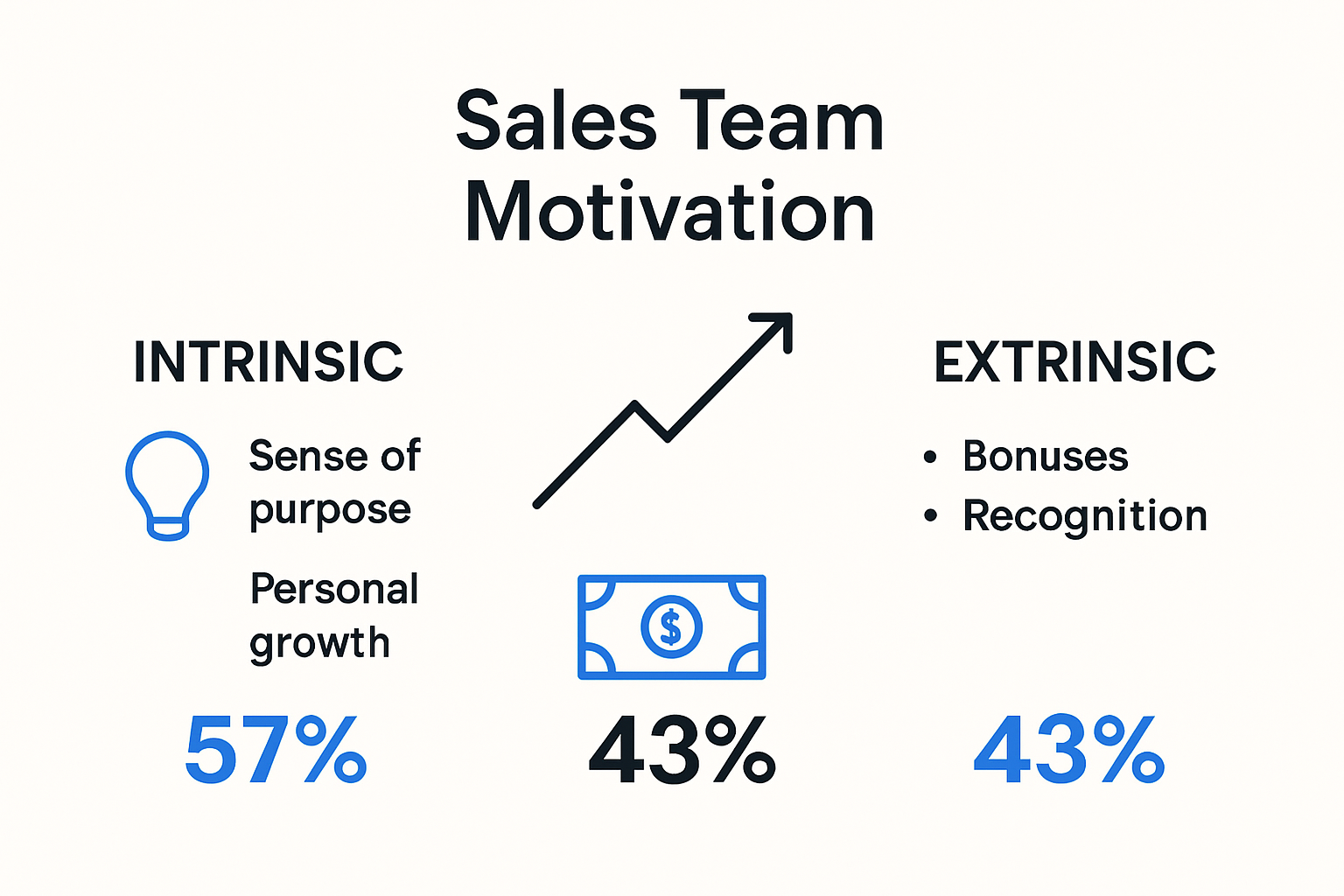
At its core, sales team motivation stems from a delicate interplay between intrinsic and extrinsic motivators. Learn more about strategic performance techniques reveals that successful motivation goes beyond simple monetary rewards. Successful sales professionals are typically driven by a combination of personal achievement, recognition, professional growth, and financial compensation.
Intrinsic motivation emerges from internal desires such as personal satisfaction, skill mastery, and career advancement. Sales representatives who feel genuinely passionate about their work and understand their broader professional purpose tend to demonstrate higher levels of engagement and consistently superior performance. This internal drive translates into more authentic client interactions and a more resilient approach to overcoming sales challenges.
External Motivational Factors
External motivators play an equally critical role in sales team dynamics. According to research from Spinify, financial incentives, competitive compensation structures, and meaningful recognition programs significantly influence sales team performance. Top-performing organizations understand that motivation is not a one-size-fits-all strategy but requires personalized approaches tailored to individual team members’ unique professional aspirations and psychological profiles.
Effective external motivation strategies often include:
- Performance Rewards: Transparent and achievable bonus structures that directly link individual effort to tangible financial outcomes.
- Career Development: Clear pathways for professional growth, skill enhancement opportunities, and potential advancement within the organization.
- Public Recognition: Regular acknowledgment of individual and team achievements through structured recognition programs.
Building a Sustainable Motivation Framework
Creating a sustainable motivation framework demands a holistic approach that balances psychological insights with practical implementation strategies. The most successful sales teams operate within environments that foster psychological safety, provide continuous learning opportunities, and maintain transparent communication channels.
Managerial approaches that prioritize individual team member development, offer consistent constructive feedback, and create supportive team cultures are more likely to sustain long-term motivation. By understanding that each sales representative has unique motivational triggers, leaders can design more targeted and effective engagement strategies.
Ultimately, how to motivate sales teams transcends traditional incentive models. It requires a deep commitment to understanding individual professional aspirations, creating meaningful work environments, and developing comprehensive support systems that empower sales professionals to achieve their full potential.
Motivation Techniques for Diverse Organizations
In an increasingly complex business environment, organizations must develop sophisticated motivation strategies that recognize and celebrate diversity while driving exceptional sales performance. The most successful teams understand that motivation is not a uniform concept but a nuanced approach tailored to individual strengths, backgrounds, and professional aspirations.
Personalized Motivation Strategies
Personalization emerges as a critical strategy for motivating diverse sales teams. Learn more about effective team leadership highlights the importance of understanding individual team members’ unique motivational triggers. Research from Spinify demonstrates that one-size-fits-all approaches significantly limit team potential.
Effective personalization involves creating motivation frameworks that accommodate different:
- Communication Styles: Recognizing how team members prefer to receive feedback and recognition.
- Professional Goals: Developing individual development paths that align with personal career aspirations.
- Learning Preferences: Offering training and motivation techniques that match individual learning approaches.
Innovative Motivation Techniques
Modern organizations are increasingly adopting innovative approaches to motivate diverse sales teams. According to research from Incentive Smart, gamification and flexible work arrangements have proven particularly effective in engaging multicultural and multigenerational workforces.

Innovative motivation techniques include:
- Gamification: Implementing interactive challenges that make sales processes more engaging and competitive.
- Flexible Work Arrangements: Creating work environments that accommodate different lifestyle needs and preferences.
- Technology-Driven Recognition: Using digital platforms to provide real-time feedback and celebrate individual and team achievements.
Building an Inclusive Motivation Culture
Creating a truly motivational environment goes beyond individual techniques. It requires building a comprehensive culture of inclusivity, respect, and continuous growth. This approach recognizes that diversity is not just about representation but about creating genuine opportunities for every team member to excel.
Key elements of an inclusive motivation culture include:
- Transparent communication channels
- Equitable performance evaluation processes
- Continuous learning and development opportunities
- Meaningful recognition that goes beyond financial rewards
Ultimately, motivating diverse sales teams requires a holistic approach that combines personalized strategies, innovative techniques, and a genuine commitment to creating an inclusive workplace. Organizations that successfully implement these approaches will not only drive sales performance but also build resilient, engaged, and high-performing teams that reflect the rich diversity of modern business environments.
Using Tools and Training to Boost Engagement
In the rapidly evolving sales landscape of 2025, technological tools and strategic training programs have become essential for maintaining high levels of team engagement and performance. Organizations must leverage cutting-edge technologies and innovative training approaches to keep sales teams motivated, skilled, and aligned with business objectives.
AI-Powered Training and Development
Explore our comprehensive training methodology reveals that artificial intelligence is transforming sales training and engagement strategies. According to research from Second Nature, AI-powered platforms now enable unprecedented personalization in skill development, simulating real-world scenarios and providing instant, actionable feedback.
AI-driven training tools offer remarkable advantages:
- Personalized Learning Paths: Adaptive algorithms create customized training experiences based on individual performance and learning styles.
- Real-Time Performance Analysis: Instant insights help managers identify strengths and development opportunities.
- Risk-Free Practice Environments: Simulated scenarios allow sales representatives to refine techniques without real-world consequences.
Interactive Engagement Technologies
Modern engagement technologies go beyond traditional training methods. Spinify highlights the growing importance of gamification and interactive platforms in maintaining sales team motivation.
Innovative engagement strategies include:
- Gamification Platforms: Interactive challenges that transform sales processes into compelling, competitive experiences.
- Performance Tracking Tools: Real-time dashboards that provide transparent, motivational progress monitoring.
- Collaborative Communication Systems: Digital platforms that facilitate team connection and knowledge sharing.
Holistic Training and Development Approach
Successful engagement strategies recognize that training is not a one-time event but a continuous process of growth and development. According to research from BI Worldwide, effective programs tap into intrinsic motivators like autonomy, mastery, and purpose.
Key components of a comprehensive training approach include:
- Continuous skill development opportunities
- Regular performance feedback mechanisms
- Opportunities for cross-functional learning
- Alignment of individual goals with organizational objectives
By integrating advanced technological tools with strategic, human-centered training approaches, organizations can create dynamic learning environments that not only boost engagement but also drive sustained sales performance. The most successful teams will be those that view training as an ongoing journey of personal and professional growth, leveraging technology to create meaningful, personalized development experiences.
Measuring and Maintaining Motivation Over Time
Sustaining sales team motivation is a dynamic process that requires continuous attention, strategic measurement, and adaptive approaches. Organizations must develop sophisticated systems that not only track performance but also proactively nurture ongoing engagement and professional growth.
Performance Measurement Frameworks
Explore effective performance tracking strategies reveals the critical importance of implementing comprehensive measurement frameworks. According to research from Sloovi, systematic performance reviews are essential for understanding and maintaining team motivation.
Effective performance measurement approaches include:
- Quantitative Metrics: Tracking key performance indicators like conversion rates, sales volume, and revenue generation.
- Qualitative Assessments: Evaluating soft skills, customer interaction quality, and team collaboration.
- 360-Degree Feedback: Gathering insights from multiple perspectives including peers, managers, and customers.
Motivation Sustainability Strategies
Maintaining motivation requires more than periodic assessments. Visdum research highlights the importance of dynamic goal-setting and continuous engagement techniques.
Key strategies for sustaining motivation include:
- Regular Goal Recalibration: Continuously adjusting objectives to keep them challenging yet achievable.
- Transparent Competitive Platforms: Implementing real-time tracking systems that foster healthy competition.
- Periodic Recognition Programs: Designing consistent acknowledgment mechanisms that celebrate both individual and team achievements.
Long-Term Engagement Techniques
According to Sales Drive research, long-term motivation is fundamentally about creating an ecosystem of continuous growth and meaningful engagement.
Comprehensive long-term engagement approaches should incorporate:
- Personalized career development pathways
- Ongoing skill enhancement opportunities
- Transparent communication channels
- Flexible reward and recognition systems
Successful organizations recognize that motivation is not a static concept but a living, breathing process that requires constant nurturing. By implementing robust measurement frameworks, adaptive strategies, and a genuine commitment to individual and collective growth, sales teams can maintain high levels of engagement and performance.
The most effective motivation strategies transcend traditional metrics, focusing instead on creating an environment where sales professionals feel valued, challenged, and continuously supported in their professional journey. This holistic approach ensures not just short-term performance gains but sustainable, long-term organizational success.
Frequently Asked Questions
What are the key factors that drive sales team motivation?
Sales team motivation is influenced by both intrinsic factors, such as personal achievement and professional growth, and extrinsic factors, such as financial incentives and recognition programs.
How can I create a personalized motivation strategy for my sales team?
To personalize motivation strategies, understand each team member’s unique communication style, professional goals, and learning preferences, then tailor motivation techniques to fit these individual attributes.
What innovative techniques can be used to enhance sales team motivation?
Innovative techniques include gamification, flexible work arrangements, and utilizing technology-driven recognition platforms to engage and motivate sales representatives effectively.
How can organizations measure and sustain motivation over time?
Organizations can measure motivation through performance metrics, qualitative assessments, and 360-degree feedback systems. Sustaining motivation involves regular goal recalibration, transparent competitive platforms, and consistent recognition programs.
Turn Sales Motivation Into Real Results With Accredited Training
Feeling stuck, even when traditional incentives are not enough to truly inspire your sales team? The article highlighted how a mix of personalized growth, meaningful recognition, and ongoing skills development drives real engagement and lasting performance. Yet, many South African companies still struggle to find solutions that fit their team’s unique needs.

Why wait to see meaningful change? Tap into Peuneo’s accredited training programs and consulting services designed to help your sales teams master the art of motivation. Our online learning portal makes it easy to unlock tailored courses and proven frameworks for success. Start building a team that thrives on growth and recognition. Visit Peuneo today and discover how skills development can transform your sales performance now.