

Managing employee performance used to mean annual reviews and generic goals, but the rules have changed for 2025. Here is a shocker: only 23 percent of employees worldwide are truly engaged at work according to the latest research. That number might sound discouraging, but it actually reveals a major opportunity. Because some of the most successful companies right now are using technology-driven feedback, personalized development, and continuous check-ins to build teams that are more motivated and productive than ever. The strategies you use this year could be the difference between stagnant results and real momentum.
Table of Contents
- Setting Clear Performance Goals And Expectations
- Effective Feedback And Communication Methods
- Using Technology To Monitor And Improve Performance
- Supporting Employee Growth And Engagement
Quick Summary
| Takeaway | Explanation |
|---|---|
| Set SMART Goals | Utilize the SMART framework to create clear, specific, measurable, achievable, relevant, and time-bound performance goals that align with organizational objectives. |
| Foster Continuous Feedback | Implement ongoing feedback mechanisms and quarterly review cycles to allow for real-time adjustments and enhance employee engagement by maintaining open lines of communication. |
| Leverage Technology for Performance Management | Use advanced performance analytics and monitoring tools to objectively evaluate employee contributions and support proactive management strategies, especially in remote or hybrid work settings. |
| Create Personalized Development Pathways | Design individualized learning plans that accommodate unique employee skills and aspirations, integrating various learning modalities to enhance growth opportunities. |
| Focus on Holistic Employee Well-Being | Adopt comprehensive well-being programs that address physical, mental, and emotional support, fostering a culture of trust and commitment that drives engagement and loyalty. |
Setting Clear Performance Goals and Expectations
Effective performance management starts with establishing crystal clear goals and expectations. Managers must transform vague aspirations into precise roadmaps that guide employee performance and organizational success.
Crafting SMART Performance Goals
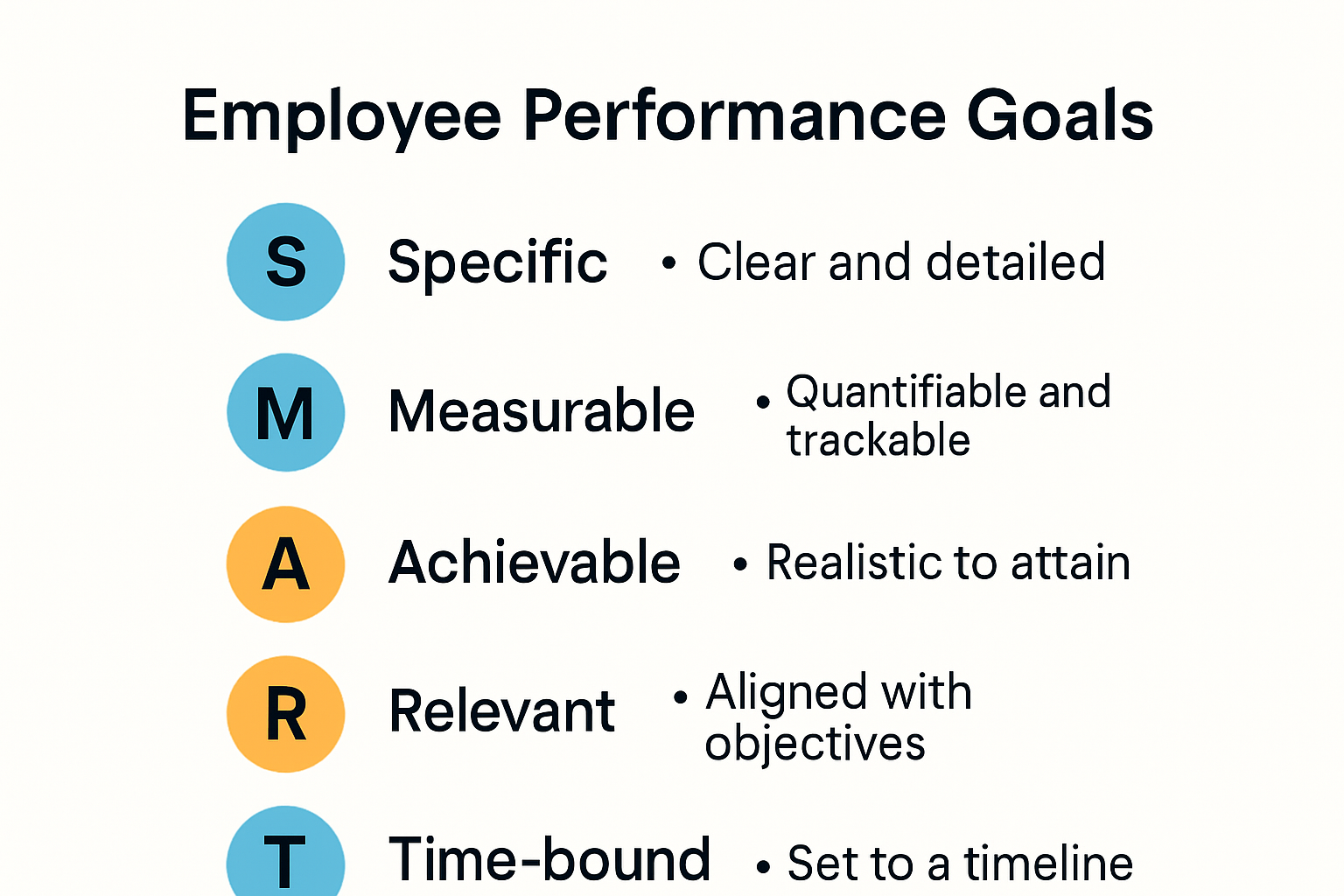
Creating meaningful performance goals requires a strategic approach. The SMART framework provides a robust methodology for goal setting that ensures clarity and achievability. According to HR.com, organizations prioritizing frequent feedback and goal alignment see significant improvements in employee engagement and productivity.
Specific goals eliminate ambiguity and provide clear direction. Instead of saying “improve sales,” a specific goal would state “increase quarterly sales by 15% in the enterprise software segment.” Measurable objectives allow tracking progress objectively, enabling employees to understand exactly what success looks like.
Achievable goals balance challenge and feasibility. They stretch employee capabilities without creating unrealistic expectations that lead to burnout. Relevant goals directly connect to broader organizational objectives, ensuring individual efforts contribute to company strategy. Time-bound goals create urgency and provide a clear timeline for achievement.
Communication and Alignment Strategies
Communicating performance expectations goes beyond simply stating goals. Deloitte’s Global Human Capital Trends survey reveals that 72% of workers struggle with trusting performance management approaches. This underscores the critical need for transparent, consistent communication.
Effective communication involves collaborative goal setting. Managers should engage employees in a two-way dialogue, understanding individual strengths, challenges, and career aspirations. This approach transforms goals from top-down mandates to mutually agreed-upon objectives. Regular check-ins provide opportunities to reassess goals, offer support, and make necessary adjustments.
Alignment requires connecting individual performance goals with broader organizational strategy. Employees need to understand how their work contributes to larger team and company objectives. Visual mapping tools, departmental presentations, and transparent performance dashboards can help create this critical connection.
Continuous Feedback and Goal Refinement
Performance goals are not static documents but living frameworks that evolve with changing business environments. Continuous feedback mechanisms allow real-time course correction and provide ongoing motivation. Research indicates that organizations implementing frequent performance conversations see up to 39% higher employee engagement.
Implementing quarterly review cycles allows more dynamic goal management. These reviews should be structured conversations that assess progress, identify challenges, and recalibrate objectives. Technology platforms can support this process by providing real-time tracking, automated reminders, and performance analytics.
Successful goal setting is an art and science. It requires empathy, strategic thinking, and a commitment to creating an environment where employees feel supported, challenged, and connected to organizational success. By implementing clear, collaborative, and adaptable performance goals, organizations can unlock tremendous potential and drive sustainable growth.
Effective Feedback and Communication Methods
Modern performance management demands sophisticated feedback and communication strategies that go beyond traditional annual reviews. Organizations must develop nuanced approaches that foster genuine dialogue, continuous improvement, and employee engagement.
Structured Feedback Frameworks
Successful communication relies on structured yet flexible feedback mechanisms. According to HR.com, 60% of organizations are shifting toward continuous feedback models that emphasize real-time performance insights. These frameworks replace rigid annual assessments with dynamic, ongoing conversations.
Effective feedback follows a clear methodology. Start with specific observations about performance rather than general statements. Use concrete examples that illustrate both strengths and areas for development. The goal is to provide actionable insights that employees can immediately implement. For instance, instead of saying “you need improvement,” specify “in your last project report, you could enhance data visualization by using more comparative charts.”
Constructive feedback requires a balanced approach. Highlight positive contributions while addressing potential growth areas. This approach maintains employee motivation and creates a psychologically safe environment where workers feel supported in their professional development.
Multi-Channel Communication Strategies
Deloitte’s Global Human Capital Trends survey reveals that 41% of organizations are implementing frequent one-on-one meetings to improve performance communication. These interactions go beyond traditional top-down reviews, creating collaborative spaces for genuine dialogue.
Different communication channels serve unique purposes. Regular in-person meetings allow for nuanced discussions and relationship building. Digital platforms enable real-time feedback and tracking. Learn more about our team development approaches to complement these communication strategies.
Technology plays a crucial role in modern feedback systems. Performance management software can provide instant analytics, track goal progress, and facilitate transparent communication. These tools help managers identify trends, recognize achievements, and address potential performance challenges proactively.
Psychological Safety and Feedback Culture
Building a culture of open communication requires more than technical tools. Psychological safety is fundamental. Employees must feel comfortable sharing challenges, asking questions, and receiving constructive criticism without fear of negative repercussions.
Managers should model vulnerability and openness. Demonstrate that feedback is a two-way process by actively seeking input from team members. Encourage employees to share their perspectives on team dynamics, project challenges, and personal development needs. This approach transforms feedback from a hierarchical process to a collaborative growth opportunity.
Active listening becomes paramount in effective communication. This means fully concentrating on what an employee is saying, understanding their perspective, and responding thoughtfully. Avoid defensive reactions or immediate problem-solving. Instead, validate their experience and work together to develop constructive solutions.
Successful performance communication is an art form that balances structure with empathy. It requires continuous learning, adaptability, and a genuine commitment to individual and organizational growth. By implementing sophisticated feedback mechanisms, organizations can create environments where employees feel valued, understood, and motivated to excel.
Using Technology to Monitor and Improve Performance
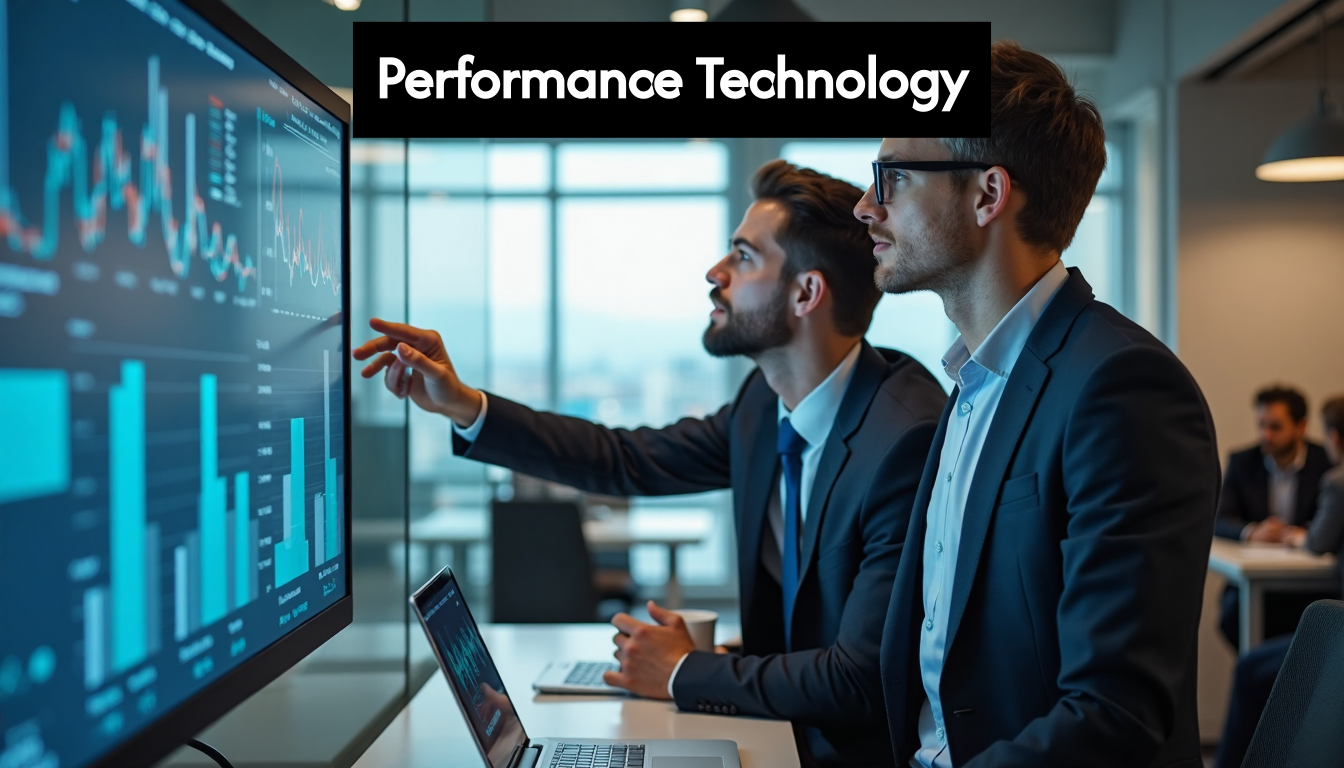
Technology has transformed performance management from a subjective assessment to a data-driven, strategic process. Modern organizations leverage sophisticated digital tools to track, analyze, and enhance employee performance with unprecedented precision and insight.
Performance Analytics and Tracking Systems
Advanced performance monitoring technologies provide organizations with comprehensive insights into workforce productivity. According to Apploye, by 2025, 70% of large companies will utilize technology to monitor employee performance, with 96% already implementing time-tracking software.
These technological solutions go beyond simple time monitoring. Sophisticated performance management platforms integrate multiple data points, including project completion rates, quality metrics, collaboration effectiveness, and individual productivity trends. Real-time dashboards enable managers to visualize performance patterns, identify potential bottlenecks, and make informed strategic decisions.
Data-driven performance tracking allows for more objective evaluations. Instead of relying on subjective impressions, managers can access concrete metrics that provide a holistic view of employee contributions. Check out our insights on technology’s impact on training to understand how these tools can enhance professional development.
Remote and Hybrid Work Monitoring Technologies
Hubstaff research reveals that 86% of employee monitoring tools now offer real-time activity tracking capabilities, reflecting the growing complexity of modern work environments. These technologies address the unique challenges of remote and hybrid workforce management.
Effective monitoring tools balance performance tracking with employee privacy and autonomy. Advanced platforms incorporate features like:
- Productivity tracking that measures output rather than micromanaging time
- Collaborative workspace integration for seamless communication
- Automated performance reporting with customizable metrics
- Privacy-conscious monitoring that respects individual boundaries
Managerial success now depends on selecting technologies that provide insights without creating invasive or demotivating surveillance cultures. The goal is to support employee growth, not create an environment of constant scrutiny.
AI and Predictive Performance Management
Artificial intelligence is revolutionizing performance management by introducing predictive analytics. These intelligent systems can forecast potential performance issues, recommend personalized development strategies, and identify high-potential employees before traditional assessment methods.
AI-powered tools analyze complex data patterns to provide nuanced insights. They can:
- Detect early signs of potential burnout
- Recommend targeted training interventions
- Predict employee retention risks
- Suggest personalized career development paths
Organizations implementing data-driven performance management strategies are three times more likely to achieve their business objectives. This technological approach transforms performance management from a reactive process to a proactive, strategic function.
The future of performance management lies in creating a symbiotic relationship between human potential and technological capabilities. By thoughtfully integrating advanced monitoring tools, organizations can create environments that simultaneously support individual growth and drive collective success. Technology becomes not just a tracking mechanism, but a catalyst for continuous improvement and organizational excellence.
Supporting Employee Growth and Engagement
Employee growth and engagement represent critical pillars of successful organizational performance. In an era of rapid technological change and evolving workplace dynamics, companies must develop comprehensive strategies that nurture individual potential and maintain workforce motivation.
Personalized Development Pathways
Research from PrimeEast reveals a stark reality: only 23% of employees worldwide are truly engaged at work in 2025. This statistic underscores the urgent need for innovative approaches to professional development. Learn more about comprehensive development strategies to transform these challenges into opportunities.
Personalized development requires moving beyond generic training programs. Each employee possesses unique skills, aspirations, and learning styles. Organizations must design flexible development frameworks that accommodate individual growth trajectories. This might involve creating customized learning plans, offering multiple skill development channels, and providing resources that support both professional and personal growth.
Successful development pathways integrate multiple learning modalities. Microlearning modules, mentorship programs, cross-functional project assignments, and digital learning platforms can create a holistic approach to skill enhancement. The goal is to create an ecosystem where continuous learning becomes an intrinsic part of the organizational culture.
Technology-Enabled Engagement Strategies
Contact Monkey research demonstrates that organizations with highly engaged employees experience up to 43% lower turnover rates and 23% higher profitability. Technology plays a pivotal role in creating these engagement mechanisms.
Modern engagement strategies leverage advanced digital tools to create interactive, responsive work environments. Real-time feedback platforms, sentiment analysis software, and collaborative digital workspaces enable organizations to maintain continuous dialogue with employees. These technologies provide insights into workforce motivation, identify potential disengagement risks, and facilitate proactive intervention.
Gamification and interactive learning technologies transform traditional training approaches. Virtual reality simulations, adaptive learning platforms, and AI-driven personalized training modules make professional development more immersive and engaging. By making learning experiences more dynamic and tailored, organizations can significantly enhance employee motivation and skill acquisition.
Holistic Well-being and Growth Support
True employee engagement transcends professional development. Organizations must adopt a comprehensive approach that addresses physical, mental, and emotional well-being. This involves creating supportive workplace cultures that recognize employees as multidimensional individuals with complex needs and aspirations.
Comprehensive well-being programs might include mental health resources, flexible work arrangements, financial wellness workshops, and initiatives that support work-life integration. By demonstrating genuine care for employee holistic development, organizations can build deeper levels of trust, loyalty, and mutual commitment.
Leadership plays a crucial role in fostering engagement. Managers must transition from traditional supervisory roles to become coaches and enablers of individual potential. This requires developing empathy, active listening skills, and the ability to create psychologically safe environments where employees feel valued and empowered.
Employee growth and engagement are not destination points but continuous journeys of mutual discovery and development. Organizations that embrace this philosophy will not only attract top talent but also create resilient, innovative workforces capable of navigating complex professional landscapes. The future of work belongs to those who view employee potential as their most significant competitive advantage.
Frequently Asked Questions
What are SMART goals in employee performance management?
SMART goals are performance objectives that are Specific, Measurable, Achievable, Relevant, and Time-bound. They provide clear direction and help align individual performance with organizational goals.
How can continuous feedback improve employee performance?
Continuous feedback fosters a dynamic environment for real-time adjustments and motivation. By having regular check-ins, employees receive ongoing support and can refine their goals, leading to increased engagement and productivity.
What role does technology play in monitoring employee performance?
Technology provides advanced analytics and tracking systems that allow organizations to objectively evaluate employee performance. It enables real-time insights, facilitating informed decision-making and proactive performance management, particularly in remote and hybrid work settings.
How can personalized development pathways enhance employee engagement?
Personalized development pathways cater to the unique skills, aspirations, and learning styles of each employee. By creating customized learning plans and integrating various development channels, organizations can foster continuous learning and maintain high levels of employee motivation.
Take Control of Team Performance with Proven Solutions
Are you feeling frustrated by unclear goals, low engagement, or feedback that just isn’t driving results? The strategies in this article make it clear that organizations need smarter tools and personalized training to keep up with evolving employee expectations. If your team needs measurable results and ongoing development, Peuneo (Pty) Ltd has the expertise and resources to help.

Empower your workforce with accredited training, consulting, and an easy-to-use online learning portal. Discover how Peuneo’s business solutions can help you implement continuous feedback, align performance goals, and create employee development paths that work. Don’t let outdated processes slow your team’s progress. Visit our platform now and see how you can boost engagement, streamline performance management, and unlock lasting success.