

Organizations everywhere want to perform better and outpace their competition. You might expect most leaders to focus on technology or cutting costs to get there. But here is a wild fact. Companies that commit to ongoing employee development see up to 24 percent higher profit margins than those that do not. That means better performance is less about the latest software and more about building up your people.
Table of Contents
- Understanding Key Drivers Of Organizational Performance
- Building A High-Performance Work Culture
- Implementing Effective Measurement And Feedback Systems
- Leveraging Leadership And Employee Development
Quick Summary
| Takeaway | Explanation |
|---|---|
| Effective leadership drives performance | Strong leaders communicate strategic goals, fostering innovation and accountability in organizations. |
| Establish clear performance expectations | Articulating specific, measurable, and relevant goals ensures employees understand their roles in achieving objectives. |
| Invest in continuous employee development | Providing ongoing skill enhancement and career development aligns individual growth with organizational success. |
| Implement dynamic performance measurement systems | Use holistic metrics and real-time tracking for comprehensive performance analysis and informed decision-making. |
| Foster a culture of continuous learning | Create environments that encourage knowledge sharing and experimentation, leading to adaptive and innovative workforces. |
Understanding Key Drivers of Organizational Performance
Organizational performance represents a comprehensive measure of an entity’s ability to achieve strategic objectives, maximize efficiency, and deliver sustainable results. Understanding the fundamental drivers that propel performance becomes crucial for leaders seeking transformative outcomes.
Leadership and Strategic Alignment
Effective leadership stands as the primary catalyst for organizational performance. Leaders guide organizational effectiveness by establishing clear strategic directions and creating environments that foster innovation and accountability. The U.S. Government Accountability Office (GAO) emphasizes that high-performing organizations prioritize strong leadership practices that align organizational goals with executable strategies.
Leaders who demonstrate strategic thinking can translate complex organizational challenges into actionable frameworks. They create cultures that encourage continuous improvement, employee engagement, and adaptive problem solving. Critical aspects include setting transparent performance expectations, providing meaningful feedback, and developing robust communication channels that enable information flow across hierarchical levels.
Performance Management and Measurement Systems
Comprehensive performance management goes beyond traditional metrics. Modern organizations require dynamic systems that capture multidimensional performance indicators. These systems should integrate quantitative measurements like financial performance with qualitative assessments such as employee satisfaction, innovation capacity, and customer experience.
Key components of effective performance measurement include:
- Holistic Metrics: Developing indicators that reflect organizational health across multiple dimensions
- Real Time Tracking: Implementing technologies that provide immediate performance insights
- Continuous Feedback: Creating mechanisms for ongoing performance evaluation and improvement
To clarify the essential components of effective performance management described in the article, the following table summarizes their key features and purposes.
| Component | Key Features | Purpose |
|---|---|---|
| Holistic Metrics | Multi-dimensional indicators | Reflect organizational health across domains |
| Real Time Tracking | Immediate performance insights | Enable timely analysis and intervention |
| Continuous Feedback | Ongoing evaluation and improvement | Support continual organizational development |
Human Capital Development
Employees represent the most critical asset in driving organizational performance. Strategic human capital development involves creating learning environments that continuously enhance workforce capabilities. This requires investing in targeted training programs, promoting skill diversity, and establishing career development pathways that align individual growth with organizational objectives.
Successful human capital strategies focus on:
- Skill Enhancement: Providing targeted learning opportunities
- Talent Retention: Creating engaging work environments
- Cultural Adaptation: Developing workforce capabilities that match evolving organizational needs
By understanding and strategically addressing these key performance drivers, organizations can create resilient, adaptive systems capable of navigating complex business landscapes. The journey toward enhanced performance requires committed leadership, robust measurement frameworks, and a genuine commitment to continuous human capital development.
Building a High-Performance Work Culture
Creating a high-performance work culture requires intentional strategies that transform organizational dynamics, motivate employees, and align individual capabilities with strategic objectives. This approach goes beyond traditional management techniques by embedding performance excellence into the organizational DNA.
Establishing Clear Performance Expectations
Strategies for building high-performance teams begin with establishing crystal clear performance expectations. According to the National Institutes of Health, organizations that communicate transparent goals and performance metrics create environments where employees understand their roles and potential impact.
Effective performance expectations should be:
- Specific: Detailed and unambiguous objectives
- Measurable: Quantifiable targets that enable tracking
- Achievable: Challenging yet realistic goals
- Relevant: Aligned with broader organizational strategies
Leaders must communicate these expectations through multiple channels, ensuring consistent understanding across different organizational levels. Regular check ins, performance reviews, and open dialogue help maintain alignment and provide opportunities for continuous improvement.
Fostering Employee Engagement and Empowerment
Employee engagement represents a critical component of high-performance cultures. Engaged employees demonstrate higher productivity, creativity, and commitment to organizational success. This requires creating environments that value individual contributions, provide meaningful work, and offer opportunities for professional growth.
Key strategies for enhancing employee engagement include:
- Recognition Programs: Implementing systems that acknowledge and reward exceptional performance
- Professional Development: Providing learning opportunities and career advancement pathways
- Inclusive Decision Making: Encouraging employee input and collaborative problem solving
Promoting Continuous Learning and Adaptability
High-performance cultures are characterized by their ability to learn, adapt, and evolve rapidly. Organizations must create infrastructures that support continuous learning, encourage experimentation, and view challenges as opportunities for growth. This requires developing learning mechanisms that transform individual and collective knowledge into organizational capabilities.
Effective continuous learning approaches involve:
- Knowledge Sharing Platforms: Creating digital and physical spaces for information exchange
- Cross Functional Training: Encouraging skill diversity and interdepartmental understanding
- Innovation Workshops: Designing structured environments for creative problem solving
Building a high-performance work culture is an ongoing journey that demands commitment, strategic thinking, and a genuine investment in human potential. By focusing on clear expectations, employee engagement, and continuous learning, organizations can create dynamic environments that drive exceptional performance and sustainable growth.
Implementing Effective Measurement and Feedback Systems
Implementing robust measurement and feedback systems represents a critical strategy for organizations seeking to enhance performance and drive continuous improvement. These systems transform raw data into actionable insights, enabling leaders to make informed decisions and create targeted interventions.
Designing Comprehensive Performance Metrics
Measuring training program effectiveness begins with developing comprehensive and meaningful performance metrics. According to research from the National Institutes of Health, effective measurement systems go beyond traditional quantitative indicators, integrating both objective and subjective performance data.
Key considerations for designing performance metrics include:
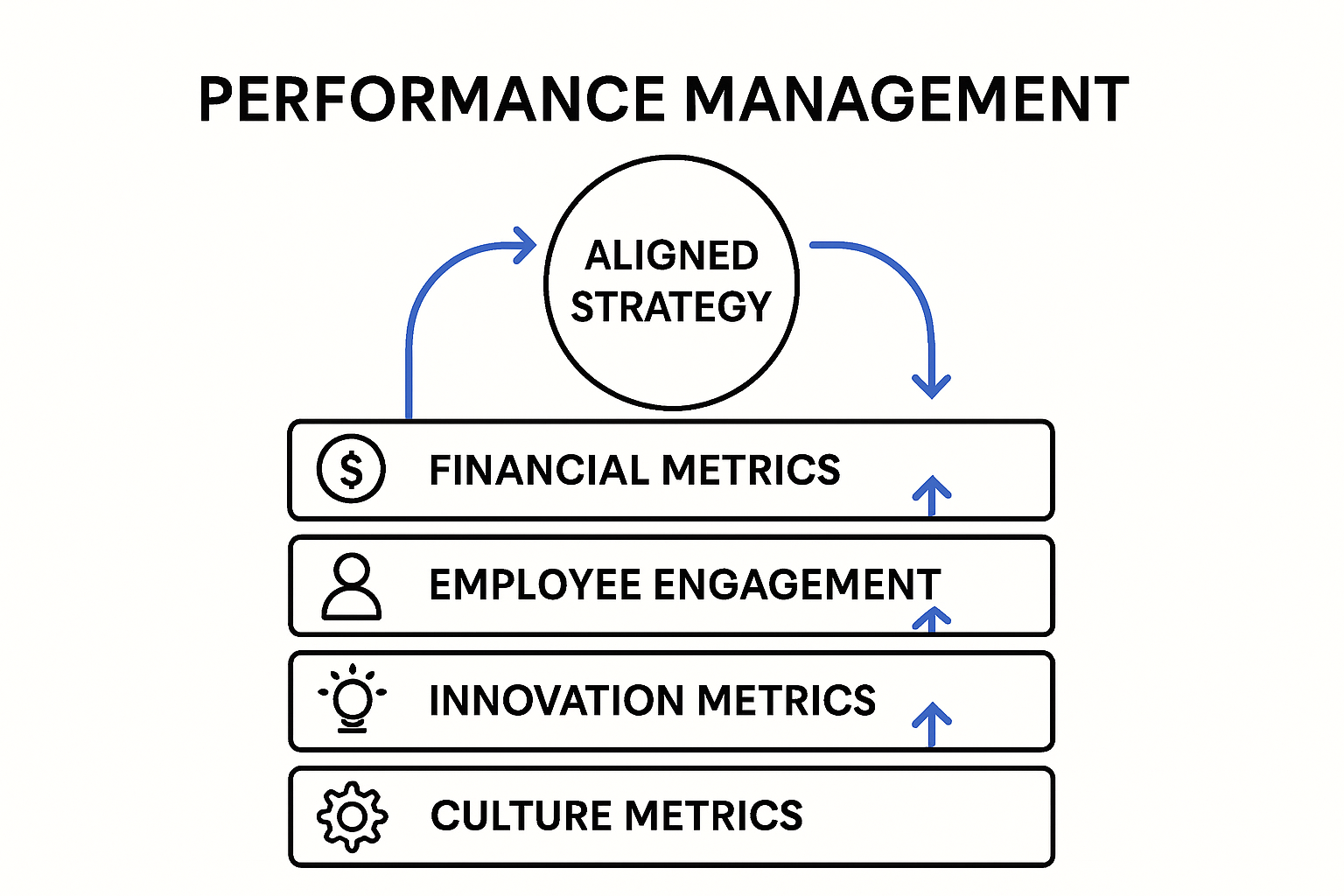
- Relevance: Aligning metrics with strategic organizational objectives
- Comprehensiveness: Capturing multidimensional performance aspects
- Adaptability: Creating flexible measurement frameworks that evolve with organizational needs
Successful metric design requires a holistic approach that balances financial indicators with qualitative assessments of employee engagement, innovation, and organizational culture. Leaders must develop metrics that provide nuanced insights into performance dynamics, enabling precise and strategic interventions.
Creating Responsive Feedback Mechanisms
Responsive feedback mechanisms are essential for translating performance data into meaningful organizational improvements. These systems should facilitate continuous dialogue, providing timely and constructive insights that support individual and collective growth. Effective feedback goes beyond traditional annual reviews, creating real time communication channels that enable immediate performance adjustments.
Critical elements of responsive feedback mechanisms include:
- Frequency: Regular and consistent feedback interactions
- Transparency: Clear and honest communication
- Actionability: Providing specific recommendations for improvement
- Two Way Communication: Encouraging dialogue and employee input
The article outlines several critical elements of responsive feedback mechanisms. The table below offers a clear checklist format summarizing each element and its fundamental role.
| Feedback Element | Description |
|---|---|
| Frequency | Regular and consistent feedback interactions |
| Transparency | Clear and honest communication |
| Actionability | Specific recommendations for improvement |
| Two Way Communication | Encourages dialogue and employee input |
Leveraging Technology for Performance Insights
Modern technological tools have transformed performance measurement and feedback systems. Advanced analytics, artificial intelligence, and real time tracking platforms enable organizations to capture and analyze performance data with unprecedented depth and precision. These technologies provide dynamic insights that support data driven decision making and strategic planning.
Technological approaches to performance measurement include:
- Advanced Analytics: Using predictive modeling to identify performance trends
- Real Time Dashboards: Creating visual representations of key performance indicators
- Machine Learning: Developing adaptive performance evaluation systems
Implementing effective measurement and feedback systems requires a strategic and integrated approach. Organizations must view these systems not as administrative tasks but as dynamic tools for continuous improvement. By designing comprehensive metrics, creating responsive feedback mechanisms, and leveraging advanced technologies, leaders can build performance management frameworks that drive organizational excellence and sustainable growth.
Leveraging Leadership and Employee Development
Leadership and employee development represent critical components of organizational performance, creating sustainable pathways for growth, innovation, and competitive advantage. By investing strategically in human potential, organizations can transform their workforce into a dynamic, adaptable, and high-performing ecosystem.
Developing Transformational Leadership Capabilities
Comprehensive employee development strategies require a focused approach to cultivating leadership capabilities that extend beyond traditional management techniques. Modern leadership demands a holistic understanding of organizational dynamics, emotional intelligence, and the ability to inspire and guide teams through complex challenges.
Key dimensions of transformational leadership development include:
- Emotional Intelligence: Enhancing leaders’ abilities to understand and manage interpersonal dynamics
- Strategic Thinking: Developing capacities for long term organizational vision and adaptive planning
- Change Management: Building skills to navigate and lead organizational transformations
Successful leadership development programs focus on creating multidimensional leaders who can balance technical expertise with human centered approaches. This involves providing immersive learning experiences, mentorship opportunities, and exposure to diverse organizational challenges that build resilience and strategic thinking.
Implementing Comprehensive Employee Learning Frameworks
Employee development goes far beyond traditional training programs. Organizations must create comprehensive learning ecosystems that support continuous skill enhancement, career progression, and personal growth. These frameworks should be designed to align individual learning trajectories with broader organizational objectives.
Effective employee learning strategies encompass:
- Personalized Learning Paths: Customized development programs tailored to individual strengths and organizational needs
- Cross Functional Exposure: Creating opportunities for employees to gain insights across different organizational domains
- Skill Diversity: Encouraging the development of complementary and emerging competencies
Nurturing a Culture of Continuous Learning
Building a culture of continuous learning requires more than structured programs. It demands creating an organizational environment that values knowledge sharing, experimentation, and personal growth. Leaders must model learning behaviors and create psychological safety that encourages employees to take intellectual risks and pursue ongoing development.
Critical elements of a learning culture include:
- Knowledge Sharing Platforms: Creating digital and physical spaces for collaborative learning
- Innovation Time: Allocating dedicated resources for exploration and skill development
- Recognition of Learning: Celebrating and rewarding continuous personal and professional growth
Leveraging leadership and employee development is not a one time initiative but an ongoing organizational commitment. By investing in human potential, creating adaptive learning frameworks, and fostering a culture of continuous growth, organizations can build resilient, innovative, and high performing workforces that are prepared to navigate complex and rapidly changing business environments.

Frequently Asked Questions
What are the key drivers of organizational performance?
The key drivers of organizational performance include effective leadership, strategic alignment, comprehensive performance management systems, and continuous human capital development. These elements work together to maximize efficiency and achieve strategic objectives.
How can organizations build a high-performance work culture?
Organizations can build a high-performance work culture by establishing clear performance expectations, fostering employee engagement, and promoting continuous learning and adaptability. This involves creating an environment where employees feel valued and are encouraged to contribute their ideas.
What role does technology play in enhancing organizational performance?
Technology plays a crucial role in enhancing organizational performance by providing tools for real-time tracking, advanced analytics, and comprehensive performance insights. These technologies enable organizations to make informed decisions and improve their performance measurement systems.
Why is continuous employee development important for organizational success?
Continuous employee development is important for organizational success because it aligns individual growth with organizational goals, enhances skill sets, and fosters a culture of innovation. Organizations that invest in their employees see increased productivity and higher profit margins.
Turn Actionable Strategies Into Real Organizational Results
Is your organization struggling to convert clear goals and employee development into improved performance? Many teams face the challenge of aligning leadership, effective measurement systems, and continuous learning with real outcomes. If you are eager to build a high-performance culture and implement proven organizational strategies, now is your chance to make it happen with a partner who understands your needs.

Let Peuneo help you bridge the gap from strategy to impact. Our accredited training, consulting, and custom business solutions tackle the pain points discussed in this article, including leadership alignment, dynamic feedback mechanisms, and ongoing workforce development. Visit our online learning portal to explore courses and consult with our expert team. Take the next step to boost your organizational performance today and empower your people to deliver measurable results.
Recommended
- How to Enhance Organizational Effectiveness in 2025: Practical Steps for All Sectors – Peuneo
- How to Enhance Organizational Growth: Proven Strategies for 2025 – Peuneo
- How to Manage Employee Performance: Practical Strategies for 2025 – Peuneo
- How to Improve Organizational Skills: Strategies for 2025 Success – Peuneo