

Every organization is chasing better results but achieving true effectiveness takes more than just meeting revenue targets or reducing costs. A jaw-dropping 70 percent of organizational transformation efforts actually fail to meet their desired outcomes. Most teams double down on technology or systems and call it a day. Yet the biggest difference makers for 2025 will be organizations that blend smart metrics, resilient culture, and constant learning into a seamless loop. Prepare for a perspective shift on what success really looks like.
Table of Contents
- Understanding Organizational Effectiveness And Its Impact
- Key Strategies To Boost Performance And Efficiency
- Building A Strong Organizational Culture For Success
- Measuring And Sustaining Lasting Organizational Improvements
Quick Summary
| Takeaway | Explanation |
|---|---|
| Adaptive Capacity is Essential | Organizations must develop the ability to respond swiftly to environmental changes to maintain effectiveness and competitiveness in dynamic markets. |
| Holistic Performance Measurement is Crucial | Implement comprehensive key performance indicators that factor in financial health, operational costs, and employee engagement to drive informed decision-making. |
| Cultural Transformation Drives Success | Strategies should focus on fostering trust, collaboration, and psychological safety to create a strong organizational culture that enhances performance and innovation. |
| Continuous Improvement is Key | Organizations must view improvement as an ongoing journey, employing evidence-based metrics and sustainable frameworks to adapt and thrive over time. |
| Integrate Technology and Human Insight | Utilize advanced analytics and feedback systems alongside human understanding to create a balanced approach to measurement and improvement. |
Understanding Organizational Effectiveness and Its Impact
Organizational effectiveness represents a critical strategic imperative for businesses seeking sustainable success in an increasingly complex global environment. At its core, this concept transcends simple performance metrics, encompassing an organization’s ability to achieve its goals while optimizing resources and adapting to dynamic market conditions.
The Fundamental Definition of Organizational Effectiveness
Organizational effectiveness is a multifaceted concept that goes beyond traditional productivity measurements. According to research from EBSCO, it involves a comprehensive approach that balances minimizing operational costs with maximizing strategic outcomes. The concept has deep historical roots, evolving from ancient military strategies to modern management principles.
Key characteristics of organizationally effective entities include:
- Adaptive Capacity: The ability to respond quickly to environmental changes
- Strategic Alignment: Ensuring all organizational components work toward common objectives
- Resource Optimization: Efficiently utilizing human, financial, and technological resources
Strategic Dimensions of Organizational Performance
Research published in the Emerald Insight journal highlights a unified model of organizational effectiveness that integrates three critical components: goals, measures, and stakeholder satisfaction. This holistic framework emphasizes that true effectiveness cannot be measured through a single lens but requires a comprehensive, systems-based approach.
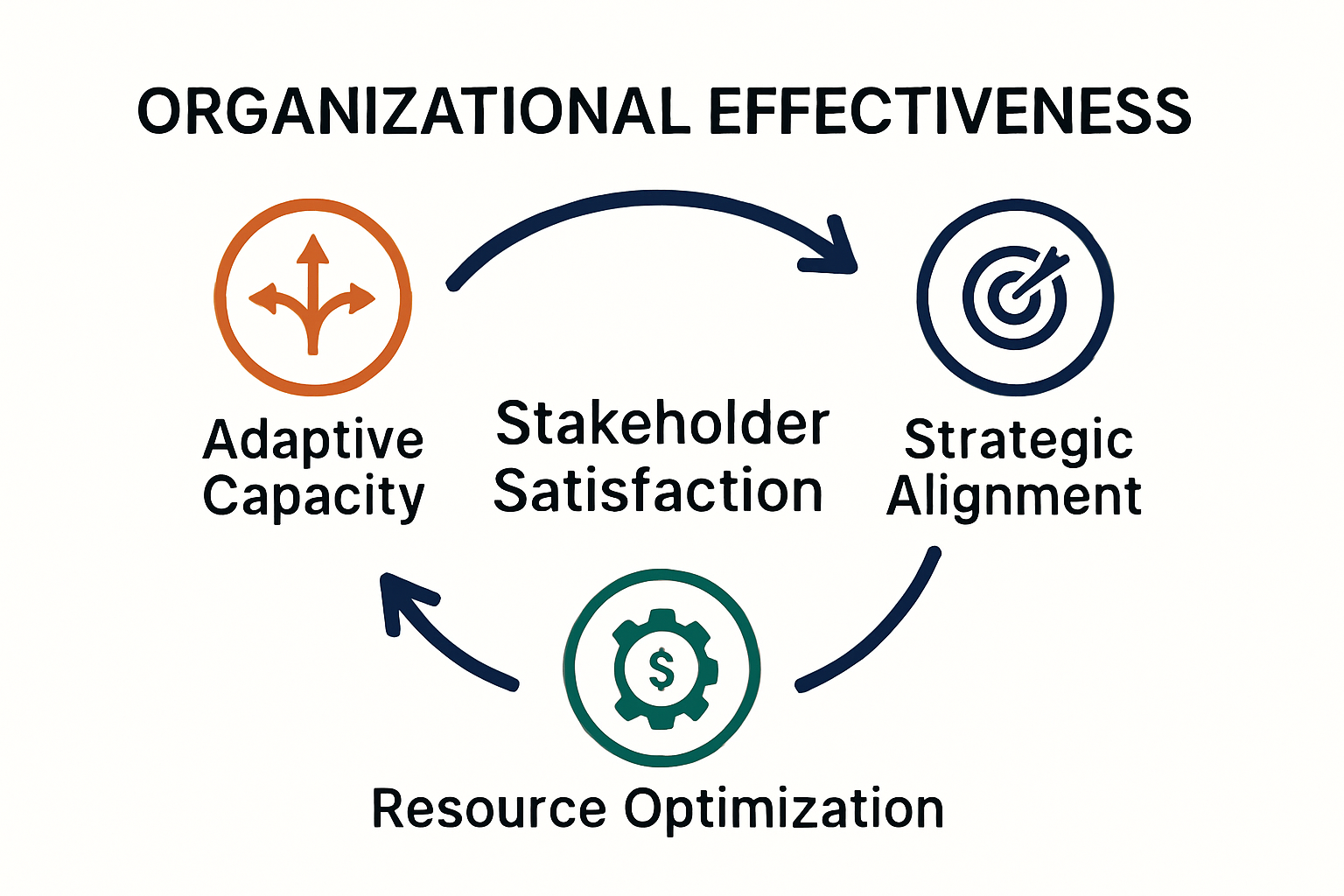
Modern organizations must recognize that effectiveness is not a static achievement but a continuous process of adaptation and improvement. Business intelligence, organizational agility, and an innovative climate emerge as pivotal factors driving sustainable performance. As a systematic literature review indicates, companies that successfully navigate these dimensions can secure a robust strategic market position.
To gain deeper insights into developing critical organizational skills, explore our comprehensive guide on strategic skill development.
Understanding organizational effectiveness requires acknowledging its complexity. It is not merely about achieving short-term goals but creating a resilient, adaptive organizational ecosystem that can thrive amid uncertainty. Leaders must continuously assess and realign their strategies, cultivate a culture of continuous learning, and remain committed to holistic performance improvement.
The implications of organizational effectiveness extend far beyond traditional business metrics. It represents an organization’s capacity to create value, engage stakeholders, and maintain competitive relevance in an ever-evolving global marketplace. By embracing a comprehensive, nuanced approach to effectiveness, organizations can transform challenges into opportunities for sustainable growth and innovation.
Key Strategies to Boost Performance and Efficiency
Boasting organizational performance and efficiency requires a strategic and holistic approach that addresses multiple dimensions of operational excellence. In 2025, successful organizations will need to implement comprehensive strategies that go beyond traditional performance management techniques and embrace innovative methodologies.
Digital Transformation and Performance Optimization
According to Duke University’s Fuqua School of Business, organizations must prioritize five key areas of transformation: integrating artificial intelligence into core strategies, emphasizing agility and resilience, committing to sustainability, leveraging data analytics, and cultivating a continuous learning culture.
To make the five priority areas of digital transformation more accessible, the table below summarizes each focus area and its main organizational benefit.
| Transformation Area | Main Benefit |
|---|---|
| Integrating Artificial Intelligence | Enhanced decision-making and operational speed |
| Emphasizing Agility and Resilience | Ability to adapt quickly to change and recover |
| Committing to Sustainability | Long-term viability and positive social impact |
| Leveraging Data Analytics | Informed strategies through actionable insights |
| Cultivating Continuous Learning | Workforce adaptability and innovation culture |
Digital technologies provide unprecedented opportunities for performance enhancement. Research from Strategy+Business highlights the emergence of digital twins as a revolutionary tool, enabling leaders to experiment with organizational strategies in real-time simulations. These advanced technologies allow organizations to test potential changes and observe their impact before actual implementation, reducing risks and improving decision-making processes.
Measuring and Monitoring Organizational Performance
Coursera’s strategic planning guide emphasizes the critical importance of measuring performance through comprehensive key performance indicators. These metrics extend beyond traditional financial measurements and include:
- Profit Margins: Tracking financial health and growth potential
- Operational Costs: Identifying areas for efficiency improvements
- Cash Flow Analysis: Understanding financial liquidity and sustainability
- Customer Acquisition Metrics: Evaluating marketing and sales effectiveness
- Employee Turnover Rates: Assessing organizational culture and workforce engagement
The following table summarizes key organizational performance metrics and their purpose.
| Performance Metric | Purpose |
|---|---|
| Profit Margins | Assess financial health and profitability |
| Operational Costs | Identify areas for efficiency improvement |
| Cash Flow Analysis | Evaluate financial liquidity and sustainability |
| Customer Acquisition | Measure marketing and sales effectiveness |
| Employee Turnover Rates | Assess culture and workforce engagement |

Effective performance strategies require a multifaceted approach that balances technological innovation, data-driven insights, and human capital development. Organizations must create flexible frameworks that adapt to changing market dynamics while maintaining a clear focus on strategic objectives.
By implementing these strategies, organizations can develop a robust performance management ecosystem that promotes continuous improvement, innovation, and sustainable growth. The key lies in creating an integrated approach that combines technological capabilities, strategic planning, and a commitment to ongoing learning and development.
Ultimately, boosting performance and efficiency is not about implementing isolated tactics but creating a holistic organizational culture that values adaptability, transparency, and continuous improvement. Leaders must be willing to challenge existing paradigms, embrace technological advancements, and foster an environment that encourages creativity and strategic thinking.
Building a Strong Organizational Culture for Success
Organizational culture represents the invisible yet powerful framework that determines an organization’s success, acting as the fundamental DNA that guides behavior, shapes decision-making, and drives collective performance. In 2025, creating a robust and adaptive culture is not just a strategic advantage but a critical survival mechanism for businesses navigating complex and rapidly changing environments.
The Foundation of Cultural Excellence
Research from the National Institutes of Health highlights that organizational culture is fundamentally about fostering trust, collaboration, and continuous learning. These elements are not abstract concepts but tangible practices that transform how teams interact, innovate, and respond to challenges.
Key components of a strong organizational culture include:
- Psychological Safety: Creating environments where employees feel comfortable expressing ideas without fear of ridicule
- Transparent Communication: Establishing clear, open channels of dialogue across all organizational levels
- Shared Values: Developing a collective understanding of organizational purpose and goals
Strategies for Cultural Transformation
Cultural transformation requires intentional, strategic efforts that go beyond superficial changes. Leaders must become architects of organizational experience, designing systems and practices that reinforce desired behaviors and mindsets.
Effective cultural development involves:
- Aligning organizational practices with core values
- Implementing feedback mechanisms that promote continuous improvement
- Recognizing and rewarding behaviors that exemplify desired cultural attributes
Discover advanced leadership techniques for building high-performing teams.
In the contemporary business landscape, culture is not static but a dynamic ecosystem that requires continuous nurturing. Organizations must view cultural development as an ongoing process of adaptation, learning, and refinement. This approach demands leaders who are not just managers but cultural catalysts capable of inspiring, guiding, and transforming organizational mindsets.
Technology and human interaction must be strategically integrated to create a culture that is both technologically advanced and fundamentally human-centric. This means leveraging digital tools to enhance collaboration while maintaining the emotional intelligence and personal connections that drive genuine engagement.
The most successful organizations in 2025 will be those that understand culture as their most significant competitive advantage. By creating environments that prioritize learning, innovation, and collective growth, businesses can build resilient, adaptive cultures that not only survive but thrive in an era of unprecedented change.
Ultimately, building a strong organizational culture is about creating a shared narrative of purpose, potential, and collective achievement. It requires commitment, courage, and a holistic approach that recognizes the profound interconnection between individual experiences and organizational success.
Measuring and Sustaining Lasting Organizational Improvements
Organizational improvement is not a one-time event but a continuous journey of strategic evolution and systematic enhancement. In 2025, successful organizations will require robust, dynamic approaches to measuring progress, implementing sustainable changes, and maintaining momentum for long-term growth and effectiveness.
Evidence-Based Measurement Strategies
Research from the Education Resources Information Center emphasizes the critical importance of using evidence-based metrics and continuous feedback mechanisms to drive organizational improvements. These strategies go beyond traditional performance indicators, focusing on comprehensive, holistic assessment approaches that capture nuanced aspects of organizational development.
Key measurement strategies include:
- Quantitative Performance Metrics: Tracking numerical indicators of organizational progress
- Qualitative Feedback Systems: Capturing employee and stakeholder perspectives
- Comparative Benchmarking: Evaluating performance against industry standards
Implementing Sustainable Improvement Frameworks
Sustaining organizational improvements requires a multifaceted approach that integrates technological tools, human-centric practices, and adaptive strategies. Organizations must develop flexible frameworks that allow for continuous learning, rapid iteration, and responsive adjustments.
Essential components of sustainable improvement include:
- Creating transparent communication channels
- Developing robust data collection and analysis systems
- Fostering a culture of continuous learning and adaptation
Explore our comprehensive guide to measuring training program effectiveness.
Successful organizations recognize that measurement is not just about collecting data but transforming insights into actionable strategies. This requires advanced analytical capabilities, sophisticated technological infrastructure, and a commitment to ongoing organizational learning.
Digital technologies play a crucial role in modern measurement approaches. Advanced analytics, artificial intelligence, and machine learning tools enable organizations to process complex datasets, identify subtle performance trends, and predict potential areas for improvement with unprecedented accuracy.
However, technological capabilities must be balanced with human insight. The most effective measurement systems combine sophisticated data analysis with nuanced understanding of organizational dynamics, employee experiences, and contextual factors that numerical metrics alone cannot capture.
Leaders must adopt a holistic perspective that views organizational improvement as an integrated ecosystem. This means breaking down traditional silos, encouraging cross-functional collaboration, and creating environments that support experimentation, learning, and continuous growth.
Ultimately, measuring and sustaining organizational improvements is about creating a dynamic, adaptive organizational culture that views change not as a challenge but as an opportunity for innovation, growth, and strategic advancement. By embracing comprehensive measurement approaches and maintaining a commitment to continuous improvement, organizations can build resilient, future-ready structures capable of thriving in an increasingly complex global environment.
Frequently Asked Questions
What is organizational effectiveness?
Organizational effectiveness refers to an organization’s ability to achieve its goals efficiently while optimizing resources and adapting to changing market conditions. It encompasses strategic alignment, adaptive capacity, and resource optimization.
How can organizations boost their performance and efficiency in 2025?
Organizations can enhance performance by implementing digital transformation strategies, using comprehensive key performance indicators, and fostering a culture of continuous learning and adaptability.
Why is building a strong organizational culture important?
A strong organizational culture is crucial because it fosters trust, collaboration, and innovation. It drives collective performance and helps organizations navigate complex and rapidly changing environments effectively.
What are evidence-based measurement strategies for organizational improvements?
Evidence-based measurement strategies include using quantitative performance metrics, qualitative feedback systems, and comparative benchmarking to track progress and inform decisions for continuous improvement.
Ready to Boost Your Organization’s Effectiveness?
Is your team feeling the weight of rapid change, complex compliance demands, and the struggle to balance digital transformation with a strong internal culture? The article highlighted how adaptive capacity, strategic alignment, and ongoing skills development shape top organizations in 2025. You deserve to see these real results in your own workplace—not just in theory, but in practice.

Peuneo is here to help you overcome uncertainty with accredited training, tailored consulting, and practical skill-building. Our solutions are built for organizations determined to drive cultural transformation and sustainable performance. Act now to stay ahead and turn today’s problems into tomorrow’s edge. Visit Peuneo’s homepage to discover how our professional consulting services or our online learning portal can move your team from strategy to measurable results. Empower your organization for 2025 success today.
Recommended
- How to Improve Organizational Skills: Strategies for 2025 Success – Peuneo
- The Importance of Team Building: Key Benefits for 2025 – Peuneo
- Top Leadership Development Strategies for 2025: Success Across Sectors – Peuneo
- Top Ways to Motivate Teams: Strategies for 2025 Success – Peuneo
- Communication interne efficace : stratégies gagnantes pour 2025
- Collaborating With Other Consultants: IT Success in 2025