

Meetings are eating up our workdays and it is not just a feeling. Professionals spend about 51 percent of meeting time on unproductive discussions. That sounds painful and maybe even unavoidable. Or is it? Instead of wasting hours in endless circles, a few simple strategies could turn your next meeting into something actually worth attending.
Table of Contents
- Setting Clear Goals And Agendas
- Engaging Participants And Encouraging Input
- Leveraging Tools And Techniques For Success
- Evaluating And Improving Meeting Outcomes
Quick Summary
| Takeaway | Explanation |
|---|---|
| Set clear agendas for meetings | Define specific objectives, time allocation, and desired outcomes to enhance meeting focus. |
| Encourage active participant engagement | Implement techniques like round-robin speaking and open-ended questions to foster collaboration. |
| Utilize digital tools effectively | Use cloud-based platforms and virtual tools for real-time collaboration and efficient documentation. |
| Measure meeting effectiveness regularly | Assess time efficiency, decision-making speed, and participant engagement through feedback and metrics. |
| Adapt and improve over time | Continuously solicit feedback and refine meeting processes to align with evolving team needs. |
Setting Clear Goals and Agendas
Effective meetings begin long before participants sit down. How to conduct effective meetings requires strategic planning and intentional goal setting that transforms potential time wasters into powerful collaborative sessions.
Crafting a Purpose Driven Agenda
Successful meetings demand crystal clear objectives. Strategic agenda design is not about filling time but creating focused, actionable frameworks. McKinsey research reveals that professionals spend approximately 51% of their meeting time considering unproductive discussions. This statistic underscores the critical need for precise agenda development.
To mitigate wasted time, every meeting agenda should include:
- Specific Objectives: Clearly state what needs to be accomplished
- Time Allocation: Assign precise durations for each discussion point
- Expected Outcomes: Define tangible results participants should anticipate
Aligning Team Expectations
Before scheduling any meeting, leaders must communicate expected outcomes transparently. Harvard Business Review suggests that clarifying meeting purposes reduces unnecessary gatherings and increases overall organizational productivity. This approach requires leaders to ask fundamental questions: What specific problem are we solving? What decisions must be made? Who needs to be involved?
Effective goal setting involves creating measurable, time bound objectives that transform abstract concepts into concrete action plans. This means moving beyond vague statements like “discuss project status” to specific targets such as “approve Q2 marketing budget allocation” or “resolve supply chain bottleneck for product X”.
Implementing a standardized meeting preparation template can significantly enhance goal clarity. This template should include:
- Purpose statement
- Required attendees
- Pre meeting preparation requirements
- Specific discussion topics
- Desired meeting outcomes
By establishing these parameters in advance, teams can approach meetings with precision and intentionality. The goal is not just to meet but to generate meaningful progress and collaborative momentum.
Remember that setting clear goals is an ongoing process. Regularly review and refine your meeting strategies, soliciting feedback from team members about what works and what needs improvement. Successful meetings are not about rigid structures but adaptive, purposeful communication frameworks that evolve with organizational needs.
Engaging Participants and Encouraging Input
Successful meetings thrive on active participation and meaningful dialogue. How to conduct effective meetings depends heavily on creating an environment where every team member feels empowered to contribute and share their insights.
Creating a Collaborative Communication Environment
Participation is not a passive process. University of Pennsylvania’s research suggests implementing round-robin techniques that systematically ensure all participants have an opportunity to speak. This approach transforms meetings from monologues into dynamic, interactive discussions.
Key strategies for encouraging input include:
- Structured Speaking Opportunities: Allocate specific time slots for each participant
- Open Questioning Techniques: Use open ended questions that invite detailed responses
- Psychological Safety: Create an environment where team members feel comfortable sharing ideas
Leveraging Technology and Interactive Techniques
University of California Agriculture and Natural Resources recommends incorporating live polling and interactive tools to maintain engagement. These technologies allow real time feedback and help teams gauge collective perspectives quickly.
Interactive meeting techniques can dramatically improve participant involvement. Visual tools like digital whiteboards, shared screens, and collaborative document editing platforms enable team members to contribute simultaneously. These methods break traditional meeting barriers and promote inclusive communication.
For those seeking deeper insights into creating engaging professional environments, our guide on effective training strategies offers additional perspectives on fostering collaborative communication.
The Unitarian Universalist Association emphasizes the importance of active listening. This involves:
- Acknowledging speakers through attentive body language
- Clarifying statements to ensure comprehensive understanding
- Summarizing key discussion points to validate participant contributions
Incorporating short energizer activities or brief breaks can also help maintain participant focus and energy levels during longer meetings. These strategic pauses prevent mental fatigue and encourage sustained engagement.
Successful meeting facilitation is an art of balance. It requires creating space for diverse perspectives while maintaining a clear, productive focus. By implementing these strategies, leaders can transform meetings from obligatory gatherings into powerful collaborative experiences that drive organizational progress.
Leveraging Tools and Techniques for Success
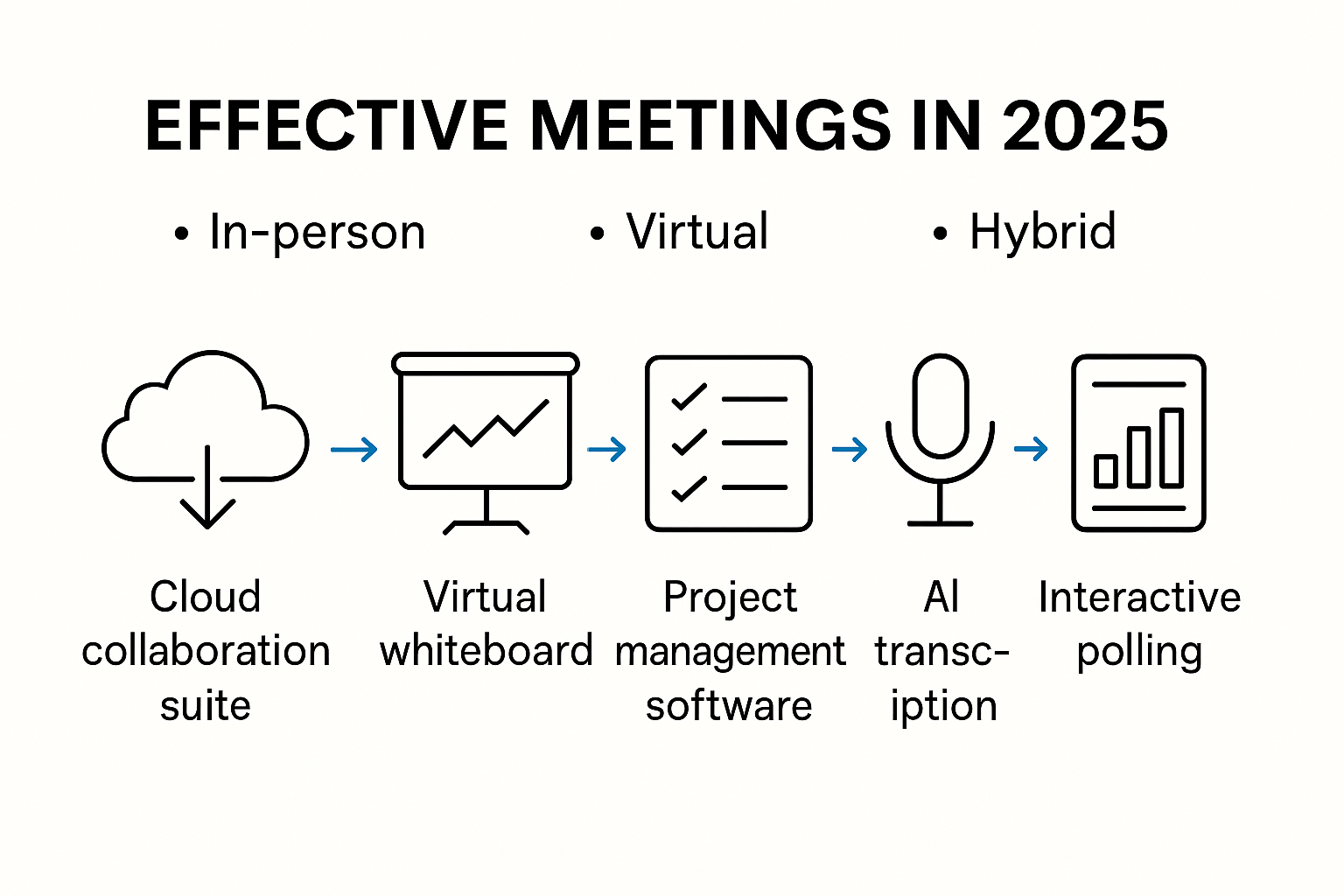
Modern meetings require more than traditional approaches. How to conduct effective meetings in 2025 demands strategic integration of advanced tools and refined techniques that transform collaboration and productivity.
To help you quickly compare common digital tools and their purposes as discussed in this section, the following table summarizes their unique contributions to meeting effectiveness:
| Tool Type | Function | Key Benefit |
|---|---|---|
| Cloud Based Collaboration Suites | Real time document editing | Streamlines teamwork |
| Virtual Whiteboard Applications | Visual brainstorming | Enhances creativity |
| Project Management Software | Tracks action items and responsibilities | Improves accountability |
| AI Powered Meeting Transcription | Automatic note-taking | Increases accuracy and recall |
| Interactive Polling Systems | Gather real time group feedback | Boosts engagement |
| Sentiment Analysis Tools | Analyze participant engagement | Provides actionable insights |
Digital Collaboration Platforms
Association of American Medical Colleges emphasizes the critical importance of meticulous meeting preparation. Digital collaboration platforms now offer comprehensive solutions that streamline communication and documentation processes.
Key digital tools include:
- Cloud Based Collaboration Suites: Enable real time document editing
- Virtual Whiteboard Applications: Facilitate visual brainstorming
- Project Management Software: Track action items and responsibilities
Strategic Meeting Management Techniques
National Center for Biotechnology Information research highlights that clearly defined meeting purposes significantly improve outcomes. This requires implementing structured approaches that go beyond traditional meeting models.
For teams seeking deeper insights into optimizing collaborative processes, our guide on management techniques provides comprehensive strategies for enhancing team performance.
Effective meeting management involves:
- Precise time allocation
- Clear role assignments
- Structured follow up mechanisms
Technology Enhanced Participation
Community Tool Box from University of Kansas recommends utilizing technological solutions that promote active engagement. Hybrid meeting formats combining in person and remote participation have become standard practice.
Advanced techniques include:
- AI powered meeting transcription
- Interactive polling systems
- Sentiment analysis tools
Successful meetings in 2025 are not about technology replacement but enhancement. The goal remains human connection, with tools serving as catalysts for more meaningful, efficient interactions. By thoughtfully integrating these approaches, organizations can create meeting experiences that are both productive and engaging.
Evaluating And Improving Meeting Outcomes
Measuring meeting effectiveness goes beyond surface level assessments. How to conduct effective meetings requires a systematic approach to evaluating outcomes, identifying improvement areas, and continuously refining organizational communication strategies.
Below is a table summarizing practical meeting performance metrics and feedback methods mentioned, helping you quickly see which tools can be applied for ongoing improvement:
| Metric/Method | Description | Example Tool or Approach |
|---|---|---|
| Time Efficiency | Actual duration vs. planned timeline | Meeting timer, agenda tracker |
| Decision Making Velocity | Number of actionable decisions per meeting | Action log, minutes summary |
| Participant Engagement | Assessing contribution levels | Polling, sentiment analysis |
| Anonymous Survey Tools | Gathering honest, post-meeting feedback | Online survey platforms |
| Post Meeting Reflection Sessions | Group discussion of what worked and what didn’t | Roundtable debrief |
| Automated Participation Tracking | Tracking who participates and how | Engagement analytics tools |
Quantitative and Qualitative Performance Metrics
Project Management Institute highlights the significant financial implications of ineffective meetings. Direct labor expenses and lost opportunities underscore the importance of rigorous performance evaluation.
Key performance metrics for meeting assessment include:
- Time Efficiency: Measuring actual meeting duration against planned timelines
- Decision Making Velocity: Tracking number of actionable decisions per meeting
- Participant Engagement: Assessing individual contribution levels
Feedback and Continuous Improvement
University of California Agriculture and Natural Resources recommends creating structured feedback mechanisms that provide comprehensive insights into meeting effectiveness. This involves collecting both quantitative data and qualitative perspectives from participants.
For professionals seeking deeper understanding of evaluation techniques, our comprehensive guide on measuring training effectiveness offers additional strategies for performance assessment.
Effective feedback collection strategies include:
- Anonymous survey tools
- Post meeting reflection sessions
- Individual performance reviews
Technology Enabled Evaluation
Advanced technological solutions now enable sophisticated meeting performance tracking. These tools provide real time analytics on participant engagement, communication patterns, and overall meeting productivity.
Emerging evaluation technologies offer:
- AI powered sentiment analysis
- Automated participation tracking
- Comprehensive meeting performance dashboards
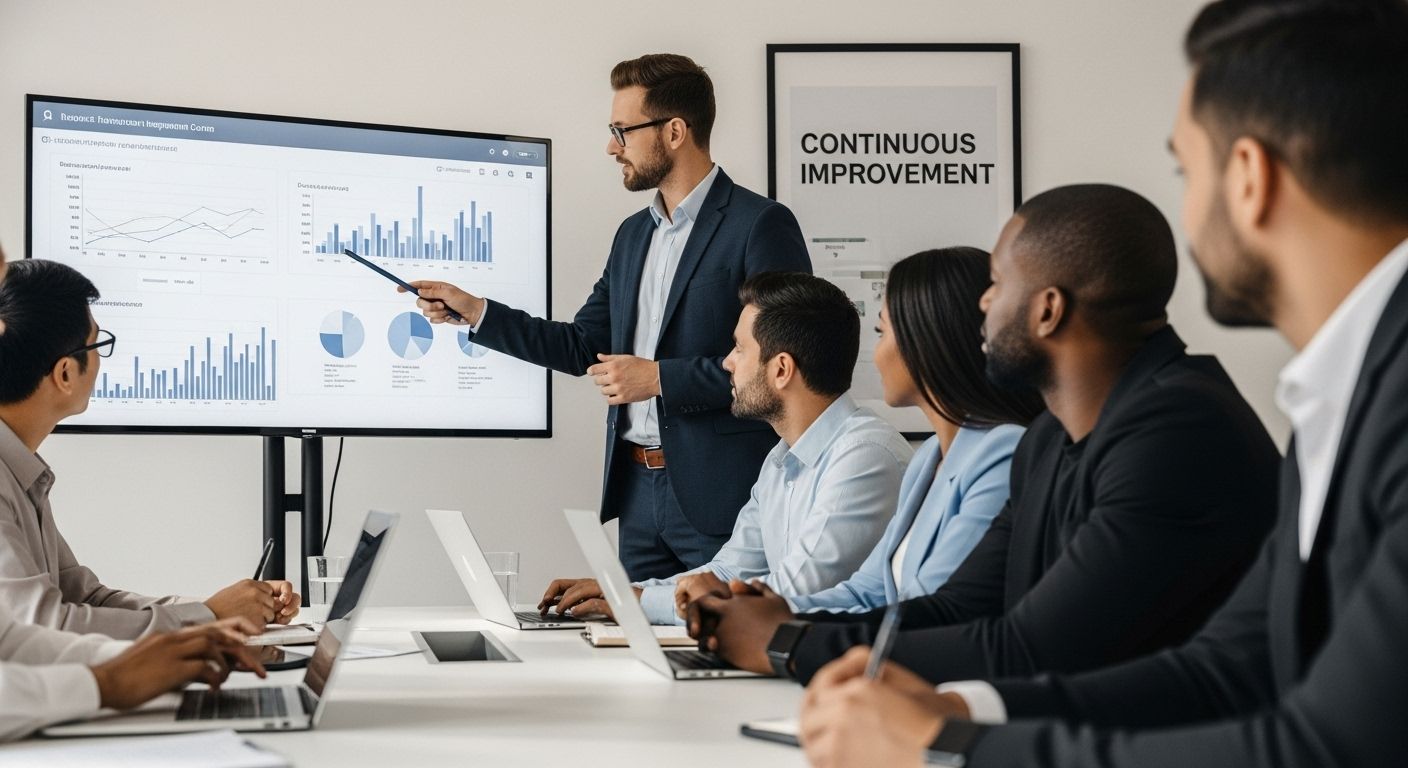
Successful organizations view meetings not as static events but as dynamic opportunities for continuous improvement. By implementing robust evaluation frameworks, teams can transform meetings from routine gatherings into strategic collaboration platforms that drive organizational excellence.
The goal is not perfect meetings but consistent, incremental enhancements that reflect evolving team dynamics and organizational needs. Regular reflection, honest feedback, and a commitment to growth will ultimately define meeting success in 2025 and beyond.
Frequently Asked Questions
How can I set clear goals for my meetings?
Effective meetings start with strategic planning. Setting clear goals involves defining specific objectives, time allocation for each discussion point, and outlining the expected outcomes to enhance focus and productivity.
What strategies can I use to engage participants during meetings?
To engage participants, implement strategies such as structured speaking opportunities, fostering psychological safety, and using open-ended questions. Encouraging collaborative communication can also enhance engagement.
What digital tools can enhance meeting effectiveness?
Digital collaboration platforms, such as cloud-based document editing tools and virtual whiteboards, facilitate real-time collaboration. Using project management software and AI-powered meeting transcriptions can streamline organization and improve meeting outcomes.
How can I evaluate the success of my meetings?
Evaluating meeting effectiveness involves assessing quantitative metrics, such as time efficiency and decision-making speed, as well as qualitative feedback from participants. Using anonymous surveys and reflection sessions can provide valuable insights for improvement.
Elevate Your Meetings With Real Results
Are you tired of meetings that feel unproductive or fail to deliver actionable outcomes? This article highlights common struggles: unclear agendas, wasted time, and lack of team engagement. Imagine transforming your sessions into focused, dynamic collaborations where every participant is engaged and every minute counts. At Peuneo, we understand how important measurable progress, clear objectives, and effective meeting techniques are to your team’s success.

Take the next step toward meaningful change. Explore Peuneo’s solutions for guided skills development, accredited training, and consulting services built to enhance your meeting management and overall organizational performance. Ready to boost your team’s productivity and master essential strategies? Visit our online learning portal now to discover practical courses and expert consulting that turn best practices into daily reality.