


Recruitment is getting a major overhaul heading into 2025. Companies everywhere are rethinking their old playbook and focusing on what actually works. Here is something that might surprise you. Over 83 percent of companies now prioritize skills instead of traditional degrees when hiring new talent. That means experience and adaptability are beating out fancy credentials. You might think this is all about technology, but the real story is about breaking down barriers to uncover top talent from unlikely places. What matters more than ever is creating hiring processes that are inclusive, data-driven, and perfectly tuned to find the right people for growing teams.
Table of Contents
- Understanding The Core Elements Of Successful Recruitment
- Building An Effective Recruitment Process For Modern Teams
- Leveraging Technology And Data For Better Talent Acquisition
- Tailoring Recruitment Strategies For Diverse Organizations
Quick Summary
| Takeaway | Explanation |
|---|---|
| Skills Over Credentials | Prioritize practical skills and adaptability over traditional degrees to access a broader and more diverse talent pool. |
| Inclusive Recruitment Practices | Implement processes that eliminate bias and actively seek out the “hidden workforce” to enhance diversity and drive strategic business advantages. |
| Leverage Technology | Utilize advanced recruitment technologies such as AI and predictive analytics to streamline processes, reduce hiring times, and enhance candidate experiences. |
| Cultural Competence | Develop cultural awareness training and inclusive evaluation methods to minimize bias and create welcoming recruitment environments. |
| Authentic Employer Branding | Communicate a genuine commitment to diversity and inclusion through transparent practices and visible leadership representation to attract diverse candidates. |
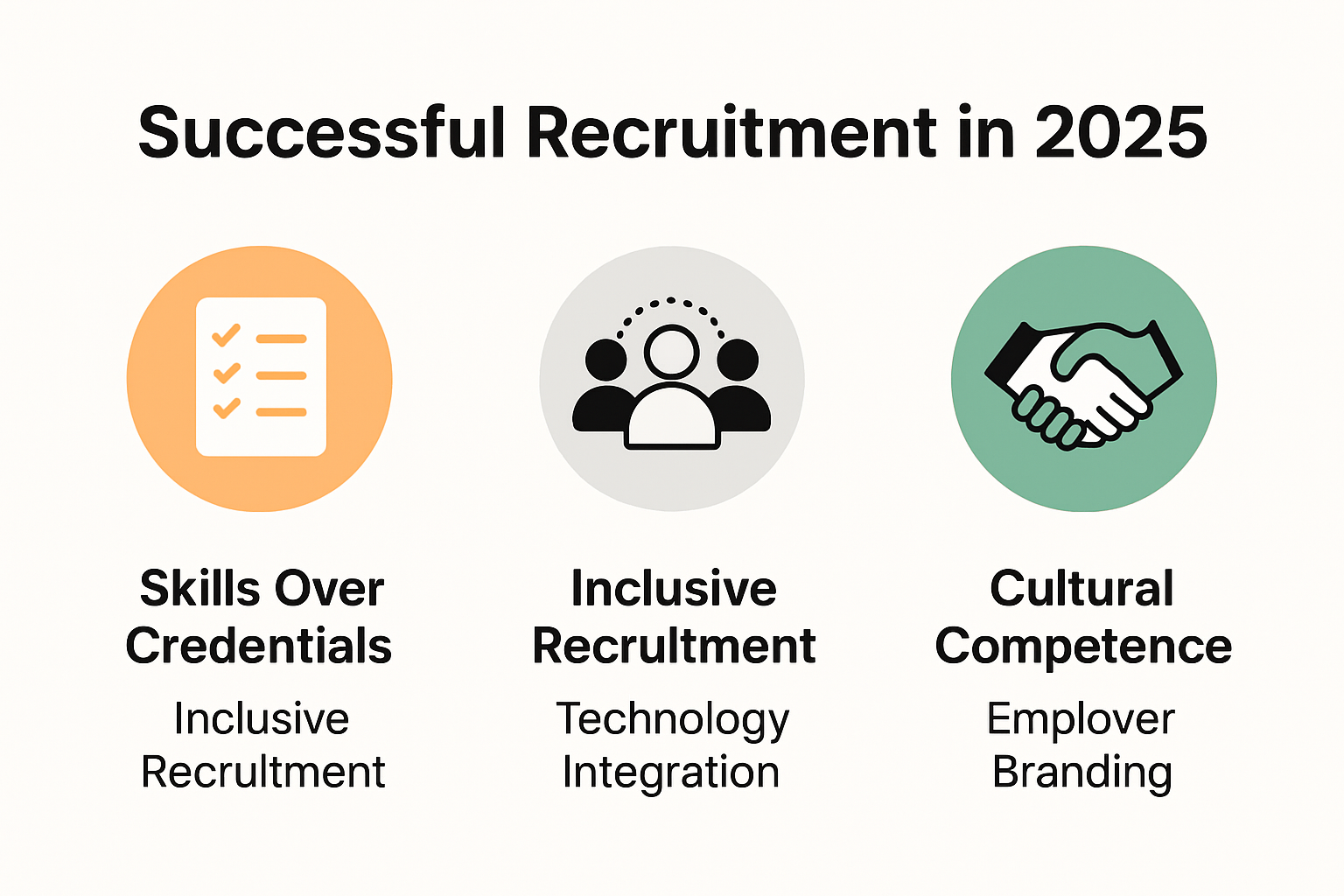
Understanding the Core Elements of Successful Recruitment
Recruitment has transformed dramatically, moving beyond traditional hiring practices to a more strategic, comprehensive approach. The core elements of successful recruitment in 2025 demand a holistic understanding of talent acquisition that goes far deeper than simply filling open positions.
Skills Over Credentials: The New Recruitment Paradigm
Traditional recruitment models that relied heavily on academic credentials and formal qualifications are rapidly becoming obsolete. According to LinkedIn’s Global Talent Trends report, 83% of companies are now prioritizing skills over traditional qualifications. This shift represents a fundamental reimagining of talent assessment.
Organizations are recognizing that practical skills, adaptability, and potential often matter more than a specific degree or pedigree. The emerging recruitment strategy focuses on identifying candidates who can demonstrate real-world capabilities, problem-solving skills, and the ability to learn and grow. This approach opens opportunities for a more diverse talent pool, including professionals from non-traditional backgrounds.
Inclusive Recruitment: Expanding the Talent Ecosystem
Successful recruitment in 2025 requires a deliberate commitment to diversity and inclusion. The concept of the “hidden workforce”—which includes retirees, caregivers, neurodiverse individuals, and people without traditional degrees—represents 14-17% of potential workers. Research indicates that tapping into this group is not just a social responsibility but a strategic business advantage.
Inclusive recruitment means creating processes that eliminate unconscious bias, provide equal opportunities, and recognize diverse talents. This involves redesigning job descriptions, implementing blind screening techniques, and developing interview processes that assess potential rather than conformity.
Technology-Driven Recruitment Strategies
Technology has become an indispensable tool in modern recruitment. Data-driven approaches allow organizations to be more precise and strategic in talent acquisition. Advanced recruitment platforms now use artificial intelligence, predictive analytics, and sophisticated matching algorithms to identify and engage top talent.

The most effective recruitment strategies in 2025 leverage multiple technological tools. These include AI-powered candidate screening, virtual interviewing platforms, skills assessment technologies, and comprehensive candidate relationship management systems. The goal is not just to find candidates but to create an engaging, personalized recruitment experience that attracts top talent.
Successful recruitment is no longer about filling positions—it’s about building dynamic, adaptable teams that can drive organizational success. By focusing on skills, embracing inclusivity, and leveraging advanced technologies, companies can develop recruitment strategies that are both innovative and effective.
Building an Effective Recruitment Process for Modern Teams
Creating a robust recruitment process in 2025 requires strategic planning, technological integration, and a human-centered approach that goes beyond traditional hiring methodologies. Modern teams need a comprehensive recruitment framework that adapts to rapidly changing workforce dynamics and organizational needs.
Strategic Workforce Planning and Talent Acquisition
Effective recruitment is no longer reactive but proactively anticipates organizational talent requirements. According to workforce development research, organizations must implement comprehensive skills gap analysis and strategic workforce planning to align recruitment efforts with future business objectives.
This approach involves multiple critical steps. HR teams must conduct thorough internal skills assessments, forecast future talent needs, and develop targeted recruitment strategies that bridge potential capability gaps. By understanding projected skill requirements, organizations can design precise recruitment processes that attract candidates with the right competencies and potential for growth.
Leveraging Technology for Streamlined Recruitment
Modern recruitment processes are fundamentally technology-driven. Advanced recruitment platforms now integrate sophisticated tools like Applicant Tracking Systems (ATS), AI-powered screening algorithms, and automated communication platforms to enhance efficiency and candidate experience.
Key technological elements include automated resume screening, predictive candidate matching, virtual interviewing tools, and integrated communication systems. These technologies reduce administrative burden, minimize human bias, and accelerate the recruitment timeline. Importantly, they allow recruiters to focus on high-value interactions and strategic decision-making rather than getting lost in repetitive administrative tasks.
Building Transparent and Engaging Candidate Experiences
Transparency and communication are paramount in modern recruitment processes. Research on candidate engagement highlights that frequent, honest communication builds trust and significantly improves an organization’s ability to attract top talent.
This means providing clear timelines, consistent updates, constructive feedback, and maintaining open communication channels throughout the recruitment journey. Candidates appreciate organizations that respect their time, provide meaningful insights into the hiring process, and demonstrate genuine interest in their professional development.
A successful recruitment process in 2025 is not just about filling positions—it’s about creating a dynamic, responsive system that identifies, attracts, and nurtures exceptional talent. By combining strategic planning, advanced technology, and a candidate-centric approach, organizations can develop recruitment processes that are both efficient and deeply human.
Leveraging Technology and Data for Better Talent Acquisition
The landscape of talent acquisition has undergone a radical transformation, with technology and data emerging as critical drivers of recruitment strategy. In 2025, organizations must embrace sophisticated technological solutions that go beyond traditional hiring methods to create more intelligent, efficient, and precise talent acquisition processes.
AI-Powered Recruitment Technologies
Artificial intelligence has revolutionized recruitment, offering unprecedented capabilities in talent identification and assessment. According to SHRM research, AI-powered recruitment systems can reduce time-to-hire by an average of 40%, dramatically improving organizational efficiency.
These advanced technologies automate critical recruitment tasks, including resume screening, candidate matching, and initial interview assessments. Advanced recruitment platforms now utilize machine learning algorithms that can analyze candidate profiles, predict job performance, and identify potential skill matches with remarkable accuracy. By eliminating human bias and processing vast amounts of data quickly, AI technologies enable more objective and comprehensive candidate evaluations.
Data-Driven Talent Intelligence
Modern talent acquisition is fundamentally a data-driven discipline. Organizations are now leveraging sophisticated analytics to develop nuanced understanding of talent markets, skill availability, and workforce dynamics. Workforce intelligence research indicates that data-driven approaches allow companies to make more strategic hiring decisions.
This involves collecting and analyzing multiple data points, including skills assessments, performance metrics, candidate behavior patterns, and labor market trends. Advanced predictive analytics can forecast talent needs, identify potential skill gaps, and develop proactive recruitment strategies. By transforming raw data into actionable insights, organizations can create more targeted and effective talent acquisition approaches.
Enhancing Candidate Experience Through Technology
Technology is not just about internal efficiency but also about creating superior candidate experiences. Modern recruitment technologies focus on creating seamless, engaging, and personalized interactions throughout the hiring journey. AI-driven tools can provide real-time communication, personalized job recommendations, and interactive engagement platforms that make candidates feel valued and understood.
Virtual interviewing platforms, automated scheduling systems, and intelligent communication tools ensure smooth, transparent, and responsive recruitment processes. These technologies reduce waiting times, provide instant feedback, and create a more human-centric approach to talent acquisition, despite being technologically mediated.
Successful talent acquisition in 2025 requires a holistic approach that combines technological innovation, data intelligence, and human insight. By embracing these advanced technologies, organizations can transform their recruitment strategies, making them more precise, efficient, and fundamentally aligned with both organizational needs and candidate expectations.
Tailoring Recruitment Strategies for Diverse Organizations
In the evolving landscape of talent acquisition, creating recruitment strategies that embrace diversity and inclusivity is no longer optional—it’s a critical business imperative. Diverse organizations recognize that successful recruitment goes beyond simply meeting demographic quotas and requires a comprehensive, intentional approach to building truly inclusive workforce ecosystems.
Expanding Recruitment Channels and Talent Pools
Traditional recruitment channels often limit an organization’s ability to connect with diverse talent. Effective recruitment best practices now emphasize expanding outreach through strategic partnerships and targeted engagement. According to industry research, this means collaborating with historically underrepresented professional networks, diversity-focused job boards, and academic institutions that support marginalized communities.
Key strategies include developing relationships with historically Black colleges and universities, professional associations representing different cultural backgrounds, and organizations supporting neurodiverse talents. By intentionally broadening recruitment channels, companies can access a wider range of perspectives, skills, and experiences that drive innovation and organizational resilience.
Cultural Competence in Recruitment Processes
Developing cultural competence is fundamental to creating inclusive recruitment strategies. Global workforce research highlights the importance of cultural awareness training for recruitment teams to minimize unconscious bias and create welcoming interview environments.
This involves redesigning recruitment processes to eliminate potential barriers. Strategies include implementing blind resume screening, developing structured interview frameworks that focus on skills and potential, and training hiring managers to recognize and counteract implicit biases. Organizations must create evaluation methodologies that assess candidates based on their capabilities, potential, and alignment with organizational values, rather than superficial demographic characteristics.
Building Inclusive Employer Branding
Employer branding plays a crucial role in attracting diverse talent. Organizations must demonstrate a genuine commitment to diversity, equity, and inclusion through transparent communication, visible leadership representation, and tangible support for underrepresented groups. Leveraging employee resource groups (ERGs) and showcasing diverse success stories can significantly enhance an organization’s attractiveness to potential candidates.
Utilizing both virtual and in-person diversity-centered job fairs, creating multimedia content that represents diverse experiences, and developing mentorship programs can help organizations communicate their commitment to inclusivity. The goal is to create an employer brand that not only attracts diverse talent but also demonstrates a meaningful, sustainable approach to building equitable workplace cultures.
Successful recruitment in diverse organizations requires a holistic, intentional approach that goes beyond surface-level diversity metrics. By expanding talent pools, developing cultural competence, and building authentic inclusive brands, organizations can create recruitment strategies that genuinely reflect the complex, multifaceted nature of modern workforce talent.
Frequently Asked Questions
What are the key elements of successful recruitment in 2025?
Successful recruitment in 2025 focuses on prioritizing skills over traditional credentials, implementing inclusive hiring practices, leveraging advanced technology, and creating engaging candidate experiences.
How can companies ensure inclusive recruitment?
Companies can ensure inclusive recruitment by eliminating unconscious bias in their processes, redesigning job descriptions, and actively seeking candidates from diverse backgrounds, including the hidden workforce.
What technologies are driving recruitment strategies in 2025?
Technologies such as AI-powered recruitment systems, predictive analytics, and automated interview platforms are driving recruitment strategies, allowing for more efficient candidate screening and engagement.
Why is it important to prioritize skills over degrees in recruitment?
Prioritizing skills over degrees allows companies to tap into a broader and more diverse talent pool, identifying candidates who possess the necessary abilities and potential rather than focusing solely on academic qualifications.
Ready to Make Your 2025 Recruitment Strategy Future-Proof?
If your organization is feeling the pain of tight talent markets or the challenges of skills-centric hiring, you are not alone. The article highlights how traditional approaches are falling short in 2025, especially when it comes to building inclusive, tech-driven, and skill-focused teams. The ongoing shift towards practical skills, data-driven recruitment, and workforce inclusivity means you need more than just good intentions—you need the right partner to turn vision into action.

Let Peuneo help you unlock the tools and know-how your company needs to compete. Access accredited training and development programs, expert consulting that transforms your recruitment processes, and flexible solutions that eliminate bias and help future-proof your team. Visit Peuneo’s online platform to enroll in skills-focused courses or connect with our advisors. Start creating a recruitment process built for 2025—take your first step today and see measurable results faster.