
Talent management is facing a shakeup like never before and organizations are scrambling to keep up as employee expectations shift fast. Get this. Recent research shows that 70 percent of workers now value purpose and personal fulfillment more than salary alone. The real surprise is that flashy perks or bigger paychecks just are not enough anymore—today’s top talent demands psychological safety, flexibility, and true opportunities to grow. That flips the script for anyone hoping to lead a successful team by 2025.
Table of Contents
- Key Challenges In Talent Management For 2025 Success
- Managing Remote And Hybrid Talent Effectively
- Overcoming Global And Cultural Barriers
- Strategies For Upskilling And Employee Retention
Quick Summary
| Takeaway | Explanation |
|---|---|
| Align talent management with evolving employee values. | Organizations must adapt strategies to meet employees’ desires for purpose, flexibility, and growth opportunities. |
| Invest in technology for remote work efficiency. | Providing advanced collaboration tools is essential for seamless communication and productivity in distributed teams. |
| Foster psychological safety in the workplace. | Create inclusive environments where employees feel safe to express their ideas, enhancing engagement and reducing turnover. |
| Implement personalized learning and development. | Tailored professional development programs improve employee retention by addressing individual career aspirations and skills. |
| Adopt continuous skills assessment practices. | Regularly evaluate employee capabilities to anticipate future needs and facilitate strategic reskilling efforts effectively. |
Evolving Workforce Expectations and Needs
The workforce is undergoing a dramatic transformation, driven by technological advancements, generational shifts, and changing career priorities. Employees no longer view work through traditional lenses of job security and linear career progression. Instead, they seek holistic professional experiences that align with their personal values, growth aspirations, and desire for meaningful impact.
Shifting Workplace Values and Motivations
Modern workers prioritize more than just financial compensation. Research from Deloitte reveals that 70% of employees now consider purpose and personal fulfillment as critical factors in job selection. This fundamental shift means organizations must rethink their talent management strategies to attract and retain top performers.
The emerging workforce values flexibility, continuous learning, and organizational transparency. They want employers who invest in their professional development and provide opportunities for skill enhancement. McKinsey’s workforce research indicates that 87% of young professionals actively seek employers offering robust professional development programs.
Technology and Work Experience Transformation
Digital technologies are reshaping workforce expectations dramatically. Remote work, hybrid models, and advanced collaboration tools have become standard expectations rather than optional perks. Employees now demand technological infrastructure that supports seamless communication, flexible working arrangements, and efficient productivity.
Additionally, artificial intelligence and automation are compelling workers to continuously upskill. The ability to adapt and learn new technologies has become a critical career survival skill. Organizations must create learning ecosystems that enable rapid skill acquisition and provide clear pathways for technological competence.
Psychological Safety and Workplace Culture
Beyond technical capabilities, employees increasingly prioritize psychological safety and inclusive workplace cultures. They seek environments where diverse perspectives are respected, mental health is supported, and personal growth is genuinely encouraged. Harvard Business Review research demonstrates that organizations fostering psychological safety experience 27% reduced turnover and significantly higher employee engagement.
Leaders must recognize that talent management is no longer about controlling workforce dynamics but creating environments where individuals can thrive authentically. This requires a fundamental reimagining of organizational structures, communication protocols, and performance evaluation mechanisms.
To remain competitive in 2025, organizations must proactively address these evolving workforce expectations. learn more about essential workforce skills to understand how to prepare for these transformative changes. The future of work demands agility, empathy, and a genuine commitment to human potential.
To help clarify the changing expectations of today’s workforce, the following table summarizes key shifts and supporting research statistics.
| Workforce Expectation | Supporting Statistic/Research Source |
|---|---|
| Purpose & fulfillment valued over salary | 70% choose purpose & fulfillment as top factor (Deloitte) |
| Demand for professional development | 87% of young professionals seek robust programs (McKinsey) |
| Importance of psychological safety | 27% reduction in turnover with high psychological safety (Harvard Business Review) |
| Desire for flexibility & technology support | Remote, hybrid, and collaboration tools now expected as standard |
Managing Remote and Hybrid Talent Effectively
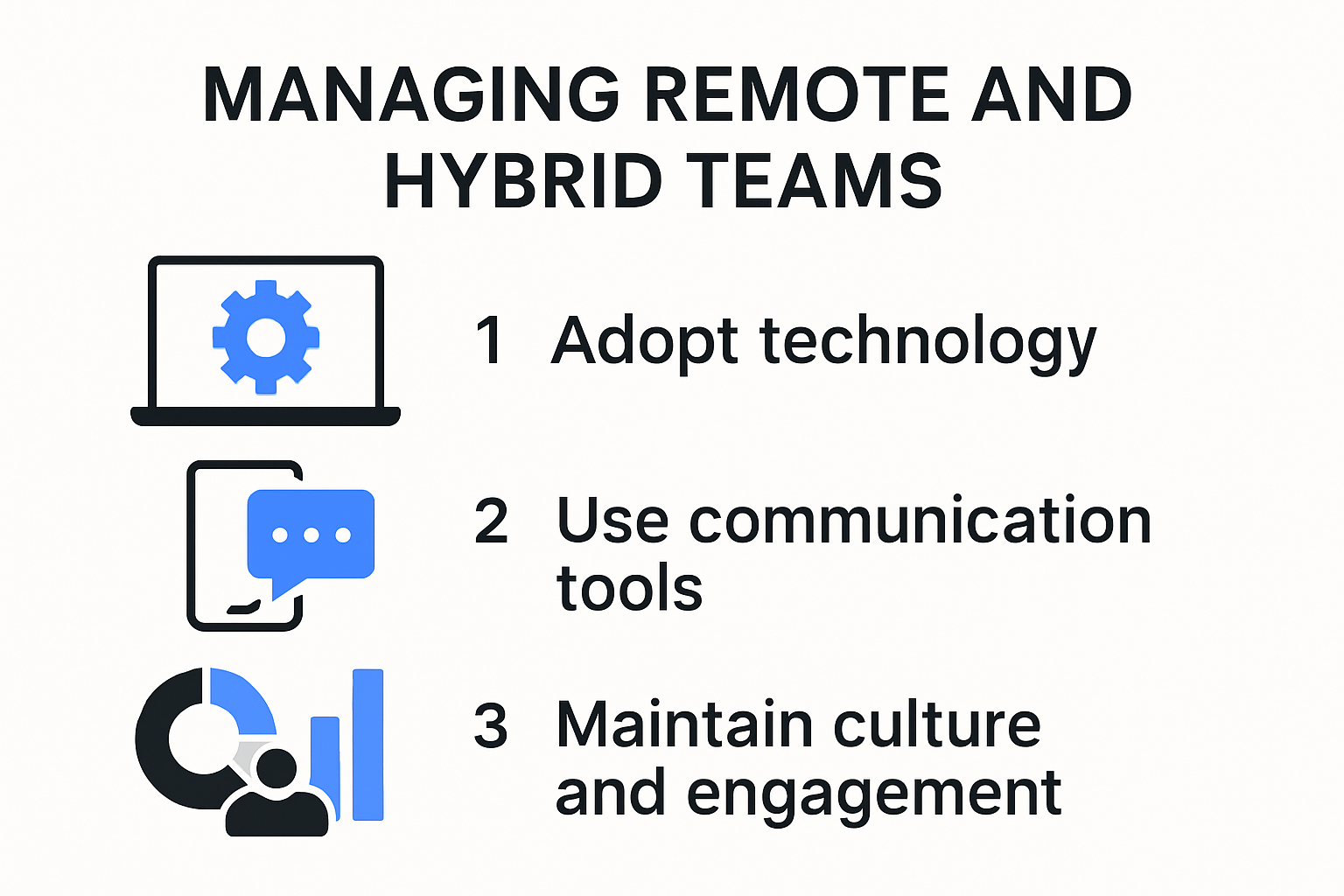
The landscape of work has fundamentally transformed, with remote and hybrid models becoming standard operational strategies rather than temporary solutions. Organizations must develop sophisticated approaches to effectively manage talent across distributed work environments, addressing complex challenges that extend far beyond traditional workplace dynamics.
Communication and Collaboration Strategies
Effective remote talent management hinges on robust communication infrastructure. Research from PubMed reveals that hybrid work environments can significantly impact social well-being, highlighting the critical need for intentional connection mechanisms. Companies must invest in advanced collaboration technologies that facilitate seamless interactions, ensuring team members feel integrated despite physical distance.
Digital communication tools are no longer optional but essential. Video conferencing, instant messaging platforms, and project management software must be strategically implemented to maintain team cohesion. Regular virtual team meetings, clear communication protocols, and structured check-ins help mitigate potential disconnection and maintain organizational momentum.
Performance Management in Distributed Teams
Research from the National Center for Biotechnology Information highlights significant challenges in monitoring performance and maintaining organizational culture within remote settings. Traditional performance evaluation methods become less effective when employees work outside centralized environments.
Organizations must develop outcome-focused performance metrics that prioritize results over physical presence. This requires establishing clear expectations, implementing transparent goal-tracking systems, and creating comprehensive performance frameworks that measure productivity through deliverables and impact rather than hours worked. Managers need training in remote leadership techniques that emphasize trust, autonomy, and results-oriented management.
Maintaining Organizational Culture and Employee Engagement
Preserving organizational culture becomes exponentially more complex in distributed work environments. Virtual team-building activities, digital recognition programs, and intentional social interaction opportunities become crucial strategies for maintaining employee connection and engagement.
Leadership must proactively design experiences that transcend physical boundaries. This might include virtual coffee breaks, online skill-sharing sessions, digital mentorship programs, and periodic in-person gatherings that reinforce team bonds. Psychological safety remains paramount, requiring leaders to create inclusive digital spaces where remote employees feel valued and heard.
Technology plays a pivotal role in bridging potential communication gaps. Explore our proven strategies for talent management to understand how innovative organizations are navigating these complex workforce transformations. Successful remote talent management demands continuous adaptation, empathy, and a commitment to creating meaningful work experiences regardless of physical location.
The following table summarizes the key strategies for successful remote and hybrid talent management, as discussed in this section.
| Strategy | Purpose/Benefit |
|---|---|
| Invest in advanced collaboration tools | Supports seamless communication and productivity |
| Regular virtual team meetings | Maintains cohesion and mitigates social isolation |
| Clear communication protocols | Reduces confusion and ensures alignment |
| Outcome-focused performance metrics | Measures success by results, not presence |
| Digital recognition programs | Reinforces engagement and acknowledges contributions |
Overcoming Global and Cultural Barriers
The global talent landscape is increasingly complex, characterized by diverse cultural backgrounds, multiple communication styles, and intricate international work dynamics. Organizations seeking to build high-performing teams must develop sophisticated strategies that transcend traditional geographical and cultural boundaries.
Navigating Cultural Intelligence and Communication
Research from Hofstede Insights demonstrates that cultural differences significantly impact workplace interactions, communication styles, and organizational behavior. Successful global talent management requires developing cultural intelligence that goes beyond surface-level understanding.
Companies must invest in comprehensive cultural training programs that help employees recognize and appreciate diverse perspectives. This involves understanding nuanced communication approaches, recognizing different decision-making processes, and creating inclusive environments that value multiple cultural viewpoints. Effective cross-cultural communication requires active listening, empathy, and a willingness to adapt communication strategies to different cultural contexts.
Inclusive Leadership and Global Talent Strategy
A study by McKinsey reveals that organizations with diverse leadership teams are 35% more likely to experience financial outperformance. This underscores the critical importance of developing inclusive leadership approaches that genuinely embrace global talent perspectives.
Leaders must move beyond token diversity initiatives and create systemic approaches that support genuine inclusion. This involves developing flexible recruitment strategies, implementing unbiased performance evaluation mechanisms, and creating career development pathways that accommodate diverse cultural backgrounds. Organizations need to challenge existing paradigms and redesign talent management processes to truly leverage global talent potential.
Technology and Global Talent Integration
Digital technologies play a crucial role in bridging global talent barriers. Advanced collaboration platforms, AI-powered translation tools, and sophisticated communication technologies enable seamless interactions across geographical boundaries. However, technology alone cannot resolve cultural complexities.
Successful global talent integration requires a holistic approach that combines technological solutions with human-centric strategies. This means creating virtual environments that promote cultural understanding, developing cross-cultural mentorship programs, and implementing continuous learning initiatives that enhance global competencies.
Explore our comprehensive change management strategies to understand how organizations can effectively navigate the complexities of global talent management. The future of work demands a nuanced, empathetic approach that recognizes the unique strengths inherent in global diversity.
Strategies for Upskilling and Employee Retention
In the rapidly evolving professional landscape, organizations must develop comprehensive strategies that simultaneously address skill development and employee retention. The traditional approach of static training programs no longer suffices in an environment characterized by technological disruption and continuous change.
Personalized Learning and Development Pathways
Research from Deloitte indicates that 94% of employees would remain longer with an organization that invests in their career development. This underscores the critical importance of creating individualized learning experiences that align with both organizational needs and personal career aspirations.
Successful upskilling requires a nuanced approach that goes beyond generic training modules. Organizations must leverage advanced technologies like artificial intelligence and machine learning to develop adaptive learning platforms that can customize educational content based on individual employee skills, learning styles, and career trajectories. This personalized approach demonstrates a genuine commitment to employee growth and potential.
Continuous Skills Assessment and Strategic Reskilling
A study by McKinsey Global Institute predicts that up to 375 million workers globally might need to switch occupational categories by 2030 due to technological disruption. This stark projection demands proactive and strategic skill development approaches.
Companies must implement robust skills assessment frameworks that continuously map employee capabilities against emerging technological and industry requirements. This involves creating dynamic skills inventories, conducting regular competency assessments, and developing targeted reskilling programs that anticipate future workforce needs. The goal is not just maintaining current productivity but positioning employees for long-term career resilience.
Creating a Culture of Continuous Learning and Engagement
Retention strategies must transcend traditional compensation models. Modern employees seek environments that offer meaningful learning opportunities, clear career progression, and a sense of organizational purpose. This requires reimagining workplace learning as an ongoing, integrated experience rather than a periodic intervention.
Organizations should develop comprehensive learning ecosystems that blend formal training, mentorship programs, cross-functional project experiences, and digital learning platforms. Encouraging a culture of knowledge sharing, peer learning, and continuous curiosity becomes as important as structured training initiatives.
Discover our comprehensive employee development strategies to understand how innovative organizations are transforming skill development and retention approaches. The future of talent management lies in creating adaptive, human-centric learning environments that empower employees to continuously evolve and grow.

Frequently Asked Questions
What are the key challenges in talent management for 2025?
Key challenges include evolving workforce expectations, managing remote and hybrid teams, overcoming global and cultural barriers, and developing strategies for upskilling and employee retention.
How can organizations address the evolving workforce expectations?
Organizations can align their talent management strategies with employee values by offering purpose, flexibility, continuous learning opportunities, and a culture that promotes psychological safety.
What strategies are effective for managing remote and hybrid talent?
Effective strategies include investing in advanced collaboration tools, establishing clear communication protocols, using outcome-focused performance metrics, and fostering virtual team-building activities to maintain engagement and culture.
How can companies promote a culture of continuous learning?
Companies can promote a culture of continuous learning by implementing personalized learning pathways, conducting regular skills assessments, and encouraging knowledge sharing through mentorship programs and cross-functional projects.
Bridge the Talent Gap with Peuneo’s Proven Solutions
Adapting to the evolving landscape of talent management is more urgent than ever. If you are struggling with rising employee expectations, rapid technology change, or the challenge of maintaining engagement in remote teams, you are not alone. The article above highlights core pain points like the need for psychological safety, flexible working options, and continuous upskilling. As new workforce trends shape the future, organizations face real risk of falling behind without the right support.

Now is the time to future-proof your organization with targeted upskilling and expert consulting. Peuneo specializes in accredited training and custom programs that address the most pressing talent management challenges for 2025. Explore our online learning portal for practical courses or discover proven strategies for talent management to boost retention and performance. Visit Peuneo’s main site today and find out how your company can thrive in the new world of work.