

Customer service is set for a major transformation in 2025. Businesses that use predictive analytics will outperform competitors by 80 percent in understanding customer preferences. That sounds like a job for robots and algorithms, right? Not entirely. Because the real winners will be those who pair smart technology with genuine human connection. Ready to see what actually sets brands apart now?
Table of Contents
- Understanding Customer Needs And Expectations
- Effective Communication Strategies That Work
- Leveraging Technology To Improve Service Quality
- Training And Empowerment For Service Excellence
Quick Summary
| Takeaway | Explanation |
|---|---|
| Anticipate Customer Needs | Use data-driven strategies to foresee customer preferences and enhance service delivery. |
| Master Effective Communication | Employ clarity, empathy, and strategic media choices to improve customer interactions. |
| Integrate Advanced Technology | Leverage AI and automation to scale support and improve response times. |
| Invest in Training Programs | Focus on emotional intelligence and technology to empower service professionals. |
| Cultivate a Continuous Learning Culture | Encourage ongoing professional development for adaptability and excellence in service. |
Understanding Customer Needs and Expectations
Customer service professionals must develop a sophisticated approach to understanding and anticipating customer needs in 2025. The landscape of customer expectations continues to evolve rapidly, demanding more nuanced and proactive strategies.
The Shifting Paradigm of Customer Expectations
Customer expectations have transformed dramatically in recent years. According to the Chartered Institute of Sales and Customer Service Management, businesses must now leverage advanced technologies and personalized approaches to meet increasingly complex customer demands. The traditional reactive model of customer service has been replaced by a more anticipatory and data-driven approach.
Key Transformation Indicators:
- Personalization becomes the primary expectation
- Multichannel communication is now standard
- Real-time responsiveness is non-negotiable
Technological Insights into Customer Understanding
Advanced technologies are revolutionizing how organizations comprehend and respond to customer needs. Artificial intelligence and machine learning enable unprecedented levels of customer insight. Research from Gartner suggests that by 2025, companies utilizing predictive analytics will outperform their competitors by 80% in understanding customer preferences.
Professionals must develop skills in data interpretation, emotional intelligence, and technological adaptation. This means going beyond traditional customer service approaches and embracing a holistic understanding of customer journey mapping, sentiment analysis, and predictive behavior modeling.
Developing a Customer-Centric Mindset
Successful customer service professionals recognize that understanding needs goes far beyond surface-level interactions. It requires deep empathy, active listening, and a commitment to continuous learning. Organizations must invest in training programs that develop these critical skills.
Technological capabilities must be balanced with genuine human connection. While AI and data analytics provide incredible insights, the human touch remains irreplaceable in creating meaningful customer experiences. Professionals should focus on developing emotional intelligence, communication skills, and adaptive problem-solving techniques.
For professionals looking to enhance their customer relationship management skills, read more about our comprehensive customer service strategies.
The future of customer service lies in creating seamless, personalized experiences that anticipate needs before customers even articulate them. This requires a sophisticated blend of technological prowess and genuine human understanding.
To help distinguish how technology and human skills combine for effective customer understanding, here’s a summary table comparing their respective roles:
| Aspect | Technology Contribution | Human Skill Contribution |
|---|---|---|
| Data Interpretation | Analyzes large datasets with AI and analytics | Applies contextual understanding and intuition |
| Personalization | Automates tailored experiences at scale | Adapts approach based on live feedback |
| Empathy | Sentiment analysis algorithms | Genuine active listening and compassion |
| Response Time | Delivers instant responses (chatbots, automation) | Navigates complex, nuanced issues with patience |
| Adaptation | Learns patterns to predict needs | Adjusts strategies in real time based on customer cues |
Effective Communication Strategies That Work
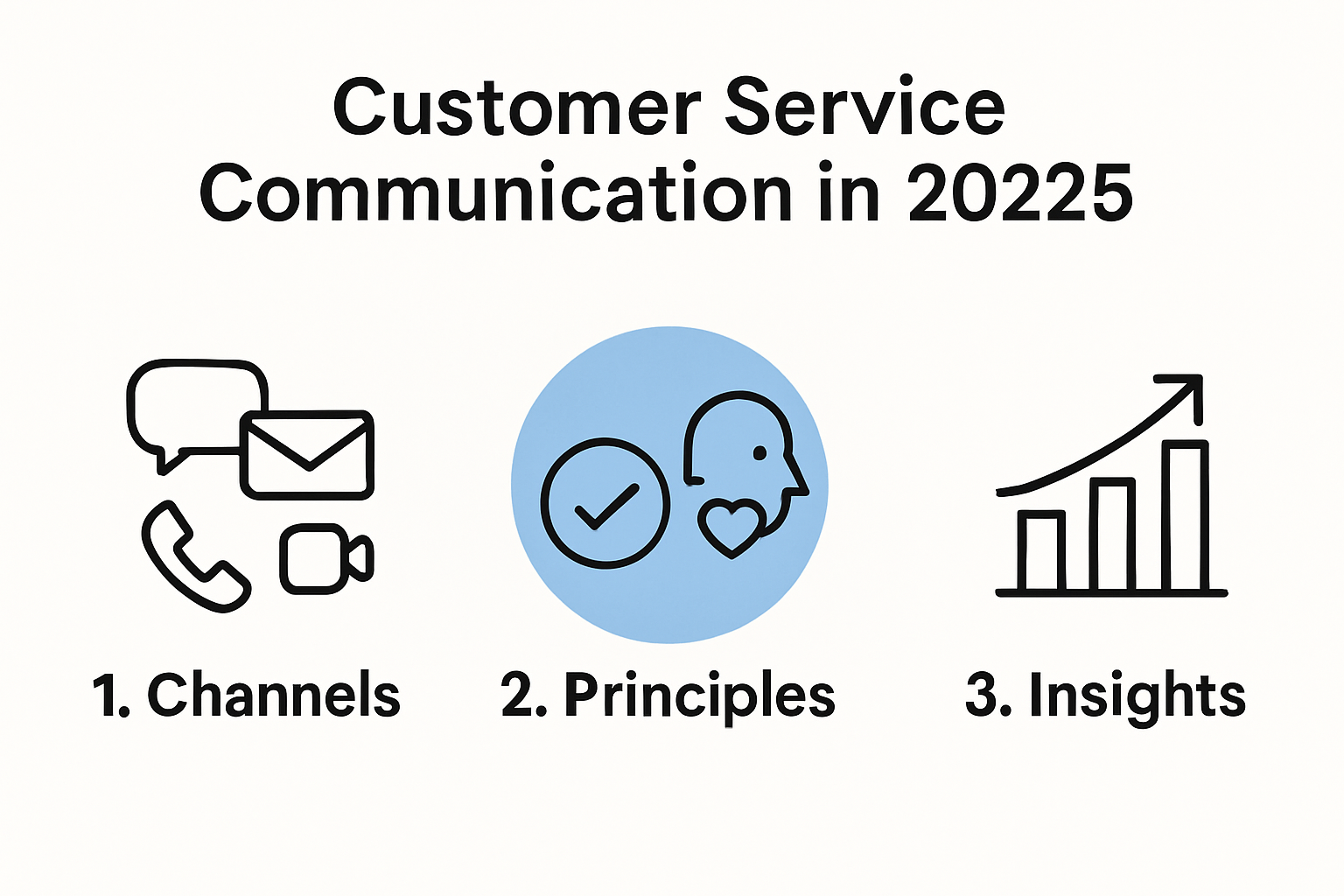
Effective communication represents the cornerstone of exceptional customer service in 2025. Professionals must master sophisticated communication techniques that transcend traditional interaction models and embrace technological and human-centric approaches.
Digital Age Communication Dynamics
According to a comprehensive 2023 communication study, modern communication strategies require professionals to navigate complex digital landscapes with precision and empathy. The research identified nine critical communication strategies essential for business professionals, emphasizing the importance of choosing appropriate communication channels, maintaining clarity, and practicing active listening.
Key Communication Principles:
- Media Selection: Choose communication platforms strategically
- Clarity and Conciseness: Communicate with precision
- Professional Tone: Maintain consistent and respectful communication
Empathy and Technological Integration
Research from advanced communication studies reveals that customer service interactions are increasingly driven by emotional intelligence and technological capabilities. Chatbots and AI-powered communication tools now require sophisticated emotional recognition algorithms that mimic human empathy and understanding.
Professionals must develop skills that blend technological proficiency with genuine human connection. This means understanding how to leverage AI tools while maintaining authentic, meaningful interactions. Communication is no longer about transmitting information but creating meaningful experiences that resonate with customers on an emotional level.
Building Trust Through Strategic Communication
Building customer trust requires a multifaceted communication approach. Insights from business communication experts highlight the importance of developing consistent communication standards, resolving disputes quickly, and creating relationship-building dialogue.
Effective communicators understand that every interaction is an opportunity to strengthen customer relationships. This involves active listening, using clear and accessible language, and demonstrating genuine interest in customer needs. Professionals should focus on transforming communication from a transactional process to a collaborative dialogue.
For professionals seeking to enhance their communication skills, explore our advanced communication training resources.
The future of customer service communication lies in creating seamless, empathetic, and technologically sophisticated interactions that make customers feel heard, understood, and valued.
To summarize the key principles of modern customer communication, the table below lists the main principles and their respective focus:
| Principle | Key Focus |
|---|---|
| Media Selection | Choosing the most suitable platforms |
| Clarity and Conciseness | Ensuring precise, efficient messaging |
| Professional Tone | Using respectful, consistent communication |
| Active Listening | Understanding customer needs fully |
| Emotional Intelligence | Responding with empathy and understanding |
Leveraging Technology to Improve Service Quality
In 2025, technology has become an indispensable tool for transforming customer service quality. Professionals must strategically integrate advanced technological solutions that enhance efficiency, personalization, and customer experience.
AI-Powered Support Systems
According to the Chartered Institute of Sales and Customer Service Management, AI-powered customer support systems are expected to handle increasingly complex interactions with minimal human intervention. These sophisticated technologies are revolutionizing how businesses approach customer service, offering unprecedented levels of responsiveness and precision.
Technological Capabilities:
- Intelligent Routing: Automatically direct customers to most appropriate support channels
- Predictive Problem Solving: Anticipate customer issues before they escalate
- Real-Time Language Translation: Overcome communication barriers instantly
Overcoming Technological Adoption Challenges
Research on chatbot deployment reveals significant challenges in technological integration. Despite advanced capabilities, organizations face ‘algorithm aversion’ and customer hesitation. Successful implementation requires transparency about technological limitations and clear communication of potential benefits.
Professionals must develop strategies that balance technological efficiency with human empathy. This means creating seamless transitions between AI-driven and human-led interactions, ensuring customers feel supported throughout their service experience.
Scaling Support Through Intelligent Automation
Analysis from Sprinklr demonstrates that intelligent automation allows businesses to scale support efficiently. By implementing AI-powered knowledge bases and automated response systems, organizations can dramatically reduce response times and redirect human resources toward more complex customer interactions.
Key considerations include maintaining a human touch, continuously training AI systems, and developing robust feedback mechanisms. Technology should augment, not replace, human connection in customer service.
Discover advanced strategies for integrating technology in customer service.
The future of customer service technology lies in creating intelligent, adaptive systems that understand and respond to customer needs with unprecedented accuracy and empathy.
Training and Empowerment for Service Excellence
In 2025, customer service excellence requires a comprehensive approach to training and professional development that goes beyond traditional skill acquisition. Organizations must create holistic empowerment strategies that transform employees into confident, adaptive service professionals.
Strategic Training Methodologies
According to research from CMSwire, successful training programs involve more than technical skill development. They require a multifaceted approach that integrates emotional intelligence, technological proficiency, and continuous learning frameworks.
Key Training Components:
- Adaptive Learning Techniques: Personalized skill development paths
- Technological Integration: Training on advanced service technologies
- Emotional Intelligence Development: Enhancing interpersonal communication skills
Advanced Training Technologies
Innovative research from AI training development introduces groundbreaking approaches like AdaCoach, a virtual coaching system that simulates real-customer interactions. These technologies enable professionals to practice complex scenarios in controlled environments, providing immediate feedback and performance analysis.
Training in 2025 is not about passive learning but active skill refinement. Professionals must engage with immersive learning experiences that challenge existing capabilities and encourage continuous growth. This means embracing technologies that provide realistic, data-driven training scenarios.
Empowerment Through Continuous Learning
Online learning certificate programs demonstrate that empowerment stems from structured, accessible learning opportunities. Organizations must create environments that support ongoing skill development, allowing employees to take ownership of their professional growth.
Effective empowerment involves providing clear career progression paths, recognizing individual achievements, and creating a culture of continuous improvement. This means investing in employees’ potential, offering mentorship programs, and developing transparent performance evaluation systems.
Explore our comprehensive guide to employee skill development.
The future of customer service excellence lies in creating adaptable professionals who can seamlessly navigate complex customer interactions with confidence, empathy, and technological sophistication.

Frequently Asked Questions
What are the key customer service expectations for 2025?
Customer service expectations for 2025 include personalization, multichannel communication, and real-time responsiveness. Businesses must proactively meet these evolving demands to remain competitive.
How can technology improve customer service quality in 2025?
Technology can enhance customer service quality through AI-powered support systems, intelligent automation, and predictive analytics. These tools help businesses respond to customer needs efficiently and effectively.
What skills should customer service professionals focus on for success in 2025?
Customer service professionals should develop skills in emotional intelligence, advanced communication strategies, and technological adaptability. Continuous learning and effective relationship-building techniques are also essential.
Why is empathy important in customer service?
Empathy is crucial in customer service as it fosters genuine connections with customers, enhances communication, and builds trust. It helps professionals understand and respond to customer needs more effectively.
Empower Your 2025 Customer Service Strategy with Peuneo
Modern customer service is more than technology upgrades. If your team struggles to blend human empathy with smart automation, or you feel overwhelmed by demands for real-time responsiveness and continuous learning, you are not alone. The article highlighted real obstacles like keeping up with advanced training, integrating AI support, and developing communication that truly builds trust. These are the exact challenges Peuneo is helping professionals in South Africa conquer every day.

Ready to transform your workforce with accredited skills and proven strategies? Visit Peuneo’s online portal now to explore our training courses and consulting solutions that close the gap between technology and human connection. Invest in the skills and confidence that tomorrow’s customer service demands. Discover how you can drive measurable results by starting your journey with Peuneo today.