
Every project comes with its own set of risks, yet only a fraction are well-prepared for what could go wrong. Here is something you might not expect—87 percent of senior leaders say risk mitigation is now fundamental to meeting stakeholder expectations. Most organizations focus their attention on dodging disasters, but the real advantage lies in how they turn risks into opportunities for growth and innovation. If you think risk management is just about avoiding trouble, think again.
Table of Contents
- Defining Project Risk Management In Modern Organizations
- Key Steps And Processes For Effective Risk Management
- Best Practices And Tools For Risk Management Success
- Benefits Of Risk Management For Diverse Stakeholders
Quick Summary
| Takeaway | Explanation |
|---|---|
| Risk Management is Proactive, Not Reactive | Organizations should anticipate and address potential challenges before they emerge to foster project success. |
| Utilize Comprehensive Risk Assessment | Implement a structured approach that includes risk identification, assessment, and prioritization to systematically manage uncertainties. |
| Leverage Technology for Enhanced Insights | Utilize advanced tools like AI-driven analytics and real-time risk visualization to transform risk management into a data-driven strategy. |
| Cultivating a Risk-Aware Culture is Crucial | Foster an environment that encourages open communication and proactive risk identification to strengthen organizational resilience. |
| Stakeholder Engagement Enhances Trust and Collaboration | Actively involve stakeholders in risk management processes to create a holistic approach and build confidence across diverse groups. |
Defining Project Risk Management in Modern Organizations
Project risk management represents a critical strategic approach that enables organizations to anticipate, understand, and proactively address potential challenges before they derail project success. At its core, project risk management is a systematic process designed to identify, analyze, and respond to uncertainties that could significantly impact project outcomes.
The Essential Components of Risk Management
Understanding what project risk management entails begins with breaking down its fundamental components. Learn more about project management foundations to contextualize these critical elements.
Risk management is not about eliminating all risks but strategically managing them. According to the Project Management Institute, project risk is defined as “the chance of certain occurrences adversely affecting project objectives, the degree of exposure to negative events.” This definition highlights the dynamic nature of risk in organizational contexts.
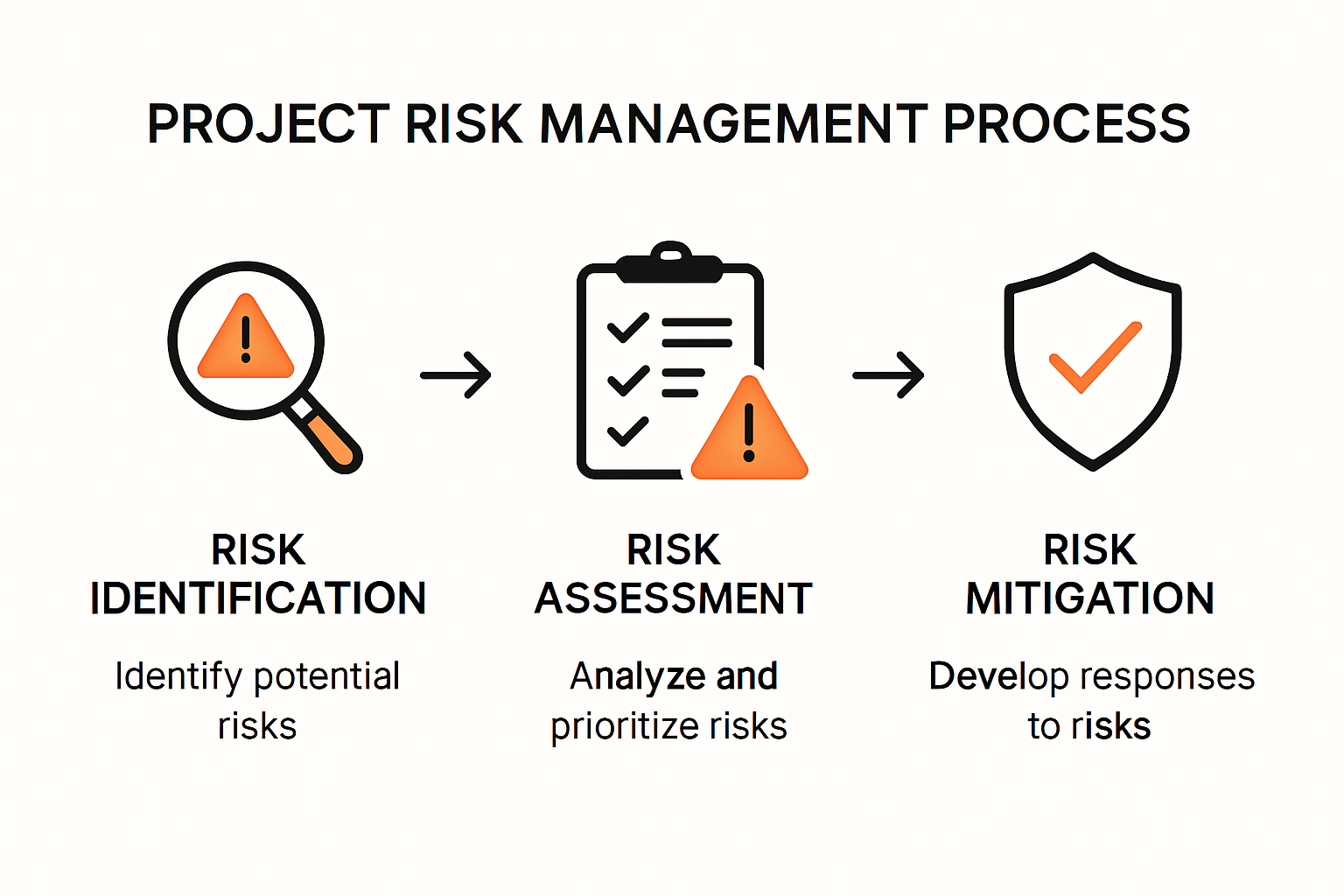
The process typically involves three key stages:
- Risk Identification: Systematically discovering potential risks that could impact project performance
- Risk Assessment: Evaluating the probability and potential impact of identified risks
- Risk Mitigation: Developing strategic responses to minimize or control potential negative outcomes
Strategic Approaches to Risk Management
Modern organizations recognize that effective risk management goes beyond simple threat prevention. As research from Harvard Business Review suggests, risk management is about creating a comprehensive framework that transforms potential challenges into strategic opportunities.
Robert S. Kaplan and Anette Mikes emphasize that “managing risk is very different from managing strategy. Risk management focuses on the negative—threats and failures rather than opportunities and successes.” This perspective underscores the importance of a nuanced approach to understanding organizational risks.
Successful project risk management requires a combination of:
- Proactive Planning: Anticipating potential risks before they emerge
- Continuous Monitoring: Regularly assessing and updating risk strategies
- Adaptive Response: Developing flexible mechanisms to address evolving challenges
The Human Element in Risk Management
Technology and data analytics play crucial roles in modern risk management, but the human element remains paramount. Skilled project managers must cultivate a risk-aware culture that encourages team members to identify, communicate, and address potential risks collaboratively.

This approach transforms risk management from a theoretical exercise into a dynamic, integrated organizational practice. By embedding risk awareness into every stage of project planning and execution, organizations can create more resilient, adaptable project strategies that anticipate and navigate complex challenges.
Effective project risk management is not about predicting the future with absolute certainty but about building organizational capabilities that can flexibly respond to uncertainty. It represents a strategic approach that turns potential threats into opportunities for innovation and growth.
Key Steps and Processes for Effective Risk Management
Effective project risk management demands a structured and systematic approach that transforms potential uncertainties into manageable strategic opportunities. Organizations must implement a comprehensive process that goes beyond simple risk identification to create robust frameworks for navigating complex project challenges.
Risk Identification and Discovery
The initial stage of risk management centers on thorough and systematic risk discovery. Learn about advanced project management techniques to enhance your risk identification strategies. According to Project Management experts, successful risk identification involves multiple interconnected methods:
- Collaborative Brainstorming: Engaging cross-functional teams to uncover potential risks through collective expertise
- Expert Interviews: Consulting experienced professionals who can provide insights into potential project vulnerabilities
- Historical Data Analysis: Reviewing past project documentation to understand recurring risk patterns
- Documentation Review: Systematically examining project plans, contracts, and technical specifications
Modern risk identification requires a holistic approach that combines structured techniques with creative thinking. Organizations must create environments that encourage open communication and proactive risk recognition.
Risk Assessment and Prioritization
Once risks are identified, the next critical phase involves comprehensive assessment and strategic prioritization. Research from Coursera suggests organizations can mitigate risks through four primary strategies:
- Risk Avoidance: Eliminating specific activities or conditions that generate potential threats
- Risk Reduction: Implementing preventive measures to minimize potential negative impacts
- Risk Acceptance: Acknowledging low-impact risks that do not significantly threaten project objectives
- Risk Transfer: Shifting potential risk consequences to other parties through contracts or insurance
Prioritization involves evaluating each identified risk based on two fundamental dimensions: probability of occurrence and potential impact. Creating a risk assessment matrix helps project managers systematically rank and address risks according to their criticality.
Continuous Monitoring and Adaptive Response
Risk management is not a one-time activity but a dynamic, ongoing process requiring continuous attention and adaptation. Successful organizations develop flexible frameworks that allow real-time risk tracking and responsive strategy adjustments.
Effective monitoring involves:
- Regular Risk Reviews: Scheduled assessments to re-evaluate existing risks and identify emerging challenges
- Performance Tracking: Measuring the effectiveness of implemented risk mitigation strategies
- Stakeholder Communication: Maintaining transparent reporting mechanisms to keep all project participants informed
Technology plays an increasingly significant role in modern risk management. Advanced analytics, machine learning algorithms, and predictive modeling enable more sophisticated risk detection and forecasting.
The ultimate goal of risk management transcends mere problem prevention. By developing comprehensive, adaptive approaches, organizations transform potential threats into strategic opportunities for innovation, learning, and continuous improvement. Successful project risk management requires a combination of systematic processes, technological tools, and human expertise.
Best Practices and Tools for Risk Management Success
Successful project risk management requires a strategic blend of advanced tools, proven methodologies, and organizational culture transformation. Modern organizations must move beyond traditional risk management approaches to develop comprehensive, adaptive frameworks that proactively address emerging challenges.
Strategic Risk Management Tools and Technologies
Explore advanced project management strategies to understand the technological landscape of risk management. Contemporary organizations are increasingly leveraging sophisticated tools to enhance risk detection and mitigation. According to TechTarget research, cutting-edge technologies are revolutionizing risk management approaches:
- Governance, Risk, and Compliance (GRC) Platforms: Integrated systems that centralize risk monitoring and reporting
- AI-Driven Analytics: Advanced algorithms that predict potential risks with unprecedented accuracy
- Machine Learning Models: Dynamic systems that continuously learn from historical project data
- Real-Time Risk Visualization Tools: Interactive dashboards that provide immediate risk insights
These technological solutions enable organizations to transform risk management from a reactive process to a proactive, data-driven strategy. By implementing intelligent monitoring systems, companies can identify potential challenges before they escalate.
Comprehensive Risk Management Best Practices
Research from global risk management experts highlights several critical best practices for modern organizations:
- Scenario Planning: Developing multiple potential outcome scenarios to prepare for various risk landscapes
- SWOT Analysis: Systematically evaluating strengths, weaknesses, opportunities, and threats
- Supply Chain Diversification: Reducing vulnerability by creating multiple operational pathways
- Emergency Protocol Development: Establishing clear, actionable response mechanisms
Behavioral risk management has emerged as a crucial component of comprehensive risk strategies. Cognitive bias research emphasizes the importance of addressing human factors in risk assessment. This approach involves:
- Training leaders to recognize and mitigate cognitive biases
- Implementing structured decision-making processes
- Encouraging a culture of transparent risk communication
- Developing pre-mortem analysis techniques
Cultivating a Risk-Aware Organizational Culture
Technology and tools are essential, but the most critical aspect of successful risk management is organizational culture. Leaders must create environments that:
- Encourage open communication about potential risks
- Reward proactive risk identification
- Foster a blame-free approach to risk discussion
- Integrate risk management into core strategic planning
Successful risk management is not about eliminating all risks but about developing organizational resilience. By combining advanced technological tools, structured methodologies, and a progressive cultural approach, organizations can transform potential threats into strategic opportunities.
The future of risk management lies in adaptive, intelligent systems that blend human expertise with technological innovation. Organizations that embrace this holistic approach will be better equipped to navigate the complex and unpredictable business landscapes of 2025 and beyond.
Benefits of Risk Management for Diverse Stakeholders
Project risk management delivers substantial value across various organizational stakeholders, creating a comprehensive ecosystem of strategic advantage and collaborative protection. Understanding how different stakeholder groups benefit from robust risk management approaches is crucial for developing comprehensive organizational strategies.
Organizational Leadership Benefits
Explore strategic project management perspectives to understand the broader implications of risk management. According to research from CFLow Applications, 87% of senior leaders recognize risk mitigation strategies as fundamental to meeting stakeholder expectations. These benefits include:
- Strategic Decision Making: Enhanced capacity to make informed choices based on comprehensive risk assessments
- Resource Optimization: Improved allocation of organizational resources by anticipating potential challenges
- Competitive Advantage: Creating more resilient business models that can adapt quickly to changing environments
- Financial Protection: Minimizing potential economic losses through proactive risk identification
Leadership teams gain significant strategic insights by implementing systematic risk management frameworks. These approaches transform potential uncertainties from threats into opportunities for organizational growth and innovation.
Stakeholder Engagement and Trust
Research from LumiVero emphasizes the critical importance of early and consistent stakeholder engagement in risk management processes. Different stakeholder groups experience unique benefits:
- Project Teams: Increased clarity, reduced anxiety, and improved collaborative problem-solving capabilities
- Investors: Greater confidence in organizational stability and strategic planning
- Clients: Enhanced transparency and predictability in project delivery
- Regulatory Bodies: Demonstrated commitment to comprehensive risk governance
Engaging stakeholders throughout the risk management process ensures diverse perspectives are considered, creating a more holistic and inclusive approach to identifying and mitigating potential challenges.
Long-Term Organizational Resilience
Beyond immediate risk mitigation, comprehensive risk management strategies contribute to building organizational resilience. This approach involves:
- Continuous Learning: Developing organizational capabilities to adapt and improve
- Cultural Transformation: Fostering a proactive risk-aware organizational environment
- Systemic Thinking: Creating interconnected risk management approaches that span multiple organizational domains
- Innovation Catalyst: Using risk insights to drive strategic innovation and competitive differentiation
Successful risk management transcends traditional defensive strategies. By viewing risks as potential opportunities for growth and innovation, organizations can transform challenges into strategic advantages.
The most effective risk management approaches recognize that stakeholders are not passive recipients but active participants in creating organizational resilience. By developing transparent, collaborative, and adaptive risk management frameworks, organizations can build trust, optimize performance, and create sustainable competitive advantages in increasingly complex business environments.
Frequently Asked Questions
What is project risk management?
Project risk management is the systematic process of identifying, analyzing, and responding to potential risks that could negatively impact project outcomes. It aims to proactively address challenges before they disrupt success.
Why is risk management important for organizations?
Risk management is crucial because it helps organizations anticipate and mitigate potential challenges, leading to enhanced stakeholder confidence, resource optimization, and the ability to turn risks into opportunities for growth and innovation.
What are the key steps in the risk management process?
The key steps in the risk management process include risk identification, risk assessment and prioritization, and continuous monitoring and adaptive response, all designed to create structured frameworks for managing uncertainties.
How can technology enhance project risk management?
Technology enhances project risk management through tools like AI-driven analytics and real-time risk visualization, enabling organizations to detect potential threats and monitor risks more effectively, leading to proactive and data-driven strategies.
Ready to Transform Risk Into Opportunity?
Project delays, compliance headaches, and sudden surprises can stop your growth in its tracks. If you want to move from worrying about “what could go wrong” to unlocking real innovation and resilience, you need more than a checklist. You need proactive planning, a risk-aware team, and proven skills to anticipate, assess, and respond to obstacles. The Essential Guide to Project Risk Management highlighted how modern organizations are shifting from simple threat prevention toward data-driven strategy, continuous learning, and a culture where risks become stepping stones to success.

Take the first step toward confident, future-ready project outcomes. Visit Peuneo’s trusted platform and discover accredited training, consulting, and real-world business solutions tailored for South Africa’s leading organizations. Gain hands-on experience in risk management best practices and turn uncertainty into your competitive edge. Why wait for challenges to become crises? Explore our online courses and consulting services now and make risk management your organization’s new superpower.