


Every organization juggles projects, but the difference between on-time success and costly missteps often comes down to one thing: a clear project lifecycle. Here’s a real eye-opener. Organizations with a well-structured project lifecycle achieve much higher project success rates than those without one. Most teams believe executing tasks is what moves projects forward. Actually, it’s the careful planning and strategic checkpoints built into the lifecycle that steer efforts away from chaos and straight toward predictable results.
Table of Contents
- Defining Project Lifecycle And Its Key Stages
- Importance Of Project Lifecycle In Different Sectors
- Best Practices For Implementing A Project Lifecycle
- Common Mistakes And How To Avoid Them
Quick Summary
| Takeaway | Explanation |
|---|---|
| Structured Project Lifecycle | The project lifecycle consists of five key stages: Initiation, Planning, Execution, Monitoring and Controlling, and Closure, each vital for guiding projects from concept to completion. |
| Adaptation Across Sectors | Different industries, such as Technology, Construction, and Sustainability, require specific adaptations of the project lifecycle to address unique challenges and objectives. |
| Importance of Clear Objectives | Unclear project objectives and scope can lead to significant complications; using SMART criteria can help clarify these goals and align stakeholder expectations. |
| Effective Risk Management | Proactive risk management, including regular assessments and flexible contingency strategies, is crucial for mitigating potential challenges throughout the project lifecycle. |
| Communication and Collaboration | Establishing effective communication protocols and using collaborative platforms can significantly enhance team coordination and stakeholder engagement. |
Defining Project Lifecycle and Its Key Stages
A project lifecycle represents the systematic sequence of stages that transform an initial concept into a completed project. Organizations use this structured framework to guide projects from conception to conclusion, ensuring consistent and predictable progress across different types of initiatives.
Core Components of Project Lifecycle
The project lifecycle provides a strategic roadmap that breaks down complex project work into manageable phases. According to the Project Management Institute, the lifecycle typically encompasses five fundamental stages that help teams navigate project challenges and deliver successful outcomes.
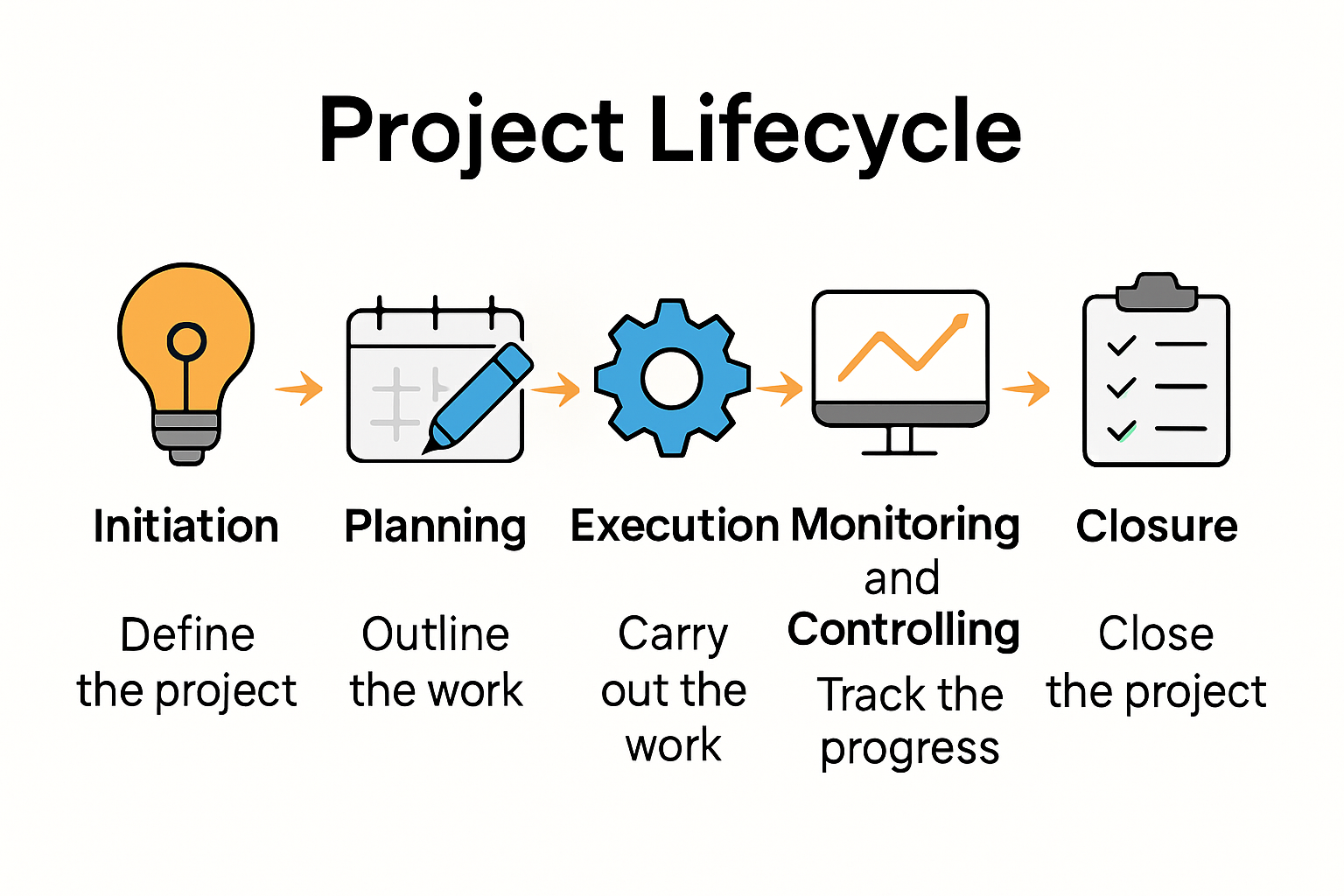
Stages of Project Lifecycle
Each stage in the project lifecycle serves a specific purpose and contributes to the overall project success. The five primary stages include:
- Initiation: The foundational phase where project goals, scope, and initial feasibility are defined
- Planning: Detailed strategy development, resource allocation, and comprehensive project blueprint creation
- Execution: Active implementation of project plans, task completion, and team coordination
- Monitoring and Controlling: Continuous performance tracking, risk management, and quality assessment
- Closure: Final project evaluation, deliverable handover, and formal project termination
Strategic Importance of Project Lifecycle Management
Implementing a structured project lifecycle approach offers significant benefits for organizations. Research from project management experts demonstrates that organizations using a well-defined lifecycle framework experience higher project success rates, improved stakeholder communication, and more predictable outcomes.
The project lifecycle serves as a critical tool for project managers, providing a standardized approach to managing complexity. It enables teams to:
- Establish Clear Milestones: Break down complex projects into measurable stages
- Enhance Communication: Create a shared understanding among team members and stakeholders
- Improve Resource Allocation: Optimize human and financial resources throughout the project
- Manage Risks Proactively: Identify and mitigate potential challenges at each project stage
While project lifecycles share common characteristics, they can be adapted to suit specific organizational needs and project types. From software development to construction, the core principles remain consistent: structured progression, clear objectives, and systematic management.
For professionals seeking to deepen their understanding, our comprehensive guide on project management fundamentals offers extensive insights into advanced lifecycle management strategies and best practices.
Understanding and effectively implementing the project lifecycle is not just a technical requirement but a strategic capability that separates successful organizations from those struggling with project delivery. By embracing this structured approach, teams can transform potential chaos into controlled, predictable project progression.
Importance of Project Lifecycle in Different Sectors
The project lifecycle transcends individual industries, serving as a universal framework that enables organizations to systematically transform innovative ideas into tangible results. While core principles remain consistent, each sector adapts the lifecycle to address unique operational challenges and strategic objectives.
Sector-Specific Project Lifecycle Applications
Different industries leverage the project lifecycle methodology to streamline complex initiatives and achieve strategic goals. Research from enterprise management experts demonstrates how a structured approach can dramatically improve project outcomes across diverse domains.
Technology and IT Sector
In the rapidly evolving technology landscape, the project lifecycle becomes a critical mechanism for managing complex digital transformations. Software development teams utilize an adaptive approach, often blending traditional and agile methodologies. According to recent industry trends, hybrid project management approaches have increased from 20% in 2020 to 31% in 2023, enabling organizations to enhance flexibility and accelerate deliverable quality.
Key adaptations in the technology sector include:
- Rapid Iteration: Shorter lifecycle phases to accommodate quick technological changes
- Continuous Integration: Seamless implementation and testing processes
- Stakeholder Collaboration: Enhanced communication and feedback mechanisms

Construction and Infrastructure Development
Construction projects represent another domain where the project lifecycle proves invaluable. Large-scale infrastructure initiatives require meticulous planning, precise execution, and robust risk management. The lifecycle provides a structured framework for managing complex interdependencies, resource allocation, and regulatory compliance.
Unique aspects of project lifecycle implementation in construction include:
- Detailed Planning: Comprehensive risk assessments and comprehensive feasibility studies
- Resource Optimization: Strategic allocation of human and material resources
- Compliance Management: Ensuring adherence to safety and regulatory standards
Sustainability and Environmental Projects
Modern organizations increasingly recognize the importance of embedding sustainability principles throughout the project lifecycle. Global sustainability research indicates that 95% of organizations are developing or beginning to integrate eco-friendly practices into their project management approaches.
For professionals seeking deeper insights into strategic project management, our comprehensive guide on project management strategies offers advanced techniques for implementing lifecycle methodologies across various sectors.
The project lifecycle is not merely a theoretical construct but a practical tool that empowers organizations to navigate complexity, manage risks, and deliver consistent value. By understanding and adapting lifecycle principles to specific sectoral requirements, teams can transform potential challenges into opportunities for innovation and success.
Best Practices for Implementing a Project Lifecycle
Implementing an effective project lifecycle requires strategic planning, robust communication, and a systematic approach that goes beyond theoretical frameworks. Organizations that master these best practices can transform project management from a routine process into a competitive advantage.
Strategic Project Initialization
According to project management experts, successful project lifecycle implementation begins with meticulous initialization. This critical phase involves establishing clear project boundaries, defining precise objectives, and creating a comprehensive roadmap that guides the entire project journey.
Key strategies for effective project initialization include:
- Comprehensive Scope Definition: Clearly articulate project goals, deliverables, and expected outcomes
- Stakeholder Alignment: Engage all relevant parties to ensure unified understanding and commitment
- Risk Assessment: Conduct thorough preliminary risk analysis to identify potential challenges
Performance Monitoring and Continuous Improvement
Regular performance tracking distinguishes successful project implementations from mediocre ones. Research demonstrates that organizations conducting weekly progress reviews and maintaining flexible monitoring mechanisms achieve significantly higher project success rates.
Critical monitoring practices include:
- Key Performance Indicator (KPI) Tracking: Establish measurable metrics that reflect project health
- Adaptive Reporting: Create dynamic reporting mechanisms that allow real-time insights
- Feedback Integration: Develop systematic channels for stakeholder input and continuous improvement
Technology and Tool Integration
Modern project lifecycle management leverages advanced technological tools to enhance efficiency and transparency. Comprehensive project management research highlights the importance of selecting appropriate technological solutions that align with organizational objectives.
Technological integration strategies encompass:
- Collaborative Platforms: Implement tools that facilitate seamless team communication
- Automated Tracking Systems: Utilize software that provides real-time project status updates
- Data Analytics Integration: Incorporate predictive analytics for enhanced decision making
For professionals seeking deeper insights into advanced project management techniques, our comprehensive guide on project management best practices offers extensive strategies and practical recommendations.
Successful project lifecycle implementation is not about rigid adherence to processes but about creating a flexible, responsive framework that adapts to organizational needs. By embracing these best practices, teams can transform project management from a procedural necessity into a strategic organizational capability that drives innovation and delivers consistent value.
Common Mistakes and How to Avoid Them
Project lifecycle management presents complex challenges that can derail even the most well-intentioned initiatives. Understanding and proactively addressing common mistakes can significantly improve project success rates and organizational performance.
Unclear Project Objectives and Scope
Research from project management experts reveals that insufficient clarity in project objectives is a fundamental error that leads to cascading complications. Many organizations struggle with defining precise, actionable goals that guide project execution.
Common scope definition mistakes include:
- Vague Goal Setting: Failing to create specific, measurable objectives
- Undefined Boundaries: Not establishing clear project limitations
- Stakeholder Misalignment: Inconsistent understanding of project expectations
To mitigate these risks, teams should:
- Implement SMART (Specific, Measurable, Achievable, Relevant, Time-bound) goal frameworks
- Conduct comprehensive stakeholder workshops
- Document and validate project scope with all key participants
Risk Management Failures
According to project management analysis, inadequate risk management represents a critical vulnerability in project lifecycle implementation. Organizations often underestimate potential challenges or fail to develop robust mitigation strategies.
Key risk management pitfalls include:
- Reactive Instead of Proactive Approach: Addressing risks after they emerge
- Incomplete Risk Assessment: Overlooking potential complex interdependencies
- Insufficient Contingency Planning: Lack of alternative strategy development
Effective risk management strategies involve:
- Regular risk identification and assessment sessions
- Creating comprehensive risk response plans
- Developing flexible contingency mechanisms
Communication and Collaboration Breakdowns
Ineffective communication represents a silent project killer that undermines even meticulously planned initiatives. Project management research consistently highlights communication gaps as a primary source of project failures.
Common communication challenges include:
- Siloed Information: Limited cross-team knowledge sharing
- Inconsistent Reporting: Lack of standardized communication protocols
- Minimal Stakeholder Engagement: Insufficient feedback mechanisms
To enhance communication effectiveness, organizations should:
- Implement collaborative project management platforms
- Establish clear communication hierarchies
- Create regular reporting and feedback cycles
Our comprehensive project management guide provides additional insights into developing robust communication strategies.
Navigating project lifecycle challenges requires continuous learning, adaptability, and a commitment to systematic improvement. By recognizing and proactively addressing these common mistakes, organizations can transform potential obstacles into opportunities for growth and innovation.
Frequently Asked Questions
What are the main stages of the project lifecycle?
The project lifecycle consists of five key stages: Initiation, Planning, Execution, Monitoring and Controlling, and Closure. Each stage plays a vital role in guiding projects from concept to completion.
Why is a structured project lifecycle important for organizations?
A structured project lifecycle helps organizations improve project success rates, enhance communication among stakeholders, and enables predictable project outcomes by providing a systematic approach to project management.
How can different industries adapt the project lifecycle?
Industries like Technology, Construction, and Sustainability tailor the project lifecycle to address their unique challenges and objectives, ensuring effective management of resources, risks, and compliance requirements.
What are common mistakes organizations make in project lifecycle management?
Common mistakes include unclear project objectives, inadequate risk management, and ineffective communication. These flaws can derail projects and lead to failure if not proactively addressed.
Ready to Turn Project Chaos Into Predictable Success?
Do you feel overwhelmed by unclear objectives, risky missteps, and stalled progress highlighted in our project lifecycle guide? These are real challenges for South African organizations and learners working to avoid missed deadlines and wasted resources. Now is your chance to overcome roadblocks like vague goal setting, ineffective communication, and lack of structure. Peuneo empowers you through accredited training, hands-on consulting, and a user-friendly online learning portal so you can implement proven project lifecycle strategies right away.

Take control of your project outcomes and drive true business transformation. Visit Peuneo’s main platform for practical solutions designed to help your team set clear goals, manage risks, and collaborate more effectively. Want to master step-by-step project lifecycle techniques? Explore more in our fundamentals of project management guide or get started today with tailored online courses and expert advice. Your next successful project begins with Peuneo.