
The modern workplace is in a constant state of flux, making the concept of a skills gap more relevant than ever. Some studies suggest that unaddressed skills gaps could cost businesses a staggering $8.5 trillion by 2030. But here’s the kicker: many organizations still overlook this pressing issue. Instead of just focusing on filling positions, it’s crucial to recognize that bridging the skills divide is key to future success and employee satisfaction. Understanding the true impact of skills gaps can transform how companies prepare for the future.
Table of Contents
- Defining The Skills Gap Concept
- Common Examples Of Skills Gaps
- Why Skills Gaps Matter Now
- Strategies For Bridging The Gap
Quick Summary
| Takeaway | Explanation |
|---|---|
| Understanding Skills Gaps | A skills gap is the disconnect between current employee capabilities and necessary skills for effective performance, essential for organizational success and individual growth. |
| Impact of Skills Gaps | Unaddressed skills gaps can lead to reduced productivity, increased recruitment costs, and higher turnover rates, emphasizing the need for proactive management strategies. |
| Economic Importance | The global skills shortage could cost businesses $8.5 trillion by 2030, highlighting the critical need for effective workforce development to maintain competitiveness. |
| Innovative Learning Solutions | Organizations must adopt dynamic, personalized learning strategies, such as microlearning and skills-based hiring, to address evolving skill requirements effectively. |
| Collaborative Development Efforts | Bridging skills gaps requires collaboration across sectors, involving partnerships with educational institutions and industry-wide initiatives to create sustainable solutions. |
Defining the Skills Gap Concept
In today’s rapidly evolving workplace, understanding the skills gap is crucial for organizational success and individual professional development. A skills gap represents the critical difference between the skills employees currently possess and the skills employers actually need to achieve their strategic objectives.
The Core Definition of Skills Gap
At its most fundamental level, a skills gap is a measurable disconnect between existing workforce capabilities and the competencies required to perform effectively in current or future roles. The Organization for Economic Cooperation and Development (OECD) defines this phenomenon as a mismatch between the skills available within an organization and those necessary to meet present and future business needs.
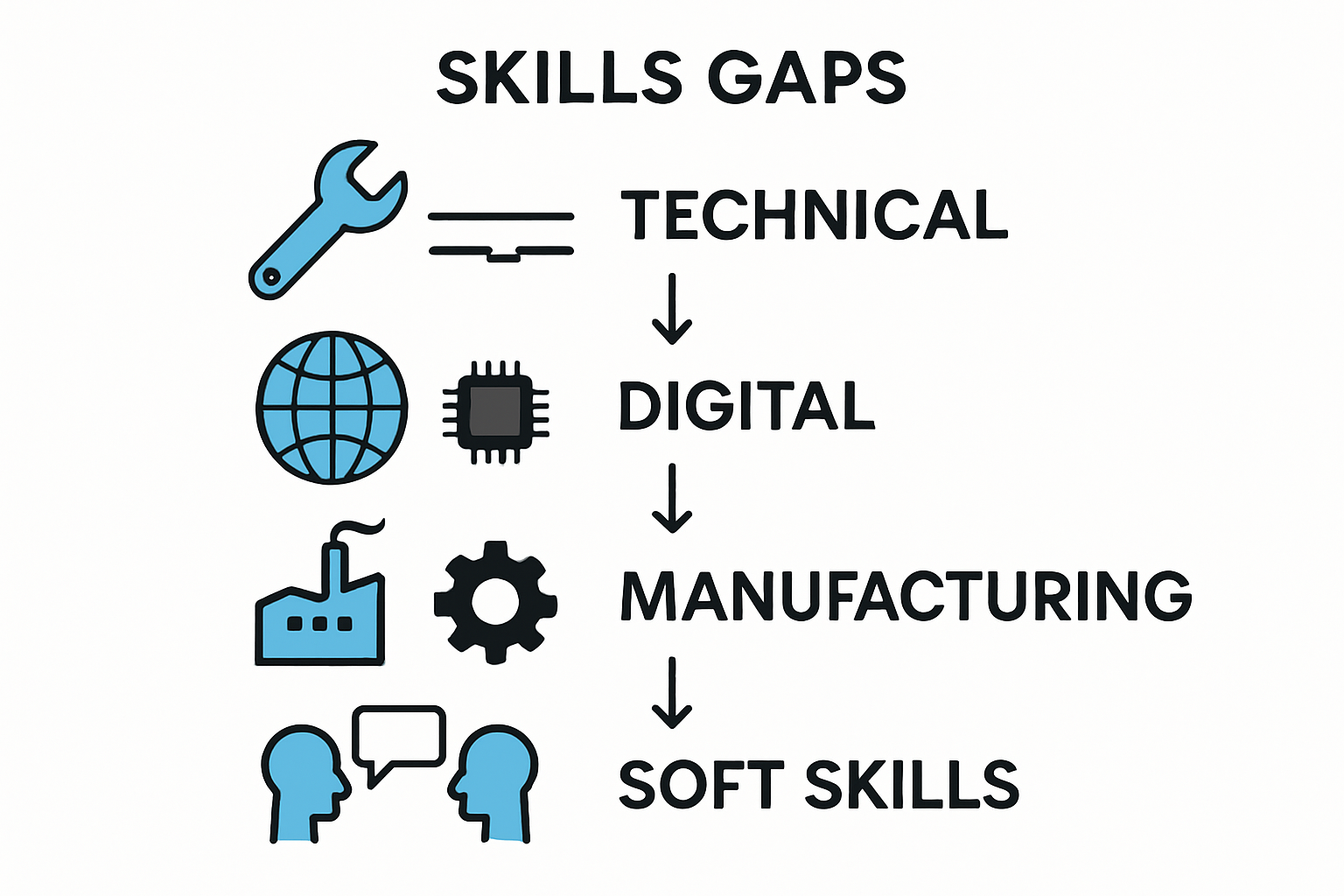
This gap can manifest in multiple dimensions:
- Technical skills related to specific job functions
- Soft skills like communication and problem-solving
- Emerging technological competencies demanded by digital transformation
Factors Contributing to Skills Gaps
Multiple interconnected factors contribute to the emergence and expansion of skills gaps. Technological advancement stands as the primary driver, with digital transformation continuously reshaping job requirements faster than traditional education and training systems can adapt. Coursera’s research highlights that rapid technological changes create persistent disconnects between workforce capabilities and emerging job demands.
Key contributory elements include:
- Accelerated technological innovation
- Shifting industry paradigms
- Limited access to continuous professional development
- Educational curricula lagging behind market needs
- Inadequate corporate training infrastructure
Implications of Unaddressed Skills Gaps
Ignoring skills gaps can have profound consequences for organizations. When workforce capabilities fail to align with strategic requirements, businesses experience reduced productivity, increased recruitment costs, and diminished competitive advantage. Employees may feel overwhelmed, leading to decreased job satisfaction and higher turnover rates.
Effective skills gap management requires a proactive, strategic approach involving continuous learning, targeted training programs, and adaptive workforce development strategies. Organizations must invest in understanding their specific skills landscape, implementing robust assessment mechanisms, and creating personalized learning pathways that bridge existing competency gaps.
Ultimately, recognizing and addressing skills gaps is not just about filling technical knowledge deficits—it’s about creating a resilient, adaptable workforce capable of navigating complex, dynamic professional environments.
Common Examples of Skills Gaps
Skills gaps are widespread across industries, presenting significant challenges for organizations seeking to maintain competitive performance. Understanding these gaps is crucial for developing targeted strategies to address workforce development and training needs.
Technology and Digital Skills Gaps
In the rapidly evolving digital landscape, technology-related skills gaps have become increasingly prominent. Research from the OECD reveals that 46% of firms struggle with technical skills deficiencies. The digital sector experiences particularly acute challenges, with only 51% of U.S. high schools teaching computer science, creating a substantial disconnect between educational preparation and industry requirements.
Key technology skills gaps include:
- Artificial Intelligence and Machine Learning competencies
- Cybersecurity expertise
- Data Analysis and Visualization skills
- Cloud Computing implementation
- Advanced Programming techniques

Manufacturing and Technical Skills Shortages
The manufacturing sector exemplifies a critical skills gap scenario. Current projections indicate approximately 600,000 open jobs, with an anticipated 3.8 million additional openings by 2033. These gaps stem from a combination of technological advancement and a shortage of both adaptive and role-specific competencies.
Manufacturing skills gaps typically involve:
- Advanced machine operation
- Precision engineering
- Automation and robotics integration
- Complex problem-solving in technical environments
- Adaptive technical maintenance skills
Soft Skills and Professional Competency Gaps
Beyond technical capabilities, organizations increasingly recognize the importance of soft skills. The OECD report highlights that 34% of firms struggle with problem-solving and interpersonal skills, which are critical for effective workplace collaboration.
Prominent soft skills gaps include:
- Critical thinking and analytical reasoning
- Emotional intelligence
- Communication across diverse teams
- Adaptability and change management
- Leadership and strategic decision-making
These skills gaps transcend individual industries, affecting organizations across sectors. Addressing them requires a comprehensive approach involving targeted training, continuous learning programs, and strategic workforce development initiatives. Companies must invest in understanding their specific skills landscape and create personalized learning pathways that bridge existing competency deficiencies.
By proactively identifying and addressing these skills gaps, organizations can develop a more resilient, adaptable workforce capable of meeting the complex challenges of today’s dynamic professional environments.
Why Skills Gaps Matter Now
In the rapidly transforming global workforce, skills gaps have emerged as a critical challenge with far-reaching implications for businesses, economies, and individual professionals. The urgency of addressing these gaps has never been more pronounced, driven by unprecedented technological disruption and evolving workplace dynamics.
Economic and Organizational Impact
The economic stakes of skills gaps are staggeringly high. Research indicates that a global skilled employee shortage could potentially cost businesses $8.5 trillion by 2030. Wiley’s 2023 survey of human resources professionals revealed that nearly 70% of organizations are experiencing skills gaps, a significant increase from 55% in 2021.
These gaps create substantial challenges:
- Reduced organizational competitiveness
- Increased recruitment and training expenses
- Decreased productivity and innovation potential
- Higher employee turnover rates
- Limitations in strategic business execution
Technological Disruption and Workforce Transformation
The accelerating pace of technological change is a primary driver of skills gaps. Current projections suggest that 44% of workers’ skills will be disrupted within the next five years. This rapid transformation demands continuous learning and adaptability from professionals across all sectors.
Key technological disruption factors include:
- Artificial Intelligence integration
- Automation of traditional job functions
- Emerging digital platforms
- Rapidly evolving technical competencies
- Remote and hybrid work models
Strategic Workforce Development
Addressing skills gaps requires a holistic, proactive approach to workforce development. Organizations must move beyond traditional training models and embrace dynamic, personalized learning strategies that anticipate future skill requirements.
Effective strategies involve:
- Continuous skills assessment
- Personalized learning pathways
- Investment in reskilling and upskilling programs
- Collaboration with educational institutions
- Leveraging advanced learning technologies
The skills gap is not merely a technical challenge but a strategic imperative. Companies that successfully navigate this landscape will gain significant competitive advantages, creating agile, resilient workforces capable of thriving in an increasingly complex professional environment.
By recognizing the urgency of skills development and implementing forward-thinking strategies, organizations can transform potential workforce vulnerabilities into opportunities for growth, innovation, and sustained success.
Strategies for Bridging the Gap
Addressing skills gaps requires a multifaceted, strategic approach that empowers organizations and individuals to navigate the complex landscape of workforce development. As the professional world continues to evolve rapidly, proactive and innovative strategies become essential for maintaining competitive advantage.
Skills-Based Learning and Development
According to the World Economic Forum, employers anticipate 39% of workers’ core skills will change by 2030, underscoring the critical need for continuous learning and adaptive skill development. Organizations must pivot from traditional training models to more dynamic, personalized learning pathways.
Effective skills-based learning strategies include:
- Microlearning modules targeting specific competency gaps
- Online certification programs
- Personalized learning platforms
- Collaborative skill-sharing initiatives
- Adaptive training technologies
Innovative Recruitment and Talent Development
Recent data shows that 81% of employers adopted skills-based hiring in 2024, a significant increase from 73% in 2023. This shift represents a fundamental reimagining of talent acquisition and development strategies.
Key approaches for innovative talent management:
- Implementing skills assessment frameworks
- Developing internal mobility programs
- Creating mentorship and cross-functional training
- Utilizing AI-powered skills matching technologies
- Designing flexible career progression pathways
Collaborative Ecosystem Development
Bridging skills gaps requires a holistic approach that extends beyond individual organizations. Research indicates that the global skills shortage could potentially cost businesses $8.5 trillion by 2030, emphasizing the need for collaborative solutions.
Strategic collaboration mechanisms include:
- Partnerships with educational institutions
- Industry-wide training consortiums
- Public-private skill development initiatives
- Government-supported reskilling programs
- Cross-sector knowledge exchange platforms
Successful skills gap strategies demand a proactive, adaptable mindset. Organizations must view skill development not as a one-time intervention but as an ongoing, dynamic process. By investing in comprehensive, forward-looking approaches, businesses can transform potential workforce challenges into opportunities for innovation, growth, and sustained competitive advantage.
The most successful organizations will be those that create learning cultures where continuous skill development is not just encouraged, but integral to their operational philosophy. This approach ensures workforce resilience, individual employee empowerment, and organizational adaptability in an increasingly complex professional landscape.
Frequently Asked Questions
What is a skills gap?
A skills gap is the difference between the skills employees currently possess and the skills that employers require for effective job performance. This gap can hinder organizational success and employee growth.
What are the main causes of skills gaps in the workplace?
Skills gaps often arise due to rapid technological advancements, changes in industry demands, and outdated educational curricula. Limited access to ongoing professional development also contributes to this disconnect.
How can organizations identify skills gaps?
Organizations can identify skills gaps through systematic skills assessments, employee feedback, and performance reviews. Monitoring industry trends and benchmarking against competitors can also reveal areas needing improvement.
Why are skills gaps important to address now?
Addressing skills gaps is crucial as they can lead to decreased productivity, increased turnover rates, and higher recruitment costs. Ignoring these gaps can jeopardize a company’s competitive edge and ability to adapt to technological advancements.
Bridge the Skills Gap with Peuneo
In today’s fast-paced work environment, addressing skills gaps is not just a necessity—it’s a strategic imperative. As revealed in our discussed article, unaddressed skills mismatches can lead to reduced productivity and increased turnover. With many organizations struggling to keep up with technical and soft skill demands, it’s clear that companies need proactive solutions to foster a competent workforce.

Don’t let your team become a statistic! At Peuneo, we specialize in accredited training programs tailored to meet governmental and corporate needs, ensuring your team is not just compliant but ready to excel. Explore our online learning portal today to find courses that directly target the essential skills your employees require. Transform challenges into opportunities by investing in dynamic training and consulting services that empower your workforce. Take the first step towards bridging the skills gap—visit us now at https://peuneo.co.za to unlock your team’s potential!