

Project management is the pulse of successful organizations today. Surprisingly, 28 times less money is wasted by companies that invest in proven project management practices. But here’s the twist: mastering project management is about much more than just keeping tasks organized. It’s a blend of technical skills, visionary leadership, and emotional intelligence that transforms mundane endeavors into powerful engines of change. Are you ready to discover the essential skills that can elevate your project management game?
Understanding Project Management Foundations
Project management is far more than juggling tasks and deadlines. At its core, it’s a disciplined approach to bringing ideas to life through careful planning, execution, and monitoring. Before diving into the specific skills needed for project management, we must understand what project management truly entails and why it forms the backbone of successful organizational initiatives.
What Is Project Management?
Project management is the application of knowledge, skills, tools, and techniques to deliver something of value to people. The temporary nature of projects stands in contrast to business as usual operations, which are repetitive and ongoing. Projects have defined beginnings and ends, with specific resources and timelines assigned to achieve particular objectives.
When we talk about project management, we’re referring to a methodical process that involves:
- Initiating: Defining the project scope and objectives
- Planning: Creating detailed roadmaps for time, cost, and resources
- Executing: Coordinating people and resources to implement the plan
- Monitoring: Tracking, reviewing, and regulating progress
- Closing: Formally completing and evaluating the project
These phases provide structure to what might otherwise be chaotic endeavors. A project manager oversees this entire lifecycle, ensuring that all moving parts work together harmoniously.
Why Project Management Matters
The significance of effective project management cannot be overstated. Organizations that invest in proven project management practices waste 28 times less money because their strategic initiatives are completed more successfully. Project management isn’t just about keeping things organized—it’s about delivering value consistently.
In today’s fast-paced business environment, the ability to execute projects efficiently provides a competitive edge. Companies recognize this reality, which explains why the demand for skilled project managers continues to grow across industries.
The Evolution of Project Management
Project management has evolved significantly from its early formalization in the mid-20th century. What began as primarily scheduling techniques like Gantt charts and PERT diagrams has expanded into a rich discipline encompassing human psychology, leadership theory, and cutting-edge technology.
Today’s project managers operate in environments characterized by:
- Increased complexity of projects
- Greater stakeholder expectations
- Rapid technological change
- Global teams and remote collaboration
- Agile and hybrid methodologies
This evolution has shaped the skills needed for project management today. While technical expertise remains important, successful project managers must demonstrate adaptability, emotional intelligence, and strategic thinking.
Research shows that competencies related to personal and social dimensions—such as leadership, communication, and emotional intelligence—significantly impact project success. This represents a shift from earlier perspectives that emphasized technical knowledge above all else.
As we explore the specific skills required for effective project management, remember that these competencies don’t exist in isolation. The modern project manager must integrate technical, leadership, and strategic capabilities to navigate complex business environments successfully. The most effective project managers understand both the science of management processes and the art of inspiring teams toward shared goals.
Key Takeaways
| Takeaway | Explanation |
|---|---|
| Project Management is Multifaceted | It involves careful planning, execution, monitoring, and closing, ensuring all project components work together effectively. |
| The Demand for Skilled Project Managers is Rising | Organizations that invest in proven project management practices are significantly more successful, highlighting the need for skilled professionals in this area. |
| Master Technical and Soft Skills | Successful project managers must combine technical capabilities, such as knowledge of methodologies and tools, with strong soft skills in leadership, communication, and conflict resolution. |
| Experiential Learning is Crucial | Developing project management skills requires hands-on experience; theoretical knowledge alone is insufficient for mastery. |
| Continuous Reflection Enhances Skills | Deliberate reflection on project experiences, successes, and challenges is essential for improving project management capabilities over time. |
Hard Skills and Technical Tools
While interpersonal abilities are crucial, the skills needed for project management also include a robust set of hard skills and technical competencies. These concrete, measurable abilities form the practical foundation that enables project managers to plan, execute, and deliver successful projects. Let’s explore the essential technical skills that every effective project manager needs to master.
Project Management Methodologies

Successful project managers possess deep knowledge of established project management frameworks. Whether it’s traditional Waterfall, Agile, Scrum, Lean, Six Sigma, or PRINCE2, understanding when and how to apply different methodologies is fundamental. Each approach offers distinct advantages depending on the project’s nature and requirements.
Waterfall provides structure for linear projects with clearly defined phases and deliverables. In contrast, Agile offers flexibility for projects where requirements might evolve. A project manager must not only understand these methodologies conceptually but also know how to implement them practically. This includes creating appropriate documentation, establishing governance structures, and following the specific processes each methodology requires.
Competent project managers don’t rigidly adhere to a single approach but adapt methodologies to fit the specific project context. This adaptive expertise comes from both formal training and hands-on experience across various project types.
Planning and Scheduling Tools
Mastery of project scheduling software and planning tools constitutes a critical hard skill for project management. Today’s project managers must be proficient with:
- Project Management Information Systems (PMIS) like Microsoft Project, Primavera, or Asana
- Collaborative platforms such as Trello, Monday.com, or Basecamp
- Specialized tools for resource allocation, budgeting, and risk management
Beyond basic operation, project managers need to understand how to structure work breakdown structures (WBS), develop critical path analyses, and create Gantt charts that communicate project timelines effectively. These technical skills enable precise planning and monitoring of project progress against established baselines.
Data Analysis and Reporting
Modern project management increasingly relies on data-driven decision-making. Project managers must develop skills in collecting, analyzing, and interpreting project metrics and performance data. This includes proficiency with:
- Creating and interpreting earned value management (EVM) reports
- Developing dashboards that visualize project status effectively
- Analyzing trends to forecast potential issues before they impact the project
- Preparing comprehensive reports for different stakeholder audiences
Research suggests that technology proficiency and data skills remain among the most valued hard skills across industries, including project management. The ability to transform raw project data into actionable insights is what separates strategic project managers from mere task managers.
Financial Management and Budgeting
Project managers must understand financial principles and budgeting techniques specific to project environments. This includes:
Developing detailed project budgets that account for all resource requirements
Tracking actual expenditures against planned costs
Managing contingency reserves appropriately
Calculating return on investment (ROI) and other financial metrics
These financial skills allow project managers to make sound decisions regarding resource allocation and help justify project investments to stakeholders. Understanding concepts like net present value, internal rate of return, and cost-benefit analysis provides project managers with the language needed to communicate effectively with financial stakeholders.
Technical Documentation
Clear, comprehensive documentation is essential for project success and knowledge transfer. Project managers must excel at creating and maintaining various technical documents, including project charters, requirements specifications, risk registers, change management plans, and closure reports. The ability to document complex technical information in accessible language ensures that all stakeholders share a common understanding of project parameters and progress.
These hard skills provide the technical foundation upon which successful project management careers are built. While technology and methodologies may evolve, the fundamental need for structured planning, execution, and monitoring remains constant. Project managers who combine these technical competencies with strong soft skills position themselves for success across diverse project environments.
Leadership and Communication Mastery
At the heart of the skills needed for project management lies the ability to lead and communicate effectively. These interconnected competencies often distinguish exceptional project managers from merely adequate ones. Leadership and communication aren’t just supplementary skills—they’re fundamental to orchestrating the complex human dynamics that determine project success.
Visionary Leadership
Effective project managers don’t simply manage tasks; they inspire teams toward shared objectives. Visionary leadership involves articulating a compelling project vision that resonates with team members and stakeholders alike. This means translating technical requirements and business objectives into meaningful work that team members can connect with personally.
A project manager with strong leadership skills creates an environment where team members understand not just what they’re doing, but why it matters. This clarity of purpose drives motivation and commitment, particularly during challenging project phases. When team members believe in the project’s significance, they’re more likely to demonstrate initiative, creativity, and resilience.
Leadership in project management also involves demonstrating integrity and ethical decision-making. Teams follow leaders they trust, and trust emerges from consistent, principled behavior. Project managers must model the professionalism and work ethic they expect from their teams while remaining authentic and approachable.
Strategic Communication
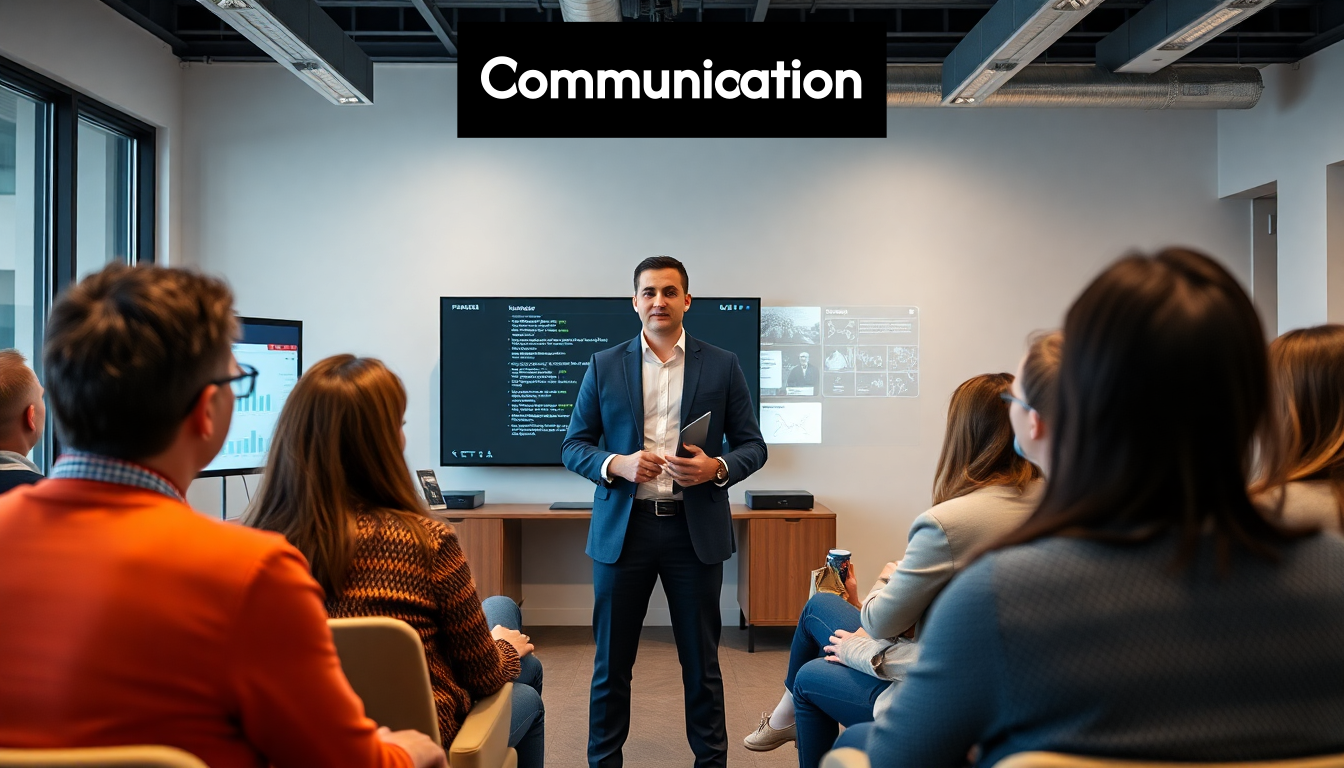
Research demonstrates that leadership and communication share a symbiotic relationship—neither can exist effectively without the other. For project managers, communication isn’t simply about disseminating information; it’s a strategic competency that builds trust, fosters teamwork, clarifies objectives, and motivates teams.
Strategic communication involves tailoring messages for different audiences. Project managers must communicate technical details to development teams, business impacts to executives, and progress updates to clients—each requiring different language, level of detail, and delivery method. This adaptability in communication style ensures that all stakeholders receive information in ways they can readily understand and act upon.
Active listening forms another crucial component of communication mastery. Project managers who truly listen gain insight into team dynamics, identify potential issues before they escalate, and make team members feel valued. This two-way communication creates an environment where ideas flow freely and problems surface early when they’re easier to address.
Conflict Resolution and Negotiation
Projects rarely progress without encountering conflicts—competing priorities, resource constraints, or interpersonal tensions. Skilled project managers view conflict not as a problem to avoid but as an opportunity to clarify expectations and improve outcomes.
Effective conflict resolution requires:
- Addressing issues promptly rather than allowing them to fester
- Creating safe spaces for honest dialogue
- Focusing on interests rather than positions
- Seeking mutually beneficial solutions when possible
Closely related to conflict resolution is negotiation skill—the ability to secure necessary resources, manage stakeholder expectations, and find workable compromises. Project managers constantly negotiate for time, budget, scope clarity, and team member availability. The best negotiators in project management prepare thoroughly, understand all parties’ interests, and focus on creating value rather than simply claiming it.
Team Development and Motivation
Project success depends on bringing together diverse individuals with complementary skills and molding them into a cohesive unit. Leadership in project management includes the ability to:
- Assess individual strengths and weaknesses accurately
- Assign responsibilities that align with team members’ abilities and growth potential
- Create development opportunities within the project context
- Recognize achievements and provide constructive feedback
Understanding what motivates different team members allows project managers to create engagement tailored to individual preferences. While some team members respond to public recognition, others might value increased autonomy or opportunities to learn new skills. This personalized approach to motivation demonstrates emotional intelligence and acknowledges the uniqueness of each team member.
Crisis Leadership
Even well-planned projects encounter unexpected challenges. The ability to lead effectively during crises—maintaining calm, making decisions with incomplete information, and keeping teams focused—represents a critical leadership skill for project managers.
Crisis leadership involves transparent communication about challenges while maintaining an appropriate level of confidence. Team members look to project managers for cues about how seriously to take problems and how to respond. By modeling resilience and adaptability, project managers help their teams navigate uncertainty without becoming paralyzed by it.
Mastery of leadership and communication transforms project management from a technical exercise into a powerful vehicle for organizational change and achievement. While methodologies and tools provide structure, it’s these human-centered skills that ultimately determine whether a project merely delivers outputs or truly realizes its intended benefits.
Boosting Skills through Real-World Practice
Identifying the skills needed for project management is only the beginning. Developing these competencies requires deliberate practice in real-world contexts. While formal education provides a foundation, true mastery comes through hands-on experience, reflection, and continuous improvement. This section explores practical strategies for cultivating project management skills through authentic application.
The Experiential Learning Advantage
Project management competencies are inherently practical—they must be applied to be truly understood. Theoretical knowledge alone cannot prepare a project manager for the complexity, ambiguity, and interpersonal dynamics of actual projects. Research on skill acquisition consistently shows that experiential learning accelerates proficiency development far more effectively than passive learning approaches.
Studies indicate that deliberate practice is particularly essential for developing complex interactive skills like those used in project management. The dynamic, collaborative nature of project work means that these skills can’t be fully developed through reading or classroom instruction alone. Just as you wouldn’t expect to become a skilled pianist without touching a piano, you can’t become an effective project manager without leading actual projects.
Experiential learning creates neural pathways through repeated practice, making skills increasingly automatic and intuitive over time. This cognitive embedding allows project managers to respond fluidly to complex situations without having to consciously recall each step of a process or framework.
Starting Small: Volunteer Projects and Side Initiatives
For those early in their project management journey, finding opportunities to practice these skills can seem challenging. However, numerous avenues exist for gaining relevant experience without holding a formal project manager title:
-
Volunteer leadership: Taking charge of community initiatives, nonprofit projects, or professional association activities provides authentic project management experience.
-
Internal improvement projects: Volunteering to coordinate process improvements or special initiatives within your current role demonstrates initiative while building relevant skills.
-
Cross-functional taskforces: Participating in or leading time-limited workgroups addressing specific organizational challenges offers concentrated project experience.
These smaller-scale opportunities allow aspiring project managers to practice core skills like planning, stakeholder management, and team coordination in lower-risk environments. They also generate concrete examples of project experience that can strengthen professional portfolios and resumes.
Progression Through Project Complexity
Skill development in project management follows a natural progression from simple to increasingly complex projects. This graduated approach allows practitioners to build confidence and competence through manageable challenges:
- Begin with well-defined, small-scale projects with limited stakeholders and clear objectives
- Progress to projects with multiple workstreams requiring coordination across several team members
- Advance to cross-functional initiatives requiring integration of diverse perspectives and priorities
- Eventually tackle complex programs with significant organizational impact and numerous stakeholders
Each level of complexity introduces new challenges that stretch capabilities without overwhelming the developing project manager. This progressive approach aligns with how our brains form and strengthen neural connections through increasingly sophisticated applications of knowledge.
Reflection and Deliberate Improvement
Merely accumulating project experience isn’t sufficient for mastery. The differentiating factor is deliberate reflection—the conscious examination of what worked, what didn’t, and why. Effective project managers develop habits of structured reflection through:
- Personal project journals documenting key decisions, challenges, and outcomes
- Regular debriefs with team members and stakeholders to gather diverse perspectives
- Formal retrospectives that identify specific improvement opportunities for future projects
- Mentoring relationships that provide expert guidance and accelerate learning
This reflective practice transforms raw experience into refined expertise. By analyzing successes and failures, project managers develop nuanced mental models that guide future decision-making and approach.
Simulations and Scenario-Based Learning
Between formal education and full project responsibility lies a valuable middle ground: structured simulations and scenario-based learning. These approaches provide safe environments to practice project management skills with realistic complexity but controlled risk. Options include:
- Project management simulations that compress timeline and consequences
- Role-playing exercises focusing on challenging stakeholder interactions
- Case studies requiring analysis and recommendation development
- Tabletop exercises addressing crisis response and decision-making under pressure
These methods bridge the gap between theory and practice, allowing project managers to experiment with different approaches and learn from mistakes without real-world consequences.
The path to project management mastery requires commitment to continuous practice. By seeking out opportunities to apply skills in progressively challenging contexts and reflecting deliberately on these experiences, aspiring project managers transform theoretical knowledge into practical expertise. The skills needed for project management aren’t simply acquired—they’re cultivated through persistent, mindful application in authentic situations.
Frequently Asked Questions
What are the key skills needed for project management success?
Successful project management requires a blend of hard skills, such as knowledge of methodologies and financial management, along with soft skills including leadership, communication, and conflict resolution.
Why is project management important for organizations?
Effective project management minimizes wasted resources and ensures that strategic initiatives are delivered successfully, providing organizations with a competitive edge in today’s fast-paced business environment.
How can I develop my project management skills?
You can develop your project management skills through hands-on experience, volunteering for projects, participating in cross-functional teams, and engaging in reflective practices after each project to identify areas for improvement.
What project management methodologies should I know?
Familiarity with various project management methodologies such as Waterfall, Agile, Scrum, Lean, and Six Sigma is essential. Understanding when to apply each methodology can significantly influence the success of a project.
Elevate Your Project Management Skills with Peuneo!
Unlocking the secrets to project management success isn’t just about understanding methodologies—it’s about blending hard and soft skills to deliver exceptional results. If you’re feeling overwhelmed by the complexities of managing projects, you’re not alone! Many budding project managers find themselves struggling with leadership, communication, and financial management, impacting their ability to drive project success. But the good news? You have the power to transform your skills and career with the right training!

At Peuneo, we believe that effective project management demands more than theory; it requires practical experience and insights drawn from industry experts. Our accredited training programs are meticulously designed to equip you with essential competencies that bridge the gap between knowledge and real-world application. Join our online courses today and master the skills that top project managers prioritize—from strategic communication to financial oversight. Don’t wait—visit Peuneo now to enroll and start your journey toward project management mastery. Your future self will thank you!