

In today’s rapidly evolving workplace, organizations face unprecedented challenges in maintaining a competitive and adaptable workforce. According to the World Economic Forum, employers expect 39% of workers’ core skills to change by 2030. But get this. Many companies are still treating skills audits as just another box to check off in HR procedures. Because the true power of a skills audit lies in its ability to transform the workforce, ensuring that every employee is equipped with the right skills to thrive in the future.
Table of Contents
- Why Skills Audits Matter Now
- Key Steps For Your Skills Audit
- Making The Most Of The Findings
- Common Mistakes To Avoid
Quick Summary
| Takeaway | Explanation |
|---|---|
| Skills Audits Are Essential | In a rapidly changing work environment, skills audits are critical for maintaining competitive workforce capabilities and organizational agility. |
| Align Skills with Strategic Objectives | Organizations should focus audits on skills directly connected to their strategic business goals for maximum impact and relevance. |
| Engage Stakeholders Effectively | Active involvement from leadership and various departments is crucial to ensure skills audits drive meaningful change and avoid becoming bureaucratic exercises. |
| Adopt Continuous Improvement | Skills audits should be viewed as ongoing processes that require regular reassessment and adaptability to respond to emerging skill needs and technological advancements. |
| Transform Findings into Action | The value of a skills audit lies in translating insights into tailored training programs and strategic workforce development plans for meaningful organizational growth. |
Why Skills Audits Matter Now
In today’s rapidly evolving workplace, organizations face unprecedented challenges in maintaining a competitive and adaptable workforce. Skills audits have emerged as a critical strategic tool for businesses navigating the complex landscape of talent management and organizational development.
The Changing Landscape of Work
The modern workplace is experiencing a dramatic transformation driven by technological advancements and global economic shifts. According to the World Economic Forum, employers expect 39% of workers’ core skills to change by 2030. This staggering statistic underscores the urgent need for organizations to proactively assess and develop their workforce capabilities.
Companies can no longer rely on traditional approaches to talent management. The rapid pace of technological innovation, particularly in areas like artificial intelligence, machine learning, and digital transformation, demands a more dynamic and responsive approach to understanding organizational skills. Skills audits provide a comprehensive snapshot of current workforce capabilities, allowing leaders to identify critical gaps and develop targeted strategies for upskkilling and reskilling.
Strategic Benefits of Comprehensive Skills Assessments
Deloitte’s research reveals that nearly 78% of organizations view skills and talent availability as a significant operational risk. Skills audits offer multiple strategic advantages that go beyond simple talent mapping:
- Workforce Optimization: Identify precise skill gaps and alignment between current employee capabilities and organizational needs
- Targeted Training Development: Create focused learning and development programs that directly address identified skill shortages
Moreover, skills audits enable organizations to make data-driven decisions about talent acquisition, internal mobility, and workforce planning. By understanding the exact skills present within the organization, leaders can develop more effective strategies for recruiting, retaining, and developing top talent.
Future-Proofing Organizational Capabilities
In an era of unprecedented workplace disruption, skills audits are no longer optional – they are essential. Research from organizational development experts demonstrates that proactive skills assessment can dramatically improve organizational resilience and competitive advantage. Companies that regularly conduct comprehensive skills audits are better positioned to:
- Anticipate and prepare for emerging skill requirements
- Create more agile and adaptable workforce strategies
- Reduce recruitment costs by leveraging internal talent development
- Enhance employee engagement through targeted professional development opportunities
The cost of inaction is significant. Organizations that fail to understand and actively manage their workforce skills risk falling behind more adaptive competitors. A robust skills audit process provides the insights necessary to make informed decisions about talent management, training investments, and strategic workforce planning.
Ultimately, skills audits represent more than just an HR exercise – they are a critical strategic tool for organizational success in an increasingly complex and dynamic business environment.
Key Steps for Your Skills Audit
Conducting an effective skills audit requires a structured and comprehensive approach that goes beyond simple checklist completion. Organizations must design a methodical process that captures nuanced workforce capabilities and aligns skill assessments with strategic business objectives.
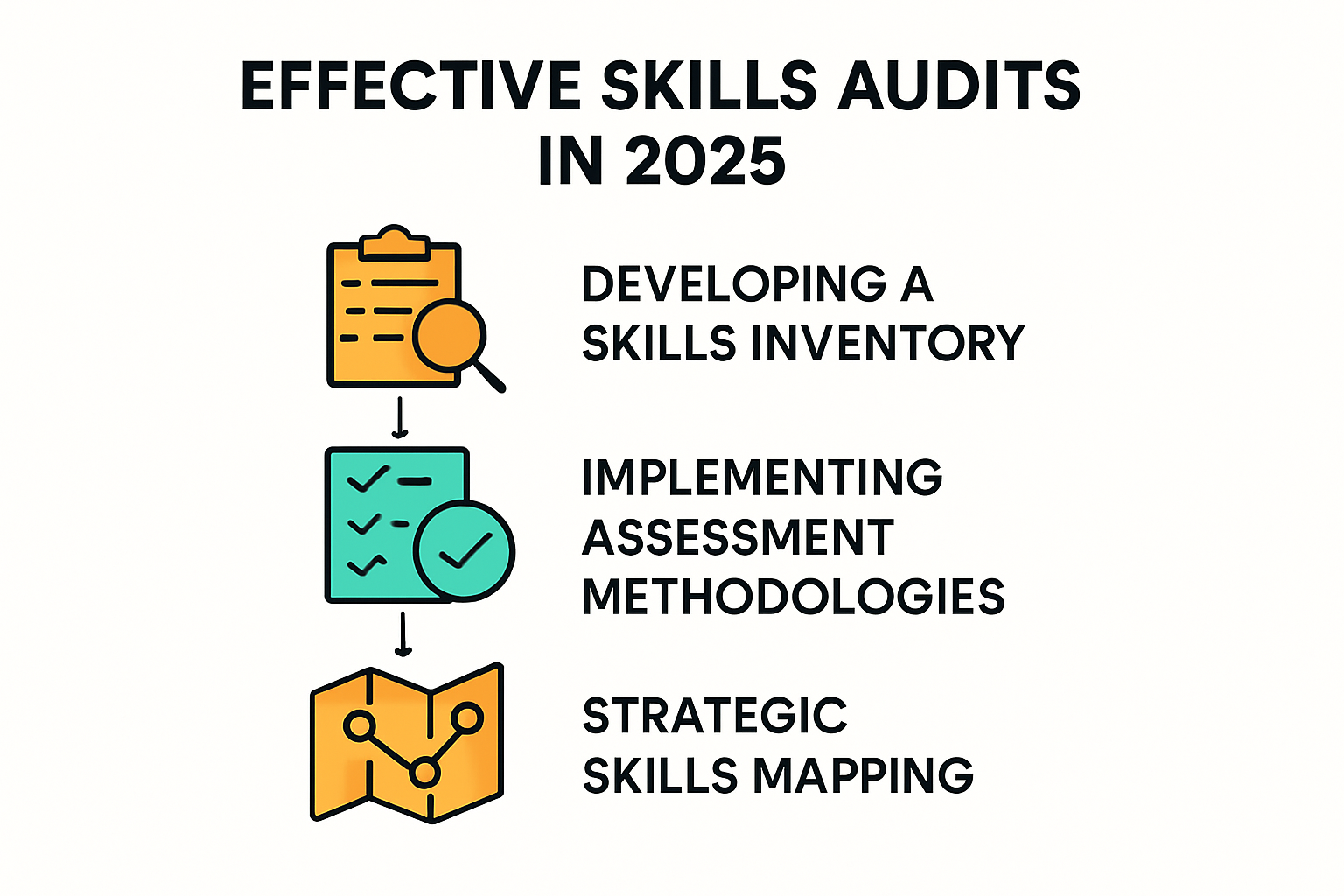
Developing A Comprehensive Skills Inventory
Research from HR technology experts highlights the importance of creating a robust skills inventory that encompasses multiple dimensions of organizational competence. This foundational step involves systematically collecting information across several critical domains:
- Technical Skills: Specific technical competencies relevant to job roles
- Leadership Capabilities: Management and strategic thinking abilities
- Interpersonal Skills: Communication, collaboration, and emotional intelligence
The inventory should integrate multiple data sources, including professional certificates, performance reviews, managerial feedback, and self-reported skill assessments. By creating a multi-dimensional view of workforce capabilities, organizations can develop a more accurate understanding of their current skill landscape.
Implementing Robust Assessment Methodologies
Competency frameworks from advanced HR research recommend a multi-modal approach to skills assessment. Effective skills audits require a combination of quantitative and qualitative evaluation methods:
- Structured interviews with employees and managers
- Comprehensive self-assessment surveys
- Formal skills proficiency tests
- Performance data analysis
- 360-degree feedback mechanisms
This holistic approach ensures a more nuanced and accurate representation of workforce skills. By utilizing diverse assessment techniques, organizations can mitigate potential biases and capture a more comprehensive view of employee capabilities.
Strategic Skills Mapping And Future Planning
Organizational development experts emphasize that skills audits are not just about capturing current capabilities but also about anticipating future workforce needs. The final phase of a skills audit involves strategic skills mapping that aligns current competencies with emerging organizational requirements.
Key considerations in this phase include:
- Identifying skill gaps between current and future role requirements
- Developing targeted training and development programs
- Creating succession planning strategies
- Informing recruitment and talent acquisition efforts
Successful skills audits transform raw data into actionable insights. They provide organizations with a dynamic tool for workforce optimization, enabling proactive talent management instead of reactive solutions. By treating skills audits as a continuous process rather than a one-time event, companies can build more adaptable, skilled, and competitive workforces.
The ultimate goal is not merely to document existing skills but to create a strategic framework that supports ongoing employee development and organizational growth. A well-executed skills audit becomes a powerful catalyst for innovation, efficiency, and long-term business success.
Making the Most of the Findings
Transforming skills audit data into meaningful organizational action requires strategic planning and intentional implementation. The true value of a skills audit lies not in the assessment itself, but in how effectively an organization can leverage the insights to drive workforce development and strategic growth.
Translating Insights into Strategic Development
HR development experts emphasize that skills audit findings should directly inform organizational development strategies. This means moving beyond passive documentation to create targeted, actionable plans that address identified skill gaps and enhance workforce capabilities.
Effective translation of audit findings involves several critical steps:
- Prioritizing Skill Gaps: Identify the most critical skills that align with organizational strategic objectives
- Designing Targeted Training Programs: Develop customized learning interventions that address specific skill deficiencies
- Creating Individual Development Plans: Craft personalized growth pathways for employees based on audit results
Organizations must approach these insights as a dynamic roadmap for talent development, not a static report. By connecting audit findings to specific business goals, companies can create more meaningful and impactful skill enhancement strategies.
Implementing Continuous Skills Management
Talent management research highlights the importance of viewing skills audits as an ongoing process rather than a one-time event. Continuous skills management involves:
- Regular reassessment of workforce capabilities
- Tracking employee skill development over time
- Creating adaptive learning ecosystems
- Establishing mechanisms for real-time skills tracking
This approach transforms the skills audit from a periodic check-up into a live, dynamic system of workforce optimization. By implementing robust tracking mechanisms, organizations can create more responsive and agile talent development strategies.
Maximizing Organizational Impact
Workforce development specialists suggest that the most successful organizations use skills audit findings to drive broader strategic initiatives. This means integrating audit insights across multiple organizational functions:
- Recruitment and talent acquisition strategies
- Performance management systems
- Compensation and career progression frameworks
- Strategic workforce planning
The ultimate goal is to create a holistic approach to talent management that views skills as a dynamic, continuously evolving asset. Organizations that successfully implement this approach can transform their skills audit from a simple assessment tool into a powerful strategic driver of organizational success.
By embracing a comprehensive and forward-thinking approach to skills audit findings, companies can build more adaptable, skilled, and competitive workforces. The key is to view these insights not as an endpoint, but as a starting point for continuous improvement and strategic workforce development.
Common Mistakes to Avoid
Skills audits can be powerful tools for organizational development, but they can also become ineffective or counterproductive when certain critical errors are made. Understanding and avoiding these common pitfalls is essential for creating a meaningful and impactful skills assessment process.
Misaligning Audit Scope and Strategic Objectives
HR strategy experts warn that one of the most significant mistakes organizations make is defining an overly broad or unfocused audit scope. Not every skill within an organization requires comprehensive assessment. Instead, companies should concentrate on skill categories directly aligned with their strategic business goals.
Typical scope errors include:
- Attempting to audit every conceivable skill
- Failing to prioritize skills critical to organizational performance
- Neglecting to connect skills assessment with specific business outcomes
Successful skills audits require a laser-focused approach that targets skills most relevant to current and future organizational needs. This means carefully selecting assessment areas that demonstrate clear strategic value and potential for meaningful impact.
Insufficient Stakeholder Engagement And Buy-In
Organizational development research consistently highlights the critical importance of comprehensive stakeholder engagement. Skills audits frequently fail when treated as a standalone HR initiative rather than a comprehensive business imperative.
Key elements of effective stakeholder management include:
- Securing leadership support across multiple departments
- Establishing clear project responsibilities
- Defining a dedicated budget
- Creating well-articulated objectives
- Demonstrating tangible business value
Without genuine cross-functional commitment, skills audits risk becoming bureaucratic exercises that generate reports but drive no meaningful change. Successful implementations require active participation and genuine investment from leadership and employees alike.
Neglecting Continuous Improvement And Adaptability
Talent management professionals emphasize that skills audits are not static events but dynamic processes. Organizations often make the mistake of treating these assessments as one-time activities, missing opportunities for ongoing skill development and organizational learning.
Common adaptability mistakes include:
- Failing to establish mechanisms for regular skill reassessment
- Not creating flexible frameworks for continuous learning
- Overlooking emerging skills and technological developments
- Rigidly adhering to outdated skill categorizations
The most effective skills audits create living, adaptable systems that can quickly respond to changing organizational needs and technological landscapes. This requires building flexibility into assessment methodologies and maintaining an open, forward-looking perspective.
Ultimately, avoiding these common mistakes transforms skills audits from bureaucratic exercises into strategic tools for organizational growth. By maintaining focus, ensuring comprehensive engagement, and embracing continuous adaptation, companies can develop robust, meaningful approaches to workforce skill development that drive genuine competitive advantage.
Frequently Asked Questions
What is a skills audit and why is it important?
A skills audit is a thorough assessment of an organization’s workforce capabilities, aimed at identifying skill gaps and ensuring that employees possess the skills needed to align with strategic business objectives. It is essential in today’s rapidly changing workplace to maintain a competitive and adaptable workforce.
How often should organizations conduct skills audits?
Organizations should treat skills audits as an ongoing process rather than a one-time event. Regular audits, ideally conducted annually or semi-annually, help track skill development over time and ensure alignment with evolving organizational needs and technological advancements.
What are common mistakes to avoid during a skills audit?
Common mistakes include misaligning the audit scope with strategic objectives, insufficient stakeholder engagement, and neglecting continuous improvement. Focusing on skills critical to organizational performance and ensuring cross-departmental commitment are key to a successful audit.
How can organizations use the findings from a skills audit?
Findings from a skills audit should directly inform targeted training and development programs, individual development plans, and broader strategic workforce planning. Organizations can maximize impact by translating insights into actionable steps for skill enhancement and ongoing employee development.
Elevate Your Skills Audits with Peuneo
In the race to keep pace with rapidly changing workplace demands, performing effective skills audits has never been more crucial. As outlined in our article, organizations are increasingly recognizing that 39% of workers’ core skills will evolve by 2030, making it vital to proactively address skill gaps before they become liabilities. Are you ready to transform your workforce into a dynamic and adaptable entity?
!
At Peuneo, we empower organizations just like yours by offering accredited training and consulting services tailored to address the identified skill shortages in your skills audit. Our comprehensive online learning portal features a variety of courses designed to refine specific competencies and optimize employee capabilities. Don’t let your organization fall behind—embrace the future of workforce development now! Explore our offerings at https://peuneo.co.za and unlock the potential of your team today. Your journey towards a skilled, compliant, and resilient workforce begins here!