

HR might sound like it’s all paperwork and payroll but that is only scratching the surface. Today HR departments are recognized as strategic powerhouses with companies that excel at talent management being 2.4 times more likely to achieve their business goals. Most people still think HR is mainly about hiring and firing but in reality these leaders shape culture, guide legal protection, and drive growth in ways that hardly anyone notices.
Table of Contents
- Key Responsibilities Of Hr Departments
- How Hr Supports Organizational Strategy
- Hr’s Role In Compliance And Legal Protection
- Developing Talent And Employee Engagement
Quick Summary
| Takeaway | Explanation |
|---|---|
| HR transforms from admin to strategic partner | Modern HR departments drive organizational success beyond traditional administrative tasks, focusing on strategic workforce initiatives and employee engagement. |
| Emphasize continuous employee development | HR should design ongoing training and feedback systems to support staff growth, aligning personal aspirations with organizational goals. |
| Engage employees through meaningful initiatives | HR should implement strategies that foster collaboration, inclusivity, and recognize individual contributions to enhance overall employee motivation. |
| Proactively manage compliance and risk | HR is responsible for ensuring adherence to legal standards and ethical practices, which reduces organizational risks and fosters a fair workplace culture. |
| Foster a culture of continuous learning | Create an environment that supports ongoing skill development and professional growth, empowering employees as strategic partners in success. |
Key Responsibilities of HR Departments
HR departments play a critical strategic role in modern organizations, managing far more than traditional administrative tasks. Their responsibilities have evolved dramatically, transforming from purely administrative functions to strategic business partners that drive organizational success and employee engagement.
Talent Acquisition and Workforce Planning
Recruitment represents a fundamental responsibility of HR departments. Modern HR professionals do not simply fill open positions they strategically align talent acquisition with organizational goals. Learn more about strategic recruitment approaches to understand this complex process.
According to Deloitte’s Global Human Capital Trends Report, organizations increasingly view talent acquisition as a continuous process requiring sophisticated strategies. HR departments now utilize advanced technologies like artificial intelligence and data analytics to identify, attract, and retain top talent. This approach involves creating comprehensive workforce planning strategies that anticipate future skill requirements and potential talent gaps.
The recruitment process includes multiple critical components:
To help clarify the core components of the recruitment process as described in this section, the following table summarizes key recruitment steps and their main focus areas.
| Recruitment Step | Main Focus |
|---|---|
| Talent Sourcing | Identifying potential candidates via diverse channels |
| Candidate Assessment | Evaluating skills, cultural fit, and potential |
| Onboarding | Integrating new employees into the organizational culture |
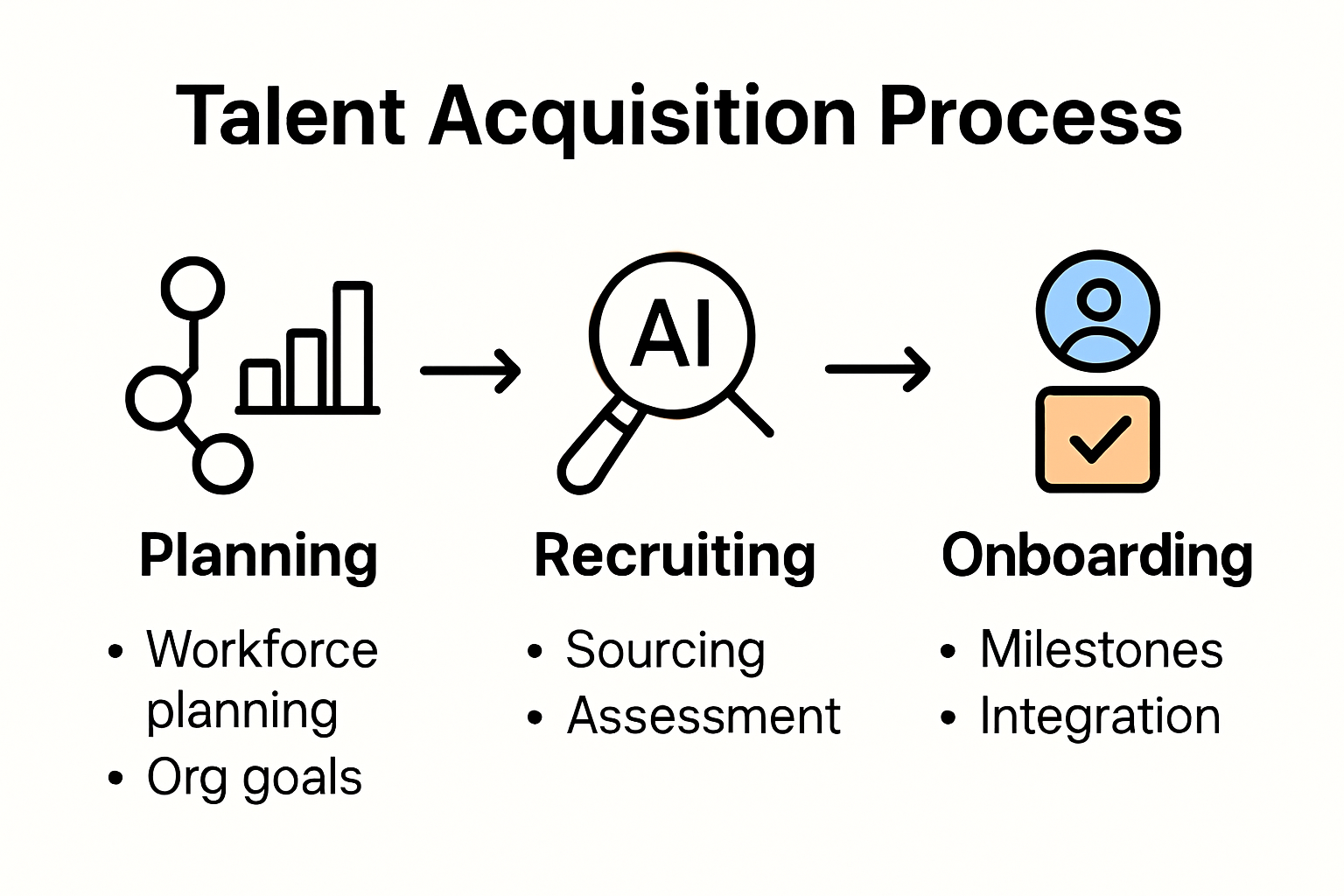
- Talent Sourcing: Identifying potential candidates through diverse channels
- Candidate Assessment: Evaluating skills, cultural fit, and potential
- Onboarding: Integrating new employees effectively into organizational culture
Employee Development and Performance Management
Beyond recruitment, HR departments are responsible for continuous employee development and performance management. This involves creating comprehensive training programs, implementing performance evaluation systems, and designing career progression pathways.
Research from McKinsey & Company indicates that successful organizations invest heavily in employee skill development and create environments that support continuous learning. HR professionals design training modules, conduct skill gap analyses, and develop personalized development plans that align individual growth with organizational objectives.
Performance management has also transformed from annual reviews to more dynamic, continuous feedback mechanisms. HR departments now implement digital platforms that enable real time performance tracking, allowing managers to provide immediate feedback and support employee growth.
Employee Engagement and Organizational Culture
Perhaps the most nuanced responsibility of HR departments involves cultivating a positive organizational culture and maintaining high levels of employee engagement. This goes beyond traditional employee satisfaction surveys and requires a holistic approach to understanding and improving workplace dynamics.
HR professionals now act as culture architects, designing initiatives that promote collaboration, inclusivity, and employee well being. They develop comprehensive employee experience strategies that consider everything from workplace design to mental health support programs.
The role of HR in creating meaningful employee experiences cannot be overstated. By understanding individual motivations, designing supportive work environments, and implementing policies that reflect organizational values, HR departments contribute directly to organizational success and employee retention.
Today’s HR departments are strategic partners driving organizational performance through sophisticated talent management, continuous development, and intentional culture building. Their responsibilities extend far beyond traditional administrative functions, positioning them as critical drivers of organizational growth and success.
How HR Supports Organizational Strategy
In the contemporary business environment, HR has transformed from a purely administrative function to a strategic partner that directly influences organizational success. By aligning human capital with business objectives, HR departments play a crucial role in translating corporate strategy into actionable workforce initiatives.
Strategic Workforce Planning
Strategic workforce planning represents a critical mechanism through which HR supports organizational strategy. Explore advanced talent management techniques to understand how HR anticipates and addresses future talent needs.
Research from Gartner’s Strategic Workforce Planning Report indicates that organizations with robust strategic workforce planning are 2.4 times more likely to achieve their business goals. HR professionals conduct comprehensive analyses that predict future skill requirements, identify potential talent gaps, and develop proactive recruitment and development strategies.
This strategic approach involves:
- Skill Mapping: Analyzing current workforce capabilities
- Future Forecasting: Predicting organizational skill requirements
- Talent Pipeline Development: Creating strategies to acquire and develop necessary talent
Organizational Change Management
HR departments are instrumental in managing organizational change, ensuring smooth transitions that align with strategic objectives. When companies undergo restructuring, mergers, or technological transformations, HR professionals become critical change agents.
According to McKinsey & Company’s Change Management Research, successful change management requires a human centric approach. HR supports this process by:
- Developing communication strategies
- Managing employee expectations
- Providing training and support during transitions
- Mitigating potential resistance to change
Aligning Organizational Culture with Strategic Goals
One of the most nuanced ways HR supports organizational strategy is through deliberate culture management. HR professionals design and implement cultural initiatives that reinforce strategic objectives, creating an environment that naturally drives organizational performance.
This involves creating alignment between organizational values, employee behaviors, and strategic goals. HR accomplishes this through carefully designed:
- Leadership development programs
- Performance management systems
- Recognition and reward mechanisms
- Diversity and inclusion initiatives
By creating a cohesive organizational culture that supports strategic objectives, HR transforms from a support function to a critical strategic partner. The ability to translate high level business strategies into actionable human capital initiatives represents the true value of modern HR departments.
Today’s HR professionals are strategic architects who understand that human capital is the most critical asset in achieving organizational success. Through sophisticated workforce planning, change management, and cultural alignment, HR plays an indispensable role in turning strategic vision into tangible business results.
HR’s Role in Compliance and Legal Protection
In today’s complex regulatory environment, HR departments serve as critical guardians of legal compliance and organizational risk management. Their responsibilities extend far beyond traditional administrative functions, encompassing comprehensive legal protection strategies that safeguard both employees and the organization.
Workplace Regulations and Compliance Management
Learn more about legal compliance strategies to understand the intricate landscape of workplace regulations. HR professionals must navigate an increasingly complex web of employment laws, ensuring organizational practices align with local, national, and international legal standards.
According to SHRM’s Legal Compliance Report, organizations face significant risks when failing to maintain proper compliance. HR departments develop and implement comprehensive compliance frameworks that address multiple critical areas:
This table consolidates the primary compliance areas managed by HR departments, providing an at-a-glance overview of their legal and regulatory responsibilities.
| Compliance Area | Description |
|---|---|
| Employment Law Adherence | Ensures fair hiring, compensation, and termination practices |
| Workplace Safety Regulations | Implements policies that protect employee well-being |
| Anti-Discrimination Policies | Creates inclusive environments to prevent workplace discrimination |
- Employment Law Adherence: Ensuring fair hiring, compensation, and termination practices
- Workplace Safety Regulations: Implementing policies that protect employee well being
- Anti Discrimination Policies: Creating inclusive environments that prevent workplace discrimination
Risk Mitigation and Legal Documentation
HR professionals play a pivotal role in protecting organizations from potential legal challenges. This involves creating robust documentation, developing clear policies, and maintaining meticulous records that can serve as critical evidence in potential legal disputes.
Research from Deloitte’s Workplace Legal Risk Analysis highlights that proactive legal documentation can reduce organizational risk by up to 60%. HR departments accomplish this through:
- Developing comprehensive employee handbooks
- Creating clear employment contracts
- Maintaining detailed performance and disciplinary records
- Implementing standardized reporting mechanisms for workplace issues
Ethical Standards and Organizational Integrity
Beyond legal compliance, HR departments are responsible for maintaining high ethical standards and organizational integrity. This involves creating cultures of transparency, accountability, and ethical behavior that extend beyond mere legal requirements.
HR professionals design and implement:
- Ethics training programs
- Whistleblower protection policies
- Conflict of interest guidelines
- Transparent reporting mechanisms for potential ethical violations
The role of HR in legal protection goes far beyond reactive measures. Modern HR departments proactively create environments that prevent legal issues from arising, understanding that prevention is significantly more effective than litigation.
By combining deep legal knowledge, strategic thinking, and a commitment to organizational values, HR professionals transform compliance from a mere checkbox exercise into a strategic advantage. They protect organizations not just through rules and regulations, but by fostering cultures of respect, fairness, and ethical conduct.
In an era of increasing regulatory complexity and heightened scrutiny, HR’s role in legal protection has never been more critical. These professionals serve as the first line of defense, ensuring that organizations operate within legal boundaries while maintaining the highest standards of workplace integrity.
Developing Talent and Employee Engagement
Talent development and employee engagement represent critical strategic priorities for modern organizations. HR departments have evolved from traditional training approaches to sophisticated talent management systems that align individual growth with organizational objectives.
Strategic Talent Development Frameworks
Discover comprehensive employee development strategies that transform workforce potential into organizational strength. HR professionals now design holistic talent development frameworks that go beyond conventional training programs.
According to SHRM’s Talent Development Research, successful organizations implement multi dimensional talent development approaches. These strategies involve:
- Personalized Learning Pathways: Tailoring development programs to individual career aspirations
- Continuous Skill Assessment: Regularly evaluating and updating employee competencies
- Cross Functional Exposure: Creating opportunities for diverse organizational experiences
Employee Engagement and Motivation Strategies
Research from Gallup’s Employee Engagement Report demonstrates that engaged employees are 21% more productive and significantly more likely to remain with their organizations. HR departments design comprehensive engagement strategies that address multiple dimensions of workplace motivation.
Effective employee engagement approaches include:
- Implementing transparent communication channels
- Creating meaningful recognition programs
- Developing robust feedback mechanisms
- Offering competitive professional development opportunities
Creating a Culture of Continuous Learning
Modern HR professionals understand that talent development extends beyond traditional training programs. They create organizational cultures that inherently support continuous learning and professional growth.
According to OpenStax’s Organizational Behavior Research, successful talent development involves:
- Establishing mentorship programs
- Supporting internal mobility
- Providing resources for self directed learning
- Creating clear career progression pathways
The most effective talent development strategies recognize that employees are not just resources but strategic partners in organizational success. By investing in individual growth, organizations create environments where professional development becomes a mutual commitment.
HR departments now function as strategic talent architects. They design comprehensive ecosystems that simultaneously address individual aspirations and organizational requirements. This approach transforms talent development from a transactional process into a dynamic, collaborative journey of continuous improvement.
By prioritizing personalized development, creating engaging work environments, and fostering a culture of continuous learning, HR professionals play a crucial role in building resilient, adaptive, and high performing organizational teams. The future of talent management lies in recognizing that every employee represents a unique opportunity for growth and innovation.

Frequently Asked Questions
What is the primary role of HR in modern organizations?
The primary role of HR in modern organizations is to act as a strategic partner that drives organizational performance through talent management, employee engagement, and aligning human capital with business objectives.
How does HR contribute to compliance and legal protection?
HR contributes to compliance and legal protection by navigating employment laws, developing comprehensive compliance frameworks, and maintaining ethical standards to minimize organizational risk and promote workplace integrity.
What strategies can HR implement to enhance employee engagement?
HR can implement strategies such as transparent communication channels, meaningful recognition programs, and continuous feedback mechanisms to enhance employee engagement and motivation within the organization.
How does HR support employee development?
HR supports employee development by creating personalized learning pathways, conducting continuous skill assessments, and providing opportunities for cross-functional exposure, ensuring that employee growth aligns with organizational goals.
Turn Modern HR Insights Into Real Organizational Growth
Are you finding it tough to move your HR function from day-to-day admin work to a place where it truly drives business results? The article explains how modern HR teams can lead talent development, strengthen compliance, and build a powerful workplace culture. But knowing what needs to be done is only half the challenge. Implementing it is where Peuneo steps in.

Peuneo specializes in accredited training, consulting, and auditing solutions to help South African businesses like yours solve the exact HR pain points discussed in the article. From strategic recruitment to legal compliance in hiring and workplace practices, our experienced team offers tailored programs and an online course portal to develop your talent and keep your organization protected. Visit Peuneo today to unlock accredited courses, get expert guidance immediately, and take the next step in building a high-performing and compliant workforce. Explore our platform now and move your HR strategy forward before your competitors do.