


Talent management is getting a radical overhaul as we head into 2025. Companies that put people first are seeing incredible results. According to recent studies, high-engagement organizations show up to 28 percent earnings-per-share growth, while their less engaged peers are falling behind. The twist? Slick technology and AI tools make headlines, but the real leap comes from building trust and a clear sense of purpose. Modern talent strategies look less like a checklist and more like a living partnership between people and tech, and the best organizations are rewriting what it means to keep employees growing and thriving. Here is what’s changing faster than anyone predicted.
Table of Contents
- Building An Effective Talent Management Framework
- Strategic Alignment And Organizational Goals
- Technology Integration And Skill Assessment
- Cultural Foundations Of Talent Management
- Key Strategies For Attracting And Retaining Talent
- Reimagining Employee Value Proposition
- Technological Integration In Talent Strategies
- Building A Culture Of Continuous Development
- Leveraging Technology For Smarter Talent Decisions
- Artificial Intelligence In Talent Acquisition
- Data Analytics And Workforce Planning
- Ethical Technology Implementation
- Measuring Success And Adapting Your Approach
- Key Performance Metrics For Talent Management
- Data-Driven Adaptation Strategies
- Ethical Measurement And Continuous Improvement
Quick Summary
| Takeaway | Explanation |
|---|---|
| Strategic Alignment is Key | Talent management strategies should closely align with organizational goals to support digital transformation and innovation, requiring competency models that emphasize adaptability and continuous learning. |
| Leverage Technology for Skill Assessment | Utilize AI and data analytics for predictive matching of workforce capabilities and individual potential, enabling targeted development pathways and performance optimization. |
| Focus on Employee Value Proposition | Craft a compelling employee value proposition that includes meaningful work, professional development opportunities, and workplace flexibility to attract and retain top talent. |
| Commit to Continuous Development | Prioritize personalized learning pathways and transparent career progression frameworks to ensure talent retention through investment in employee growth and development. |
| Implement Ethical Measurement | Establish ethical measurement frameworks that balance quantitative and qualitative insights, focusing on transparency, privacy, and fair evaluation processes for talent management success. |
Building an Effective Talent Management Framework
Creating a robust talent management framework in 2025 requires strategic thinking and adaptable approaches that align with emerging workforce dynamics. Organizations must develop comprehensive systems that anticipate future skill requirements while maintaining flexibility and human-centric design.
Strategic Alignment and Organizational Goals
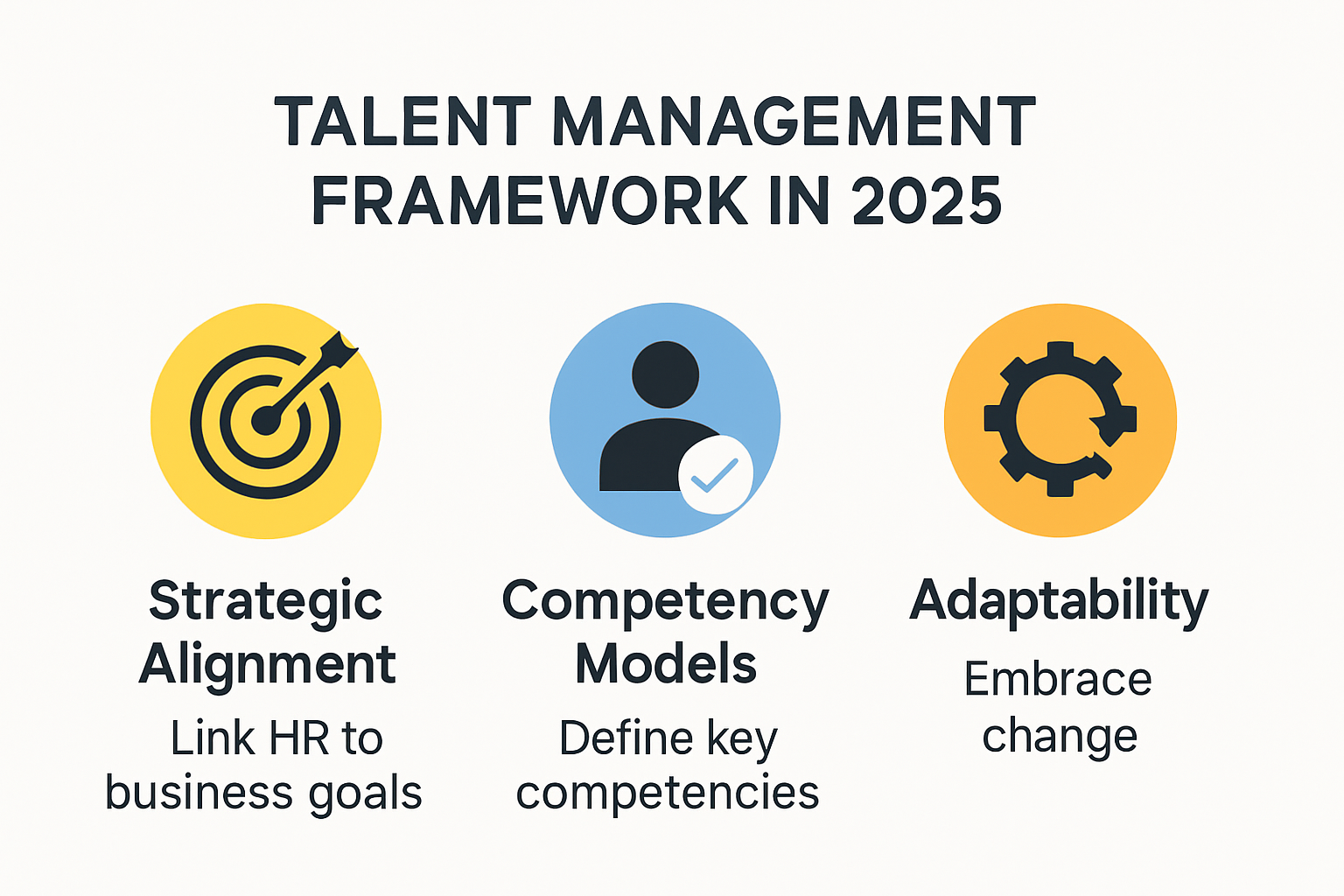
Effective talent management begins with precise strategic alignment. Modern organizations recognize that talent strategies cannot exist in isolation but must directly connect with broader business objectives. Research from Mercers Global Talent Trends survey reveals that high-performing companies are dramatically restructuring their talent frameworks to support digital transformation and rapid innovation.
Key considerations include developing competency models that reflect current and anticipated skill needs. This means moving beyond traditional job descriptions to create dynamic role profiles that emphasize adaptability and continuous learning. Companies must design frameworks that allow seamless skill transitions and promote internal mobility.
Technology Integration and Skill Assessment
Advanced talent management frameworks in 2025 will leverage artificial intelligence and data analytics to transform workforce planning. According to Phenom’s talent management research, organizations can now use AI to assess workforce capabilities, predict future skill requirements, and match employees to roles based on potential rather than just existing credentials.
Technology enables more nuanced skill assessments that go beyond surface-level evaluations. By implementing intelligent assessment tools, organizations can:
- Predictive Matching: Identify potential skill gaps before they emerge
- Personalized Development: Create targeted learning pathways for individual employees
- Performance Optimization: Align individual capabilities with organizational objectives
To support this approach, organizations should explore comprehensive skills assessment strategies that provide actionable insights into workforce potential.
Cultural Foundations of Talent Management
Beyond technological solutions, successful talent management frameworks require robust cultural foundations. This means cultivating an environment of trust, continuous learning, and equitable opportunities. Research from Totara highlights that organizations must move beyond transactional HR practices to create holistic employee experiences.
Building such a framework demands commitment to transparency, regular feedback mechanisms, and genuine investment in employee growth. Leaders must view talent management as a strategic partnership rather than a administrative function. This approach transforms talent management from a compliance-driven process to a dynamic, value-generating organizational capability.
By integrating strategic alignment, technological innovation, and a human-centric cultural approach, organizations can develop talent management frameworks that are not just responsive but predictive and transformative.

Key Strategies for Attracting and Retaining Talent
In the competitive talent landscape of 2025, organizations must develop sophisticated strategies that go beyond traditional recruitment and retention approaches. Successful talent attraction and retention require a holistic, forward-thinking methodology that addresses the evolving expectations of modern professionals.
Reimagining Employee Value Proposition
The employee value proposition has transformed dramatically in recent years. Research from global HR trends indicates that top talent now seeks more than competitive salaries. They want meaningful work, professional development, and organizational cultures that align with their personal values.
Companies must craft comprehensive value propositions that encompass:
- Purposeful Work: Clear alignment between individual roles and organizational mission
- Professional Growth: Continuous learning and career development opportunities
- Workplace Flexibility: Adaptable work arrangements that support work-life integration
To enhance recruitment effectiveness, organizations should explore innovative recruitment practices that speak directly to these emerging workforce expectations.
Technological Integration in Talent Strategies
Artificial intelligence and advanced analytics are revolutionizing talent attraction and retention strategies. According to research from Deloitte, organizations that leverage technology can create more personalized, data-driven talent experiences.
Key technological approaches include:
- Predictive analytics for identifying potential talent gaps
- AI-powered matching systems that align candidate skills with organizational needs
These technologies enable more precise talent acquisition and help organizations build more resilient, adaptable workforces. By understanding individual employee potential beyond traditional metrics, companies can create more targeted retention strategies.
Building a Culture of Continuous Development
Talent retention hinges on an organization’s commitment to continuous learning and professional growth. Research from McKinsey highlights that top performers are increasingly choosing employers who invest meaningfully in their professional development.
Successful organizations will prioritize:
- Personalized learning pathways
- Regular skill assessment and reskilling programs
- Mentorship and coaching initiatives
- Transparent career progression frameworks
By creating environments that genuinely support employee growth and potential, organizations can transform talent management from a transactional process to a strategic partnership. The most successful companies will view their employees as long-term collaborators, not replaceable resources.
Modern talent strategies demand a holistic approach that balances technological innovation, personalized development, and genuine organizational commitment to employee potential. By implementing these comprehensive strategies, organizations can attract, develop, and retain exceptional talent in an increasingly competitive global marketplace.
Leveraging Technology for Smarter Talent Decisions
The technological landscape of talent management is undergoing a radical transformation in 2025, with artificial intelligence and advanced analytics reshaping how organizations make critical workforce decisions. Smart technology is no longer an optional enhancement but a fundamental requirement for competitive talent strategies.
Artificial Intelligence in Talent Acquisition
Artificial intelligence has revolutionized talent acquisition by enabling more sophisticated, data-driven recruitment processes. Research from Phenom demonstrates that AI-powered tools can now match employees with roles based on comprehensive skill assessments, potential, and organizational fit rather than relying solely on traditional credentials.
Advanced AI technologies provide unprecedented capabilities:
- Predictive Matching: Identifying candidates with highest potential
- Bias Reduction: Creating more objective candidate evaluation processes
- Skill Gap Analysis: Identifying organizational capability requirements
To enhance recruitment effectiveness, organizations should explore strategic recruitment management approaches that integrate cutting-edge technological solutions.
Data Analytics and Workforce Planning
Modern Human Capital Management platforms transform workforce planning through sophisticated data analytics. According to NetSuite research, integrated analytics platforms now enable real-time workforce insights, allowing organizations to make proactive talent decisions.
Key analytics capabilities include:
- Dynamic workforce modeling
- Predictive performance forecasting
- Comprehensive skills inventory management
- Automated talent pipeline development
These technologies enable organizations to transition from reactive to predictive talent management strategies, anticipating future skill requirements and potential organizational challenges.
Ethical Technology Implementation
As technological capabilities expand, organizations must simultaneously prioritize ethical implementation. Research from global HR trends highlights the critical importance of maintaining human oversight and ensuring technological solutions respect individual privacy and organizational values.
Ethical technology implementation requires:
- Transparent algorithmic processes
- Regular audits of AI decision-making systems
- Continuous human validation of technological recommendations
- Clear guidelines for technological intervention in talent decisions
Successful organizations will view technology as a collaborative tool that enhances human decision-making rather than replacing human judgment entirely. The most effective talent strategies will seamlessly integrate technological capabilities with nuanced human insights.
By embracing intelligent technologies while maintaining a commitment to ethical implementation, organizations can create more agile, responsive, and effective talent management ecosystems. The future of talent decisions lies not in choosing between human expertise and technological innovation, but in developing sophisticated partnerships that leverage the strengths of both.
Measuring Success and Adapting Your Approach
In the dynamic talent management landscape of 2025, organizations must develop sophisticated measurement strategies that go beyond traditional performance metrics. Successful talent management requires continuous evaluation, data-driven insights, and agile adaptation to evolving workforce dynamics.
Key Performance Metrics for Talent Management
Research from ZRG Partners reveals that organizations with robust measurement strategies significantly outperform their competitors. Critical metrics for tracking talent management success include:
- Quality of Hire: Assessing the long-term performance and potential of new employees
- Retention Rates: Measuring employee engagement and organizational commitment
- Time-to-Productivity: Evaluating the effectiveness of onboarding and training processes
Companies with high-engagement strategies have demonstrated remarkable performance, with earnings-per-share growth rates reaching 28%, compared to an 11.2% decline in low-engagement organizations. To gain deeper insights into measuring your talent initiatives, explore our comprehensive guide to employee development strategies.
To provide a clear comparison of performance outcomes based on engagement levels, see the table below:
Performance outcomes for organizations with varying engagement strategies:
| Engagement Level | Earnings-per-Share Growth |
|---|---|
| High Engagement | +28% |
| Low Engagement | -11.2% |
Data-Driven Adaptation Strategies
Advanced HR Analytics research highlights the importance of transforming metrics into actionable insights. Organizations must move beyond simple data collection to create dynamic, responsive talent management ecosystems.
Key adaptation strategies include:
- Implementing real-time feedback mechanisms
- Conducting regular skills gap analyses
- Developing personalized learning and development pathways
- Creating agile performance management systems
Successful organizations treat talent management as a continuous improvement process, using data to identify potential challenges and opportunities before they become critical issues.
To help organize key strategies for adaptive, data-driven talent management, the following table summarizes main approaches and their purposes:
| Strategy | Purpose |
|---|---|
| Real-time Feedback Mechanisms | Rapidly identify and address workforce needs |
| Regular Skills Gap Analyses | Proactively manage current and future skill needs |
| Personalized Learning/Development Pathways | Support individual employee growth and retention |
| Agile Performance Management Systems | Adjust goals and track progress in real time |
Ethical Measurement and Continuous Improvement
Global HR trend research emphasizes the critical importance of maintaining ethical standards while measuring talent management effectiveness. This requires a holistic approach that balances quantitative metrics with qualitative insights.
Ethical measurement frameworks should prioritize:
- Transparency in data collection and analysis
- Protecting individual privacy
- Ensuring fair and unbiased evaluation processes
- Aligning measurement strategies with organizational values
The most advanced organizations view talent management measurement as more than a compliance exercise. They see it as a strategic opportunity to understand workforce potential, support individual growth, and drive organizational innovation.
By developing comprehensive, adaptive, and ethical measurement approaches, organizations can transform talent management from a reactive function to a proactive strategic capability. The future of talent success lies in continuous learning, data-driven insights, and a genuine commitment to employee potential and organizational growth.
Frequently Asked Questions
What are the key components of an effective talent management framework for 2025?
Creating an effective talent management framework in 2025 involves strategic alignment with organizational goals, technology integration for skill assessment, and fostering a culture of trust and continuous development.
How can organizations attract and retain top talent in 2025?
Organizations can attract and retain top talent by reimagining their employee value proposition to include meaningful work, professional growth opportunities, and workplace flexibility tailored to employee needs.
What role does technology play in talent management strategies for 2025?
Technology plays a crucial role in talent management by enabling predictive analytics, AI-driven recruitment processes, and real-time workforce insights, which help organizations make informed and agile workforce decisions.
How can companies measure the success of their talent management practices?
Companies can measure the success of their talent management practices by tracking key performance metrics such as quality of hire, retention rates, and time-to-productivity, while also implementing ethical measurement frameworks that balance quantitative and qualitative insights.
Unlock Smarter Talent Management Results with Accredited Training
Are you tired of seeing skill gaps slow your company down while competitors leap ahead? This article shows how real success in 2025 requires technology integration, continuous learning, and ethical talent measurement, but making it a reality can be tough. Building trust, enhancing adaptability, and keeping your employees engaged is crucial for sustainable organizational growth. The problem often starts with outdated frameworks and a lack of up-to-date skills development. That is where Peuneo can help.

Peuneo’s accredited training and consulting services are designed to bridge your specific talent management gaps. Our programs empower your team to master new technologies, foster a culture of ongoing development, and ensure compliance with the latest industry standards. Do not let your talent strategy fall behind. Visit Peuneo’s online platform now to access practical courses, expert business solutions, and hands-on support that moves your goals forward. Start today so you can keep your best people and build the workforce of tomorrow.
Recommended Articles
- How to Manage Recruitment Effectively in 2025 – Peuneo
- How to Manage Employee Performance: Practical Strategies for 2025 – Peuneo
- Current Trends in Employee Training for 2025 – Peuneo
- How to Conduct Skills Assessments in 2025 – Peuneo
- Top Workforce Development Strategies for 2025: A Practical Guide – Peuneo
- 2025 Trends in Employee Development: 5 Key Strategies – Peuneo