


Performance management systems are quickly reshaping how organizations track and develop talent. Here’s the surprise: while annual reviews used to be the norm, now organizations using data-driven performance management are three times more likely to achieve their business objectives. That might sound like a technology upgrade, but it’s turning into something much bigger. By 2025, these systems will act more like living ecosystems—predicting skill gaps, personalizing learning, and making feedback a daily habit instead of a dreaded yearly ritual. The real twist is how these once-static tools are becoming powerful engines for both employee growth and organizational success at the same time.
Table of Contents
- How Performance Management Systems Work
- Choosing The Right System For Your Needs
- Best Practices For Effective Implementation
- Emerging Trends In Performance Management Systems 2025
Quick Summary
| Takeaway | Explanation |
|---|---|
| Emphasize Continuous Feedback | Modern performance management systems prioritize continuous feedback rather than annual reviews, enabling real-time communication for immediate recognition and improvement. |
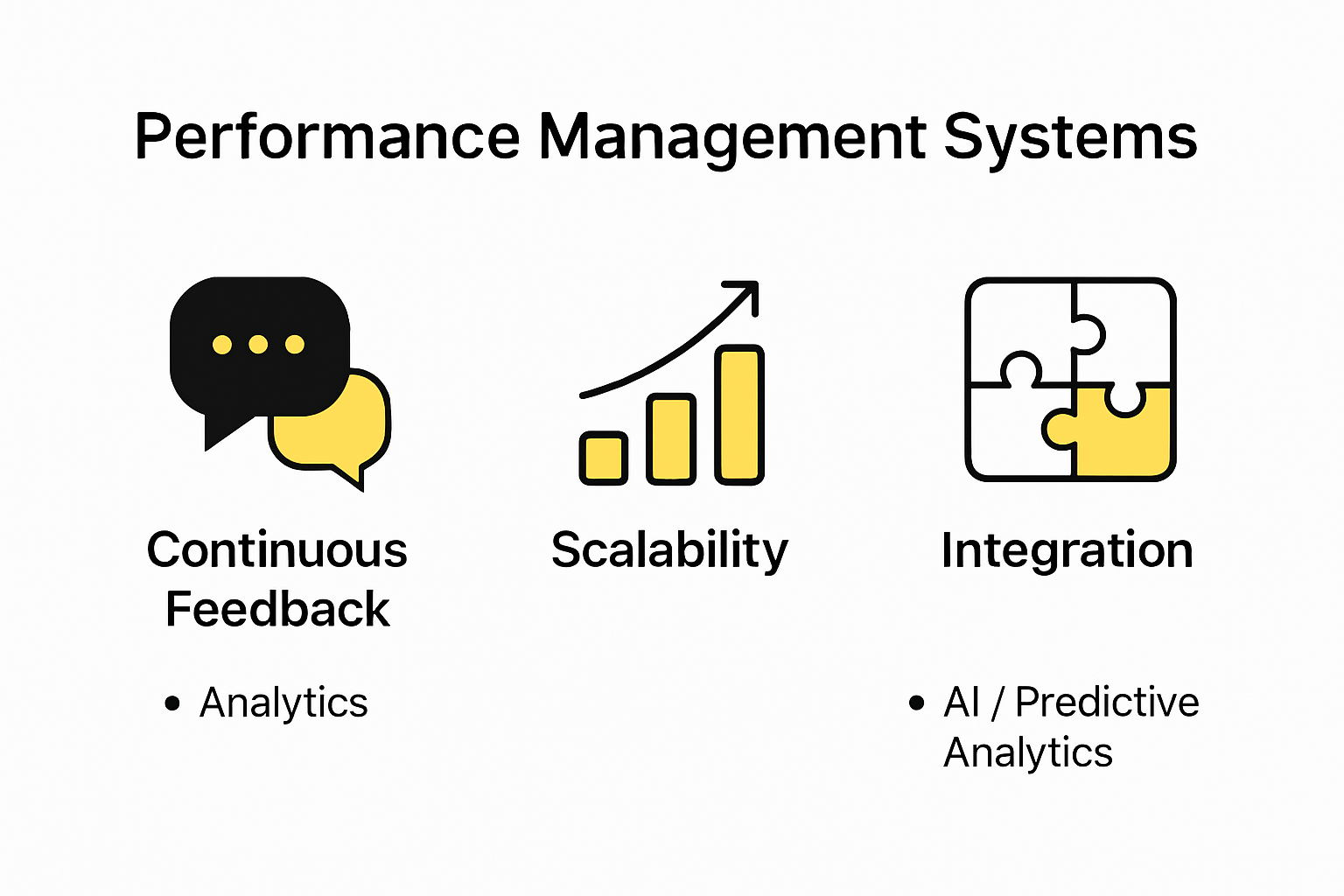
| Select Based on Comprehensive Criteria | Choose performance management systems using critical evaluation factors such as scalability, integration capabilities, and analytics depth to ensure they meet organizational needs. |
| Focus on Employee Engagement | Successful implementation involves change management strategies that foster engagement, including clear communication, interactive training, and leadership involvement. |
| Adopt AI and Predictive Analytics | Emerging systems are incorporating AI-driven capabilities for predictive performance modeling and skill gap identification, enhancing performance tracking and talent development. |
| View Systems as Dynamic Ecosystems | By 2025, effective performance management systems will evolve into holistic platforms that support continuous improvement and integration of personal development with organizational goals. |
How Performance Management Systems Work
Performance management systems represent sophisticated technological frameworks designed to systematically track, evaluate, and enhance employee performance across organizational structures. These integrated platforms go beyond traditional performance reviews by providing real-time insights, continuous feedback mechanisms, and data-driven analytical tools that transform how businesses monitor workforce productivity.
Core Technological Architecture
At the fundamental level, performance management systems operate through interconnected digital components that capture, analyze, and visualize employee performance data. Modern systems leverage advanced technologies such as artificial intelligence and machine learning to generate nuanced performance assessments. These platforms typically integrate multiple data sources including key performance indicators (KPIs), project management metrics, peer reviews, self-assessments, and management evaluations.
According to Deloitte’s Global Human Capital Trends survey, 61% of managers and 72% of workers report challenges with traditional performance management processes. This statistic underscores the critical need for more transparent and sophisticated performance tracking systems that provide genuine, actionable insights.
Continuous Feedback and Analytics
Modern performance management systems prioritize continuous feedback over annual review models. These dynamic platforms enable real-time communication between employees and managers, allowing immediate recognition of achievements and rapid intervention for performance improvements. Research indicates that organizations implementing data-driven performance management approaches are three times more likely to achieve their business objectives.
The technological infrastructure supports multiple feedback channels including:
- Instant Messaging: Direct communication tools integrated within the performance platform
- 360-Degree Feedback: Multi-source evaluation mechanisms
- Goal Tracking: Real-time progress monitoring against predetermined organizational objectives
By 2025, cloud-based performance management solutions are projected to capture 65% of the market share, reflecting a significant shift toward more integrated, accessible, and scalable systems. These platforms not only track performance but also predict potential skill gaps, recommend personalized development strategies, and support organizational strategic planning.
For professionals seeking deeper insights into employee development strategies, our comprehensive guide on workforce optimization provides additional context on aligning individual performance with organizational goals.

Ultimately, performance management systems represent more than technological tools. They are strategic instruments that transform raw performance data into meaningful organizational intelligence, enabling businesses to make informed decisions, cultivate talent, and drive continuous improvement.
Choosing the Right System for Your Needs
Selecting the appropriate performance management system represents a critical strategic decision that can significantly impact organizational effectiveness, employee engagement, and overall business performance. The right system transforms performance tracking from a mundane administrative task into a powerful tool for organizational growth and talent development.
Critical Evaluation Criteria
When evaluating performance management systems, organizations must consider multiple dimensions beyond basic functionality. Research from Deloitte’s Global Human Capital Trends survey highlights that 72% of workers experience dissatisfaction with traditional performance management approaches, emphasizing the need for comprehensive selection criteria.
Key evaluation factors include:
- Scalability: The system must accommodate organizational growth and complexity
- Integration Capabilities: Seamless connection with existing HR and management software
- Analytics Depth: Advanced reporting and predictive insights
- User Experience: Intuitive interface for employees and managers
Technology and Customization Requirements
Research indicates that organizations implementing data-driven performance management solutions are three times more likely to achieve their business objectives. This underscores the importance of selecting systems with robust technological capabilities.
Modern performance management platforms should offer:
- Artificial intelligence-powered analytics
- Customizable performance metrics
- Real-time feedback mechanisms
- Mobile accessibility
By 2025, cloud-based solutions are projected to capture 65% of the market share, signaling a clear trend toward more flexible, accessible technological platforms. Organizations must prioritize systems that offer cloud infrastructure, ensuring remote accessibility, data security, and seamless updates.
Implementation and Change Management
Successful system adoption extends beyond technological selection. Our comprehensive guide on workforce optimization provides deeper insights into aligning performance management technology with organizational culture.
Effective implementation requires:
- Comprehensive staff training
- Clear communication of system benefits
- Gradual rollout strategies
- Continuous feedback loops
Ultimately, choosing the right performance management system demands a holistic approach. Organizations must balance technological sophistication with user experience, organizational culture, and strategic objectives. The most successful systems are those that not only track performance but actively contribute to employee development, engagement, and organizational growth.
Best Practices for Effective Implementation
Implementing a performance management system requires strategic planning, organizational commitment, and a comprehensive approach that goes beyond mere technological deployment. Successful implementation transforms these systems from administrative tools into powerful drivers of organizational growth and employee development.
Strategic Planning and Alignment
Effective implementation begins with clear organizational alignment. Research from Deloitte’s Global Human Capital Trends survey emphasizes the importance of creating a performance management approach that integrates seamlessly with broader organizational objectives. This means developing a holistic strategy that connects individual performance metrics with overarching business goals.
Key strategic considerations include:
- Clear Performance Expectations: Defining precise, measurable performance indicators
- Organizational Culture Integration: Ensuring the system reflects core organizational values
- Flexible Goal Setting: Creating adaptable performance frameworks
- Transparent Evaluation Criteria: Establishing fair and consistent assessment methods
Change Management and Employee Engagement
Successful implementation hinges on effective change management. Research indicates that involving internal champions and key influencers can significantly reduce resistance and drive system adoption. Organizations must approach implementation as a collaborative process, not a top-down mandate.
Critical engagement strategies involve:
- Comprehensive communication plans
- Interactive training sessions
- Continuous feedback mechanisms
- Leadership demonstration of system value
Our comprehensive guide on developing effective training programs provides additional insights into creating robust implementation strategies that resonate with employees at all organizational levels.
Continuous Improvement and Adaptation
Performance management systems are not static tools but dynamic platforms requiring ongoing refinement. Organizations must establish robust mechanisms for continuous evaluation and system optimization. This involves regular performance audits, employee feedback collection, and technological updates.
Key continuous improvement practices include:
- Periodic system performance assessments
- Regular user feedback surveys
- Technological capability reviews
- Alignment with emerging workplace trends
By 2025, successful organizations will view performance management systems as living ecosystems that evolve with their workforce. These systems must balance technological sophistication with human-centric design, creating platforms that not only track performance but actively contribute to employee growth, engagement, and organizational success.
Ultimately, effective implementation is less about the technology and more about creating a culture of continuous learning, transparent communication, and mutual growth. The most successful performance management systems are those that empower employees, provide meaningful insights, and align individual potential with organizational objectives.
Emerging Trends in Performance Management Systems 2025
The landscape of performance management is undergoing a transformative revolution, driven by technological advancements, changing workforce dynamics, and the need for more agile, responsive organizational strategies. As we approach 2025, performance management systems are evolving from traditional, rigid evaluation models to dynamic, intelligent platforms that prioritize continuous growth and organizational adaptability.
Artificial Intelligence and Predictive Analytics
Research from B2B Reviews reveals that 75% of global knowledge workers now use AI in some form for performance management, signaling a dramatic shift in technological integration. Artificial intelligence is no longer a futuristic concept but a practical tool transforming how organizations approach performance tracking and talent development.
Key AI-driven capabilities emerging in performance management systems include:
- Predictive Performance Modeling: AI algorithms that forecast potential employee performance
- Skill Gap Identification: Intelligent systems detecting developmental opportunities
- Personalized Learning Recommendations: Tailored skill enhancement suggestions
- Bias Reduction: Objective performance assessment mechanisms
Real-Time Continuous Feedback Ecosystems
According to Deloitte’s Global Human Capital Trends survey, organizations embracing data-driven performance management are three times more likely to achieve their business objectives. This statistic underscores the critical importance of transitioning from annual reviews to continuous, real-time feedback mechanisms.
By 2025, an estimated 75% of companies plan to implement real-time performance management systems that offer:
- Instant feedback channels
- Dynamic goal adjustment
- Holistic performance tracking
- Integrated well-being metrics
Our comprehensive guide on employee development trends provides deeper insights into creating adaptive performance management strategies that align individual potential with organizational objectives.
Holistic and Integrated Performance Ecosystems
Cloud-based performance management solutions are projected to capture 65% of the market share by 2025, reflecting a significant shift toward more integrated, accessible technological platforms. These advanced systems go beyond traditional performance metrics, incorporating comprehensive assessments that include:
- Emotional intelligence indicators
- Cross-functional collaboration metrics
- Personal development trajectory
- Organizational culture alignment
The most innovative performance management systems in 2025 will recognize that performance is not just about individual output but about creating interconnected, agile organizational ecosystems. They will seamlessly blend technological intelligence with human-centric design, transforming performance management from a compliance exercise into a strategic growth enabler.
Ultimately, the future of performance management lies in creating intelligent, empathetic systems that view employees as dynamic, evolving assets. These platforms will not merely measure performance but actively contribute to individual and organizational potential, fostering a culture of continuous learning, adaptability, and mutual growth.
Frequently Asked Questions
What are performance management systems?
Performance management systems are integrated platforms designed to systematically track, evaluate, and enhance employee performance through real-time insights, continuous feedback, and data-driven analytics.
How do modern performance management systems differ from traditional methods?
Modern performance management systems emphasize continuous feedback rather than annual reviews, enabling real-time communication that fosters immediate recognition and improvement.
What trends can we expect in performance management systems by 2025?
By 2025, trends will include the integration of artificial intelligence and predictive analytics, real-time continuous feedback ecosystems, and the development of holistic, integrated performance platforms that align individual and organizational goals.
How can organizations choose the right performance management system?
Organizations should evaluate performance management systems based on criteria such as scalability, integration capabilities, analytics depth, user experience, and customization options to ensure they meet their specific needs.
Transform Performance Management Into Real Growth With Peuneo
Are you struggling with outdated performance reviews and finding it hard to keep up with the shift toward continuous feedback and real-time analytics? The article highlights a crucial pain point: traditional employee management falls short, leaving teams disengaged and businesses missing targets. If your organization is facing inconsistent feedback cycles or you worry about missing key trends for 2025, it is time to look for a smarter, data-driven way to empower your people and boost results. Peuneo knows how essential it is to turn performance management systems into living, adaptable solutions that help your talent thrive and meet business goals.

Peuneo can help you close skill gaps, comply with industry standards, and build engagement with accredited training, tailored consulting, and a robust online portal. Visit Peuneo’s main site to see how our accredited programs and professional consulting can elevate your performance management approach. Take charge of your growth and discover business solutions that make a real difference. Do not wait while others advance—explore Peuneo’s solutions now to transform the way your team grows and succeeds.