


Mentorship is driving serious results in professional growth—just look at the numbers. Mentees report a 72 percent retention rate, compared to only 49 percent for employees without mentorship opportunities. That sounds like a huge win for companies looking to keep their best people. But here’s what most miss. The real game-changer is not HR policy or job perks. Mentorship actually turns everyday learning into career-defining success. This flips the old classroom approach on its head and unlocks a faster, smarter way to grow in any workplace.
Table of Contents
- Why Learning Through Mentorship Drives Real-World Success
- Proven Mentorship Models For Diverse Workplaces
- How To Start And Sustain Effective Mentoring Programs
- Measuring Results: Tracking Growth And Impact In 2025
Quick Summary
| Takeaway | Explanation |
|---|---|
| Mentorship Boosts Career Development | Personalized mentorship significantly enhances career advancement opportunities, with 71% of mentees believing their companies support their growth, compared to only 47% of non-mentees. |
| Diverse Mentorship Models Are Essential | Innovative mentorship approaches such as peer, group, and affinity-based mentoring create inclusive environments that empower professionals from all backgrounds to thrive. |
| Ongoing Evaluation Maximizes Impact | Successful mentorship programs rely on continuous feedback and advanced assessment methods to evaluate effectiveness, enabling organizations to adapt and improve their offerings. |
| Structured Programs Yield Better Retention | Organizations with mentorship programs experience higher retention rates, with mentees showing a 72% retention rate compared to 49% for those without, emphasizing mentorship’s role in workforce engagement. |
| Strategic Foundations Are Crucial | Establishing clear objectives, defined roles, and structured communication early on creates a solid foundation for mentorship programs, enhancing their overall effectiveness. |
Why Learning Through Mentorship Drives Real-World Success
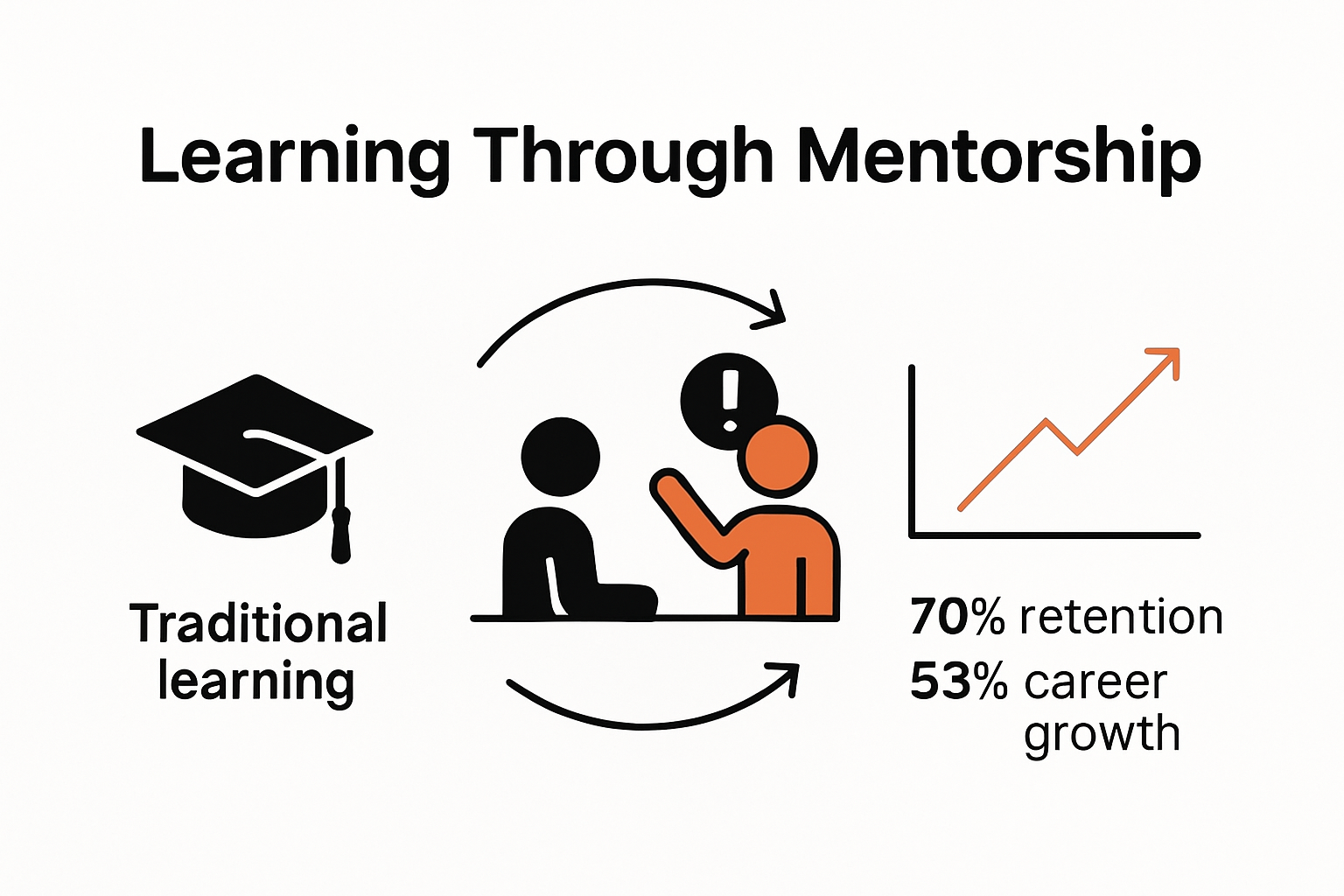
Mentorship transforms theoretical knowledge into practical expertise, bridging the critical gap between academic learning and professional performance. The power of learning through mentorship extends far beyond traditional training methods, offering a dynamic pathway to real-world success that empowers professionals to navigate complex workplace challenges with confidence and precision.
The Strategic Impact of Mentorship on Professional Growth
Statistics reveal the profound impact of mentorship on organizational success. Research from MentorCliq demonstrates that Fortune 500 companies with mentoring programs report median profits more than double those without such programs. This isn’t just a coincidence. Mentorship creates a structured environment where knowledge transfer happens organically, allowing professionals to gain insights that cannot be learned from textbooks or traditional training modules.
The retention statistics are equally compelling. Data from Mentorloop shows that employees involved in mentoring programs experience significantly higher retention rates. Mentees see a 72% retention rate, while mentors maintain a 69% retention rate, compared to just 49% for employees without mentorship opportunities. These numbers underscore the critical role of mentorship in creating engaged, committed workforces.
Accelerating Career Development Through Personalized Guidance
Personalized mentorship provides a unique advantage in professional development. Research indicates that 71% of professionals with mentors believe their companies offer excellent career advancement opportunities, compared to only 47% of those without mentors. This personalized guidance helps professionals:
- Navigate Complex Challenges: Mentors provide real-world insights that textbooks cannot capture.
- Develop Targeted Skills: Receive specific guidance tailored to individual career goals.
- Build Professional Networks: Create meaningful connections that extend beyond immediate work environments.
Professionals seeking comprehensive skill development might want to explore our detailed guide on employee development strategies to complement their mentorship journey.
The true value of mentorship lies in its ability to transform potential into performance. It goes beyond simple knowledge transfer, creating a dynamic learning environment where experienced professionals actively shape the growth of their younger counterparts. By providing context, sharing nuanced experiences, and offering direct feedback, mentors help professionals develop not just skills, but the professional judgment and strategic thinking required to excel in complex workplace environments.
Understanding mentorship as a strategic tool for professional growth reveals its transformative potential. It is not just a training method but a sophisticated approach to continuous learning that adapts to individual needs, organizational goals, and evolving professional landscapes. For organizations and individuals committed to meaningful professional development, mentorship represents an invaluable investment in human potential.
Proven Mentorship Models for Diverse Workplaces
In an increasingly complex professional environment, organizations must adopt mentorship models that recognize and celebrate workplace diversity. These models go beyond traditional one-size-fits-all approaches, creating inclusive learning experiences that empower professionals from all backgrounds to thrive and grow.
Innovative Mentorship Approaches for Inclusive Development
Research from Diversity Bot highlights multiple mentorship models that effectively support diverse workplace dynamics. These approaches include one-on-one mentoring, group mentoring, peer mentoring, and reverse mentoring. Each model offers unique advantages in addressing the specific challenges faced by underrepresented groups and fostering a culture of continuous learning and mutual understanding.

Affinity-based mentorship has emerged as a particularly powerful strategy. Data from Together Platform illustrates this approach’s success through Amazon’s mentorship program, which expanded from 18,800 to nearly 160,000 participants by partnering with affinity groups like the Black Employee Network. This targeted approach provides tailored support and professional development opportunities for specific professional communities.
Strategic Implementation of Diverse Mentorship Models
Peer mentoring represents a particularly transformative model in diverse organizations. According to AIHR, these programs enable employees to learn from colleagues with different perspectives and backgrounds, inherently fostering inclusion and broadening professional growth opportunities. This approach breaks down traditional hierarchical barriers and creates a more collaborative learning environment.
Key characteristics of successful diverse mentorship models include:
- Structured Matching: Carefully pairing mentors and mentees based on complementary skills, experiences, and development goals.
- Cultural Sensitivity: Developing programs that respect and integrate diverse cultural perspectives and communication styles.
- Flexible Learning Formats: Offering multiple mentorship formats to accommodate different learning preferences and organizational structures.
Professionals looking to enhance their team development strategies might explore our comprehensive guide on effective team leadership for additional insights.
The most effective mentorship models recognize that diversity is not just about representation but about creating genuine opportunities for meaningful exchange and growth. By implementing thoughtful, inclusive mentorship approaches, organizations can transform workplace dynamics, drive innovation, and create environments where every professional can reach their full potential.
As workplace complexity continues to evolve, mentorship models must remain adaptive, responsive, and committed to genuine inclusion. The future of professional development lies in recognizing the unique strengths each individual brings and creating structured opportunities for continuous learning and mutual understanding.
How to Start and Sustain Effective Mentoring Programs
Successful mentoring programs require strategic planning, intentional design, and ongoing commitment. Organizations must approach mentorship as a comprehensive development strategy that goes beyond simple knowledge transfer to create meaningful professional growth experiences.
Establishing a Strong Foundation for Mentorship
Research from Qooper emphasizes the critical importance of clearly defining program objectives, roles, and responsibilities from the outset. This foundational step involves specifying precise goals, outlining participant duties, and establishing structured communication channels and meeting schedules.
Key elements of a robust mentorship program foundation include:
- Clear Program Objectives: Align mentorship goals with organizational strategic priorities
- Defined Participant Roles: Create transparent expectations for mentors and mentees
- Structured Communication Protocols: Establish regular check-ins and feedback mechanisms
Implementing Comprehensive Support and Training
Insights from Engagedly highlight the significance of attracting qualified mentors and enthusiastic mentees while tailoring programs to address specific organizational challenges. Training becomes a critical component of program success.
According to Qooper, providing ongoing support through workshops, best practices sharing, and resource access significantly enhances mentorship program engagement and effectiveness. This might include:
- Orientation workshops for new mentors and mentees
- Skill-building sessions on effective communication
- Regular performance and satisfaction assessments
Professionals seeking deeper insights into employee development might explore our comprehensive guide on supporting professional growth.
Continuous Improvement and Program Sustainability
Sustaining an effective mentoring program requires continuous evaluation and adaptive strategies. Organizations must remain committed to:
- Regularly collecting feedback from participants
- Measuring program impact through quantitative and qualitative metrics
- Adapting program design based on participant experiences and organizational needs
Successful mentorship programs are not static documents but living ecosystems of professional development. They demand ongoing attention, refinement, and a genuine commitment to creating meaningful learning experiences.
The most effective mentoring initiatives transform from structured programs into cultural practices that embed continuous learning and professional growth into the organizational DNA. By investing in thoughtful design, comprehensive support, and adaptive strategies, organizations can create mentorship experiences that drive individual and collective success.
Measuring Results: Tracking Growth and Impact in 2025
In the evolving landscape of professional development, measuring mentorship outcomes has become a sophisticated process that goes beyond traditional evaluation methods. Organizations must adopt comprehensive, nuanced approaches to understanding the true impact of mentorship programs and their contribution to individual and organizational growth.
Comprehensive Metrics for Holistic Evaluation
Research from Mentoring Complete emphasizes the importance of tracking multiple engagement metrics to gain a comprehensive view of mentorship program effectiveness. These metrics extend beyond simple participation rates and delve into the qualitative and quantitative dimensions of professional development.
Key engagement metrics include:
- Participation Rates: Number of sign-ups and active participants
- Meeting Frequency: Regularity and duration of mentorship interactions
- Goal Completion: Percentage of mentee objectives successfully achieved
Advanced Tracking of Individual and Organizational Growth
According to Thrive with Mentoring, tracking mentee goal achievement provides critical insights into program effectiveness. Organizations are increasingly using sophisticated assessment frameworks that combine:
- Regular progress reviews
- Quantitative performance measurements
- Qualitative feedback mechanisms
Professionals interested in understanding training program effectiveness might explore our comprehensive guide on measuring employee training impact.
Satisfaction and Continuous Improvement
Satisfaction surveys represent a crucial tool in measuring mentorship program success. Research highlights the importance of gathering feedback from both mentors and mentees to:
- Align mentorship outcomes with strategic organizational goals
- Identify areas for program refinement
- Understand the subjective experience of program participants
Successful measurement goes beyond collecting data—it requires creating a dynamic feedback loop that allows continuous program adaptation. Organizations must view mentorship evaluation as an ongoing process of learning and improvement, not a static annual assessment.
The most advanced mentorship tracking approaches in 2025 integrate multiple data sources, including performance metrics, satisfaction surveys, and longitudinal career progression analysis. By adopting a holistic, data-driven approach, organizations can transform mentorship from a traditional development tool into a strategic lever for organizational growth and individual potential realization.
Ultimately, measuring mentorship impact is about understanding the intricate ways professional relationships foster learning, innovation, and personal development. The most successful programs will be those that can articulate their value through precise, meaningful metrics that demonstrate tangible growth and transformation.
Frequently Asked Questions
What are the main benefits of mentorship in professional development?
Mentorship provides personalized guidance, enhances skill development, increases retention rates, and fosters professional networks, leading to significant career advancement opportunities.
How do mentorship programs impact employee retention?
Employees with mentorship opportunities report a 72% retention rate, compared to just 49% for those without mentorship programs, highlighting the value of mentorship in workforce engagement.
What are effective mentorship models for diverse workplaces?
Effective mentorship models include one-on-one mentoring, group mentoring, peer mentoring, and affinity-based mentorship, all designed to create inclusive learning experiences that empower professionals from diverse backgrounds.
How can organizations measure the success of their mentorship programs?
Organizations can measure mentorship success through participation rates, meeting frequency, goal completion rates, and satisfaction surveys to develop a comprehensive understanding of program effectiveness.
Transform Mentorship Insights Into Real-World Growth with Peuneo
You just learned how mentorship can create lasting professional success and improve retention, but putting these strategies into practice is a real challenge for many organizations. Struggling with high employee turnover, slow skill development, or difficulty inspiring new leaders? At Peuneo, we help you break through these barriers. Our accredited training, consulting, and tailored development programs make it easy to apply the personalized mentorship strategies explored in this article and build a culture of growth that lasts.

Unlock your team’s full potential with proven mentorship frameworks and real solutions for 2025. Visit Peuneo to explore our full range of accredited courses and consulting services. Ready to move from theory to results? Start now and take your professional development initiatives to the next level with guidance from experts who truly understand skills development in South Africa.