


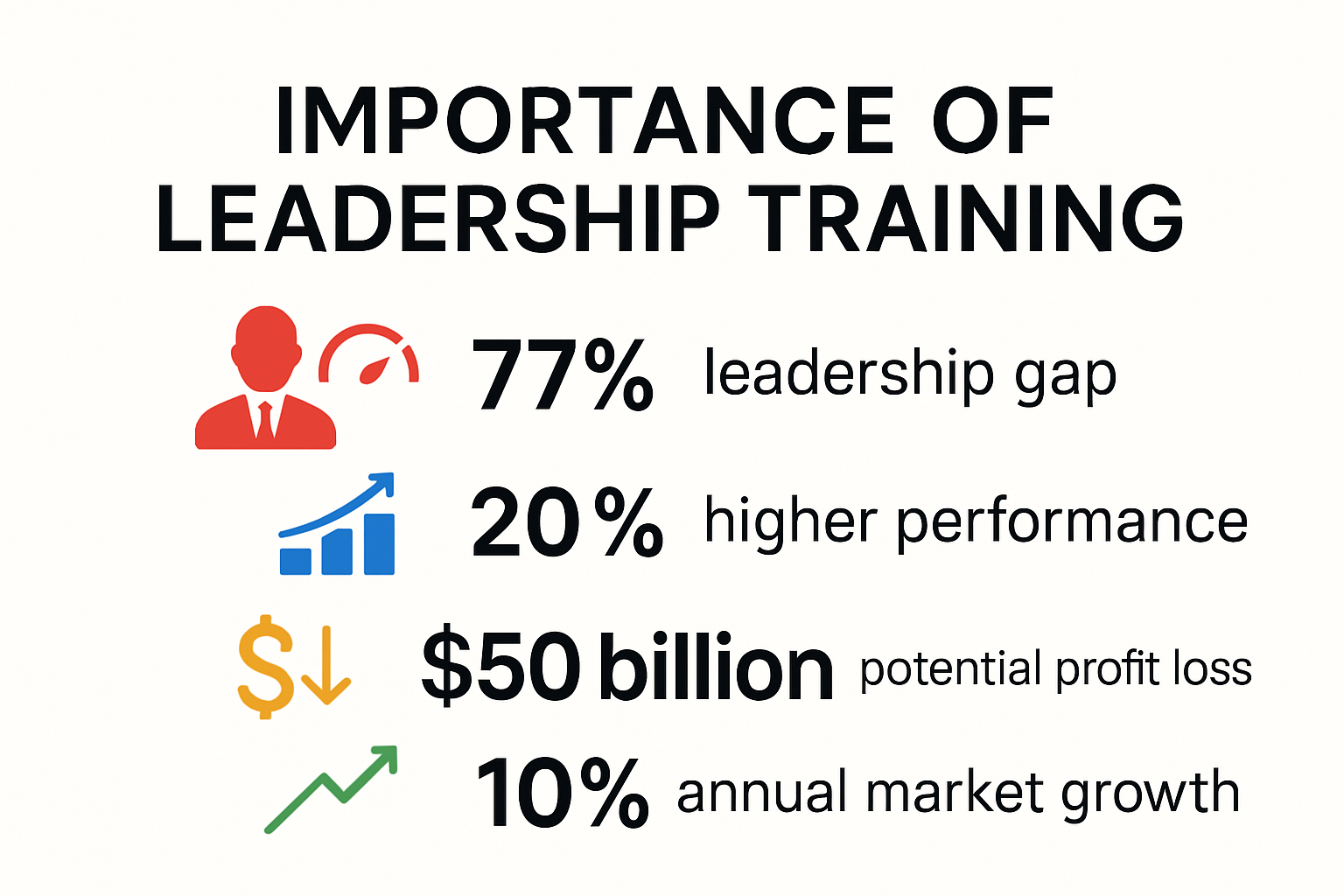
The business landscape is transforming at an unprecedented pace, making leadership training more critical than ever before. Organizations are facing complex challenges that demand exceptional leadership skills to navigate economic uncertainties, technological disruptions, and rapidly changing workforce dynamics. But get this. 77% of organizations report a shortage of leadership talent, which is a staggering statistic that highlights a crucial gap in many companies. Because the truth is, addressing this gap through effective leadership training can boost performance by 25% and prevent potential profit losses of up to 7%, making it a strategic necessity rather than a mere option.
Table of Contents
- Why Leadership Training Matters Now
- Boosting Employee Engagement Through Leaders
- Driving Organizational Growth And Innovation
Quick Summary
| Takeaway | Explanation |
|---|---|
| The Leadership Gap is Critical | 77% of organizations report a shortage of leadership talent, impacting overall effectiveness and profits. Investing in leadership development can boost performance by 25% and prevent losses of up to 7% in potential profits. |
| Modern Skills Are Essential | Today’s leaders need emotional intelligence, digital literacy, and inclusive leadership skills to effectively manage diverse and remote teams. Comprehensive training is vital for creating resilient organizations. |
| Engagement Drives Success | Engaged employees lead to higher productivity, innovation, and retention. Companies implementing targeted leadership training can see significant improvements across organizational alignment, retention, and overall productivity. |
| Innovation Is Fueled by Leadership | Effective leadership training fosters a culture of psychological safety and strategic thinking, enabling organizations to innovate and adapt in a changing market. |
| Investment in Leadership is Non-Negotiable | Leadership training should be viewed as a continuous investment rather than a one-time event, critical for maintaining competitive advantage and driving organizational growth. |
Why Leadership Training Matters Now
The business landscape is transforming at an unprecedented pace, making leadership training more critical than ever before. Organizations are facing complex challenges that demand exceptional leadership skills to navigate economic uncertainties, technological disruptions, and rapidly changing workforce dynamics.
The Urgent Need for Leadership Development
Companies worldwide are experiencing a significant leadership gap that threatens their competitive edge. Research indicates that approximately 77% of organizations report critical shortages in leadership talent. This gap isn’t just a minor concern—it directly impacts business performance, with companies offering robust leadership training experiencing a 25% boost in overall organizational effectiveness.
The financial implications are stark. Organizations that delay investing in leadership development risk losing up to 7% in potential profits. In an era of intense global competition, such losses can mean the difference between thriving and merely surviving. The leadership development market is expected to reach $94.47 billion by 2025, reflecting the growing recognition of leadership training’s strategic importance.
Addressing Modern Workplace Challenges
Today’s leaders must be equipped to manage diverse, multigenerational workforces, navigate remote and hybrid work environments, and drive innovation amid constant technological change. Traditional leadership approaches no longer suffice. Modern leadership training focuses on developing adaptable skills such as:
- Emotional Intelligence: Understanding and managing team dynamics
- Digital Literacy: Leveraging technology for effective communication and decision-making
- Inclusive Leadership: Creating environments that value diversity and foster collaboration
These skills are not optional extras but essential competencies for contemporary leaders. Companies that prioritize comprehensive leadership training create more resilient, agile, and high-performing organizations.
The Strategic Advantage of Proactive Leadership Development
Leadership training is no longer a luxury but a strategic necessity. It transforms individual contributors into visionary leaders who can:
- Anticipate and respond to market changes
- Develop innovative solutions to complex problems
- Build and motivate high-performing teams
- Drive organizational culture and strategic vision
By investing in leadership development, organizations create a pipeline of internal talent capable of steering the company through unprecedented challenges. The most successful companies view leadership training as a continuous journey of growth, not a one-time event.
In an increasingly complex and unpredictable business world, the importance of leadership training cannot be overstated. It is the key to building organizational resilience, driving innovation, and maintaining a competitive edge in a rapidly evolving global marketplace.
Boosting Employee Engagement Through Leaders
Employee engagement is the cornerstone of organizational success, and leaders play a pivotal role in creating an environment where team members feel motivated, valued, and connected to their work. Effective leadership goes far beyond traditional management—it’s about inspiring, supporting, and empowering employees to reach their full potential.
The Critical Connection Between Leadership and Engagement
Research reveals that workers supported by their managers are 53% more likely to be engaged, with leaders who actively support their teams experiencing 3.4 times higher engagement levels. This statistic underscores the profound impact that well-trained leaders can have on organizational culture and employee motivation.
Currently, the global engagement landscape is concerning. Only 23% of employees worldwide are truly engaged at work, representing a massive productivity challenge. This disengagement translates to an estimated $8.9 trillion loss in productivity—equivalent to 9% of global GDP. Effective leadership training becomes crucial in bridging this engagement gap.
Strategies for Enhancing Employee Engagement

Superior leaders understand that engagement is not a one-size-fits-all approach. They develop nuanced skills to connect with team members individually, recognizing unique motivations and potential. Key strategies include:
- Personalized Communication: Creating open dialogue channels that make employees feel heard and valued
- Recognition and Development: Providing meaningful feedback and clear pathways for professional growth
- Purpose-Driven Leadership: Connecting individual roles to broader organizational goals
Companies that implement comprehensive leadership development programs see significant improvements. According to engagement studies, targeted leadership training can increase engagement across critical areas:
- Organizational alignment: 22.5% improvement
- Employee retention: 20.6% increase
- Customer focus: 19.9% enhancement
- Overall productivity: 19.3% boost
Building a Culture of Engagement
Engagement is not a destination but a continuous journey. Leaders must consistently demonstrate commitment to their team’s growth, well-being, and professional development. This means moving beyond traditional management metrics to create an environment of trust, collaboration, and mutual respect.
Successful engagement strategies involve:
- Transparent communication
- Regular performance conversations
- Opportunities for skill development
- Meaningful recognition programs
- Inclusive decision-making processes
By investing in leadership training that emphasizes emotional intelligence, communication skills, and team-building techniques, organizations can transform their workplace culture. Engaged employees are more productive, innovative, and committed to organizational success.
The bottom line is clear: leadership training is not just about developing individual managers—it’s about creating a holistic approach to workplace engagement that benefits everyone involved. Organizations that prioritize this approach will be better positioned to attract, retain, and develop top talent in an increasingly competitive global marketplace.
Driving Organizational Growth And Innovation
In today’s dynamic business environment, leadership training has emerged as a critical catalyst for organizational growth and innovation. Successful companies recognize that strategic leadership development is not just an operational expense, but a fundamental investment in their future competitive advantage.
The Direct Link Between Leadership Training and Performance
Research indicates that companies investing in comprehensive leadership training experience a remarkable 25% boost in business performance. This significant improvement demonstrates how well-developed leadership capabilities directly translate into tangible organizational success.
Industry data shows a striking 171% increase in empowering leadership training hours between 2023 and 2024. This substantial investment reflects a strategic shift towards developing leaders who can create environments of psychological safety, autonomy, and adaptability—key attributes essential for driving innovation in volatile markets.
Cultivating a Culture of Innovation
Effective leadership training goes beyond traditional management techniques. It focuses on developing leaders who can:
- Foster Psychological Safety: Create environments where team members feel comfortable sharing ideas without fear of criticism
- Encourage Experimentation: Promote a culture that views failures as learning opportunities
- Drive Strategic Thinking: Develop leaders who can anticipate market trends and navigate complex challenges
Leaders trained in innovative thinking become instrumental in breaking down organizational silos, encouraging cross-functional collaboration, and promoting a growth mindset throughout the organization. By developing these skills, companies can transform their approach to problem-solving and strategic planning.
Strategic Risk Management and Organizational Resilience
Delaying leadership development can have significant financial consequences. Studies reveal that organizations might lose up to 7% in potential profits by not investing in leadership training. This underscores the critical role of leadership development in maintaining organizational resilience and competitive edge.
Innovative leaders are characterized by their ability to:
- Anticipate and respond to market disruptions
- Make data-driven strategic decisions
- Build agile and adaptable teams
- Create scalable growth strategies
By prioritizing leadership training, organizations develop a robust pipeline of talent capable of steering the company through complex business landscapes. This approach transforms leadership from a hierarchical management model to a dynamic, collaborative process that drives continuous improvement and innovation.
The most successful organizations view leadership training as an ongoing journey of development, not a one-time event. They understand that investing in their leaders means investing in their entire organizational ecosystem—creating a culture of continuous learning, adaptability, and strategic growth.
In an era of unprecedented technological change and global competition, leadership training is no longer optional. It is a strategic imperative that determines an organization’s capacity to innovate, adapt, and thrive in an increasingly complex business world.
Frequently Asked Questions
What is the importance of leadership training in 2025?
Leadership training in 2025 is crucial due to the rapidly changing business landscape. Effective training helps organizations address leadership talent shortages and improve overall performance, ultimately leading to higher profits and a competitive edge.
How does leadership training impact employee engagement?
Leadership training enhances employee engagement by equipping leaders with skills to inspire and motivate their teams. Engaged employees contribute to higher productivity, innovation, and retention, creating a positive organizational culture.
What skills are essential for modern leaders?
Modern leaders need skills such as emotional intelligence, digital literacy, and inclusive leadership. These competencies enable them to manage diverse workforces, adapt to technological changes, and foster collaboration within their teams.
How does investing in leadership training affect organizational growth?
Investing in leadership training can lead to significant organizational growth by developing leaders who can drive innovation, strategic decision-making, and resilience. Companies that prioritize leadership development often experience increased performance and adaptability in a competitive market.
Elevate Your Leadership Game with Peuneo’s Tailored Training Solutions
The urgency for effective leadership training has never been clearer. With 77% of organizations facing a critical leadership talent shortage, the need for strategic, accredited programs is paramount to elevate your company’s performance and resilience in today’s tumultuous markets. Peuneo (Pty) Ltd understands these challenges, offering specialized training that not only addresses emotional intelligence, digital literacy, and inclusive leadership but also shapes leaders who inspire engagement within their teams.

Don’t let the opportunity for growth pass you by. Take proactive steps NOW to invest in your organization’s future with our comprehensive training and consulting services. Explore our online learning portal where you can enroll in tailored courses designed to meet your specific needs. Whether you’re looking to boost employee engagement, enhance organizational culture, or drive innovation, Peuneo is here to help you succeed!