
Everyone talks about staying on top of their game at work and learning new skills is more urgent than ever. But did you know that about 64 percent of employees say time constraints keep them from professional development? That might sound like a dead end for career growth. Actually, the biggest opportunity comes to those who rethink how and when they learn turning small efforts into major wins with the right strategy.
Table of Contents
- What Is Continuous Professional Development
- Key Benefits For Organizations And Individuals
- Strategies For Effective Professional Growth
- Overcoming Common Challenges In Development
Quick Summary
| Takeaway | Explanation |
|---|---|
| Continuous professional development is essential | It enables professionals to keep their skills current and stay competitive in evolving industries. |
| Personalized learning plans enhance growth | Tailoring development goals to individual needs ensures targeted skill acquisition and career progression. |
| Organizations benefit from investing in development | Companies with strong development programs improve engagement, innovation, and performance among employees. |
| Diverse learning methods are crucial | Utilizing various learning approaches fosters comprehensive skill growth and adapts to different learning styles. |
| Overcoming challenges requires strategic planning | Professionals should address time constraints and motivation issues to maintain consistent development efforts. |
What Is Continuous Professional Development
Continuous professional development represents a strategic approach to lifelong learning that enables professionals to maintain, enhance, and expand their knowledge and skills throughout their career journey. According to UNESCO’s TVETipedia Glossary, it is a comprehensive range of learning activities designed to help professionals retain their capacity to practice safely, effectively, and legally within their professional domain.
Core Components of Professional Development
Professional development is not a one size fits all process. It encompasses multiple dimensions of learning and growth that go beyond traditional training programs. The National Academies Press defines it as a learner driven process that allows professionals to customize their learning experience according to individual needs and career objectives.
The core components typically include structured learning experiences, self directed learning, practical skill application, and ongoing reflection. Professionals engage in various activities such as workshops, online courses, conferences, peer learning networks, mentorship programs, and independent research to continuously upgrade their professional capabilities.
To give a clearer overview of the main types of professional development activities mentioned, the following table summarizes and compares their key characteristics and benefits:
| Activity Type | Description | Key Benefit |
|---|---|---|
| Workshops | In-person or virtual skill-building sessions | Practical skill application |
| Online Courses | Self-paced or instructor-led digital learning | Flexibility, self-directed learning |
| Conferences | Large gatherings for industry updates and networking | Exposure to trends, peer networking |
| Peer Learning Networks | Groups sharing knowledge and best practices | Collaborative learning |
| Mentorship Programs | Guided development under experienced professionals | Personalized guidance |
| Independent Research | Self-conducted study on relevant topics | Boosts initiative, deepens expertise |
Strategic Importance in Career Progression
Continuous professional development serves as a critical mechanism for career advancement and personal growth. The Centers for Disease Control and Prevention emphasizes that professional development is a systematic process designed to strengthen how professionals acquire and retain knowledge, skills, and attitudes aligned with organizational goals.
In today’s rapidly evolving professional landscape, continuous learning has transformed from a optional enhancement to an essential survival strategy. Professionals who consistently invest in their skill development remain competitive, adaptable, and resilient in dynamic work environments. This proactive approach enables individuals to stay ahead of technological changes, industry trends, and emerging best practices.
Moreover, organizations increasingly recognize continuous professional development as a key driver of employee engagement and organizational performance. By supporting ongoing professional development initiatives, companies can create a culture of innovation, improve workforce capabilities, and maintain a competitive edge in their respective industries.
Key Benefits for Organizations and Individuals
Continuous professional development offers transformative advantages that extend far beyond traditional skill enhancement, creating significant value for both organizations and individual professionals. Harvard University’s Division of Continuing Education highlights that these development initiatives fundamentally reshape professional landscapes by boosting confidence, increasing job satisfaction, and driving organizational performance.
Organizational Performance and Strategic Advantages
For organizations, continuous professional development represents a critical strategic investment. Western Governors University emphasizes that robust professional development programs foster employee engagement, spark innovation, and directly contribute to productivity improvements. Companies that prioritize learning create adaptive workforces capable of navigating complex business environments.
Key organizational benefits include enhanced workforce capabilities, reduced skill gaps, improved talent retention, and increased competitive advantage. By systematically investing in employee growth, organizations develop internal talent pipelines, reduce recruitment costs, and create environments where continuous learning becomes a cultural cornerstone. These initiatives signal a commitment to employee development, which attracts high potential professionals seeking meaningful career growth opportunities.
Individual Professional Growth and Career Advancement
From an individual perspective, continuous professional development serves as a powerful mechanism for personal and career transformation. The National Academies Press underscores that ongoing learning allows professionals to maintain professional competencies, translate emerging knowledge into practical skills, and remain relevant in rapidly evolving industries.
Professionals who engage in consistent skill development experience numerous personal benefits. These include expanded career opportunities, increased earning potential, enhanced job security, and greater professional confidence. By proactively acquiring new skills and knowledge, individuals position themselves as valuable assets within their organizations and industries.
Moreover, continuous professional development enables individuals to stay ahead of technological advancements, industry trends, and emerging best practices. Discover more about professional development strategies that can dramatically transform career trajectories and organizational performance. The ability to adapt, learn, and grow becomes a critical differentiator in today’s dynamic professional landscape, empowering both individuals and organizations to thrive amid constant change.
Strategies for Effective Professional Growth
Professional growth requires a deliberate and strategic approach that goes beyond sporadic learning experiences. A comprehensive review published in the Journal of Education and Health Promotion emphasizes the importance of structured and intentional continuous professional development strategies that enable professionals to systematically enhance their skills and knowledge.
Personal Learning and Development Planning
Effective professional growth begins with comprehensive self assessment and targeted goal setting. Professionals must develop a personalized learning roadmap that aligns individual career aspirations with organizational requirements. This involves conducting thorough skills gap analyses, identifying specific competencies needed for career advancement, and creating actionable development plans.
Key elements of personal development planning include setting clear, measurable objectives, establishing realistic timelines, and selecting appropriate learning methods. These might encompass formal education, online courses, workshops, conferences, and industry certifications. Explore comprehensive career growth opportunities that can help professionals design strategic learning pathways tailored to their unique professional contexts.
Diverse Learning Approaches and Skill Acquisition
Successful professional development demands a multifaceted approach to learning. Professionals should embrace diverse learning modalities that cater to different learning styles and preferences. This includes traditional classroom training, digital learning platforms, peer to peer knowledge sharing, mentorship programs, and experiential learning opportunities.
Critical strategies for effective skill acquisition include active participation in professional networks, attending industry conferences, engaging in cross functional projects, and seeking feedback from experienced colleagues. By diversifying learning experiences, professionals can develop a more holistic understanding of their field and acquire both technical and soft skills essential for career progression.
Additionally, professionals should cultivate a growth mindset that views challenges as opportunities for learning and development. This approach encourages continuous curiosity, adaptability, and willingness to step outside comfort zones. Regular reflection on learning experiences, documenting insights, and implementing new knowledge in practical scenarios are crucial for transforming theoretical learning into tangible professional capabilities.
Overcoming Common Challenges in Development
Continuous professional development is not without its complexities, and professionals often encounter significant barriers that can impede their learning and growth journey. Understanding and strategically addressing these challenges is crucial for maintaining momentum and achieving meaningful professional advancement.
Here’s a table summarizing the key challenges professionals face in continuous development, along with strategies suggested in the article to overcome them:
| Challenge | Description | Strategy to Overcome |
|---|---|---|
| Time and Resource Constraints | Balancing work and learning with limited time and budget | Microlearning, flexible online platforms, employer support |
| Motivation and Commitment Challenges | Risk of burnout and difficulty sustaining learning motivation | Set clear goals, create accountability, celebrate progress |
| Technological and Skills Adaptation | Keeping up with rapid tech and industry changes | Identify emerging skills, use diverse learning platforms |
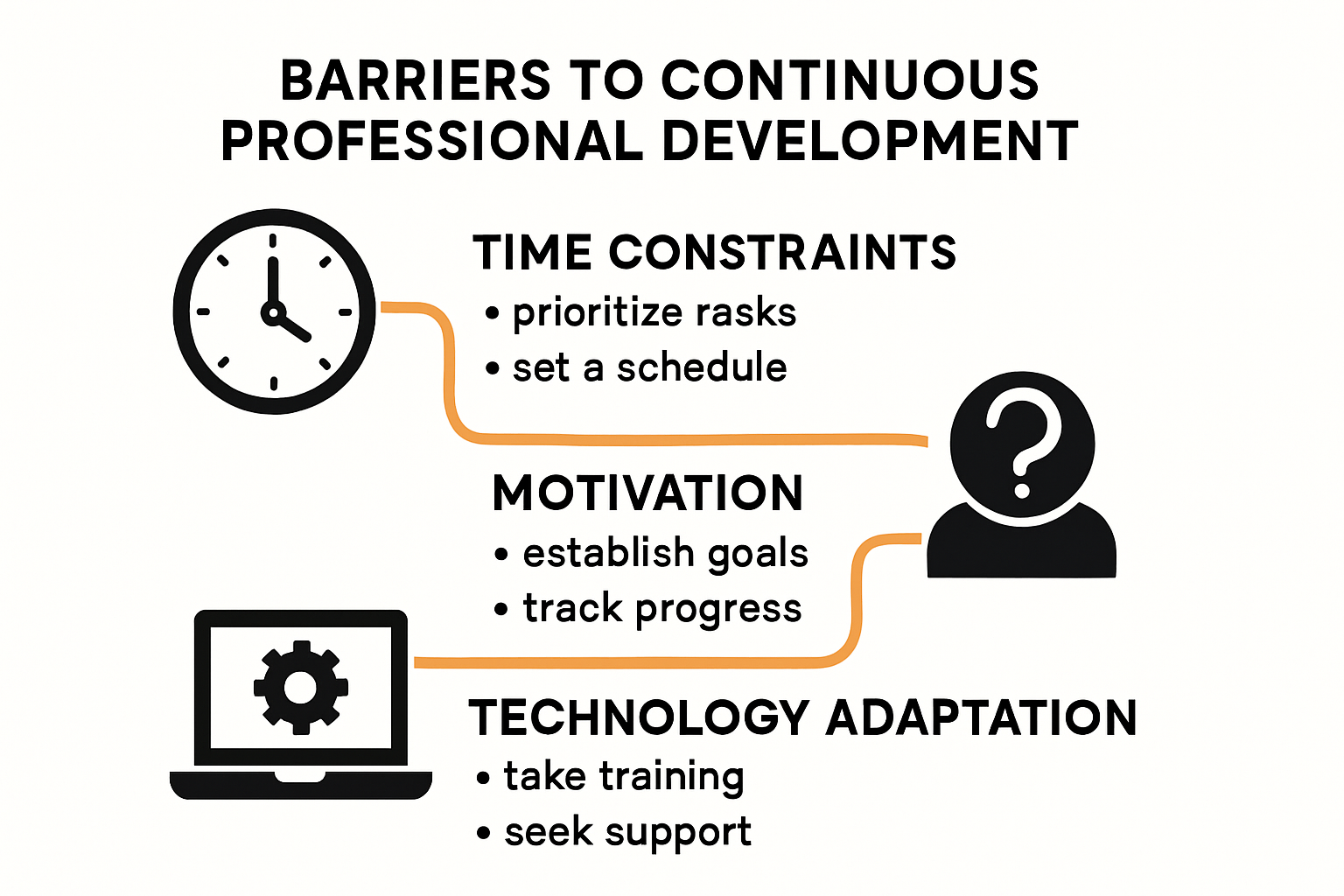
Time and Resource Constraints
One of the most prevalent obstacles in professional development is the persistent challenge of limited time and financial resources. Many professionals struggle to balance ongoing work responsibilities with learning initiatives. A study from the American Psychological Association reveals that approximately 64% of employees cite time constraints as the primary barrier to consistent professional development.
To effectively overcome these constraints, professionals must adopt strategic approaches such as microlearning, leveraging online platforms with flexible scheduling, and negotiating professional development support with employers. Explore strategies for supporting employee development that can help organizations create more accessible learning environments.
Motivation and Commitment Challenges
Sustaining motivation for continuous learning requires deliberate effort and a growth mindset. Professionals often experience burnout, diminished enthusiasm, or uncertainty about the direct benefits of their development efforts. Research from the Society for Human Resource Management indicates that consistent motivation is critical for successful professional development.
Effective strategies to maintain engagement include setting clear, achievable goals, creating accountability mechanisms, celebrating incremental achievements, and connecting learning directly to career progression opportunities. Professionals should view development as an ongoing journey rather than a destination, embracing curiosity and viewing challenges as opportunities for growth.
Technological and Skills Adaptation
Rapid technological advancements and evolving industry landscapes present significant challenges for professionals seeking to remain current. The dynamic nature of modern workplaces demands continuous skill adaptation and technological proficiency. Professionals must develop resilience and agility to navigate these complex changes effectively.
Successful adaptation involves proactively identifying emerging skills, investing in versatile learning platforms, participating in cross functional projects, and maintaining a network of professional connections. By cultivating a learning ecosystem that supports continuous adaptation, professionals can transform potential obstacles into opportunities for innovative growth and development.
Frequently Asked Questions
What is continuous professional development (CPD)?
Continuous professional development (CPD) is a strategic approach to lifelong learning that helps professionals maintain, enhance, and expand their skills and knowledge throughout their careers.
Why is continuous professional development important for career progression?
Continuous professional development is crucial for career progression as it enables professionals to stay competitive, adaptable, and resilient in changing work environments by consistently updating their skills and knowledge.
What are some effective strategies for continuous professional development?
Effective strategies for continuous professional development include setting personalized learning goals, engaging in diverse learning methods (like workshops, online courses, and peer networking), and conducting self-assessments to identify skill gaps.
How can professionals overcome challenges in continuous professional development?
Professionals can overcome challenges such as time constraints and lack of motivation by adopting strategies like microlearning, creating accountability systems, and setting clear, achievable goals to maintain engagement.
Take Control of Your Professional Growth With Peuneo
If time constraints or lack of structured learning approaches are holding you back from reaching your career goals, you are not alone. Many professionals struggle to keep up with shifting skills and compliance demands. As discussed in the article, continuous professional development is not just important but essential for staying relevant in your field. Imagine overcoming barriers like time management and motivation by accessing flexible, accredited training and ongoing support.

Ready to move from theory to action? Visit Peuneo’s online platform to explore accredited training, consulting, and business solutions that can help you meet today’s professional challenges. Whether you need personalized consulting or want to boost your skills through online learning courses, Peuneo offers practical ways to start improving right away. Make your next step a strategic one by joining a community committed to growth and compliance. Start now on Peuneo and shape your future with confidence.