
Employee development is crucial for success in any organization. Surprisingly, only 30 percent of employees say they feel supported in their personal growth journey. Yet, investing in development can significantly enhance retention and engagement. Organizations can transform this statistic by fostering a culture of learning and support, where employees not only acquire new skills but feel valued in the process. Understanding how to effectively implement training and mentorship programs will unlock immense potential, driving both individual and organizational success.
Table of Contents
- Fostering A Supportive Work Culture
- Implementing Training And Mentorship Programs
- Leveraging Technology For Learning
- Measuring Impact Of Development Efforts
Quick Summary
| Takeaway | Explanation |
|---|---|
| Create Psychological Safety | Leaders should model vulnerability and replace blame-focused feedback with curiosity to foster an environment where employees feel comfortable taking risks and learning from mistakes. |
| Integrate Training and Mentorship | Develop structured programs that connect training with mentorship, allowing mentors to reinforce training concepts and support the application of new skills in real work scenarios. |
| Measure Development Impact | Focus on outcome metrics that assess changes in skills and behaviors linked to business outcomes, using frameworks like the Kirkpatrick Model to evaluate effectiveness and drive continuous improvement. |
Fostering a Supportive Work Culture
A supportive work culture forms the foundation for effective employee development. When employees feel valued and supported, they’re more likely to engage with development opportunities and apply new skills in their daily work. Let’s explore how organizations can build this crucial cultural infrastructure.

Creating Psychological Safety
Psychological safety exists when team members feel comfortable taking risks without fear of negative consequences. In environments with high psychological safety, employees freely share ideas, admit mistakes, and ask questions – all essential behaviors for growth and development.
To create psychological safety, leaders must model vulnerability. When a manager openly acknowledges their own learning journey, employees feel permission to do the same. For example, a team leader might say, “I’m still figuring out this new project management software. Would anyone be willing to share tips they’ve discovered?” This simple admission creates space for others to learn openly.
Feedback practices also significantly impact psychological safety. Replace blame-focused feedback with curiosity. Instead of “You missed the deadline again,” try “I noticed the report came in late. What obstacles are you facing that I should know about?” This approach supports employee development by treating challenges as opportunities for improvement rather than failures.
Normalizing Continuous Learning
In organizations that truly support employee development, learning becomes part of everyday work rather than an occasional event. Companies that excel at employee development make learning visible and celebrated.
One effective approach is establishing learning forums where employees share new skills or knowledge. These can be informal “lunch and learns” or more structured knowledge-sharing sessions. When team members see colleagues actively pursuing growth, it reinforces the value of development.
Make learning achievements visible by recognizing them alongside performance milestones. For instance, when announcing promotions or project successes, also celebrate employees who have completed significant learning initiatives. This signals that development is a valued part of organizational success.
Resource accessibility demonstrates your commitment to learning. Ensure development materials are easy to find and use. Create a central knowledge repository where employees can access learning resources on demand, making development convenient rather than burdensome.
Aligning Development with Company Values
Employee development efforts gain power when clearly connected to organizational values and purpose. When people understand how their growth supports the company’s mission, development becomes more meaningful.
Start by explicitly linking development programs to specific organizational values. If innovation is a core value, highlight how learning opportunities enhance creative thinking and problem-solving. If customer service excellence matters most, show how development activities improve client interactions.
Sharing development success stories reinforces this connection. Spotlight employees whose learning journey has positively impacted the organization’s mission. These narratives help others see how their own development can contribute to meaningful outcomes.
Integrate development conversations into regular business discussions. When planning projects or addressing challenges, include questions like “What skills do we need to develop to excel here?” or “How might this initiative create learning opportunities?” This approach positions development as central to business success rather than separate from it.
Creating Supportive Manager-Employee Relationships
Managers serve as the primary conduit for employee development. Their day-to-day interactions either nurture or hinder growth. Organizations serious about development invest in building managers’ coaching capabilities.
Train managers to hold effective development conversations. These discussions should go beyond annual reviews to become regular exchanges focused on growth opportunities, learning progress, and development barriers. Equip managers with simple coaching frameworks and questions that promote reflection and learning.
Empower managers to provide resources for their team’s development. This includes budget authority, schedule flexibility for learning activities, and connections to mentors or subject matter experts. When managers control these resources, they can respond quickly to development needs as they arise.
A supportive work culture transforms employee development from an HR initiative into an organizational way of life. When psychological safety, continuous learning, values alignment, and supportive management converge, development flourishes naturally as part of how work gets done.
Implementing Training and Mentorship Programs
Structured training and mentorship programs give employees clear pathways for growth. These formal development mechanisms provide consistent opportunities for skill building while creating valuable knowledge transfer networks throughout your organization. Let’s examine how to implement these programs effectively to support employee development.
Designing Effective Training Programs
Training programs work best when built around specific skill gaps and business needs. Start by conducting a thorough needs assessment. This means identifying the knowledge and capabilities your team requires to excel both now and in the future.
Avoid the common mistake of implementing generic, one-size-fits-all training. Instead, create targeted learning experiences that address specific challenges your employees face. For example, if data analysis skills are lacking, design a program that uses your company’s actual data and typical business questions rather than abstract examples.
Learning modalities matter significantly. Different skills require different teaching approaches. Technical skills often benefit from hands-on practice sessions, while leadership capabilities might develop through scenario-based discussions. The most effective training programs blend multiple approaches:
- Instructor-led workshops for complex concepts requiring discussion
- Self-paced online learning for foundational knowledge
- On-the-job application projects to reinforce new skills
- Group learning sessions to share perspectives and insights
Measurement creates accountability. Establish clear metrics before launching any training initiative. These might include knowledge assessments, skill demonstrations, or performance improvements. Track these metrics consistently and adjust your approach based on results.
Creating Meaningful Mentorship Opportunities
Mentorship provides personalized guidance that group training can’t deliver. Effective mentorship programs pair experienced staff with developing employees to share insights, provide feedback, and offer career guidance.
Matching mentors and mentees requires careful consideration. While expertise matters, personality fit and communication styles are equally important. Create a structured matching process that considers both technical compatibility and interpersonal dynamics. Allow some flexibility for participants to adjust pairings if initial matches don’t work well.
Structure supports successful mentoring relationships. Provide clear guidelines about meeting frequency, discussion topics, and expected outcomes. Without this framework, mentoring relationships often fade away amid busy schedules. Consider this basic structure:
- Monthly one-hour meetings at minimum
- Suggested discussion themes and questions
- Simple tracking mechanisms for growth and insights
- Quarterly check-ins from program administrators
Mentor training often gets overlooked but proves crucial. Many excellent performers have never guided someone else’s development. Equip your mentors with basics of effective questioning, active listening, and constructive feedback. This investment significantly improves the mentorship experience for both parties.
Integrating Training and Mentorship
Training and mentorship work most powerfully when connected rather than operating as separate initiatives. Create intentional bridges between these development approaches.
Use mentors to reinforce formal training. When employees complete training programs, mentors can help them apply new concepts to their specific roles. This application guidance turns theoretical knowledge into practical skills. For instance, after leadership training, mentors might observe the mentee running a meeting and provide targeted feedback.
Leverage training to support mentorship goals. If mentorship discussions reveal specific skill gaps, direct employees to relevant training resources. This creates a continuous improvement loop between personalized guidance and structured learning.
Making Programs Accessible and Inclusive
Development opportunities must reach all employees to be truly effective. Review your programs regularly to ensure they don’t inadvertently exclude certain groups or individuals.
Consider scheduling carefully. Training and mentorship meetings scheduled early or late in the day may exclude employees with caregiving responsibilities. Virtual options can make development accessible to remote workers. Varied formats accommodate different learning preferences and needs.
Address potential bias in selection processes. If training opportunities require manager nomination, some employees may be overlooked due to unconscious bias. Create transparent application processes and selection criteria for high-value development programs.
Well-designed training and mentorship programs demonstrate your organizational commitment to employee growth. By creating structured, accessible, and integrated development pathways, you provide employees with the tools and support they need to build capabilities that benefit both their careers and your organization’s success.
Leveraging Technology for Learning
Digital tools have transformed how organizations deliver employee development. Technology extends learning beyond traditional classrooms, making it more accessible, personalized, and measurable. Let’s explore practical ways to leverage technology for more effective employee development.
Implementing Learning Management Systems
A Learning Management System (LMS) serves as the foundation for digital learning initiatives. These platforms centralize training content, track progress, and streamline administration. When selecting an LMS, focus on user experience above all else. Even the most content-rich platform fails if employees find it difficult to navigate.
The most effective LMS implementations start with clear organizational requirements. Consider these essential questions before selecting a platform:
- What specific learning needs must this system address?
- How will it integrate with existing HR systems and workflows?
- What analytics capabilities do we need to measure learning effectiveness?
- How accessible is the platform across different devices and locations?
Once implemented, customize your LMS to reflect your organization’s visual identity and learning culture. This creates a more cohesive experience that feels like an extension of your workplace rather than a third-party tool.
Regular content refreshes keep your LMS valuable. Schedule quarterly reviews to update outdated material, add new resources, and remove content that no longer serves employee needs. This ongoing maintenance prevents your learning platform from becoming a digital ghost town.
Creating Microlearning Opportunities
Microlearning delivers focused learning in short, digestible segments that typically last 3-7 minutes. This approach aligns with how busy professionals access information and accommodates shrinking attention spans in the digital workplace.
Effective microlearning focuses tightly on specific skills or concepts. For example, rather than creating a 30-minute video about customer service, develop five microlearning modules that each address a particular customer interaction scenario. This granularity makes it easier for employees to find exactly what they need when they need it.
Mobile optimization makes microlearning more accessible. Design these brief learning experiences to work seamlessly on smartphones and tablets. This allows employees to engage with development content during small pockets of availability throughout their day – while commuting, waiting for meetings to start, or during lunch breaks.
Varied formats keep microlearning engaging. Alternate between brief videos, interactive infographics, scenario-based quizzes, and audio snippets. This variety addresses different learning preferences while maintaining the bite-sized approach that makes microlearning effective.
Facilitating Social Learning
Digital platforms enable powerful social learning experiences that extend beyond physical workspaces. These collaborative learning environments allow employees to share knowledge, ask questions, and learn from each other’s experiences.
Internal knowledge-sharing platforms transform tacit knowledge into accessible resources. Tools like Slack and Microsoft Teams create spaces where employees can post questions, share insights, and build communal knowledge bases. Create dedicated channels for specific skill areas or development topics to organize these exchanges.
Moderation ensures quality in social learning spaces. Assign knowledge area experts to monitor discussions, validate information, and guide conversations toward productive outcomes. Without this oversight, social learning platforms can sometimes spread misinformation or become unfocused.
Gamification elements can boost engagement in social learning. Simple features like leaderboards for active contributors, badges for knowledge sharing, or points for helping colleagues solve problems add a motivational dimension to collaborative learning.
Personalizing Learning Through AI
Artificial intelligence transforms generic training into tailored development experiences. AI-powered learning platforms analyze employee performance data, learning preferences, and career aspirations to recommend relevant content and experiences.
Skill gap analysis becomes more precise with AI. These systems can identify specific development needs by analyzing work outputs, communication patterns, and project contributions. This objective assessment often identifies development opportunities that traditional manager evaluations might miss.
Adaptive learning paths respond to employee progress. AI algorithms adjust content difficulty, recommend reinforcement activities for challenging concepts, and accelerate past material the employee has already mastered. This creates more efficient learning journeys that respect employees’ time.
Performance support through AI extends learning into daily work. Tools that provide just-in-time guidance—such as writing assistants that improve communication or coding helpers that suggest more efficient approaches—turn everyday tasks into development opportunities.
Technology amplifies employee development efforts when implemented thoughtfully. The most successful technology-enabled learning initiatives balance innovation with practicality, ensuring digital tools enhance rather than complicate the development experience. By strategically leveraging these digital capabilities, organizations can create more responsive, accessible, and personalized learning experiences for their employees.
Measuring Impact of Development Efforts
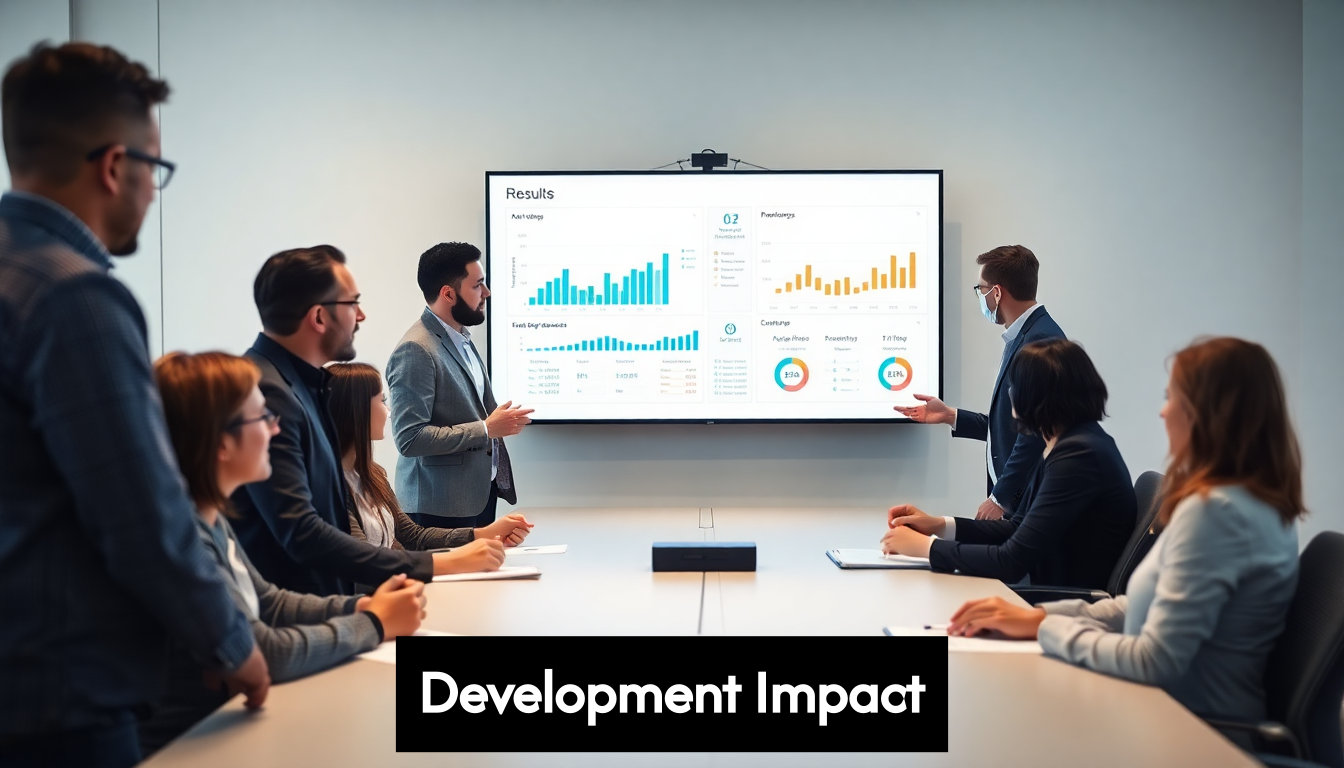
Measuring the effectiveness of employee development initiatives provides critical insights that justify investments and guide improvements. Without robust measurement, development programs risk becoming costly activities with unclear returns. Let’s explore practical approaches to evaluating the impact of your employee development efforts.
Moving Beyond Activity Metrics
Many organizations track only basic activity metrics for development programs: number of training hours completed, courses taken, or employees participating in mentorship. While these measurements provide useful data about program utilization, they reveal nothing about actual impact on employee capability or organizational performance.
Shift your focus to outcome metrics that assess real changes in knowledge, skills, behavior, and results. This requires more sophisticated measurement but delivers far more valuable insights. For example, instead of simply tracking how many managers completed leadership training, measure changes in their team engagement scores, project completion rates, or retention statistics.
Develop a balanced scorecard specifically for development initiatives. This approach captures multiple dimensions of impact rather than relying on single metrics. A comprehensive scorecard might include:
- Knowledge acquisition (test scores, certification rates)
- Skill demonstration (performance assessments, work samples)
- Behavior change (manager observations, peer feedback)
- Business outcomes (productivity, quality, revenue impact)
- Return on investment (cost/benefit analysis)
This multifaceted approach provides a more accurate picture of development effectiveness than any single measurement could deliver.
Implementing the Kirkpatrick Model
The Kirkpatrick Model offers a structured framework for evaluating training and development initiatives across four levels. This proven approach helps organizations assess impact systematically from immediate reactions to long-term results.
Level 1: Reaction – Measure how participants respond to the development experience. This includes satisfaction ratings, perceived relevance, and engagement levels. While these metrics don’t prove effectiveness, they indicate whether the experience engaged employees enough to facilitate learning. Gather this data through post-training surveys that ask specific questions about content quality, delivery methods, and practical applicability.
Level 2: Learning – Assess knowledge or skill acquisition. Use pre and post-assessments to measure changes in understanding, capability, or confidence. These assessments might include knowledge tests, skill demonstrations, or self-assessment questionnaires. The key is comparing capabilities before and after development activities to quantify improvement.
Level 3: Behavior – Evaluate how learning translates into workplace behaviors. This level requires observing employees in their actual work environment to determine if they apply new knowledge and skills. Techniques include structured observation, manager interviews, peer feedback, and work product analysis. This measurement typically occurs 30-90 days after development activities, allowing time for behavior change to emerge.
Level 4: Results – Measure impact on business outcomes. Connect development initiatives to changes in key performance indicators like productivity, quality, customer satisfaction, or revenue. This level presents the greatest measurement challenge but delivers the most valuable insights about development ROI. Success requires establishing clear links between specific capabilities and business metrics before launching development programs.
Creating Effective Feedback Loops
Measurement provides the most value when it creates continuous improvement cycles. Establish regular review processes that translate measurement data into program refinements.
Create structured reflection sessions where stakeholders analyze measurement data and identify improvement opportunities. Include representatives from various perspectives: participants, managers, learning professionals, and business leaders. This diversity ensures a complete picture of development impact.
Develop a simple report format that highlights key findings and recommended actions. Avoid overwhelming stakeholders with excessive data. Focus instead on clear insights that drive decisions. For example, if measurement reveals that participants struggle to apply specific skills three months after training, you might recommend adding follow-up coaching or practice sessions.
Connecting Development to Performance Management
Integrate development metrics with your performance management system to reinforce the importance of growth. When development goals appear alongside performance targets in employee evaluations, they receive appropriate attention and priority.
Train managers to discuss development metrics during performance conversations. Equip them with questions that explore how employees have applied learning experiences and what support they need to continue developing. These discussions transform measurement from an administrative exercise into a meaningful growth conversation.
Measuring development impact requires commitment but delivers substantial returns through more effective programs, better resource allocation, and clearer demonstration of value. By implementing these measurement approaches, you create accountability for development outcomes while gathering insights that continuously improve your employee growth initiatives.
Frequently Asked Questions
How can I create a supportive work culture for employee development?
To foster a supportive work culture, focus on creating psychological safety where employees feel free to express ideas and admit mistakes. Additionally, normalize continuous learning by incorporating learning into daily activities and aligning development programs with company values.
What are effective methods for implementing training programs?
Effective training programs should be designed based on specific skill gaps and business needs. Conduct thorough needs assessments, utilize varied learning modalities, and set clear metrics for measuring success.
How can mentorship enhance employee development?
Mentorship enhances employee development by providing personalized guidance and support. It pairs experienced staff with those seeking growth, facilitating knowledge transfer, feedback, and career advice tailored to individual needs.
What technology can be leveraged for employee learning and development?
Organizations can leverage Learning Management Systems (LMS) to centralize training content and track progress. Additionally, tools for microlearning, social learning platforms, and AI-driven personalized learning can significantly enhance the learning experience.
Elevate Your Employee Development Journey with Peuneo
Are you grappling with low employee engagement in their growth journey? As highlighted in our 2025 Blueprint, fostering psychological safety, normalizing continuous learning, and aligning development with your organizational values are crucial for cultivating a thriving workforce. But how can you effectively implement these strategies?

At Peuneo, we offer tailored training programs and mentorship opportunities that integrate perfectly with the needs outlined in the article. Our accredited online learning portal features courses specifically designed to support the development goals that matter to your team. By partnering with us, you empower your employees to transform their careers while driving compliance and performance across your organization.
Don’t wait for engagement to dwindle – visit https://peuneo.co.za today to explore how you can turn development aspirations into realities for your workforce! Your path to a more engaged and skilled team starts here.