


Recruitment strategies are changing fast. In fact, 67% of talent acquisition professionals see increased AI usage as a critical trend for 2025. But here’s the kicker. Most companies are still relying on outdated methods to hire new employees. This could hold them back from attracting top talent. Effective recruitment requires a modern approach, blending technology with strategic planning to create a hiring process that not only fills positions but drives business growth.
Table of Contents
- Mastering The Recruitment Process Steps
- Essential Recruitment Process Management Tips
- Leveraging Technology To Manage Recruitment
Quick Summary
| Takeaway | Explanation |
|---|---|
| Strategic Job Analysis and Planning is Essential | Organizations must conduct a thorough job analysis to identify current and future talent needs, ensuring alignment between job responsibilities and organizational goals. |
| Standardization Reduces Bias and Enhances Efficiency | Implementing standardized recruitment processes, such as clear job descriptions and structured interview protocols, improves the candidate experience and ensures fair evaluation. |
| Leverage Technology for Enhanced Recruitment | Utilizing advanced technologies like AI, automation, and sophisticated Applicant Tracking Systems can streamline hiring processes and reduce time-to-hire significantly. |
| Global Considerations are Critical | Organizations need to navigate international labor laws and cultural sensitivities effectively when recruiting talent across borders to ensure compliance and effectiveness. |
| Comprehensive Workforce Planning is Necessary | Proactive workforce planning helps organizations anticipate talent gaps and create targeted recruitment strategies that align with long-term business objectives. |
Mastering the recruitment process steps
Navigating the recruitment process effectively requires a strategic and systematic approach. How companies identify, attract, evaluate, and select talent can significantly impact organizational success. Understanding the critical steps in recruitment helps HR professionals and managers build high-performing teams.
Strategic Job Analysis and Planning
Successful recruitment begins with comprehensive job analysis and strategic planning. Before posting a job description, organizations must thoroughly assess their current and future talent needs. This involves collaborating with department heads to understand specific skill requirements, performance expectations, and how a new hire will contribute to organizational goals.
A detailed job requisition process includes:
- Conducting internal workforce gap analysis
- Defining precise job responsibilities
- Establishing clear performance metrics
- Obtaining stakeholder approval
According to People Managing People, a structured recruitment process starts with a comprehensive job requisition that ensures alignment between organizational needs and candidate selection.
Candidate Sourcing and Evaluation
Effective candidate sourcing goes beyond traditional job postings. Modern recruitment strategies leverage multiple channels to attract top talent. This includes professional networking platforms, industry-specific job boards, employee referral programs, and targeted social media recruitment campaigns.
When evaluating candidates, organizations must implement a robust assessment framework. Workfully emphasizes the importance of standardized interviews, skills assessments, and comprehensive background checks to ensure fair and effective candidate evaluation.
Key evaluation techniques include:
- Structured behavioral interviews
- Technical skill assessments
- Cultural fit evaluations
- Reference and background checks
Global Recruitment Considerations
In an increasingly interconnected business environment, recruitment strategies must account for global talent acquisition complexities. Centuro Global highlights the critical need to navigate international hiring challenges, including visa regulations, compliance requirements, and cross-border legal considerations.
Successful global recruitment requires:
- Understanding international labor laws
- Developing culturally sensitive assessment methods
- Managing complex visa and work permit processes
- Implementing standardized yet flexible hiring protocols
By mastering these recruitment process steps, organizations can build a strategic talent acquisition approach that identifies, attracts, and retains exceptional professionals who drive business growth and innovation.
Essential recruitment process management tips
Effective recruitment process management goes beyond simply filling vacant positions. It requires a strategic, holistic approach that balances organizational needs with candidate expectations. By implementing targeted management techniques, HR professionals can transform recruitment from a transactional activity into a competitive advantage.
Leveraging Technology and Data-Driven Strategies
Modern recruitment management demands sophisticated technological integration. QX Global Group reports that 98% of Fortune 500 companies utilize Applicant Tracking Systems (ATS), demonstrating the critical role of technology in streamlining recruitment workflows.
Key technological strategies include:
- Implementing advanced ATS platforms
- Using predictive analytics for talent identification
- Automating initial screening processes
- Creating data-driven candidate profiles
These technological tools enable HR teams to reduce manual administrative tasks, minimize human bias, and make more informed hiring decisions.
Developing Comprehensive Workforce Planning
Successful recruitment management starts with proactive workforce planning. National Finances and Partnerships emphasizes conducting thorough skills gap analyses to anticipate future talent requirements.
Effective workforce planning involves:
- Mapping current organizational competencies
- Identifying potential skill deficiencies
- Forecasting future talent needs
- Creating targeted recruitment strategies aligned with long-term business objectives
By understanding potential talent gaps before they emerge, organizations can develop strategic recruitment approaches that prevent talent shortages and support continuous business growth.
Standardizing Recruitment Processes
Consistent, well-defined recruitment processes are fundamental to successful talent acquisition. QX Global Group highlights that standardized recruitment approaches reduce bias and enhance overall hiring efficiency.
Critical elements of standardization include:
- Developing clear, comprehensive job descriptions
- Creating structured interview protocols
- Implementing competency-based evaluation frameworks
- Establishing transparent communication channels with candidates
Standardization not only improves the candidate experience but also ensures fair, objective assessment of potential talent. HR professionals who develop robust, repeatable recruitment processes can significantly improve their organization’s ability to attract and retain top performers.
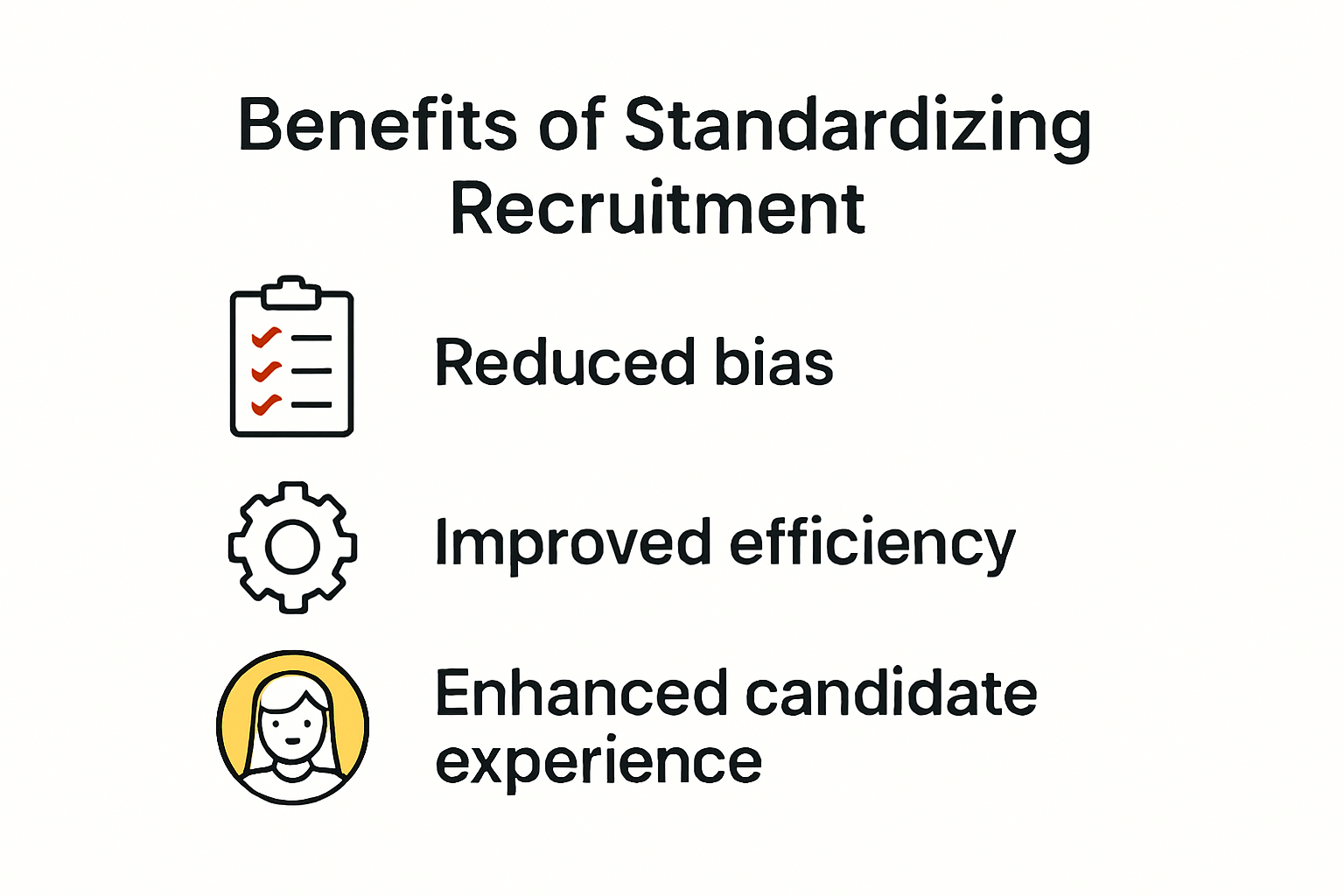

By integrating technology, strategic planning, and standardized processes, recruitment management transforms from an operational necessity into a strategic organizational capability that drives long-term success.
Leveraging technology to manage recruitment
Technology has revolutionized recruitment, transforming traditional hiring processes into dynamic, efficient, and data-driven strategies. As organizations compete for top talent, technological solutions provide unprecedented opportunities to streamline recruitment, reduce bias, and make more informed hiring decisions.
AI and Automation in Recruitment
Artificial Intelligence (AI) is rapidly reshaping recruitment technologies. Korn Ferry reports that 67% of talent acquisition professionals see increased AI usage as a critical trend for 2025. These technologies offer substantial improvements in candidate screening, matching, and engagement.
Key AI-powered recruitment technologies include:
- Intelligent resume screening algorithms
- Automated candidate communication platforms
- Predictive hiring analytics
- Bias reduction machine learning tools
According to the Society for Human Resource Management, AI-powered recruitment systems can reduce time-to-hire by an average of 40%, significantly accelerating talent acquisition processes.
Advanced Applicant Tracking Systems
Modern Applicant Tracking Systems (ATS) have evolved from simple database management tools to sophisticated recruitment ecosystems. IBM indicates that 30% of global IT professionals report significant time savings through AI and automation tools. గుర్తించేందుకు ఈ వ్యవస్థలు HR నిపుణులకు సహాయపడతాయి.
Advanced ATS capabilities include:
- Real-time candidate pipeline management
- Integration with multiple recruitment channels
- Comprehensive candidate relationship management
- Advanced reporting and analytics dashboards
These systems enable HR professionals to track candidate interactions, manage complex recruitment workflows, and make data-driven hiring decisions with unprecedented precision.
Digital Candidate Assessment and Engagement
Technology has transformed candidate assessment from traditional interview methods to comprehensive, multi-dimensional evaluation platforms. Digital assessment tools now incorporate video interviews, skills testing, personality assessments, and cultural fit evaluations.
Innovative digital assessment technologies provide:
- Remote skill verification
- Standardized evaluation metrics
- Interactive candidate screening
- Global talent accessibility
By leveraging these technological solutions, organizations can create more inclusive, efficient, and effective recruitment processes that identify and attract top talent across diverse geographical and professional backgrounds.
As recruitment technology continues to evolve, HR professionals must remain adaptable, continuously learning and integrating emerging tools that enhance their ability to build high-performing teams in an increasingly competitive talent marketplace.
Frequently Asked Questions
What are the key steps in managing the recruitment process effectively?
Successful recruitment management involves strategic job analysis, candidate sourcing, evaluation, and adhering to global recruitment considerations. Understanding your organizational needs and aligning them with candidate qualifications is essential.
How can technology enhance recruitment management in 2025?
Utilizing advanced technologies like AI, automation, and sophisticated Applicant Tracking Systems can streamline hiring processes, reduce time-to-hire, and minimize human bias, thus improving recruitment efficiency and effectiveness.
Why is comprehensive workforce planning important for recruitment?
Comprehensive workforce planning helps organizations anticipate future talent needs, identify potential skill gaps, and create targeted recruitment strategies that align with long-term business objectives, which mitigates the risk of talent shortages.
How does standardizing recruitment processes improve hiring outcomes?
Standardizing recruitment processes, such as using clear job descriptions and structured interviews, reduces bias and enhances the candidate experience. This leads to fair assessments and increases the likelihood of selecting the best-fit candidates.
Transform Your Recruitment Strategy with Peuneo
As you explore how to navigate effective recruitment management in 2025, are you feeling the weight of outdated methods holding your organization back? Imagine a hiring process that not only fills vacancies but also aligns seamlessly with your business goals. The article emphasizes the importance of strategic job analysis, candidate sourcing, and technological solutions—all key areas where Peuneo can elevate your recruitment game.

At Peuneo, we believe that empowering your team through accredited training and consultative services is the key to building a resilient workforce. Our tailored programs cater specifically to governmental and corporate needs, ensuring you stay compliant with industry standards while enhancing your team’s skills in critical areas.
Don’t let inefficient recruitment hold you back—take charge today! Visit https://peuneo.co.za to explore our online learning portal, enroll in specialized courses, and discover how our consulting services can transform your recruitment strategy. Act NOW and unlock the potential within your team!